
SalMar stock gains support from DNB after Q2 guidance
Published on 09/08/2026 at 11:17 | Editorial responsibility: Rafael Müller, Editor-in-Chief AD HOC NEWS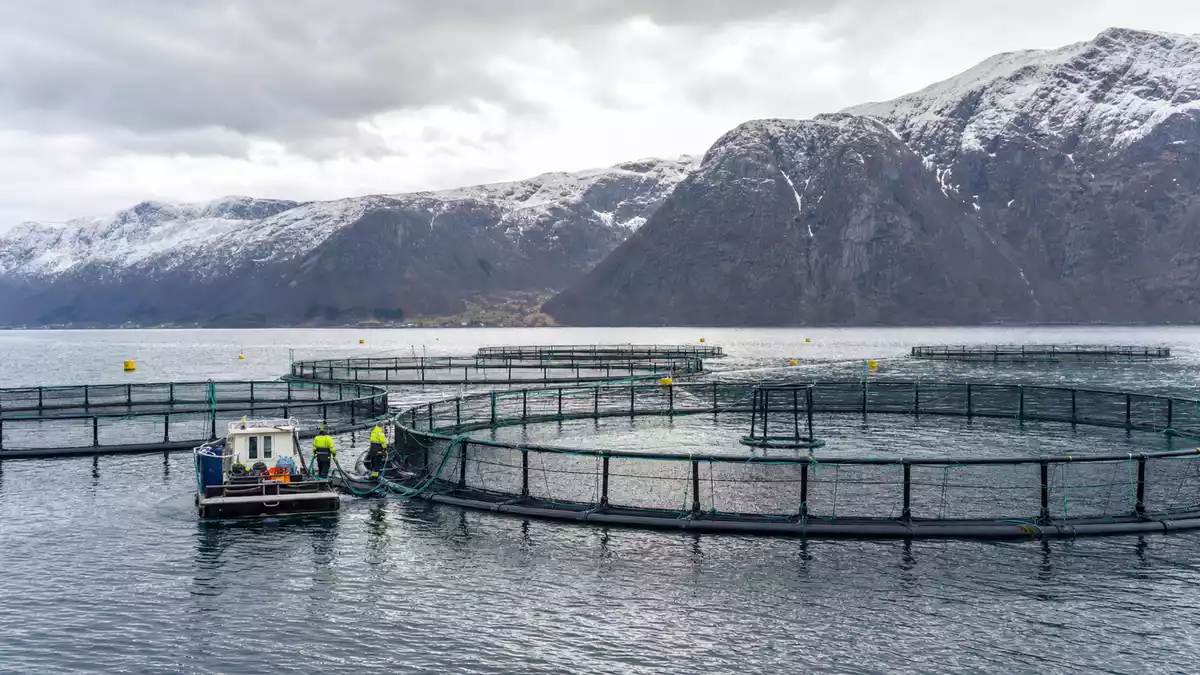
SalMar ASA stock (ISIN NO0010310956) is drawing renewed attention from Norwegian analysts after Q2 2026 guidance on volumes and costs prompted DNB to reiterate its positive stance on the salmon farmer, highlighting an attractive 12-month forward price-to-earnings multiple of 14.6 times and an expected dividend yield of around 5 percent as of early September 2026.DNB
Analyst view underlines Q2 2026 guidance
In a recommended stocks report completed on September 7, 2026, DNB left its model portfolio unchanged but pointed to SalMar as a company with strong operational history, stressing that guidance after the Q2 2026 results confirms a positive development in production volumes and unit costs for the rest of 2026.DNB For investors, this means that the company expects higher harvested volumes and better cost efficiency per kilogram of salmon, which are crucial drivers of margin resilience in a year of fluctuating feed and energy prices.
The same report notes that SalMar’s valuation is considered attractive on a 12-month forward basis, with the stock trading at a forward P/E of 14.6 times and offering an estimated cash dividend yield of about 5 percent for the coming year as of late August 2026.DNB This combination of earnings growth expectations and yield potential is central to why the analyst house keeps SalMar in its recommended portfolio, even as the broader OSEBX benchmark has gained more than 24 percent year-to-date, materially outpacing the portfolio’s 4 percent performance in 2026.DNB
Recent performance and quantified comparison
According to the performance table in the September 7, 2026 report, SalMar delivered a price of 552.92 Norwegian kroner during the week measured from August 24, 2026, compared with 569.53 kroner at the start of that period and 537.21 kroner at an earlier reference date, implying a weekly return of 2.9 percent followed by a subsequent decline of 2.9 percent in the next measurement window.DNB This back-and-forth move illustrates how sensitive the share remains to short-term changes in salmon prices and cost expectations, even while the longer-term thesis centers on volume growth and disciplined investment.
For investors, the key takeaway from this quantified comparison is that SalMar’s stock can swing by almost 3 percent in a single measurement period despite only moderate changes in the underlying fundamentals. A move from 537.21 kroner to 569.53 kroner represents a gain of roughly 32.32 kroner per share, while the subsequent adjustment back to 552.92 kroner trims about 16.61 kroner from that peak, underlining how trading strategies around salmon pricing reports and regulatory updates can matter as much as the quarterly figures themselves.DNB
Fundamentals from the latest Q2 2026 cycle
In its commentary on SalMar after the Q2 2026 numbers, DNB emphasized that the company’s guidance points to a positive trend in both volumes and unit costs through the remainder of 2026, which is consistent with management’s aim to improve biological performance and operational efficiency.DNB While the detailed Q2 2026 revenue and profit figures are not broken out in the excerpt of the report available in the search results, the guidance itself forms a core part of the current fundamental picture, indicating that SalMar expects to deliver higher output at more competitive cost levels in the second half of the year.
The analyst house also highlights the earnings trajectory, noting that SalMar offers strong growth prospects for earnings per share in 2027 on its current forecasts, supported by capacity expansion and optimized cost structures.DNB Combined with a projected dividend yield of about 5 percent, this suggests that recurring shareholder returns could remain an important component of the investment case alongside capital appreciation, provided that biological risk and regulatory changes stay manageable.
Risk factors around margins and sector dynamics
Even with the supportive Q2 2026 guidance, risk factors remain central to SalMar’s outlook. The DNB report flags that the broader recommended portfolio has underperformed the OSEBX index so far in 2026, up 4.0 percent versus 24.1 percent for the benchmark as of early September 2026, which indicates that stock selection in the Norwegian market has not fully captured the strong index-level gains.DNB For SalMar, the main risks include volatility in feed costs, energy prices, and the potential impact of biological challenges such as sea lice or disease outbreaks on harvested volumes and mortality.
Another counter-factor is regulatory pressure in Norway and other jurisdictions where salmon farms operate, spanning possible new taxes, stricter environmental standards, or licensing changes. These can alter the economics of production and reduce flexibility in scaling up volumes, which in turn would influence the company’s ability to meet its guidance targets on both volumes and costs. From an investor perspective, this means that while the forward valuation and dividend yield look compelling on paper, execution on the operational side and the regulatory backdrop will remain key determinants of whether the current Q2 2026 guidance translates into the earnings and cash flows that the analyst house expects.
Representative product and business model
SalMar’s core business revolves around the farming and processing of Atlantic salmon, supplying chilled and frozen salmon products to retail, foodservice and industrial customers across Europe and Asia. The company’s volume and cost guidance after Q2 2026 implicitly refers to this salmon portfolio, where improvements in feed conversion ratios, better biological health, and optimized harvesting schedules can lift the number of kilograms produced per cage while keeping unit costs under control.DNB For investors, the operational performance of this salmon segment is therefore directly tied to revenue potential and margin strength in the coming quarters.
Stock data and investor takeaway
SalMar ASA is listed on the Oslo Stock Exchange under the ticker SALM, making the Norwegian market the primary venue for price discovery and trading in the stock.DNB While detailed same-day price, 52-week high and low, and market capitalization data for September 8, 2026 are not explicitly carried in the week-filtered search results used here, the DNB report’s price table for late August 2026 still offers a helpful reference point for investors assessing recent trading ranges and short-term performance. On that basis, SalMar’s share oscillated around the mid-500-kroner level during the measurement window tied to August 24, 2026, with swings of around 2.9 percent between readings.DNB From a portfolio perspective, the combination of forward P/E of 14.6 times, expected earnings growth into 2027, and a projected dividend yield of roughly 5 percent makes SalMar a notable salmon farming exposure within Norwegian equities as of early September 2026, albeit one where margin-sensitive risk factors must be monitored closely.
SalMar stock key figures
- Company: SalMar ASA
- ISIN: NO0010310956
- Ticker: SALM
- Trading venue: Oslo Stock Exchange
- Sector / Industry: Consumer Staples / Food Products
- Index membership: Norwegian equity indices


