
Trimble stock holds steady as Q2 2026 record ARR supports raised outlook
Published on 08/17/2026 at 17:42 | Editorial responsibility: Rafael Müller, Editor-in-Chief AD HOC NEWS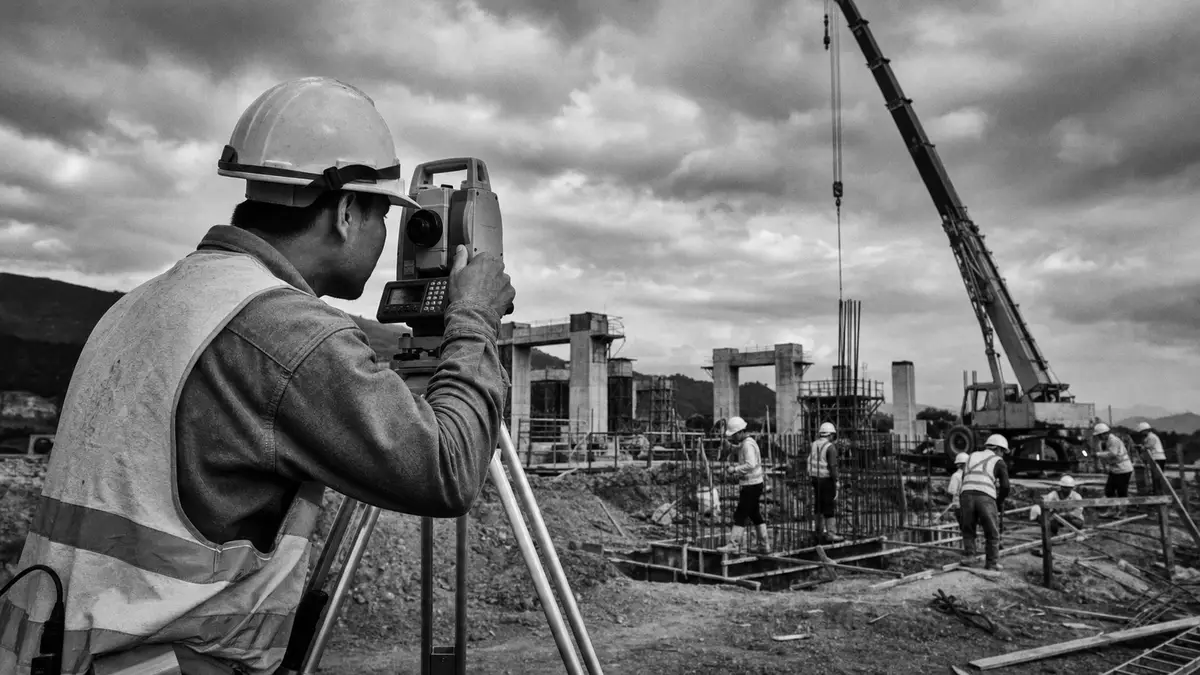
Trimble Inc. (US8962391058) stock is trading in the high-$50 range after the company reported double-digit revenue growth for the second quarter of 2026 and raised its full-year guidance on the back of record recurring revenue as of August 12, 2026. An earnings release summarized revenue of $972.0 million for Q2 2026, up 11 percent year over year, and highlighted annualized recurring revenue of $2.51 billion, up 14 percent from the prior-year period. Investors now have to weigh the stronger top line and subscription momentum against a sizeable goodwill impairment in the Transportation and Logistics segment that pushed Trimble into a GAAP net loss for the quarter.
Q2 2026 results and record ARR
Per the second quarter 2026 results released on August 12, 2026, Trimble generated revenue of $972.0 million, representing an 11 percent increase compared with the second quarter of 2025. The same update noted that annualized recurring revenue reached a record $2.51 billion in Q2 2026, up 14 percent year over year and 12 percent on an organic basis, underscoring the company’s continued transition toward subscription and software-based offerings. That combination of higher revenue and expanded recurring streams gives the business more visibility on future cash flows, which can matter for investors focused on stability.
Profitability metrics told a more nuanced story. According to the Q2 2026 disclosure, GAAP operating income was $132.0 million, representing 13.6 percent of revenue, while non-GAAP operating income was $260.6 million, or 26.8 percent of revenue for the quarter. Non-GAAP diluted earnings per share came in at $0.86, up from $0.71 in the second quarter of 2025, showing that on an adjusted basis Trimble grew per-share earnings by roughly 21 percent year over year. However, GAAP results were dominated by a $562.0 million impairment of goodwill in the Transportation and Logistics unit, leading to a GAAP net loss of $471.7 million and a GAAP diluted loss per share of $2.02 for Q2 2026.
Guidance raised for fiscal 2026 and Q3 2026
The Q2 2026 report was accompanied by higher guidance for the remainder of the year. For fiscal 2026, Trimble now expects revenue between $3.9 billion and $3.95 billion, lifted from a prior range of $3.84 billion to $3.92 billion, implying that the mid-point of guidance increased from about $3.88 billion to $3.925 billion. The company also projects non-GAAP diluted earnings per share between $3.60 and $3.70 for the full year, helping investors frame expected profitability once impairment charges and other non-recurring items are stripped out.
Management provided more granular expectations for the near term as well. For the third quarter of 2026, Trimble guided to revenue between $953 million and $978 million and non-GAAP diluted earnings per share between $0.83 and $0.88. Those figures suggest that if Trimble reaches the top end of its Q3 2026 revenue range, sales would come in roughly $6 million higher than the Q2 2026 level of $972 million while non-GAAP EPS at the high end would be slightly above the $0.86 achieved in the second quarter. For investors, the guidance indicates that management expects momentum in recurring revenue and subscriptions to continue feeding into the top line and adjusted earnings over the next few quarters, even as macroeconomic and foreign-exchange headwinds remain part of the backdrop.
Valuation signals and recent share performance
Market data as of the most recent completed session provides additional context on Trimble’s stock valuation. Trimble shares closed at $57.60 on August 14, 2026 on the Nasdaq, up 0.10 percent for that session, but down 26.5 percent from their starting level of $78.35 at the beginning of 2026. That decline in the share price means the market has compressed Trimble’s valuation despite the company’s ongoing revenue and recurring revenue growth.
The stock’s trading multiple reflects that mixed sentiment. One valuation overview cites a Price-to-Sales ratio of 3.62 for Trimble, slightly below a historical median of 3.8, with a market capitalization of $13.43 billion based on the August 14, 2026 close. A separate fair-value framework places intrinsic value closer to the low-$80s per share against the recent $57.60 price, hinting that investors focused on discounted cash flows or long-term growth may see upside compared with where the market currently trades the stock.
Shorter-term performance metrics also highlight the tension between improving fundamentals and lingering skepticism. An equity analysis notes that Trimble delivered a 30-day share price return of 9.26 percent, but still posted a year-to-date share price decline of 26.46 percent and a one-year total shareholder return decline of 30.43 percent. That pattern suggests that while the Q2 2026 results and raised guidance have helped the stock recover some ground in the past month, longer-term holders remain underwater, and the market has yet to fully re-rate the shares.
Analyst sentiment and technical backdrop
Several analyst and data compilers continue to view Trimble favorably despite the recent share price correction. According to a multi-analyst consensus overview, Trimble carries a Buy rating based on input from 15 analysts, with a reported top price target of $80.73 per share, implying potential upside of more than 40 percent from the recent $57.60 price point. That kind of gap between current trading levels and analyst target ranges highlights how much of the impairment and macro risk may already be reflected in the price.
At the same time, technical indicators portray the stock as consolidating rather than trending strongly higher. The same technical snapshot describes Trimble shares as trading sideways between support and resistance levels, a pattern often associated with range-bound trading where short-term investors look to buy near the lower end of the range and sell toward the upper end. For longer-term holders, a range-bound phase following a drawdown can be a period where fundamentals improve while price waits for a catalyst to break out of the band.
Transportation and Logistics impairment risk
The goodwill impairment in the Transportation and Logistics segment is a key factor in the Q2 2026 narrative. Trimble recorded a $562.0 million impairment charge against goodwill tied to Transportation and Logistics in the quarter, which was a major driver of the GAAP net loss of $471.7 million and the GAAP diluted loss per share of $2.02. An impairment of that size signals that management has reassessed the future cash flows and competitive position of that unit and concluded that its carrying value on the balance sheet needed to be reduced.
For investors, the impairment can be viewed in two ways. On the one hand, it acknowledges that the Transportation and Logistics segment faces structural challenges, whether from competition, pricing, demand, or changing business models. On the other hand, writing down goodwill is a non-cash accounting adjustment, and the company’s non-GAAP metrics for Q2 2026 still showed non-GAAP net income of $200.3 million and adjusted EBITDA of $278.0 million, equal to 28.6 percent of revenue. That level of adjusted profitability suggests that outside the impairment, Trimble continues to generate healthy operating earnings and cash flow.
Subscription momentum and recurring revenue mix
Recurring revenue is central to Trimble’s long-term strategy. The Q2 2026 update emphasized that annualized recurring revenue reached $2.51 billion, up 14 percent year over year and 12 percent on an organic basis, reinforcing that subscriptions and software contracts are becoming an ever-larger share of total revenue. With Q2 2026 total revenue at $972 million, that ARR figure means recurring commitments are roughly 2.6 times the quarter’s reported sales, underscoring the durability of Trimble’s installed base.
In practical terms, higher recurring revenue can smooth earnings and reduce volatility across economic cycles. Customers who use Trimble’s software and platforms to manage construction, agriculture, geospatial, and transportation workflows may be less inclined to switch providers frequently once they have embedded tools into their operations, creating a switching-cost moat. The Q2 numbers show that this installed base continues to grow and renew, which supports the company’s decision to lift revenue and non-GAAP EPS guidance for fiscal 2026.
Representative product: Trimble construction software
Trimble is best known among many enterprise and industrial users for its software and hardware solutions that connect field operations with office workflows. One representative product area is its construction management and building information modeling software, which helps contractors and project owners coordinate design, scheduling, and execution in complex projects. These offerings integrate positioning, project management, and collaboration tools, allowing teams on a job site to access the same plans and updates as engineers and managers in the office.
Because these products are sold mostly as subscriptions, they feed directly into the recurring revenue metrics highlighted in the Q2 2026 results. As customers expand usage across more projects or departments, Trimble can grow ARR without needing to rely solely on one-time hardware sales. Over time, that tilt toward software and cloud-based solutions can support margins in line with the non-GAAP operating income of 26.8 percent of revenue recorded in Q2 2026.
Trimble stock valuation and trading context
From a stock-market perspective, Trimble shares currently sit at a level that reflects both the growth in recurring revenue and the headwind from the Transportation and Logistics impairment. Recent price and performance data show the stock at $57.60 at the close on August 14, 2026, with a year-to-date percentage change of roughly negative 26.5 percent. That decline from $78.35 at the start of the year indicates the market has de-rated the shares even as quarterly revenue and non-GAAP earnings per share have improved.
In the fact box context, the same data support a market capitalization of $13.43 billion as of August 14, 2026, based on the $57.60 share price. On major indexes, Trimble trades on the Nasdaq and is commonly categorized under the software and IT services industry, where recurring revenue and subscription metrics often attract investors who look beyond short-term GAAP volatility. For those traders and investors, the key questions now revolve around whether the record $2.51 billion ARR and upgraded guidance for fiscal 2026 justify a higher multiple than the current Price-to-Sales ratio of 3.62 and whether the impairment fully addresses the issues in Transportation and Logistics or signals further strategic changes ahead.
Go deeper
More on Trimble stock
Investor Relations
Construction platforms connect field and office
In Trimble’s construction segment, platform offerings illustrate how the company’s technology creates value for customers. Its construction software allows users to manage design models, coordinate schedules, and track progress from early planning through project completion, using geospatial data and positioning technologies to keep field work aligned with digital plans. For example, site supervisors can use Trimble-connected equipment and mobile applications to ensure that earthmoving, grading, and concrete work matches the engineer’s design, reducing rework and delays.
These tools often integrate with third-party applications and enterprise resource planning systems, making it easier for customers to adopt Trimble solutions without needing to overhaul existing workflows. As those integrations deepen, customers can centralize data from multiple projects, analyze performance metrics, and adjust resource allocation in near real time. That kind of operational insight can drive efficiency gains, which in turn makes recurring software fees more acceptable and supports the ARR growth highlighted in the Q2 2026 results.
Price snapshot and investor takeaway
As of August 14, 2026, Trimble stock closed at $57.60 on the Nasdaq, denominated in USD, with the shares down 26.5 percent year to date from $78.35 at the beginning of 2026 but posting a positive 30-day return of 9.26 percent. For investors, the latest quarter’s 11 percent revenue growth, record $2.51 billion annualized recurring revenue, and higher fiscal 2026 guidance provide a counterweight to the $562.0 million goodwill impairment, leaving Trimble stock trading at a valuation that many analytical frameworks suggest is below intrinsic value while the company continues to shift its business toward higher-margin, subscription-driven models.
Fact box
Company: Trimble Inc.
ISIN: US8962391058
Ticker: TRMB
Exchange: Nasdaq
Price (as of August 14, 2026, 4:00 p.m. ET): $57.60 USD
Market cap: $13.43 billion (as of August 14, 2026)
Sector / Industry: Software and IT services
Index membership: Nasdaq indices


