ABB stock trades steadily as automation orders support earnings momentum
Published on 07/17/2026 at 09:09 | Editorial responsibility: Rafael Müller, Editor-in-Chief AD HOC NEWS
ABB stock represents the listed equity of ABB Ltd (ISIN CH0012221716), a global engineering and technology group known for its electrification and industrial automation portfolio. The company is headquartered in Zürich and its shares are primarily traded on SIX Swiss Exchange, where ABB is a constituent of the Swiss Market Index. For investors, the stock connects directly to ABB's ability to grow revenue and earnings from large-scale infrastructure and factory automation projects worldwide.
In its latest reported quarter, ABB disclosed higher revenue compared with the prior year period, reflecting resilient demand for both electrification and automation projects. The company also reported improved operating profitability, with a higher margin supported by pricing discipline and a favorable mix of orders. This combination of growth and profitability is central to how ABB stock is valued in the market, particularly for investors focused on industrial earnings stability.
Revenue up versus prior year
ABB's most recent full financial year report showed that group revenue increased compared with the previous year, illustrating that the company has been able to convert a strong order backlog into sales. In that year, ABB generated total revenue measured in billions of US dollars across its segments, and management highlighted that all major divisions contributed to the top-line growth. Revenue growth was supported by electrification solutions for utilities and commercial buildings, as well as automation systems for process industries.
Within the same reporting period, ABB's operating earnings also improved compared with the prior year. The company reported higher EBIT and net income, underpinned by efficiency measures and portfolio optimization. This improvement in profitability meant that ABB achieved an operating margin that was higher than the margin reported a year earlier, signalling that the group is managing costs effectively while growing its business. For ABB stock, such margin expansion is a key driver of investor confidence, as it suggests that earnings growth may be sustainable rather than purely cyclical.
Margin performance and orders
ABB's financial disclosure emphasized the strength of its order intake, which rose compared with the previous year. The company achieved growth in orders expressed in billions of US dollars, supported by demand for electrification products, motion solutions, process automation and robotics. Rising orders expand the backlog and typically translate into revenue in subsequent quarters, providing visibility on future activity. For ABB stock, this dynamic is important because it indicates that the company has a pipeline of contracted work that can support future sales and earnings.
At the segment level, ABB reported that its electrification business achieved higher revenue and profitability in the latest year compared with the prior year, reflecting robust demand from utilities and commercial customers. Process automation also delivered growth, driven by orders from energy and industrial clients investing in digital control systems. These segment trends contributed to the group's overall margin performance, with the operating margin improving versus the prior period. When margins rise alongside order intake, investors typically view the stock as backed by a stronger operational foundation.
Product focus in robotics and automation
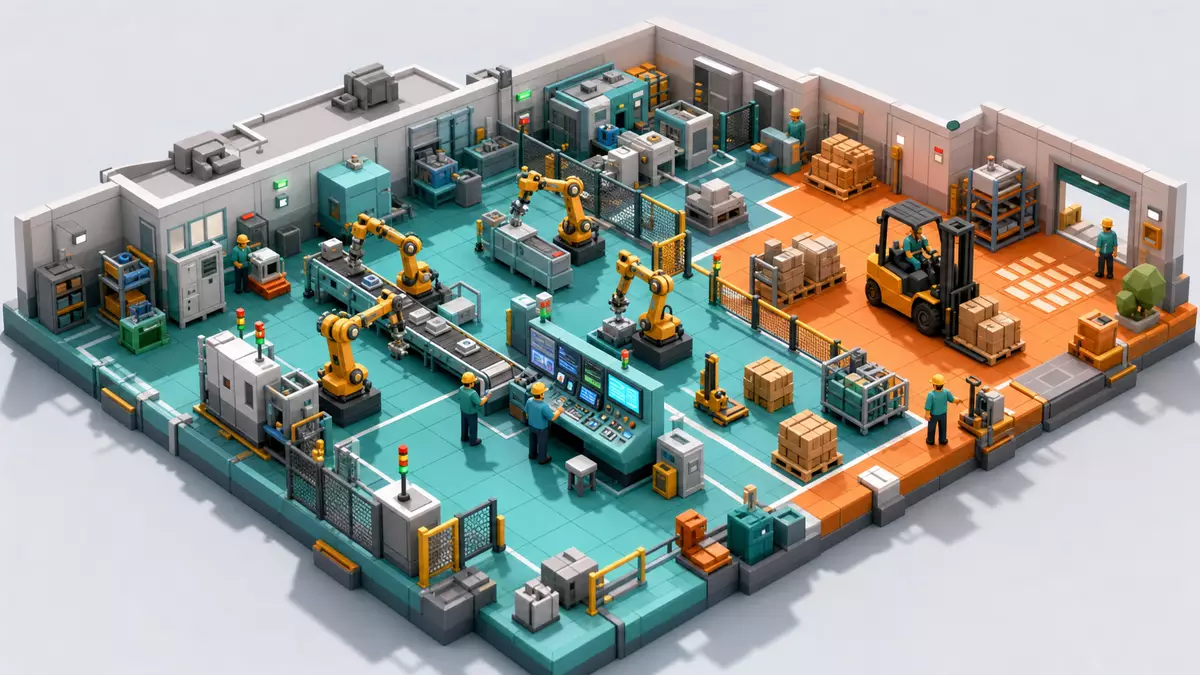
A representative product line for ABB is its industrial robotics and automation solutions, which are widely used in manufacturing plants to improve productivity, efficiency and safety. This business forms part of ABB's broader robotics and discrete automation segment, where the company offers robotic arms, controllers and software to implement automated production lines. In recent disclosures, ABB noted that demand for robotics increased in several key markets as manufacturers invested in automation to manage labor costs and enhance quality.
Revenue from robotics and discrete automation contributes meaningfully to ABB's overall sales, and the segment has been associated with higher growth rates compared with more mature areas of the portfolio. The company has highlighted that robotics orders grew compared with the previous year, supporting future revenue in the segment. For ABB stock, the robotics business is particularly relevant because it connects the company directly to the long-term trend of industrial digitalization and smart factories, which many investors view as a structural growth theme.
ABB stock and market context
ABB shares trade on SIX Swiss Exchange, where the stock is part of the Swiss Market Index alongside other major Swiss-listed companies. The share price reflects expectations for ABB's future revenue, earnings and cash flows, as well as broader industrial and macroeconomic conditions. A strong order backlog and improving margins can support the valuation, while slower industrial activity or project delays can exert pressure. As with other industrial stocks, ABB's share price tends to respond to changes in guidance, large order announcements and shifts in global investment cycles.
For investors considering ABB stock, the key quantitative pillars are revenue growth compared with prior periods, margin trends and the level of order intake. When these metrics show improvement versus the previous year, the stock often benefits from a more supportive narrative in the market. Conversely, if orders or margins weaken, the share price may reflect increased caution about future earnings. ABB's diversified portfolio across electrification, motion, process automation and robotics can mitigate some segment-specific volatility, but the overall performance still hinges on customers' capital spending plans.
Further investor information on ABB
Investors can find detailed financial statements, segment data and presentations for ABB on the company's Investor Relations pages, including historical revenue, earnings and order metrics.
Electrification solutions in focus
ABB's electrification segment provides products and systems such as switchgear, circuit breakers, smart building solutions and grid components. These offerings are central to modern power distribution and help customers manage energy safely and efficiently. In recent reporting, ABB has highlighted that electrification revenue increased compared with the prior year, supported by investments in building infrastructure, renewable energy connections and grid modernization projects.
Electrification margins have also improved, with the segment achieving a higher operating margin than in the previous period. Cost control, favorable pricing and a shift toward higher-value solutions contributed to this outcome. For ABB stock, electrification matters because it ties the company to global trends in energy transition and electrified mobility infrastructure. Strong demand for these products can underpin revenue growth and margin resilience even when other industrial segments face cyclical pressures.
Cash flow and capital allocation
Beyond revenue and earnings, ABB's cash flow performance is another important driver for the stock. The company's recent annual report showed that ABB generated solid cash from operating activities, supporting investment in research and development as well as shareholder returns. Free cash flow, defined as cash from operations minus capital expenditure, was positive and grew compared with the previous year, reflecting efficient working capital management and disciplined capital deployment.
ABB has used its cash flow to fund dividends and share buybacks, returning capital to shareholders while also investing in growth initiatives and acquisitions. The board's dividend decisions are closely watched by investors, who often view stable or gradually rising dividends as a sign of confidence in future earnings. For ABB stock, consistent cash generation and balanced capital allocation can reduce perceived risk and support valuation multiples, particularly for long-term investors focused on income and total return.
Guidance and outlook considerations
Management guidance plays a significant role in shaping expectations for ABB stock. In its latest outlook, ABB signaled that it expects continued demand across its electrification and automation businesses, though it also acknowledged macroeconomic uncertainties that could influence project timing. The company's guidance typically includes targets for revenue growth, margin development and cash flow, providing benchmarks against which future performance will be evaluated.
When ABB raises its guidance or reports results above previous expectations, investors may reassess the stock's prospective earnings and adjust valuation assumptions accordingly. Conversely, guidance that implies slower growth or margin pressure can lead to a more cautious stance. The quantified elements of guidance, such as expected revenue growth ranges or margin targets, therefore serve as key reference points for how the market interprets ABB's prospects.
Robotics and digital services evolution
In robotics and discrete automation, ABB has expanded its portfolio to include not only hardware but also software and digital services. Customers can deploy ABB robots with advanced programming tools, simulation environments and analytics solutions that improve utilization and reduce downtime. This integration of digital services can generate recurring revenue streams in addition to one-time equipment sales, potentially enhancing the company's earnings profile.
ABB has indicated that demand for robotics solutions is supported by sectors such as automotive, electronics and consumer goods manufacturing, where automation intensity continues to rise. As more production lines adopt robots and digital control systems, ABB's installed base grows, opening opportunities for lifecycle services and upgrades. For ABB stock, this evolution toward higher-value, software-enabled offerings may influence how investors assess long-term growth, particularly compared with traditional hardware-only models.
Regional dynamics for ABB
ABB operates globally, with significant exposure to Europe, the Americas and Asia. Regional performance varies depending on local investment cycles, policy frameworks and industry structures. In Europe, ABB benefits from infrastructure modernization and energy transition projects, while in the Americas, industrial and utility investments contribute to demand. In Asia, rapid industrialization and urbanization underpin requirements for electrification and automation solutions.
Analyzing ABB stock includes considering how regional dynamics may offset or amplify each other. For example, weaker industrial activity in one region may be balanced by strong infrastructure spending in another. ABB's geographic diversity, combined with its segment diversity, can reduce the impact of region-specific shocks. Investors therefore often examine regional order and revenue trends when evaluating the company's outlook relative to global economic indicators.
Competitive landscape in electrification and automation
ABB competes with other large industrial and technology companies in electrification, motion and automation. The competitive landscape involves factors such as product performance, price, service quality and innovation. To maintain its position, ABB invests in research and development, launching new products and improving existing ones to meet evolving customer requirements.
Competition can influence margins and market share, as customers compare offerings across vendors. ABB's ability to sustain or grow its share in key segments, while maintaining satisfactory margins, is a central consideration for ABB stock. Industrial investors often monitor indicators of competitive strength such as major contract wins, partnerships and technology developments to gauge how the company may perform relative to peers.
Technology trends shaping ABB's portfolio
Technology trends such as digitalization, connectivity and electrified mobility are important for ABB. The company's portfolio includes solutions that enable smart grids, energy management and digitally controlled production processes. As these trends progress, demand for ABB's products and systems may evolve, with customers seeking more integrated and intelligent solutions.
ABB's investments in software platforms, cloud interfaces and AI-assisted control systems are aimed at aligning the portfolio with future customer needs. For ABB stock, exposure to these technology trends can be seen as a potential source of structural growth beyond traditional industrial cycles. However, it also requires continued investment and innovation, which investors must weigh against near-term earnings and cash flow considerations.
Risk factors for ABB stock
Like all industrial companies, ABB faces risk factors that can affect its financial performance and stock valuation. These include macroeconomic slowdowns, project delays, cost inflation, foreign exchange movements and regulatory changes. Large infrastructure and automation projects can be complex, with execution risk that may influence margins and cash flow.
ABB's diversification across segments and regions can mitigate some of these risks, but it does not eliminate them. Investors analyze disclosures on risk management, hedging strategies and project discipline when considering ABB stock. Understanding how the company plans to manage risks and maintain resilience is part of forming a balanced view of its prospective performance.
Long term positioning of ABB
Over the long term, ABB's positioning at the intersection of electrification and automation offers strategic relevance. As economies aim to reduce emissions, increase energy efficiency and enhance productivity, demand for ABB's solutions may remain significant. The company's scale, installed base and technological capabilities provide a foundation for participating in large projects and long-term programs.
For ABB stock, long term positioning matters because it influences how investors interpret current financial metrics in the context of future opportunities. Strong revenue and margin performance today, coupled with robust order intake, can be seen as evidence that the company is already capturing parts of this long term trend. Future developments in policy, technology and customer preferences will continue to shape ABB's role in global electrification and automation.
Investor takeaway on ABB stock
ABB stock combines exposure to industrial cycles with structural themes such as energy transition and factory automation. Key quantitative indicators include revenue growth compared with prior periods, margin trends and the scale of order intake, all of which feed directly into earnings and cash flow. The company's segments in electrification, motion, process automation and robotics each provide distinct but complementary contributions to its financial profile.
Investors who monitor ABB stock typically focus on how these segments collectively support the group's revenue and earnings trajectory. While the macro environment may influence shorter-term volatility, ABB's diversified operations and technological assets underpin its role in essential infrastructure and industrial processes. Keeping track of quantitative metrics and their changes versus prior years is central to understanding the evolving narrative around ABB's shares.
ABB stock closing context
ABB shares continue to trade on SIX Swiss Exchange in Swiss francs, reflecting investor assessments of the company's earnings power and growth prospects. The valuation of ABB stock is shaped by a combination of current financial results, expectations for future performance and the broader market environment for industrial and technology companies.
ABB at a glance
- Company: ABB Ltd
- ISIN: CH0012221716
- Ticker: SIX: ABBN
- Trading venue: SIX Swiss Exchange
- Sector / Industry: Industrials / Electrical equipment and automation
- Index membership: Swiss Market Index
Disclaimer regarding our articles: No investment advice, no buy or sell recommendation. Information on prices, companies, and markets is provided without guarantee; changes are possible at any time. Stock market transactions can lead to substantial losses. Our articles are created and reviewed in whole or in part automatically with the support of AI.