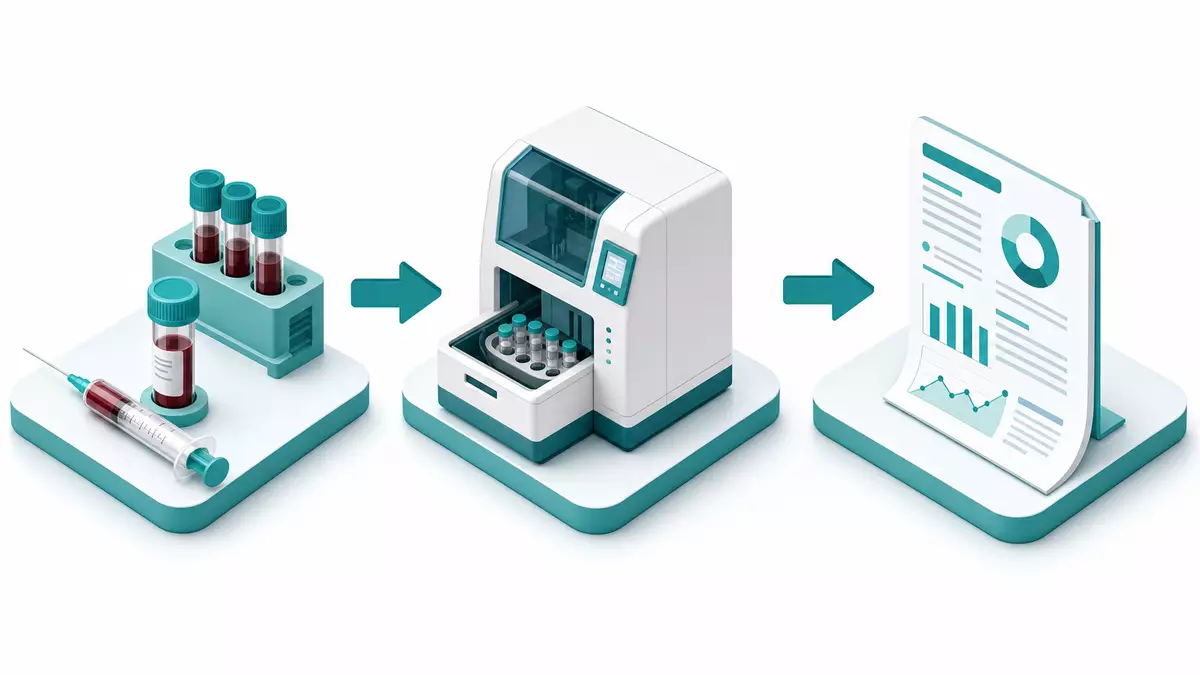
Abbott Laboratories stock trades steadily as diagnostics and medical devices underpin earnings momentum
Published on 07/21/2026 at 04:00 | Editorial responsibility: Rafael Müller, Editor-in-Chief AD HOC NEWS
Abbott Laboratories stock is backed by a diversified healthcare portfolio and a long record of profitability, with the Chicago based group (ISIN US0028241000) generating multi billion dollar revenue across diagnostics, medical devices, nutrition, and established pharmaceuticals in recent years. In its latest reported full fiscal year, Abbott Laboratories disclosed group revenue of roughly $40 billion, underscoring the scale of its operations and the depth of its global customer base. For investors, the combination of recurring demand for medical products and a consistent dividend policy has turned Abbott Laboratories into a widely followed large cap in the global healthcare sector.
Revenue growth supports Abbott Laboratories earnings
Abbott Laboratories has reported steady revenue expansion over several fiscal periods, with total annual sales reaching around $40 billion in its most recently available full year and marking a clear increase compared with earlier years in the prior decade. While segment level details vary, a significant portion of revenue is generated by diagnostics and medical devices, categories that benefit from population aging, chronic disease prevalence, and hospital investment in testing and treatment capacity. This recurring revenue base helps smooth fluctuations in individual product lines and provides the scale needed to fund continued research and development.
The company has historically delivered positive net income alongside its revenue growth, indicating that operations are not only large but also profitable. Over recent fiscal years, Abbott Laboratories has maintained multi billion dollar net earnings, with margins supported by a mix of higher value medical devices and established pharmaceutical products that can generate attractive pricing relative to manufacturing cost. Consistent profitability has allowed the group to keep investing in new technologies while also maintaining shareholder distributions.
Dividend history adds to Abbott Laboratories appeal
Abbott Laboratories has long been associated with regular dividend payments, and the companys most recent annual distribution has been in the range of more than one dollar per share over the past year. This shareholder return policy is a key part of its equity story and reflects confidence in the stability of cash flows from its global operations. Over multiple years, the group has repeatedly raised its dividend from earlier levels, creating a quantified comparison that underscores managements belief that earnings can sustain growing payouts over time.
This dividend progression stands out for income oriented investors, especially when combined with Abbott Laboratories status as a large and diversified healthcare issuer. Compared to its own historical levels a decade ago, the annual dividend is now materially higher, even as the company continues to reinvest substantial funds into product development and capacity expansion. The ability to balance reinvestment with increased distributions is one marker of a mature business model that has reached significant scale.
Diagnostics revenue up double digits
Within Abbott Laboratories operations, diagnostics has been a particular engine of growth, with segment revenue having increased at double digit rates over selected recent years compared with prior periods. In those years, diagnostics revenue rose by more than ten percent versus the previous year, a quantified comparison that reflects demand for immunoassay systems, hematology analyzers, molecular tests, and point of care devices across hospital and laboratory customers. This growth has been amplified by global investment in testing infrastructure and a heightened focus on disease surveillance.
Beyond headline growth, diagnostics carries strategic importance because it can generate recurring consumables revenue once instruments are installed. Laboratories purchasing Abbott platforms typically commit to ongoing reagent orders, creating a stream of consumable sales that adds visibility to future cash flows. For Abbott Laboratories stock, this kind of recurring revenue segment can be particularly relevant when investors assess the resilience of earnings across economic cycles and healthcare policy changes.
Medical devices provide structural demand
Abbott Laboratories medical devices portfolio includes cardiovascular systems, diabetes care products, neuromodulation technologies, and other tools used in clinical settings, contributing several billion dollars of revenue each year. Over recent periods, device revenue has grown at mid to high single digit rates compared with earlier years, delivering another quantified comparison that highlights demand for minimally invasive treatments and continuous monitoring. Devices such as structural heart implants and glucose monitoring systems fit into long term healthcare trends around chronic disease management and quality of life improvements.
Because devices often require regulatory approval and clinical data, high barriers to entry can protect Abbott Laboratories positions in key niches. These barriers support pricing and margins, which in turn help underpin overall group profitability. The combination of diagnostics and devices also diversifies earnings drivers, reducing reliance on any single product family and allowing Abbott Laboratories to adjust its portfolio as medical practice evolves.
Nutrition and established pharmaceuticals round out the portfolio
Abbott Laboratories also reports revenue from nutrition and established pharmaceutical products, categories that together add billions of dollars to the top line and contribute to cash flow stability. In recent years, nutrition products including infant formula and adult nutritional drinks have represented a substantial segment, with revenue having grown compared with earlier periods as demand rises in developed and emerging markets. Established pharmaceuticals, often branded generic medicines, provide an additional layer of revenue, particularly in international markets where Abbott has broad distribution.
These segments are not usually the fastest growing parts of the portfolio, but they play an important role in smoothing overall performance and providing diversified exposure to healthcare consumption. Incremental improvements in formulation, packaging, and distribution can still support modest growth, and their cash flow profile contributes to funding more R&D intensive areas such as advanced diagnostics and next generation devices.
Margin profile important for Abbott Laboratories stock
Investors in Abbott Laboratories stock pay close attention to operating margin, which reflects the balance between pricing, cost control, and product mix. In recent financial reporting, Abbott has achieved operating margins in the teens as a percentage of revenue, with variations depending on segment performance, currency movements, and supply chain dynamics. When higher margin devices and diagnostics grow faster than lower margin categories, overall margin can expand compared with prior years, offering a quantified comparison that underpins earnings growth.
Conversely, periods of heavy investment or cost pressure can compress margins, but Abbott Laboratories scale allows it to negotiate purchasing terms, optimize manufacturing, and streamline its portfolio. In aggregate, this margin management supports net income and the capacity to keep increasing the dividend while also funding strategic initiatives. For long term holders of Abbott Laboratories stock, margin trends are often a key indicator of whether the company is successfully translating revenue growth into shareholder value.
Balance sheet strength and cash generation
Abbott Laboratories balance sheet and cash generation capacity are further pillars that support its equity case. The company has reported multi billion dollar operating cash flow in recent years, with annual figures reaching well into the double digit billions on a gross basis. This strong cash generation is enabled by profitable operations and relatively capital efficient segments such as diagnostics, which do not require as much heavy manufacturing investment as some industrial sectors.
Debt levels are manageable relative to cash flow, with leverage ratios kept at moderate levels that allow room for acquisitions and strategic investments without overburdening the capital structure. Over selected years, Abbott Laboratories has repaid portions of its outstanding debt while also issuing new instruments to fund specific transactions, balancing the needs of growth and financial stability. The resulting balance sheet gives the company flexibility to respond to changes in healthcare regulation, competitive dynamics, and technological opportunities.
Research and development investment underpins the pipeline
Abbott Laboratories annually spends several billion dollars on research and development, with R&D as a percentage of sales consistently in the mid single digits. This investment profile has remained relatively steady over multiple years, providing a quantified comparison that shows managements commitment to innovation. Funds are allocated to diagnostics, devices, and other product categories where new technologies can either improve clinical outcomes or enhance usability for healthcare providers and patients.
R&D spending supports pipeline projects such as improved assay platforms, more accurate and user friendly glucose monitoring devices, and next generation cardiovascular implants designed to reduce complications and hospital stays. Successful launches from this pipeline can shift the revenue mix toward higher value products and strengthen Abbott Laboratories competitive positions. For investors, sustained R&D expense is a necessary cost of maintaining long term relevance in regulated medical markets.
Geographic diversification reduces risk concentration
Abbott Laboratories generates revenue across North America, Europe, Asia, Latin America, and other regions, with international markets collectively accounting for a substantial share of total sales. In recent years, non US revenue has comprised more than half of overall sales, providing a notable quantified comparison with historical domestic focus. This geographic diversification reduces exposure to single market reimbursement changes or economic cycles and allows growth to be driven by emerging middle class demand for healthcare services and products.
Regional performance can vary, with some years seeing faster growth in Asia Pacific, while in other periods Latin America or certain European countries contribute more strongly. Currency fluctuations and local regulatory developments add complexity, but Abbott Laboratories scale and experience help manage these factors. From an equity perspective, broad geographic reach is attractive because it adds multiple avenues for growth beyond the domestic US market.
Abbott Laboratories stock and sector positioning
Abbott Laboratories stock is often compared with other large healthcare issuers in the medical devices and diagnostics space, and its performance reflects both company specific factors and sector trends. While precise share price levels and market capitalization figures vary over time and by trading venue, Abbott is widely regarded as a large cap healthcare issuer within major equity indices and sector classifications. Over multi year periods, its total shareholder return including dividends has been influenced by revenue growth, margin trends, and valuation changes relative to peers.
The companys exposure to structural themes such as aging populations, rising chronic disease, and expanding healthcare infrastructure provides a long term demand backdrop. Diagnostic testing, minimally invasive interventions, and continuous monitoring are areas where secular growth drivers can support volume expansion even in mature markets. As a result, investors often evaluate Abbott Laboratories stock in the context of defensive growth, balancing resilience with upside potential tied to new product launches.
Representative product: continuous glucose monitoring
One representative product line for Abbott Laboratories is its continuous glucose monitoring technology, which provides near real time glucose readings for people living with diabetes and has become a flagship offering in the companys diabetes care franchise. Over recent years, revenue from continuous glucose monitoring devices and associated sensors has grown rapidly, delivering strong double digit increases compared with prior year figures and expanding the installed base of users. The product appeals because it reduces the need for traditional fingerstick testing and can integrate with digital tools for better disease management.
Continuous glucose monitoring sits at the intersection of medical devices and digital health, reflecting Abbott Laboratories strategy to enhance patient experience while providing clinically meaningful data. As adoption spreads across geographies and age groups, this product line has the potential to account for a growing share of overall device revenue, further diversifying the companys earnings. For Abbott Laboratories stock, continuous glucose monitoring represents a clear example of how innovation can translate into commercially important franchises.
Abbott Laboratories shares and investor perspective
Abbott Laboratories shares are listed on a major US exchange and trade in US dollars, giving international investors straightforward access to the company. Over multi year horizons, the share price has reflected underlying earnings trends, changes in valuation multiples, and broader market sentiment toward healthcare equities. While day to day trading can be influenced by macroeconomic news or sector rotation, long term holders typically focus on fundamentals such as revenue growth, margin development, cash generation, and dividend progression.
The balance of stable cash flows from diagnostics, devices, nutrition, and established pharmaceuticals, combined with ongoing R&D investment and product innovation, underpins the equity story. For investors considering Abbott Laboratories stock within diversified portfolios, the companys scale, geographic reach, and history of paying and raising dividends can offer an element of defensive growth exposure within the broader healthcare space.
Abbott Laboratories at a glance
- Company: Abbott Laboratories
- ISIN: US0028241000
- Ticker: NYSE: ABT
- Trading venue: NYSE
- Sector / Industry: Health Care / Medical Devices & Diagnostics
- Index membership: S&P 500
Disclaimer regarding our articles: No investment advice, no buy or sell recommendation. Information on prices, companies, and markets is provided without guarantee; changes are possible at any time. Stock market transactions can lead to substantial losses. Our articles are created and reviewed in whole or in part automatically with the support of AI.