Airbus Scores Across Fronts with A400M Upgrade, Helicopter Flurry and A350-1000ULR Debut, Yet Delivery Output Raises Questions
Published on 06/17/2026 at 18:33 | Redaktion boerse-global.de
Airbus has strung together an unusually broad run of developments this June, spanning a new drone-command capability for its A400M military transport, a flurry of helicopter orders from Europe and Canada, the maiden flight of Qantas’s ultra-long-range A350-1000, and a commercial milestone – the A320 family surpassing 20,000 cumulative orders. The shares have clawed back roughly 18% from their March low, but a persistent production gap continues to temper investor enthusiasm.
The most conspicuous strike in the defence arena came from Airbus Defence and Space, which inked a contract with European procurement agency OCCAR on behalf of France’s DGA to fit the A400M with a so-called Parallel Mission System (PMS). The upgrade turns the turboprop into a flying operations centre, embedding a tactical situational display, an optoelectronic sensor, and the ability to pilot drones and launch missiles directly from the cargo hold. Coordination with ground forces, helicopters and fighter jets is also part of the design. Installation on the first French A400M is scheduled for 2027, with flight tests following in 2028.
On the helicopter side, the flow of orders has been steady. On 15 June, European air ambulance specialist Avincis placed a firm commitment for up to 15 H145 light twins, to be deployed in Scandinavia, Italy and Spain primarily for emergency medical services and offshore transport. The same day, Avincis separately ordered 15 more rotorcraft from Leonardo, bringing its total fleet renewal to 30 machines. The H145 family now counts more than 1,800 units in service worldwide, having logged over 8.5 million flight hours. Elsewhere, Canada received its first H135 – designated CT-153 Juno for the Royal Canadian Air Force’s pilot training programme – just 18 months after the contract was signed, with further deliveries due by 2028. Germany, meanwhile, exercised a December 2025 option for 20 additional H145M light attack helicopters, bringing its total to 82, and a further defence package worth over €3 billion – potentially including 20 more combat helicopters – awaits a Bundestag decision expected in November 2026.
Should investors sell immediately? Or is it worth buying Airbus?
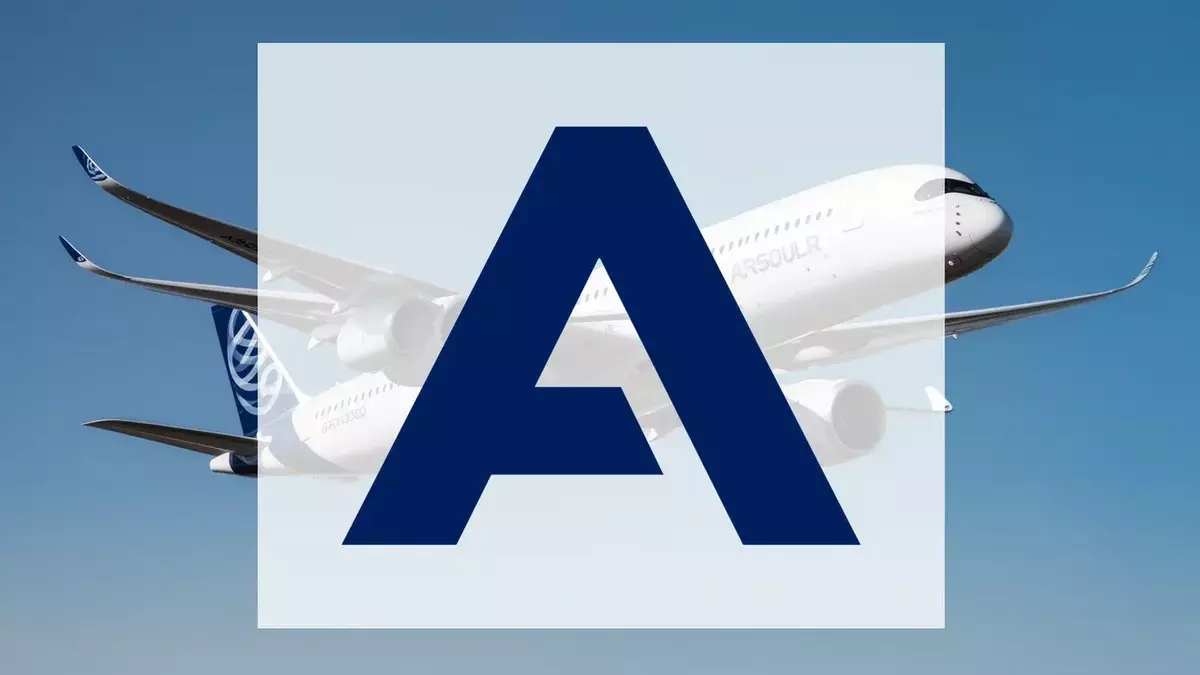
In the commercial realm, the A350-1000ULR programme logged a key milestone on 2 June, when the first example destined for Qantas completed its maiden flight from Toulouse, lasting three hours and 43 minutes and reaching an altitude of roughly 41,000 feet. A two-month test campaign of approximately 80 flight hours now follows, with delivery of the first aircraft targeted for April 2027 – later than originally planned due to supply chain bottlenecks. Airbus is also investing around €31 million in its Querétaro plant in Mexico, adding 262 jobs and expanding capacity to produce doors for the A320, A330 and A350 families as well as helicopter components. The facility is expected to support a production rate of 70 to 75 A320s per month by the end of 2027.
The order book continues to swell. By the end of May, the A320 family had crossed 20,000 cumulative orders, with the outstanding backlog for that single programme standing at roughly 7,500 aircraft. Across all commercial programmes, the total backlog reached 9,247 units, a net increase of 276 from April. Yet the delivery side tells a more cautious story. Through May, Airbus handed over 262 aircraft – more than Boeing over the same stretch – but only about 70% of those were actually produced in the month; the remainder came from inventory, signalling that production lines are not yet running smoothly enough to meet the full-year target of 870 deliveries without drawing down stock. For 2026, management is guiding for adjusted EBIT of around €7.5 billion and free cash flow of roughly €4.5 billion.
The company also used its presence at the VivaTech conference in Paris (17-20 June) to showcase an “invisible shield” concept blending artificial intelligence, connectivity and space technology to protect against physical and digital threats. Among the demonstrations was the Optimate system from Airbus UpNext, an automation tool designed to assist pilots during ground taxiing.
The shares have recovered from their 52-week low of €38.40 in March, closing Tuesday at €45.60 – a gain of 11.2% over the past month. But on a year-to-date basis the stock remains 6.9% in the red, trading roughly 17% below its January high of €55.00. Whether the recovery can be sustained will largely depend on how quickly Airbus stabilises its production machine. The next concrete checkpoint comes with the half?year results, typically due at the end of July.
Ad
Airbus Stock: New Analysis - 17 June
Fresh Airbus information released. What's the impact for investors? Our latest independent report examines recent figures and market trends.
Disclaimer regarding our articles: No investment advice, no buy or sell recommendation. Information on prices, companies, and markets is provided without guarantee; changes are possible at any time. Stock market transactions can lead to substantial losses. Our articles are created and reviewed in whole or in part automatically with the support of AI.