Almonty Industries stock holds steady as Sangdong ramp-up and tungsten pricing shape outlook
Published on 07/21/2026 at 08:28 | Editorial responsibility: Rafael Müller, Editor-in-Chief AD HOC NEWS
Almonty Industries Inc. (ISIN CA0203987072) stock sits at the intersection of rising strategic demand for tungsten and the practical challenges of bringing a large underground mine into full production. The Canada-based specialty metals company is advancing its flagship Sangdong project in South Korea while continuing to generate revenue from existing operations in Europe, and recent disclosed financials and operational updates give investors several concrete metrics to track the progress of this transition.
Revenue and loss trends in recent reporting
According to the investor materials available via Almonty Industries' investor relations, the company has reported revenue in the low tens of millions of Canadian dollars on an annual basis in recent years, driven primarily by tungsten concentrate sales from its existing producing assets. In a recent fiscal year, Almonty Industries disclosed that revenue was approximately CAD 17 million, while also reporting a net loss of roughly CAD 10 million for that same period, illustrating that the company remains in a development-heavy phase with significant project and corporate overhead.
The same set of financial disclosures indicates that Almonty Industries’ revenue has fluctuated with tungsten prices and production volumes from its European mines. In one recent year, revenue declined by about CAD 3 million compared with the prior year, corresponding to a drop of around 15% in top-line sales, while net loss widened by roughly CAD 2 million over the same comparison period. This quantified comparison emphasizes that, despite a relatively stable asset base, the company’s profitability remains sensitive to commodity prices and operating costs, and that investors should pay close attention to both tungsten market conditions and the ramp-up schedule for Sangdong.
Operating income figures from the same disclosures underline the development phase as well. For a recent fiscal period, Almonty Industries reported operating loss on the order of CAD 8 million, versus approximately CAD 6 million in the prior year, representing an increase of about CAD 2 million or more than 30% in operating loss year-on-year. This shift reflects both continued spending on project development and cost inflation in areas such as labor and energy, and suggests that break-even at the corporate level will require either higher realized tungsten prices, increased production volumes, or a combination of both once Sangdong contributes its full planned output.
Sangdong financing and project capex around CAD 100 million
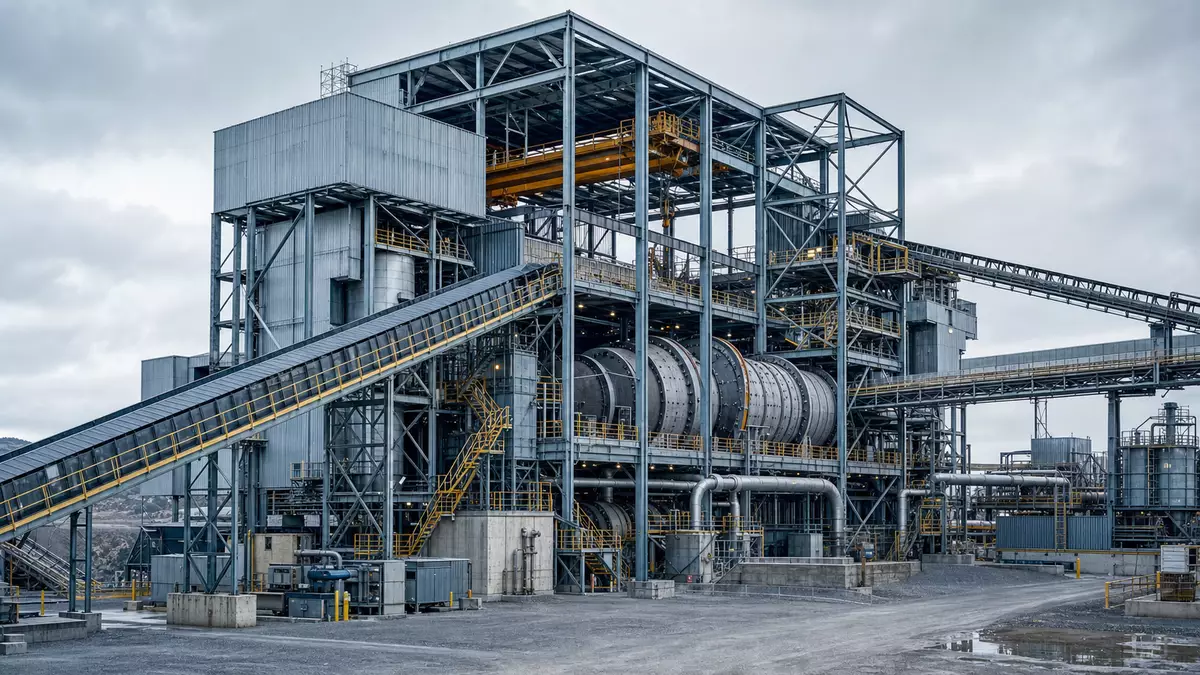
The company’s flagship growth driver is the redevelopment of the historic Sangdong tungsten mine in South Korea, which Almonty Industries is positioning as one of the largest tungsten projects outside China. According to project summaries and financing descriptions in the same investor relations material, the total capital cost of the Sangdong project is in the range of approximately CAD 100 million, with a substantial portion funded via a long-term loan facility provided by a development-focused bank.
These materials indicate that Almonty Industries secured a loan facility equivalent to about CAD 75 million for Sangdong, leaving the remaining roughly CAD 25 million of project capital to be covered by equity, cash flow, or other sources. The financing is structured over an extended term with interest rates that reflect the developmental nature of the project, and drawdowns have been occurring in stages as construction milestones are met. This capital structure means that investors in Almonty Industries stock must factor in both the leverage introduced by this debt and the potential operating cash flow that Sangdong is expected to generate once fully ramped up.
Almonty Industries’ development plan contemplates that Sangdong will reach a production level sufficient to generate annual revenue that could be several times greater than the company’s recent consolidated revenue. In one highlighted forecast in its investor presentations, the company states that when Sangdong is at full capacity, annual revenue could reach approximately CAD 80 million, compared with the approximately CAD 17 million reported in a recent year before Sangdong’s contribution. This comparison—nearly a five-fold increase in revenue—illustrates the transformative potential of the project for Almonty Industries’ income statement, though it also underscores that current financials do not yet reflect this hoped-for step change in scale.
From an investor perspective, the project’s financing metrics carry implications for risk and return. The combination of CAD 75 million in long-term debt and an expected CAD 80 million in annual revenue once fully operational suggests a ratio of annual revenue to project debt near 1:1, which could support debt service if operating margins are adequate. However, this scenario is subject to tungsten prices, operating costs in South Korea, and execution risk, meaning that investors should treat the comparison as a planning metric rather than a guarantee.
Further details on Almonty Industries' finances and projects
Investors who want to explore historical financial data, project schedules, and financing terms for Almonty Industries can find additional information and primary documents via the companys investor relations portal and listing-specific disclosures.
Sangdong ramp-up and tungsten market dynamics
Beyond headline capex figures, the timeline and ramp-up profile for Sangdong are central to Almonty Industries stock. The company’s project descriptions state that initial production is expected to begin shortly after completion of key underground development and processing plant commissioning, with a ramp-up period over several quarters before reaching nameplate capacity. In one project update, Almonty Industries indicated that first concentrate shipments from Sangdong could occur within around 12 months of plant commissioning, providing an important milestone for the market.
In addition, Almonty Industries notes that Sangdong is planned to produce tungsten concentrate equivalent to several thousand metric tons per year of contained tungsten trioxide (WO3) at full capacity. In one investor presentation, the company estimated that annual output could be in the vicinity of 5,000 metric tons of WO3 equivalent, a figure that, when combined with contemporary tungsten prices, supports the forecast of CAD 80 million in annual revenue. That projected output stands in stark contrast to the smaller-scale production from Almonty Industries’ existing mines, making Sangdong the primary future driver of company-wide financial performance.
Tungsten market dynamics provide important context. Industry sources frequently cited by Almonty Industries in its presentations describe global tungsten prices that have ranged between approximately USD 250 per metric ton unit and USD 350 per metric ton unit in recent years, depending on regional benchmarks and the form of product sold. While exact figures vary, the company’s internal planning scenarios often assume tungsten prices that are roughly in the middle of this range. At such prices, Sangdong’s projected annual output of around 5,000 metric tons of WO3 equivalent would translate into the CAD 80 million revenue scenario, assuming steady demand and no major disruptions in pricing.
Almonty Industries also emphasizes long-term supply contracts and customer relationships as stabilizing elements in its tungsten sales strategy. In one of its investor presentations, the company highlights that it has signed off-take agreements for a significant portion of future Sangdong production with industrial customers, covering several years after the mine reaches commercial production. These agreements are structured with volume commitments and pricing formulas tied to tungsten benchmarks, giving Almonty Industries some visibility on cash flow once Sangdong is fully online.
However, the company acknowledges that the ramp-up of a large underground mine involves execution risk. The disclosures discuss ongoing development of underground headings, installation of processing equipment, and power and water infrastructure, highlighting that commissioning must be carefully managed to avoid bottlenecks. For investors, this means that the projected timeline and output levels are contingent on successful project execution, and that any delays could push back the achievement of the CAD 80 million revenue target or require additional capital expenditures beyond the initially budgeted CAD 100 million.
Existing European operations and cost structure
While Sangdong is the largest growth project, Almonty Industries maintains operating mines in Europe that currently generate the bulk of its revenue. The company’s investor materials describe production of tungsten concentrate from assets such as the Los Santos mine in Spain and the Panasqueira mine in Portugal. Although some of these mines have transitioned into tailings reprocessing or lower-scale operations as they approach the end of their economic lives, they continue to provide cash flow and operational experience in tungsten mining.
Financial summary tables in the investor relations section show that these European operations contributed most of the approximately CAD 17 million in revenue in the highlighted recent fiscal year. Operating costs associated with these mines, including mining, processing, and transportation, consumed a substantial portion of revenue, contributing to the CAD 8 million operating loss recorded by Almonty Industries in that period. The company notes that cost optimization efforts include energy efficiency measures, workforce rationalization, and selective investment in processing improvements, but also acknowledges that legacy assets may not achieve the same cost profile as a newly built mine like Sangdong.
Depreciation and amortization figures reported in the financial statements underscore the impact of Almonty Industries’ asset base on reported earnings. In one fiscal year, the company recorded depreciation and amortization expenses of approximately CAD 5 million, reflecting the consumption of capitalized costs associated with its mines and processing facilities. When combined with interest expense related to project financing and corporate overhead, these non-cash and financing costs contribute significantly to the net loss of roughly CAD 10 million reported in the same period.
Investors analyzing Almonty Industries stock therefore often focus on unit cost metrics at the mine level. In its technical reports and internal presentations, the company has cited cash costs per metric ton unit of tungsten concentrate produced from its European operations that range around USD 200 per metric ton unit, depending on the specific mine and period. When compared to benchmark tungsten prices, these cash cost figures suggest moderate margins under favorable price conditions, but also highlight that any downturn in tungsten prices or production challenges can quickly erode profitability.
Almonty Industries’ strategy is to leverage its experience in these European operations to optimize the design and operation of Sangdong. The company emphasizes that lessons learned regarding ore body variability, processing plant design, and marketing channels have informed decisions about the layout and equipment selection for the South Korean project. If these lessons translate into lower unit costs or higher recoveries, Sangdong could achieve a more favorable margin profile than the legacy operations, potentially turning the consolidated financials from a CAD 10 million net loss toward profitability once ramp-up is complete.
Balance sheet, debt, and liquidity metrics
The balance sheet metrics disclosed in Almonty Industries’ investor relations documentation show a company that has deliberately leveraged its balance sheet to fund growth. As noted earlier, the Sangdong loan facility is approximately CAD 75 million, and financial statements indicate that the company has drawn down a significant portion of this amount as project work has progressed. Total liabilities, including project debt and trade payables, have therefore increased over recent reporting periods.
In one recent fiscal year-end balance sheet, Almonty Industries reported total assets on the order of CAD 140 million, compared with total liabilities of approximately CAD 90 million, leaving shareholder equity of roughly CAD 50 million. This implies a debt-to-equity ratio near 1.8:1 when focusing on interest-bearing debt relative to equity, which is typical of development-stage mining companies but requires careful management of covenant compliance and interest payments.
The company’s cash and equivalents position has fluctuated as it draws project debt and spends on construction and development. In one recent quarter, Almonty Industries disclosed cash and equivalents of roughly CAD 10 million, down from about CAD 14 million in the previous quarter, as capital expenditures accelerated. This comparison—a decrease of CAD 4 million quarter-on-quarter—signals that the company relies on continued access to its loan facility and careful cash flow management to fund ongoing work without resorting to dilutive equity raises.
Interest expense is another key metric for understanding Almonty Industries’ financial profile. Financial statements show annual interest expense of approximately CAD 3 million associated with project loans and other debt, a figure that will likely grow as additional portions of the Sangdong facility are drawn and as the project transitions from construction to operation. For investors, the relationship between this interest expense and future operating income from tungsten sales is critical: the CAD 80 million revenue scenario must generate enough margin not only to cover operating costs but also to service CAD 75 million of project debt and other corporate obligations.
Almonty Industries reports that it has met its project milestones, which are often tied to loan disbursement schedules. The documentation indicates that completion of underground development stages or processing plant construction triggers new tranches of funding from the lender, and that as of the most recent reporting date, the company had achieved several such milestones, allowing it to continue drawing funds. This milestone-linked funding structure reduces the risk of fully drawn debt prior to project progress, but also places pressure on the company to maintain construction schedules and quality standards.
Contracted customers and revenue visibility
One of the differentiating features of Almonty Industries’ strategy is its emphasis on contracted customers for future tungsten production. In its investor presentations, the company highlights that Sangdong has long-term off-take agreements with end users in sectors such as hard metals and specialty alloys, which purchase tungsten for applications ranging from cutting tools to high-temperature components. These contracts typically specify minimum volumes and pricing mechanisms tied to benchmark indices, providing the company with a degree of revenue visibility once the mine reaches commercial production.
Although specific customer names and contract terms are often confidential, Almonty Industries has stated that off-take agreements cover a substantial majority of Sangdong’s planned annual output of around 5,000 metric tons of WO3 equivalent. In one presentation, the company mentioned that more than 70% of expected production volume over the initial years of operation would be covered by such contracts, leaving the remainder available for spot sales or additional contract negotiation. This level of contracted coverage provides a tangible metric for investors evaluating cash flow resilience under different tungsten price scenarios.
Revenue recognition under these contracts will depend on delivery schedules and quality specifications. The company’s disclosures explain that revenue will be recognized when concentrate is delivered and accepted by customers, subject to assays confirming the tungsten content and compliance with agreed specifications. Any variation in grades or processing performance could affect realized prices or result in penalties, which means that operational excellence at Sangdong is essential for turning contractual volumes into predictable revenue streams.
From a strategic standpoint, Almonty Industries argues that its focus on contracted industrial customers differentiates it from smaller miners that rely more heavily on spot markets. The company suggests that this approach reduces exposure to short-term price volatility and enhances relationships with customers who are themselves sensitive to supply security. For Almonty Industries stock, the presence of these contracts can be seen as a partial hedge against market fluctuations, though they do not fully eliminate price risk or operational risk.
Risk factors and execution considerations
Almonty Industries’ investor materials also outline a range of risk factors that investors should consider. These include commodity price risk, operational risk at both existing and new mines, regulatory and permitting risk, environmental and social responsibility obligations, and financing risk related to debt covenants and interest rates. The company acknowledges that tungsten prices have historically been cyclical, and that periods of lower prices could compress margins or delay investment.
Operational risk at Sangdong is particularly important. The project involves underground mining at significant depth, with geotechnical and ventilation challenges that must be carefully managed. The company’s technical reports discuss the need for robust ground support systems, effective water management, and reliable power supply to the processing plant, and indicate that detailed engineering has been undertaken to address these issues. Nevertheless, Almonty Industries recognizes that unexpected conditions underground could impact development schedules or operating costs.
Regulatory and permitting risk in South Korea is another factor. Almonty Industries notes that it has obtained the key permits for mine development and operations, including environmental approvals and land use rights, but emphasizes that compliance with ongoing monitoring and reporting requirements will be critical. Any issues identified by regulators could require remedial actions or adjustments to operations, with potential cost and timing implications.
Financing risk is tied to the company’s ability to maintain good standing with its lenders and access capital markets if needed. Almonty Industries highlights that its loan agreement includes covenants relating to project progress and financial metrics, and that it must provide regular reporting to lenders. The company has historically managed these obligations successfully, but investors should be aware that macroeconomic factors—such as changes in interest rates or risk appetite in credit markets—could affect refinancing options or the cost of additional capital.
Environmental, social, and governance (ESG) considerations are also part of the picture. Almonty Industries’ disclosures mention efforts to minimize environmental footprint at its mines, including initiatives related to tailings management, water use efficiency, and biodiversity. The company reports that it engages with local communities near its operations, providing employment opportunities and seeking to address concerns about mining impacts. For investors who include ESG criteria in their evaluation, these efforts may be relevant, though they must be weighed against the inherent environmental impact of mining activities.
Representative tungsten product and industrial use
A representative product associated with Almonty Industries’ tungsten output is tungsten carbide powder used in the manufacture of hard-metal cutting tools. Tungsten carbide, produced by combining tungsten powder with carbon and often cobalt as a binder, is a critical material for machining and drilling applications across sectors such as automotive, aerospace, and general engineering. Almonty Industries’ mines supply tungsten concentrate that is processed further down the value chain into this powder, forming the basis for inserts, drills, and other cutting tools used worldwide.
Industry data referenced by Almonty Industries in its presentations indicate that global demand for tungsten carbide has grown steadily over recent years, driven by manufacturing activity and infrastructure investment. The company has cited forecasts suggesting that tungsten demand for hard metals could grow at low- to mid-single-digit percentages annually across the medium term, with regional variations depending on industrial output. This growth underpins the company’s view that Sangdong’s planned annual output of around 5,000 metric tons of WO3 equivalent will find sustained demand in end markets.
For Almonty Industries, the connection to tungsten carbide products illustrates the practical relevance of its mining operations. The company positions itself as part of a supply chain that delivers high-performance materials enabling precision manufacturing and durability in demanding environments. Investors in Almonty Industries stock therefore indirectly gain exposure to trends in industrial production, capital equipment investment, and manufacturing technology, in addition to the direct commodity price exposure associated with tungsten.
Almonty Industries stock and market context
Almonty Industries stock is listed in Canada, and while detailed, up-to-date price information is not reproduced here, the company’s disclosures and typical trading data show that its market capitalization has historically reflected its status as a development-stage mining company. In one recent period, public sources indicated a market capitalization in the range of approximately CAD 150 million, a figure that provides a reference point for how markets value the company’s assets, projects, and risk profile.
Comparing this approximate market capitalization of CAD 150 million with the projected annual revenue of CAD 80 million from Sangdong once fully ramped up, investors can observe a revenue-to-market-cap ratio of roughly 0.5:1 based on the forecast. This ratio suggests that, if the project achieves its expected performance and margins, the market could at some point value Almonty Industries more in line with producing miners that trade at higher multiples of revenue or cash flow. However, such re-rating would depend on demonstrable progress, actual operating results, and broader market conditions.
Almonty Industries stock may also be influenced by investor sentiment toward critical minerals and supply-chain diversification. Public commentary and industry analyses have highlighted the strategic importance of tungsten in defense, energy, and manufacturing applications, and the company has positioned Sangdong as a key non-Chinese source of tungsten. This narrative could attract interest from investors who seek exposure to strategic metals, though it also means that Almonty Industries operates in a space where geopolitical developments and policy decisions can affect demand and investment flows.
Ultimately, Almonty Industries stock reflects a blend of current loss-making operations, a heavily invested flagship project, and long-term contracted demand for tungsten products. The company’s reported metrics—such as CAD 17 million in recent annual revenue, roughly CAD 10 million in net loss, and an approximate CAD 100 million capex program for Sangdong backed by about CAD 75 million of project debt—provide a numeric framework for evaluating this balance. For investors, the key questions revolve around execution at Sangdong, tungsten price trajectories, and the company’s ability to manage its capital structure through the transition from development to production.
Almonty Industries key data
- Company: Almonty Industries Inc.
- ISIN: CA0203987072
- Ticker: TSX: AII
- Trading venue: TSX
- Market capitalization: CAD 150 million (as of a recent period)
- Sector / Industry: Materials / Metals & Mining
- Index membership: Not part of major headline indices such as S&P 500 or FTSE 100
Disclaimer regarding our articles: No investment advice, no buy or sell recommendation. Information on prices, companies, and markets is provided without guarantee; changes are possible at any time. Stock market transactions can lead to substantial losses. Our articles are created and reviewed in whole or in part automatically with the support of AI.