Almonty's Sangdong Progress Collides With a Wave of Post-Index Profit-Taking
Published on 07/09/2026 at 04:52 | Redaktion boerse-global.de
The tungsten producer Almonty Industries is delivering on every operational promise — the Sangdong mill in South Korea is now processing ore, the Plansee Group has locked in long-term offtake, and global tungsten prices have surged nearly tenfold since the start of 2025. Yet the stock closed Wednesday at CAD 20.37, a staggering 39% below its 52-week high of CAD 33.35 and almost nine percent lower than just a week ago. The disconnect between the company's fundamental milestones and the market's reaction is striking, but the forces driving the selloff are more mechanical than existential.
Much of the recent decline can be traced to the aftermath of Almonty's inclusion in the Russell 1000 and Russell 3000 indices at the end of June. Passive funds tracking those benchmarks had to buy shares ahead of the reconstitution, fueling a sharp run-up that subsequently unwound as active traders and momentum investors cashed in. This index-related profit-taking explains why a stock that has still gained 184.5% over the past twelve months — and roughly 69% since January — could suddenly shed more than a third of its value from the April peak. Routine equity grants to directors Daniel D'Amato, Gustave Perna and Mark Trachuk, made without any cash consideration and outside closed trading windows, added background noise but no fundamental dilution.
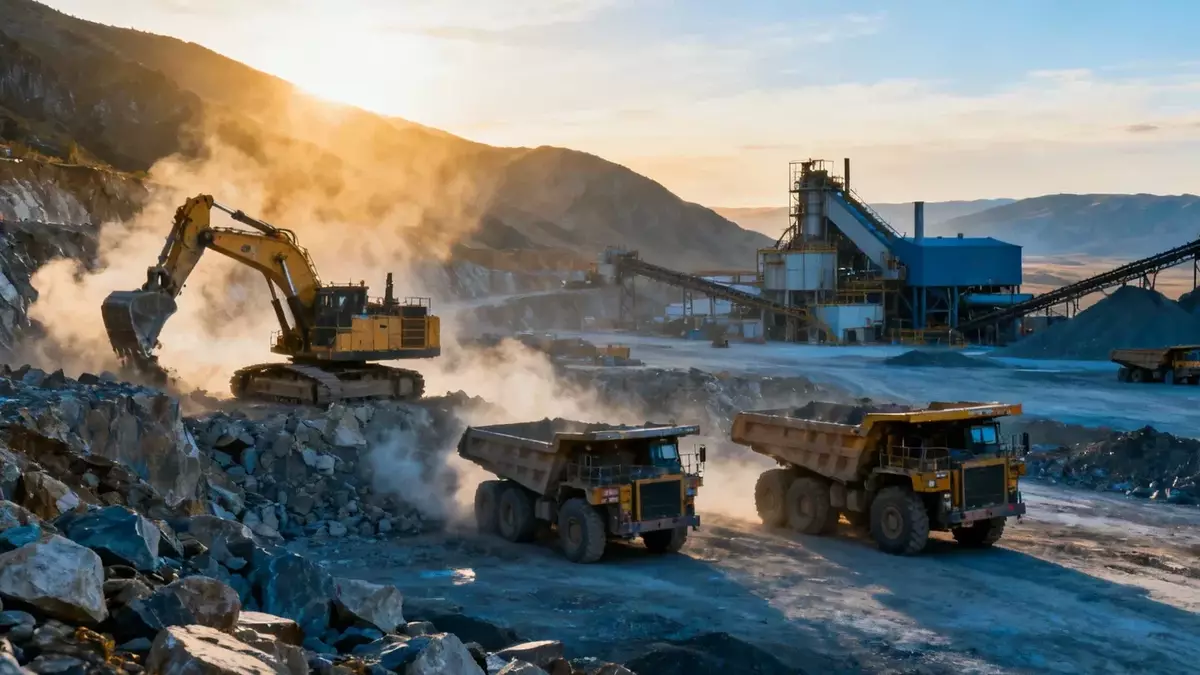
Operationally, the picture continues to brighten. On July 1, Almonty announced that the Sangdong mill had begun processing ore from a stockpile of nearly 140,000 tonnes, moving the project from the construction phase into commercial commissioning. The mine is widely regarded as the most important tungsten development outside China, and management expects it to eventually supply as much as 20% of the non-Chinese market. That ambition is backed by a strong strategic partner: Austria's Plansee Group, which holds close to 10% of Almonty and has secured the majority of Sangdong's future output under long-term contracts. Plansee's CEO Karlheinz Wex has described tungsten as a "life insurance policy for industry," a sentiment that resonates as China — once the world's dominant exporter — has flipped into a net importer, choking off supply to Western buyers.
Should investors sell immediately? Or is it worth buying Almonty?
The technical backdrop paints a mixed picture. With an annualized volatility of nearly 92%, Almonty shares remain susceptible to violent swings, and the current correction has pushed the relative strength index to 34.4, deep into oversold territory. Chart watchers are focused on the 200-day moving average at CAD 18.55; a decisive break below that level could open the door to further downside. For now, the stock is trading well below its short-term trendlines, but the oversold reading suggests that much of the post-index selling pressure may already be exhausted once the market fully digests the index rebalancing flows.
What the current price action obscures is that the Sangdong ramp-up is generating hard data, not just promises. The mill is now physically processing ore, the revenue pathway through Plansee is contractually secured, and the broader tungsten supply deficit — exacerbated by China's shift to net imports — provides a powerful tailwind for pricing. Short-term risks around the mill's production ramp and the stock's elevated volatility will keep traders on edge. But for investors willing to look past the noise of index mechanics and routine insider filings, the long-term equation remains as compelling as ever: a strategically vital mine beginning to deliver into a market that urgently needs new supply.
Ad
Almonty Stock: New Analysis - 9 July
Fresh Almonty information released. What's the impact for investors? Our latest independent report examines recent figures and market trends.
Disclaimer regarding our articles: No investment advice, no buy or sell recommendation. Information on prices, companies, and markets is provided without guarantee; changes are possible at any time. Stock market transactions can lead to substantial losses. Our articles are created and reviewed in whole or in part automatically with the support of AI.