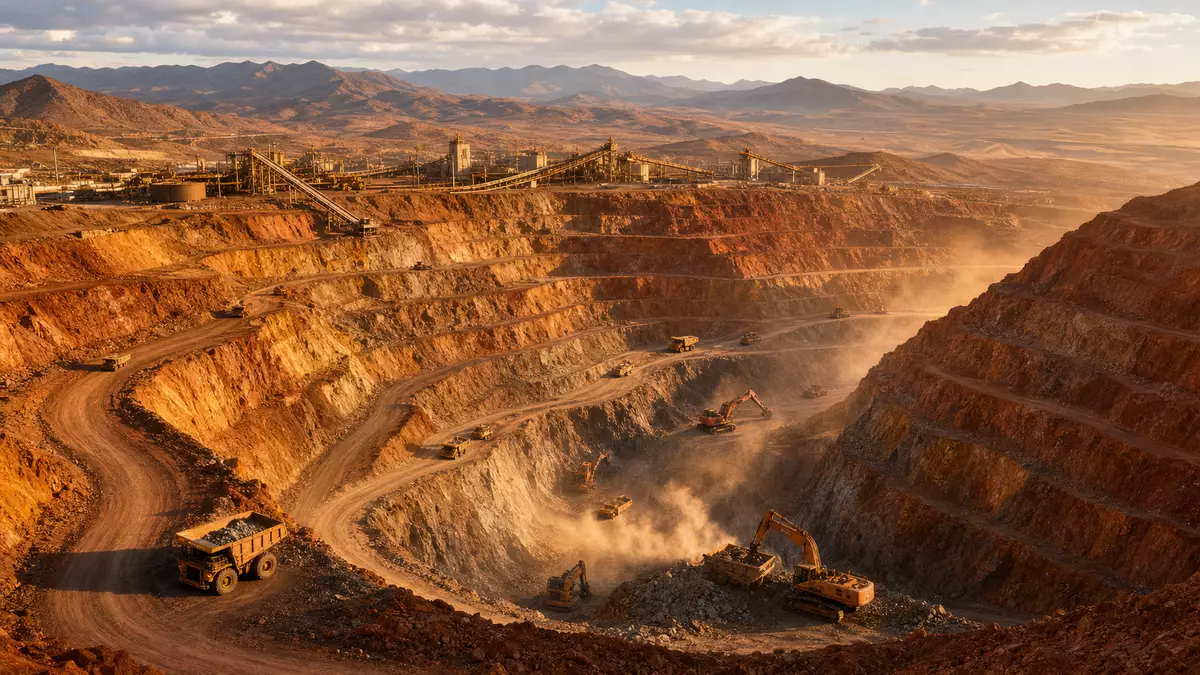
Anglo American stock trades steady as De Beers sale and copper growth reshape the mining portfolio
Published on 07/22/2026 at 15:42 | Editorial responsibility: Rafael Müller, Editor-in-Chief AD HOC NEWS
Anglo American stock sits in a complex transition phase as the London-based mining group (ISIN GB00B1XZS820) reshapes its portfolio around copper, fertilizer and iron ore while pursuing a divestment of its De Beers diamond business. The strategic moves follow a volatile earnings period in 2024 and come against the backdrop of takeover interest in the U.K. mining sector, leaving investors closely watching cash flow, capital spending and commodity exposure.
Copper and earnings drive 2024 numbers
Anglo American plc, listed on the London Stock Exchange, has increasingly highlighted copper and iron ore as core profit engines, while diamonds and some other assets are under review. In its recent reporting for fiscal 2024, the group disclosed multi-billion dollar revenue and earnings figures that show how sensitive cash generation remains to price swings in copper, platinum group metals and iron ore, as well as to operational stability in key regions such as Chile, Peru and South Africa.
Revenue for the year was spread across major divisions including iron ore, copper, coal, platinum group metals (PGMs) and diamonds. Copper output, in particular, has been a strategic focus, with Anglo American advancing projects such as Quellaveco in Peru and investments in Chilean operations. These projects have boosted copper volumes compared with earlier years, and have required substantial capital expenditure, reinforcing the importance of discipline in allocation and returns.
On the earnings side, Anglo American reported billions of dollars in underlying EBITDA and clear swings versus the previous year driven by commodity price changes, cost inflation and productivity trends. The underlying EBIT and net profit figures illustrate how margin compression in some segments has intersected with stronger contributions from copper and iron ore. This has fed into a narrative that the company’s long-term value will be determined by its ability to grow in metals critical for electrification while managing volatility and capital intensity.
Cost discipline and capital expenditure
Alongside top-line revenue metrics, Anglo American has reported large capital expenditure figures linked to its pipeline of growth and replacement projects. New copper capacity, improvements in iron ore operations and development of its crop nutrients project have demanded billions in capex, with planning intended to balance growth with free cash flow generation. This has led management to stress prioritization of projects with strong risk-adjusted returns, and to explore options such as asset sales or partnerships where appropriate.
Operating costs have remained a central factor in profitability, with the company facing inflationary pressures on energy, labor and logistics. Efficiency programs and technological upgrades aim to offset these pressures, including use of automation, digital tools and energy-saving initiatives at mines and processing facilities. The resulting unit cost trends, when set against commodity prices, influence both current margins and the company’s ability to withstand downturns in key markets.
Cash flow metrics, including operating cash flow and free cash flow, have fluctuated with earnings and investment requirements. Periods of stronger commodity prices and stable operations tend to yield higher cash generation, allowing for debt reduction and shareholder returns through dividends. Conversely, downturns and heavy capex cycles temporarily constrain free cash flow, underscoring the importance of a resilient balance sheet and flexible capital allocation framework.
Balance sheet, debt and dividends
Anglo American’s balance sheet reflects a mix of equity, long-term debt and provisions related to environmental obligations and closure costs. Total debt stands at several billion dollars, with maturities spread over multiple years. Interest costs are monitored carefully in light of global rate trends, particularly as central bank policies affect financing conditions and investor appetite for corporate debt. Maintaining investment-grade credit ratings is a stated priority, as it underpins access to capital and lowers borrowing costs.
Dividends remain a key feature of Anglo American’s investment case, with the board targeting distributions that reflect both earnings and broader financial strength. Payouts have varied according to profits and free cash flow, with periods of higher commodity prices allowing more generous dividends. In contrast, weaker markets or heavy investment phases can prompt more cautious payouts. This cyclicality is a common trait in diversified miners and requires shareholders to consider both short-term yield and long-term growth prospects.
Beyond dividends, Anglo American has occasionally employed other shareholder-return mechanisms such as buybacks when conditions permit, although these must be weighed against the demands of funding growth projects and maintaining a robust balance sheet. The tension between reinvestment and direct returns to shareholders is a recurring theme in discussions about capital allocation across the mining sector.
Portfolio reshaping and the De Beers sale
One of the most notable strategic moves in Anglo American’s recent history is its plan to exit the De Beers diamond business. Diamonds have historically been an important part of Anglo American’s portfolio, but the company has signaled a desire to focus more on future-facing metals like copper and on projects such as crop nutrients. A sale of De Beers would mark a significant shift in portfolio composition, reducing exposure to consumer-driven luxury demand and increasing concentration on industrial and infrastructure-linked commodities.
Finding a buyer for De Beers at a price that reflects its long heritage, brand value and operational assets is a complex task. Potential acquirers might consider synergies with existing luxury or gemstone businesses, while also weighing the cyclical nature of diamond demand and the capital intensity of mining operations. The outcome of a sale process would have implications for Anglo American’s balance sheet, with proceeds potentially used to reduce debt, fund growth or support shareholder returns.
From an investor perspective, the planned divestment raises questions about valuation, earnings diversification and risk profile. Removing De Beers could simplify Anglo American’s exposure and highlight its strengths in copper, iron ore and PGMs. However, it also strips away a segment that can perform well in certain consumer cycles. The eventual transaction structure and valuation will therefore be watched closely by markets, even if detailed terms and timing are not yet finalized.
Focus on copper and crop nutrients
Copper is central to Anglo American’s long-term strategy, given its role in electrification, renewable energy and the broader energy transition. The company’s investments in projects such as Quellaveco have expanded its copper footprint, positioning it to benefit from structural demand growth. At the same time, copper mining carries environmental and social responsibilities, which Anglo American addresses through ESG initiatives, community engagement and regulatory compliance.
The crop nutrients project, centered on producing fertilizer products from mineral resources, offers a different exposure, linked to agricultural productivity and food security rather than industrial demand. While still developing, this segment has been presented as a future source of revenue and earnings diversification. Its ramp-up will require continued capital investment, technical development and market-building efforts, adding another dimension to Anglo American’s growth story.
Balancing these future-facing segments with more traditional commodities such as iron ore and coal is an ongoing task. Decisions about portfolio mix must consider commodity price correlations, ESG considerations, policy trends and customer requirements. For example, coal exposure may bring both cash generation and heightened climate scrutiny, while iron ore remains essential for steel production but is also influenced by decarbonization strategies in the steel industry.
Market environment and peers
Anglo American operates in a competitive landscape that includes global miners such as BHP, Rio Tinto and Glencore. Each of these companies has its own mix of commodities, geographic exposure and strategic priorities. Comparisons of revenue scale, earnings margins, capital expenditure and balance-sheet strength often feature in analyst assessments of Anglo American’s relative positioning. Such peer benchmarks help investors gauge whether Anglo American’s portfolio reshaping and capital allocation choices are delivering comparable or superior value.
The broader market environment for mining stocks is shaped by macroeconomic factors including global growth, interest rates, currency movements and geopolitical developments. Commodity price cycles are influenced by Chinese demand, infrastructure spending in developed markets, and emerging technologies that alter consumption patterns. For copper and iron ore, trends in electric vehicles, grids and steel production are particularly important. Anglo American’s sensitivity to these forces depends on the share of its earnings tied to each commodity, and on its ability to manage costs and maintain operational reliability.
Regulatory frameworks and ESG pressures also play a growing role. Investors increasingly scrutinize carbon emissions, water usage, biodiversity impacts and community relations. Failure to meet expectations can affect both reputation and access to capital. Anglo American’s sustainability reports and ESG commitments are therefore integral to its long-run investment case, even if short-term share price moves remain more closely tied to commodity prices and financial metrics.
Operational risks and project execution
Operational risks in mining include safety incidents, equipment failures, geological challenges and labor disputes. Anglo American’s ability to maintain safety standards and minimize disruptions is essential for sustaining production, protecting employees and preserving its social license to operate. The company reports safety and incident statistics in its annual and sustainability disclosures, illustrating both progress and areas requiring continued focus.
Project execution risks are equally important, particularly for large-scale developments such as new copper mines or fertilizer projects. Cost overruns, delays or technical setbacks can erode returns and strain the balance sheet. Anglo American’s track record in delivering projects on time and within budget influences investor confidence in its growth plans. Transparent reporting on milestones, budgets and risk management helps stakeholders assess execution quality.
Environmental and social risks intersect with operations and projects, as regulations evolve and community expectations rise. Anglo American invests in community engagement, environmental protection measures and remediation plans to address these concerns. Failure to manage such risks can lead to permitting issues, legal challenges or reputational damage, all of which carry financial implications.
Governance and management priorities
Corporate governance at Anglo American includes oversight by a board of directors that evaluates strategy, risk and performance. Management priorities have recently centered on simplifying the portfolio, strengthening the balance sheet, and positioning the company for long-term demand in metals key to electrification and food production. These priorities drive decisions about asset sales, capital expenditure and organizational structure.
Executive compensation is structured to align with shareholder interests, incorporating financial metrics, safety performance and ESG indicators. This linkage aims to encourage behavior that enhances long-term value rather than focusing solely on short-term share price. Shareholder meetings and governance disclosures provide insight into how these incentives and oversight mechanisms function in practice.
Stakeholder engagement extends beyond shareholders to include employees, suppliers, customers and communities. Anglo American’s reports highlight efforts to foster inclusive workplaces, support local economies and contribute to social development. These activities may not directly appear in financial statements but can influence operational stability and brand perception, indirectly affecting valuation.
Anglo American stock valuation considerations
Valuing Anglo American stock involves weighing current earnings, cash flow and balance-sheet metrics against expectations for future commodity prices and project outcomes. Traditional valuation approaches include price-to-earnings ratios, EV/EBITDA multiples and discounted cash flow models. These must be adjusted for the cyclicality inherent in mining, and for the timing of major projects such as new copper mines or fertilizer plants.
Analyst opinions vary, reflecting differing views on commodity cycles, risk tolerance and preferred portfolio compositions. Some may emphasize the potential upside from copper and crop nutrients, while others focus on exposure to coal or operational risks. Consensus estimates for revenue, EBITDA and earnings provide benchmarks, but are subject to frequent revision as market conditions evolve.
Anglo American’s share price also incorporates market sentiment about corporate events such as the proposed De Beers sale or potential takeover interest. Rumors and news flow can drive short-term volatility, even when underlying fundamentals change more gradually. Long-term shareholders must distinguish between noise and signal, assessing whether strategic decisions are likely to enhance value over multi-year horizons.
Representative product: De Beers diamonds
Within Anglo American’s portfolio, De Beers has long been a flagship brand in diamonds, encompassing mining operations, sales channels and marketing. The business distributes rough diamonds to cutting and polishing centers, and supports downstream activities through partnerships and branding initiatives. Revenue in this segment depends on global jewelry demand, consumer confidence and trends in luxury spending.
As Anglo American explores a sale of De Beers, the diamond unit serves as a representative product area that illustrates both historical legacy and evolving strategy. The eventual buyer will inherit a well-known brand and a network of operations, but also the cyclical risks of gemstone markets. For Anglo American, the divestment would free capital and management attention for metals and fertilizers, aligning more closely with its stated long-term focus.
Anglo American stock and London listing
Anglo American stock is primarily traded on the London Stock Exchange, where it forms part of major U.K. equity indices. The LSE listing provides liquidity for global investors and situates the company alongside other large diversified miners. Daily trading volumes reflect both institutional and retail participation, and are influenced by commodity price moves, earnings announcements and sector news.
Index inclusion, such as membership in the FTSE 100, connects Anglo American stock to passive investment flows and benchmark-driven strategies. When index weights shift or rebalancing occurs, short-term volume and price impacts can arise even without company-specific news. Over longer periods, however, performance is driven mainly by fundamentals, strategic decisions and macroeconomic trends that affect demand for the commodities Anglo American produces.
Anglo American at a glance
- Company: Anglo American plc
- ISIN: GB00B1XZS820
- Ticker: LSE: AAL
- Trading venue: London Stock Exchange
- Sector / Industry: Materials / Diversified Mining
- Index membership: FTSE 100
Disclaimer regarding our articles: No investment advice, no buy or sell recommendation. Information on prices, companies, and markets is provided without guarantee; changes are possible at any time. Stock market transactions can lead to substantial losses. Our articles are created and reviewed in whole or in part automatically with the support of AI.