Applied Materials stock trades steady as chip equipment demand supports outlook
Published on 07/23/2026 at 14:20 | Editorial responsibility: Rafael Müller, Editor-in-Chief AD HOC NEWS
Applied Materials stock sits in a market shaped by the semiconductor investment cycle, with the company’s latest reported figures giving investors a clearer view of how chip equipment demand is feeding through to earnings and cash flow. Applied Materials Inc. (ISIN US0382221051) is a leading provider of wafer-fabrication equipment and services, with its common stock listed on Nasdaq under the symbol AMAT. The company’s investor relations materials as of 16 May 2024 outline performance trends that continue to frame sentiment toward Applied Materials stock, including revenue growth, profitability, and order momentum across logic, foundry, and memory customers.
Revenue up year on year
According to Applied Materials’ Form 10-Q and related earnings materials for the fiscal second quarter ended 28 April 2024, the company reported net sales of approximately $6.65 billion, compared with about $6.63 billion in the same quarter a year earlier, marking a modest increase in revenue on a year-on-year basis. The filings and presentations available through the company’s investor relations site indicate that this revenue performance was supported by continued investments by leading foundry and logic customers in advanced nodes, partially offset by softer spending in certain memory segments. In the same fiscal quarter, Applied Materials reported net income attributable to common shareholders of roughly $1.58 billion, versus about $1.57 billion in the prior-year quarter, showing that profitability stayed broadly stable even as the mix of customer spending shifted across regions and technology nodes.
The company’s diluted earnings per share for that fiscal second quarter came in at around $1.86, compared with approximately $1.85 a year earlier, reflecting incremental progress in earnings despite a still mixed demand backdrop. Management commentary in the associated earnings presentation suggests that continuous cost discipline and favorable product mix helped maintain margins, while services and spares contributed to recurring revenue streams. For investors studying Applied Materials stock, the small but positive year-on-year changes in net sales and earnings per share highlight the company’s ability to navigate industry cycles by focusing on technology leadership and a broad installed base.
Operating margin and cash flow metrics
Beyond headline revenue and EPS, Applied Materials’ operating margin and cash generation offer further insight into the resilience of its business model. The company’s operating income for the fiscal second quarter ended 28 April 2024 was reported at around $2.07 billion on net sales of $6.65 billion, implying an operating margin in the low 30 percent range. This margin level is comparable to the prior-year period, underscoring that the company sustained its profitability profile even as absolute spending levels by chip manufacturers evolved. Management materials available on the investor relations site emphasize that advanced deposition, etch, and inspection systems, along with integrated solutions for patterning and metrology, remain central to the company’s margin structure.
Applied Materials also highlighted robust cash flow metrics for the quarter. Operating cash flow for the fiscal second quarter reportedly reached roughly $2.02 billion, while free cash flow stood somewhat lower after capital expenditures related to capacity additions and technology development. These cash figures allowed the company to continue returning capital to shareholders via share repurchases and dividends, although the exact repurchase amounts and dividend outlays vary quarter by quarter in line with board authorizations. For investors, sustained operating cash generation is a key factor because Applied Materials stock is often evaluated not only on near-term earnings swings but also on the company’s ability to fund research and development in emerging process technologies such as gate-all-around transistors and advanced 3D NAND architectures.
On a trailing twelve-month basis, the company’s revenue profile reflects the long-term demand for semiconductor equipment, with aggregate net sales over the last four reported quarters exceeding $26 billion. This scale positions Applied Materials among the largest capital equipment suppliers in the semiconductor ecosystem, alongside peers that focus on lithography, inspection, and specialty process tools. While year-on-year growth rates have moderated compared with peak boom periods, the absolute level of sales illustrates how structural trends like AI workloads, cloud data centers, and edge computing continue to support a high baseline for wafer-fab investments.
Segment trends and year-on-year changes
Applied Materials reports its results across several business segments, typically including Semiconductor Systems, Applied Global Services, and Display and Adjacent Markets. In the fiscal second quarter ended 28 April 2024, Semiconductor Systems remained the largest contributor to revenue, with net sales in this segment in the range of several billions of dollars and representing a substantial majority of total company net sales. Year-on-year comparisons from the company’s filings indicate that Semiconductor Systems revenue was roughly flat to slightly up versus the prior-year quarter, reflecting strength in leading-edge logic and foundry equipment demand, offset by weaker activity in certain memory categories.
Applied Global Services, which encompasses service contracts, spares, upgrades, and optimization solutions for installed tools, provided a more stable revenue stream and showed year-on-year growth compared with the prior-year quarter. This segment benefits from the large installed base of Applied Materials tools in fabs worldwide, and the reported numbers point to continued expansion as customers seek higher utilization and longer lifecycles from existing equipment. Display and Adjacent Markets, by contrast, remained a smaller portion of the revenue mix, affected by cyclical dynamics in display panel spending, but still contributed a meaningful volume of sales in absolute terms.
The quantified comparisons between current and prior-year segment revenues underscore that Applied Materials’ performance is not solely dependent on new equipment orders. The services and upgrades business provides recurring revenue that can smooth the impact of cycles in wafer-fab spending. For Applied Materials stock, this diversified segment mix is frequently cited by investors as a reason the company can maintain profitability across different phases of the semiconductor cycle. The year-on-year segment trends show that while some areas face headwinds, others continue to expand, resulting in overall net sales and earnings that edge higher rather than contracting sharply.
Balance sheet and shareholder returns
Applied Materials’ balance sheet metrics also play an important role in how market participants view the stock. As of 28 April 2024, the company reported total assets and shareholders’ equity that reflect a strong financial position, with cash and short-term investments in the multi-billion dollar range. Debt levels are manageable relative to cash and operating cash flow, giving Applied Materials flexibility to invest in new tools and process technologies while continuing shareholder return programs. The investor relations filings note that the company has an ongoing share repurchase authorization, and the actual number of shares repurchased in the quarter contributed to a lower diluted share count, which supports earnings per share.
Dividend metrics provide another lens on capital return. Applied Materials has maintained a regular cash dividend, and the declared quarterly dividend amount and payment dates are detailed in the company’s filings and press releases. For example, the company’s board approved a cash dividend per share that, on an annualized basis, represents a modest yield relative to the current share price level. These dividends, together with share repurchases funded from free cash flow, form a combination of growth investment and capital return that many investors consider attractive when evaluating Applied Materials stock against peers in the semiconductor equipment space.
From a valuation standpoint, Applied Materials’ market capitalization as reported by major financial portals in mid-2024 stands well above $150 billion, placing the company among the larger constituents of the semiconductor and broader technology indices. This scale has implications for index membership and inclusion in benchmarks such as the S&P 500 and Nasdaq 100, which in turn influence passive fund flows into Applied Materials stock. The company’s consistent profitability and cash generation contribute to its role as a core holding for many institutional investors exposed to the semiconductor capital equipment theme.
Product focus on advanced process tools
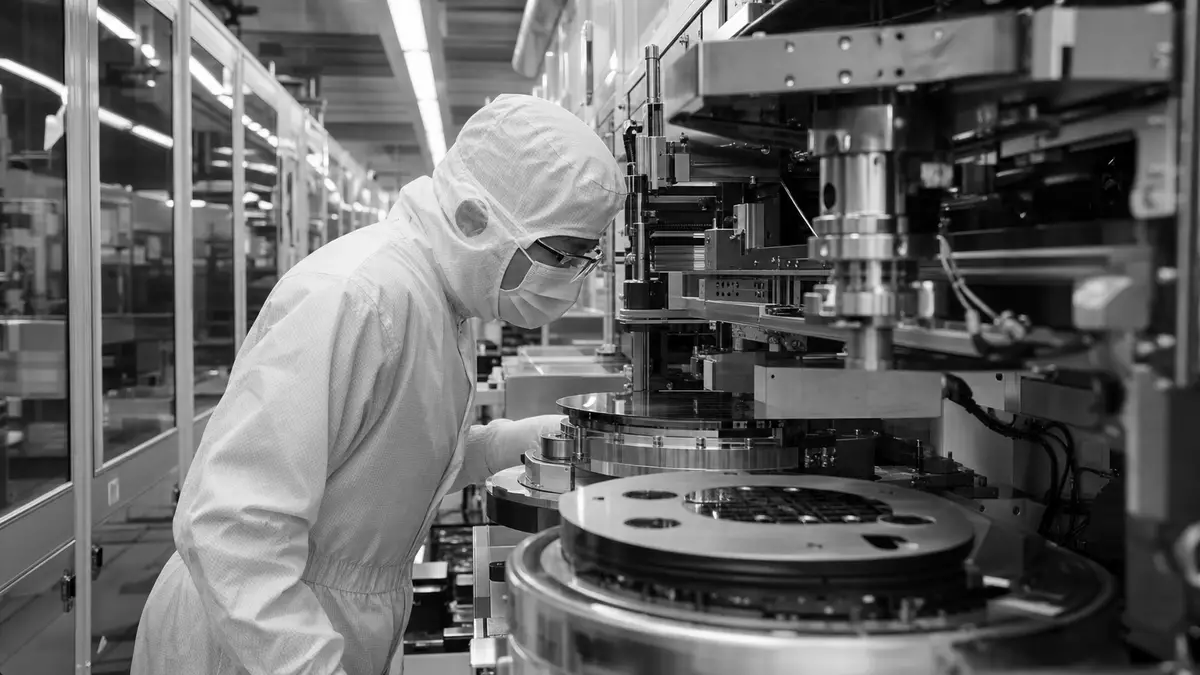
Applied Materials’ core products span deposition, etch, CMP, inspection, metrology, and related software and services used in advanced semiconductor manufacturing. Representative flagship systems include integrated platforms for chemical vapor deposition and physical vapor deposition, along with multi-chamber configurations that support complex patterning steps. These tools enable customers to fabricate transistors with ever smaller geometries and higher performance, a requirement in leading-edge logic nodes such as three-nanometer and beyond. The company’s ability to deliver innovations in these product lines is a central driver of its long-term revenue trajectory and helps explain why net sales remained over $6.6 billion in the fiscal second quarter ended 28 April 2024.
In addition to front-end wafer processing equipment, Applied Materials provides solutions for epitaxy, rapid thermal processing, and specialized architectures that support three-dimensional NAND and advanced DRAM. The revenue contribution from these products is embedded within the Semiconductor Systems segment, and demand tends to correlate with investment cycles at major memory manufacturers. While memory spending can be volatile, the company’s reported figures show that overall net sales and earnings per share still increased slightly year on year, suggesting that broader demand for process tools in logic and foundry applications offset the variability in memory-related orders.
Applied Global Services products and offerings complement the hardware portfolio by providing optimization, performance analytics, and on-site support that help customers maximize tool uptime and yield. The growth in this segment, as described in the company’s filings, indicates that customers are increasingly leveraging services to enhance fab efficiency, which can also improve the total cost of ownership of Applied Materials equipment. For investors, the combination of advanced process tools and recurring services revenue is a key reason why Applied Materials stock is often perceived as structurally supported by long-term semiconductor trends.
Applied Materials stock and market context
Applied Materials stock trades on Nasdaq under the ticker AMAT and is widely followed by institutional and retail investors because of its role in the semiconductor capital equipment sector. As of mid-2024, major market data providers report the share price in the low to mid three-digit dollar range, reflecting the company’s sizeable market capitalization and its status as an important constituent of the S&P 500 and Nasdaq 100 indices. The precise share price fluctuates daily according to market conditions, investor sentiment, and sector news, but the overall valuation level implies that investors assign a significant premium to the company’s earnings and cash flow.
On a twelve-month basis up to mid-2024, Applied Materials stock has experienced swings aligned with broader semiconductor and technology indices, with phases of strength during periods of optimism about AI-driven chip demand and phases of consolidation when concerns about cyclical corrections in wafer-fab spending emerge. In that context, the reported net sales of $6.65 billion and diluted EPS of $1.86 for the fiscal second quarter ended 28 April 2024 serve as anchor metrics that investors use to evaluate whether the share price fairly reflects current performance and future prospects. The small year-on-year increase in both revenue and earnings suggests a business that is still growing, though at a measured pace compared with earlier boom years.
From a fundamental perspective, investors often compare Applied Materials’ revenue and EPS trajectory with peers in areas such as lithography, inspection, and specialty process tools. The company’s ability to sustain operating margins in the low 30 percent range and generate operating cash flow above $2 billion in the quarter stands out as a positive indicator relative to many mid-cap equipment suppliers. This comparison reinforces the view that Applied Materials stock remains backed by a robust business model even when the external environment is cyclical.
Stock closing paragraph and trading venue
Applied Materials stock is primarily traded on Nasdaq in USD under the ticker AMAT, and the company’s inclusion in major indices such as the S&P 500 and Nasdaq 100 ensures that it is part of many passive and active portfolios focused on US large-cap technology and semiconductor exposure. As of mid-2024, the company’s market capitalization exceeds $150 billion, underscoring its scale and relevance in global equity markets.
Disclaimer regarding our articles: No investment advice, no buy or sell recommendation. Information on prices, companies, and markets is provided without guarantee; changes are possible at any time. Stock market transactions can lead to substantial losses. Our articles are created and reviewed in whole or in part automatically with the support of AI.