
ASML stock steadies as investors weigh cyclical demand and AI-driven lithography orders
Published on 07/18/2026 at 04:12 | Editorial responsibility: Rafael Müller, Editor-in-Chief AD HOC NEWS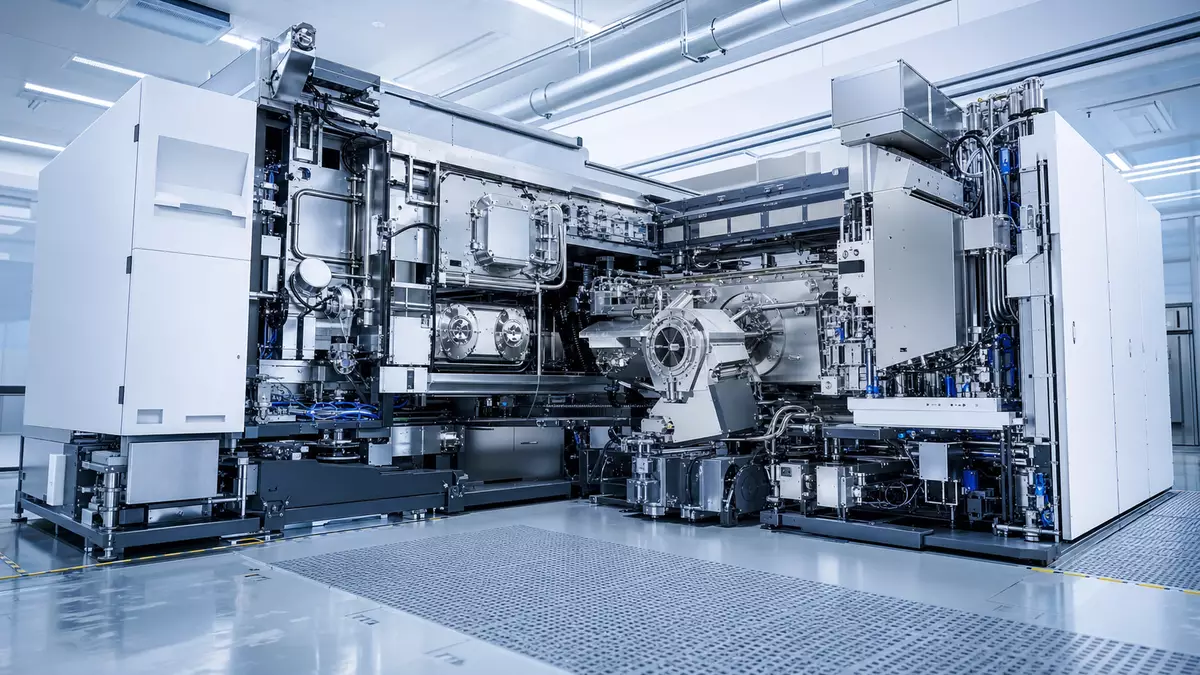
ASML stock, backed by ASML Holding N.V. (ISIN NL0010273215), sits at the heart of the global semiconductor equipment cycle, with investors watching how a slower near-term chip environment intersects with an expected demand upturn for advanced AI-capable lithography capacity into 2026 and 2027. As of mid-July 2026, the company remains one of the largest semiconductor equipment makers globally by market value, with a market capitalization in the hundreds of billions of euros according to major market-data portals, and its valuation reflects both the current cyclical pause in orders and expectations for a renewed wave of investments in leading-edge process nodes over the next several years.
Revenue growth and cyclical normalization
According to ASML's own investor materials for recent fiscal years, the company reported annual net sales on the order of several tens of billions of euros, illustrating how it has scaled from a niche lithography specialist into one of the semiconductor industry's largest capital-equipment suppliers. In its recent reporting, ASML has highlighted that demand for systems serving leading-edge nodes such as 5 nanometer and 3 nanometer, particularly in logic and foundry segments, has helped support revenue even as broader semiconductor markets passed through an inventory-correction phase, and the company has emphasized that it sees the current cycle as a pause rather than a downturn in the long-term growth trajectory of semiconductor demand.
In the last few reporting periods, ASML has communicated that year-on-year revenue growth has moderated from the exceptional expansion seen during the pandemic-driven chip boom, when fabs raced to add capacity for PCs, servers, and consumer electronics. The company has indicated in its outlook commentary that while bookings for some mature-node and memory systems have softened compared with peak levels, its order book remains underpinned by structural demand for EUV (extreme ultraviolet) and advanced DUV (deep ultraviolet) tools, which are essential for the most advanced process nodes used in high-performance computing and AI accelerators. This mix shift means that absolute revenue may be flatter in the near term than the double-digit growth rates of recent years, but the profitability profile remains supported by the higher value and margin profile of leading-edge systems.
ASML has also repeatedly pointed to the geographic diversification of its customer base as a stabilizing factor. A significant share of its net sales comes from major foundry and logic manufacturers in Asia and the United States, and the company has described how increased regionalization of semiconductor supply chains is encouraging more leading-edge fab projects, particularly in Europe and North America. For investors, this combination of cyclical normalization at the industry level and continued structural demand for ASML's most advanced tools is central to understanding why revenue growth has cooled from its recent peaks without collapsing, and why the market continues to assign a premium multiple to ASML stock overall.
Margins, cash flow, and capital return
On the profitability side, ASML has historically reported robust gross margins and solid operating margins, underpinned by its near-monopoly position in EUV lithography systems and its strong technology moat. The company has emphasized in its financial communications that it aims to maintain or improve these margins over time through a combination of pricing, product-mix management, and continued productivity improvements in both EUV and DUV platforms. This margin profile has translated into substantial free cash flow, which in turn supports both significant research and development investments and shareholder returns via dividends and share buybacks.
Over recent fiscal years, ASML has increased its dividend per share in line with its long-term growth in earnings and cash flow, positioning itself as both a growth company and a returning-capital story. The company has communicated a policy of progressive dividends, meaning that it aims to grow the dividend over time in line with long-term business expansion, rather than targeting a fixed payout ratio that could lead to volatility in distributions. Alongside dividends, ASML has executed share repurchase programs that reduce the share count and support earnings per share metrics, a combination that has been welcomed by many long-term institutional investors.
At the same time, ASML has continued to deploy significant capital expenditures into manufacturing capacity, supply-chain resiliency, and technology platforms such as High-NA EUV. The company has described how it is balancing capital return with the need to ensure that its production footprint, spare-parts logistics, and service organizations can support an installed base that has grown to encompass thousands of systems worldwide. For investors considering ASML stock, this balance between reinvestment in the business and direct returns to shareholders is a key element in assessing the sustainability of both growth and cash distributions across the cycle.
More on ASML investor metrics
Historical figures for revenue, margins, cash flow, and dividends, as well as detailed risk disclosures, are available directly from the companys investor relations materials.
EUV, High-NA, and AI-related demand
A central pillar of the ASML investment case is the role its EUV and forthcoming High-NA EUV systems play in enabling the most advanced semiconductor nodes, which in turn underpin AI accelerators, high-performance CPUs and GPUs, and cutting-edge mobile processors. EUV systems allow chipmakers to pattern extremely fine features with fewer process steps than would be required with older lithography methods, improving both performance scaling and cost efficiency at the leading edge. ASML has communicated significant multi-year order commitments from major foundry and logic customers for these systems, even as some near-term orders are rescheduled to align with fab construction timelines and macroeconomic conditions.
The new High-NA EUV platform, designed to offer higher numerical aperture and therefore higher resolution, is expected to be deployed for nodes beyond current 3-nanometer-class processes. ASML has described High-NA EUV as a key enabler for future logic and memory nodes that will be required to meet the enormous computational and bandwidth demands associated with AI training, inference, and data center workloads. These systems are both technologically complex and extremely expensive, which has implications for ASMLs revenue mix: each High-NA EUV system carries a much higher selling price than even current EUV tools, so a relatively small number of shipments can meaningfully influence quarterly and annual net sales.
In the AI context, ASML has underlined that demand for leading-edge capacity is being driven not only by traditional mobile and PC markets but increasingly by hyperscale cloud providers, AI model developers, and advanced networking infrastructure. As these end customers sign long-term agreements with foundries for AI-capable capacity, foundries in turn commit to multi-year lithography tool roadmaps with ASML. For investors, this AI-driven tailwind helps offset concerns about shorter-term cyclical corrections in other segments, such as consumer-oriented logic and certain memory products, and supports the thesis that ASMLs order book has a structural floor even when some categories of chips move through inventory adjustments.
Geopolitics, export controls, and regionalization
Geopolitics and export controls play a significant role in ASMLs operating environment. Various governments have imposed and adjusted export restrictions on advanced lithography tools to certain destinations over recent years, particularly for the most advanced EUV systems and some high-end DUV systems. ASML has explained that it complies fully with all applicable regulations and export-licensing regimes, and that it works with authorities to understand how rule changes affect its ability to ship tools to specific customers and regions.
At the same time, the global push for semiconductor supply-chain resilience has encouraged new fab projects in regions including Europe, North America, and parts of Asia outside traditional hubs. These policies, often supported by government incentives, are intended to reduce dependence on single-country manufacturing and to secure local capacity for critical applications. For ASML, this regionalization creates a more geographically diverse base of leading-edge customers, even as export rules constrain certain shipments. The company has indicated that while export controls can influence the timing and destination of orders, the underlying global demand for computation and data is still expected to require ongoing investments in advanced lithography capacity over the long term.
Investors in ASML stock therefore pay close attention to regulatory developments and policy announcements related to semiconductor subsidies, export rules, and technology alliances. Changes in these areas can affect where ASMLs systems are deployed, how quickly certain markets grow, and what mix of products is most in demand, but they also provide visibility into multi-year capital spending plans as new fabs are publicly announced and supported by long-term government frameworks.
Immersion and dry DUV platforms
While EUV and High-NA systems garner much of the market attention, ASML continues to derive significant revenue from immersion and dry DUV lithography systems, which serve a wide range of process nodes and applications, from mature logic and analog to certain memory and display-related technologies. These systems are critical for the production of automotive chips, industrial semiconductors, power devices, and many system-on-chip platforms that do not require the most advanced nodes used for flagship smartphones or AI accelerators.
ASMLs DUV installed base has grown substantially over the years, and the company earns a sizable portion of its revenue from service, upgrades, and options associated with these systems. This recurring revenue stream provides a buffer against volatility in new-system shipments and helps smooth the companys financial performance across economic cycles. Service contracts, performance upgrades, and productivity enhancements can extend the useful life of DUV tools and help customers improve yields and throughput without necessarily adding entirely new systems to their fabs.
For investors, understanding the interplay between EUV and DUV is important. EUV opens new nodes and keeps ASML at the technological frontier, while DUV sustains a large and diversified revenue base across many end markets. When considered together, these portfolios suggest that ASMLs revenue is not solely dependent on the relatively small number of fabs capable of deploying EUV but is instead tied to a broader swath of the semiconductor value chain.
Supply chain, capacity, and lead times
ASML relies on an extensive supply chain involving thousands of suppliers for components ranging from precision optics and lasers to motion stages, control electronics, and specialized materials. In recent years, the company has worked with suppliers to increase capacity and reduce bottlenecks that emerged during the surge in semiconductor equipment demand. It has described efforts to build dual sourcing where possible, to deepen collaboration with key partners, and to invest in capacity expansions for critical subsystems to support its long-term shipment targets for both EUV and DUV platforms.
Lead times for complex lithography systems can be lengthy, and ASML has articulated its goal of improving delivery times and predictability for customers. Better alignment between fab construction schedules and tool shipments can help customers ramp production more efficiently and can reduce working capital burdens for both ASML and its clients. Investors monitor these developments closely, as the ability to deliver systems on schedule and at planned costs affects revenue recognition, margins, and customer satisfaction, particularly in an environment where leading-edge fabs have tight project timelines and substantial capital commitments.
ASML has also discussed the importance of workforce development and training to support its growth ambitions. That includes hiring and training skilled engineers and technicians, expanding service teams in key regions, and investing in digital tools and remote-support capabilities that can help diagnose and address issues in the field more quickly. These operational investments, while adding to operating expenses, are integral to maintaining the reliability and performance of ASMLs tools and strengthening its relationships with top-tier semiconductor manufacturers.
Risk factors and competitive landscape
From an investor perspective, ASML stock carries a set of risk factors that are relatively well known but nonetheless significant. One key risk is the dependence on a small number of large customers, mainly leading foundry and logic manufacturers, for a substantial portion of revenue. While these customers are themselves financially robust, any change in their technology roadmaps, capital spending plans, or geopolitical circumstances can have a pronounced effect on ASMLs order book and near-term financial results.
Another risk is technological execution. ASML invests heavily in research and development to advance both EUV and DUV platforms, as well as to develop new options and productivity enhancements. Delays in delivering new generations of tools, cost overruns in development, or unforeseen reliability issues in the field could impact customer confidence and profitability. However, ASMLs long track record of iterative improvements and close collaboration with customers tends to mitigate some of these concerns, as problems are often identified and addressed in partnership with chipmakers.
The competitive landscape also matters. In DUV lithography, ASML competes with several other equipment manufacturers, though it enjoys a strong market position. In EUV, ASML has effectively established a unique position, as no other supplier currently offers tools of similar capability for high-volume manufacturing at leading-edge nodes. This unique position supports pricing power and margins but also heightens scrutiny from regulators and customers, who expect ASML to ensure continuity of supply and ongoing innovation in a domain where alternatives are limited.
Long-term demand for semiconductors
Looking beyond the immediate cycle, ASMLs strategy is built around the expectation that global semiconductor demand will continue to grow over the long term, driven by trends such as AI, 5G and beyond, automotive electrification, industrial automation, and the proliferation of connected devices. These trends translate into more silicon content per device, more devices per user, and more infrastructure to support data processing and storage. As chipmakers strive to meet this demand, they invest in both advanced and mature-node capacity, creating a broad and multi-year opportunity for lithography equipment suppliers.
ASML has outlined scenarios in which semiconductor revenue as a whole grows meaningfully over the next decade, and it expects that capital expenditures by chipmakers will remain elevated relative to past periods to support this growth. Within this framework, the company aims to supply the critical lithography technologies that enable denser, more power-efficient, and higher-performance chips across many applications. For investors, this long-term narrative supports the case that ASMLs current valuation reflects not only near-term earnings but also the embedded option value of future technology nodes and system generations.
At the same time, long-term demand does not eliminate the cyclical nature of the industry. Periods of underinvestment and overinvestment can lead to swings in utilization and pricing, and macroeconomic shocks can temporarily dampen demand for end devices. Investors considering ASML stock therefore typically think in multi-year horizons, balancing the near-term cyclicality of bookings and shipments against the structural growth story in global semiconductor consumption.
Representative product: EUV lithography systems
A representative flagship product line for ASML is its EUV lithography systems, which have become the backbone of leading-edge manufacturing for advanced logic and memory chips. These systems operate at a wavelength of roughly 13.5 nanometers, significantly shorter than the wavelengths used in most DUV systems, and they rely on complex light-source technologies, multilayer mirrors, and precision optics to project and pattern circuit features at scale. EUV systems enable chipmakers to achieve smaller feature sizes with fewer patterning steps, which in turn can reduce overall process complexity and improve yield for the most advanced nodes.
Each EUV system is a major capital investment for chipmakers, with tools weighing many tons and comprising hundreds of thousands of parts. ASML supports these systems with a full ecosystem of resists, masks, metrology, and process-integration know-how in collaboration with its customers and partners. The company continuously refines EUV platforms through throughput improvements, overlay accuracy enhancements, and uptime upgrades, enabling customers to ramp production more quickly and operate fabs at higher efficiency.
For investors, the EUV product line illustrates why ASML is often viewed as a critical bottleneck supplier in the semiconductor value chain: there are few, if any, substitutes for these systems at the leading edge, and chipmakers planning future nodes must coordinate their technology roadmaps with ASMLs development timelines and capacity plans. As AI workloads and advanced computing applications become more demanding, the importance of these systems for maintaining performance scaling is likely to increase, reinforcing the strategic position of ASML within the industry.
ASML stock and trading context
ASML stock trades primarily on Euronext Amsterdam, where it is considered one of the most important technology constituents within the local and regional equity indices. Its share price reflects a combination of cyclical semiconductor-equipment dynamics and long-term expectations for technology leadership in EUV and beyond. Over recent periods, the stock has experienced phases of strength when investors focused on AI-driven demand and advanced-node capacity expansion, interspersed with periods of consolidation when concerns about semiconductor inventory adjustments and macroeconomic uncertainty weighed on sentiment.
Market participants often compare ASMLs valuation multiples, such as price-to-earnings and enterprise-value-to-sales ratios, with those of other major semiconductor-equipment manufacturers and broader technology benchmarks. Given its unique position in EUV, ASML frequently trades at a premium to many of its peers, a premium that hinges on the market's confidence in its ability to deliver on technology roadmaps, manage export-control complexities, and convert its order backlog into sustained revenue and cash flow. For retail investors, this means that ASML stock tends to be sensitive not only to reported earnings but also to any new information about customer roadmaps, regulatory developments, and technology milestones.
ASML stock fact box
- Company: ASML Holding N.V.
- ISIN: NL0010273215
- Ticker: EURONEXT: ASML
- Trading venue: Euronext Amsterdam
- Sector / Industry: Information Technology / Semiconductor Equipment
- Index membership: Euro Stoxx 50


