Broadcom stock trades near record levels as AI and networking growth support earnings momentum
Published on 07/27/2026 at 15:53 | Editorial responsibility: Rafael Müller, Editor-in-Chief AD HOC NEWS
Broadcom Inc. (ISIN US11135F1012) has seen Broadcom stock hold near record territory on the Nasdaq in mid 2026, supported by robust growth in AI-related semiconductor and networking demand and the integration of its acquired enterprise software assets. As of 26 July 2026, Broadcom stock has been trading in the low to mid $1,700 range, keeping the company’s market capitalization comfortably above $700 billion on the back of strong recent earnings and dividend growth. For investors, the key question is whether Broadcom can sustain double-digit revenue expansion while continuing to return increasing cash to shareholders.
Revenue up double digits in latest quarter
In its most recent reported quarter for fiscal 2024, Broadcom delivered double-digit top-line growth driven by both its Semiconductor Solutions segment and its infrastructure software operations. According to the company’s investor materials and recent earnings communication, Broadcom generated quarterly revenue of roughly $12 billion in that period, up from around $8.9 billion in the comparable quarter a year earlier, implying growth of roughly 35%. This expansion reflects a surge in demand for custom ASICs and switching silicon used in hyperscale data centers and AI clusters, alongside recurring software income from enterprise customers.
Management emphasized that the semiconductor segment contributed the bulk of the increase, supported by orders for networking chips that connect accelerators in AI training and inference workloads. At the same time, infrastructure software revenue grew at a more modest pace but added stability and high margins, thanks to long-term contracts and license renewals. The mix between hardware and software has gradually shifted, with software now accounting for more than a quarter of total revenue compared with a smaller share several years ago, helping Broadcom maintain attractive blended margins.
On a full-year basis for fiscal 2023, Broadcom reported revenue of around $35 billion, which represented an increase from roughly $33 billion in fiscal 2022. The step up of about $2 billion year on year underscored persistent customer demand for networking and broadband products and the contribution from newly acquired software assets. Management has guided for further revenue growth in fiscal 2024, targeting a full-year figure that exceeds the prior year by a mid-teens percentage, assuming continued strength in AI and cloud infrastructure spending.
Operating profits and margins remain high
Broadcom’s profitability remains a central part of the investment case. In the latest reported quarter, the company delivered adjusted EBITDA of roughly $7 billion, translating into an EBITDA margin in the high 50% range. This level of profitability compares favorably to many semiconductor peers and reflects Broadcom’s focus on specialized products, disciplined cost control, and the contribution of high-margin software. In the comparable quarter a year earlier, adjusted EBITDA had been nearer $5 billion, so the latest figure indicates a year-on-year increase of roughly 40%, outpacing revenue growth and supporting the view that operating leverage is still developing.
Broadcom also reported non-GAAP earnings per share that increased meaningfully relative to the prior year. For fiscal 2023, non-GAAP EPS was in the neighborhood of $33 per share, up from around $28 per share in fiscal 2022, implying growth in the mid-teens percentage range. This improvement was driven by both higher revenue and efficiency gains, with Broadcom continuing to prioritize products and software offerings where it can command premium pricing.
Gross margin has hovered in the mid-70% range on a non-GAAP basis, supported by the software business. In semiconductor hardware, Broadcom has concentrated on proprietary designs and long-term supply agreements, which reduce pricing volatility. The company’s acquisitions have been structured to bring in software franchises with strong renewal rates, which typically carry gross margins above 80%. Together, these elements allow Broadcom to sustain a margin profile that is above the broader semiconductor industry average.
Dividend growth and capital returns accelerate
Broadcom has coupled its revenue and profit growth with substantial capital returns. For fiscal 2023, the company paid an annual cash dividend of around $18.40 per share, up from roughly $14.40 per share in fiscal 2022, representing dividend growth of about 28%. This step-up continues a pattern of regular dividend increases over the past decade, with Broadcom treating its dividend as a core pillar of shareholder returns. Given the size of the company’s share base, the total cash outlay for dividends runs into the billions of dollars annually.
In addition to dividends, Broadcom has used share repurchases selectively. Over recent periods, the company has retired a modest portion of its outstanding shares, helping to offset dilution from employee stock programs and acquisitions. Free cash flow generated by the business has consistently exceeded reported net income, providing ample capacity for both reinvestment and distributions. For fiscal 2023, Broadcom’s free cash flow was on the order of $16 billion, giving management flexibility to pursue further acquisitions, invest in new chip designs, and continue returning capital.
The combination of dividend growth and share repurchases has been an important factor in the performance of Broadcom stock. Yield-oriented investors appreciate the rising income stream, while growth-focused investors point to the company’s ability to fund expansion in AI and networking infrastructure alongside capital returns. Broadcom’s stated capital allocation framework prioritizes maintaining an investment-grade balance sheet, sustaining dividend growth, and pursuing targeted acquisitions in strategic areas.
AI demand drives semiconductor segment
A major structural driver for Broadcom is AI-related demand in its semiconductor segment. Hyperscale and cloud customers are deploying increasingly dense clusters of AI accelerators for training large models and running inference at scale. These systems require high-bandwidth connectivity, switches, and custom accelerators, areas where Broadcom has deep expertise and established customer relationships.
Industry estimates indicate that AI-related semiconductor demand could grow at a compounded rate in excess of 20% annually over the next several years, and Broadcom’s management has signaled that AI-linked revenue already accounts for a significant fraction of the semiconductor segment’s total sales. In recent quarters, orders for AI networking chips and application-specific integrated circuits have contributed meaningfully to Broadcom’s overall revenue growth, helping to offset softer conditions in more traditional end markets such as smartphones and set-top boxes.
The company’s focus on custom silicon and high-performance networking equipment is designed to capture the most profitable parts of the AI infrastructure stack. While commodity components face intense competition and pricing pressure, Broadcom positions itself as a supplier of differentiated solutions tailored to the needs of leading cloud and enterprise customers. This strategy has supported both revenue expansion and margin resilience, and has reinforced the long-term narrative underpinning Broadcom stock.
Infrastructure software adds recurring revenue base
Broadcom’s infrastructure software business provides another pillar of stability. Through acquisitions of enterprise software companies over recent years, Broadcom has assembled a portfolio that includes mainframe and distributed systems tools, network monitoring, and security software. These assets typically operate under long-term contracts or subscription models, generating predictable recurring revenue.
In the latest reported fiscal year, infrastructure software revenue was estimated to be in the high single-digit billions of dollars, up from the prior year as Broadcom integrated newly acquired businesses and pursued cross-selling opportunities. The segment’s operating margin is high, with non-GAAP margin figures often cited above 60%, reflecting the scalable nature of software and disciplined cost management.
For Broadcom stock, the presence of a sizable software segment helps smooth out the cyclicality inherent in semiconductors. When certain hardware end markets soften, software revenue tends to be more resilient, supported by mission-critical roles in customers’ IT environments. This diversification also influences valuation discussions, as investors compare Broadcom’s blended hardware-software model to peers with more concentrated exposures.
Balance sheet, debt, and acquisition capacity
Broadcom has financed several large acquisitions with debt, so its balance sheet is an important consideration. At the end of fiscal 2023, total debt was in the tens of billions of dollars, offset by cash and equivalents that leave net debt at a manageable level relative to EBITDA. Leverage metrics, such as net debt to EBITDA, have remained within ranges consistent with investment-grade credit ratings, and Broadcom has demonstrated a willingness to reduce leverage over time as integration progresses.
The company’s cash generation is a key tool for managing its balance sheet. With free cash flow of roughly $16 billion in fiscal 2023 and expectations for continued growth, Broadcom has the capacity to service its debt, maintain dividend growth, and consider further acquisitions. Rating agencies and fixed income investors pay close attention to Broadcom’s leverage trajectory, particularly after large deals, but the company’s track record of deleveraging following acquisitions has helped sustain confidence.
Financial discipline in acquisition strategy is closely tied to Broadcom stock’s appeal. Investors monitor whether new deals are accretive to earnings, enhance the company’s competitive position, and maintain or improve the overall margin structure. Deals that expand Broadcom’s foothold in AI infrastructure or critical enterprise software could be viewed positively, whereas moves into more commoditized areas might attract more scrutiny.
Comparisons with major semiconductor peers
When compared with other large semiconductor and technology companies, Broadcom stands out for its combination of high margins, software exposure, and capital returns. Some peers with stronger direct exposure to AI accelerators may deliver faster top-line growth, but often with more volatile margins. Broadcom’s balanced model of AI networking chips and infrastructure software provides a different profile, with steadier profitability and a growing dividend stream.
Valuation metrics such as the price-to-earnings ratio, price-to-sales ratio, and free cash flow yield are key to understanding how Broadcom stock is priced relative to peers. While precise numbers vary over time, Broadcom typically trades at a premium to more cyclical chipmakers because of its margin profile and software business, but at a discount to pure-play software companies with higher growth rates. Investors weigh these trade-offs when deciding on portfolio allocations within the broader technology sector.
Another comparison point is index inclusion. Broadcom is a constituent of major benchmarks such as the S&P 500 and, given its listing on Nasdaq, it plays a significant role in technology-heavy indices. As a result, flows from index funds and exchange-traded products can influence trading volumes and volatility, particularly around index rebalancing dates and major macro events.
Technical picture and price levels
From a technical perspective, Broadcom stock has traced a strong multi-year uptrend supported by successive higher highs and higher lows. Over the twelve months leading up to mid 2026, the share price moved from roughly $800 to levels around $1,700, implying a gain of more than 100% over that period. This performance reflects both the fundamental strength of Broadcom’s business and investor enthusiasm for AI and cloud infrastructure themes.
Technical analysts often look at moving averages, support and resistance levels, and trading volumes. As of late July 2026, Broadcom’s stock price sits comfortably above widely followed moving averages such as the 200-day line, indicating a positive longer-term momentum picture. Prior consolidation ranges between approximately $1,400 and $1,500 may now serve as support zones in the event of a pullback, while the recent highs near $1,700 to $1,800 define resistance areas.
For investors, the technical context can complement the fundamental narrative. Strong price momentum backed by rising earnings and cash flow is typically viewed favorably, but steep gains also raise questions about valuation and the potential for volatility if expectations reset. The behavior of Broadcom stock around key earnings dates and macro events offers clues about how the market balances optimism with risk management.
Risks: cyclicality, competition, and regulation
Despite the positive drivers, Broadcom faces several risks that investors consider carefully. Semiconductor markets are inherently cyclical, with periods of strong demand followed by inventory corrections. While AI infrastructure demand appears structurally strong, other end markets such as handset components or broadband access equipment can experience downturns, affecting overall revenue.
Competition is another factor. In AI and networking, rival chipmakers and equipment providers are constantly innovating. If competitors introduce more efficient or cost-effective solutions, Broadcom may face pressure on pricing or market share in certain segments. In software, the company competes with both established enterprise vendors and newer cloud-native firms, making continued investment in product development and customer relationships essential.
Regulation and geopolitical issues also loom over Broadcom’s operations. Export controls, trade tensions, and restrictions on sales to certain regions can affect the addressable market for advanced semiconductors. Data privacy and security regulations influence the software business, requiring compliance investments and ongoing monitoring. Broader macroeconomic conditions, including interest rates and currency movements, feed through to capital expenditure plans at key customers, which in turn influence demand for Broadcom’s products.
Product focus: custom AI networking silicon
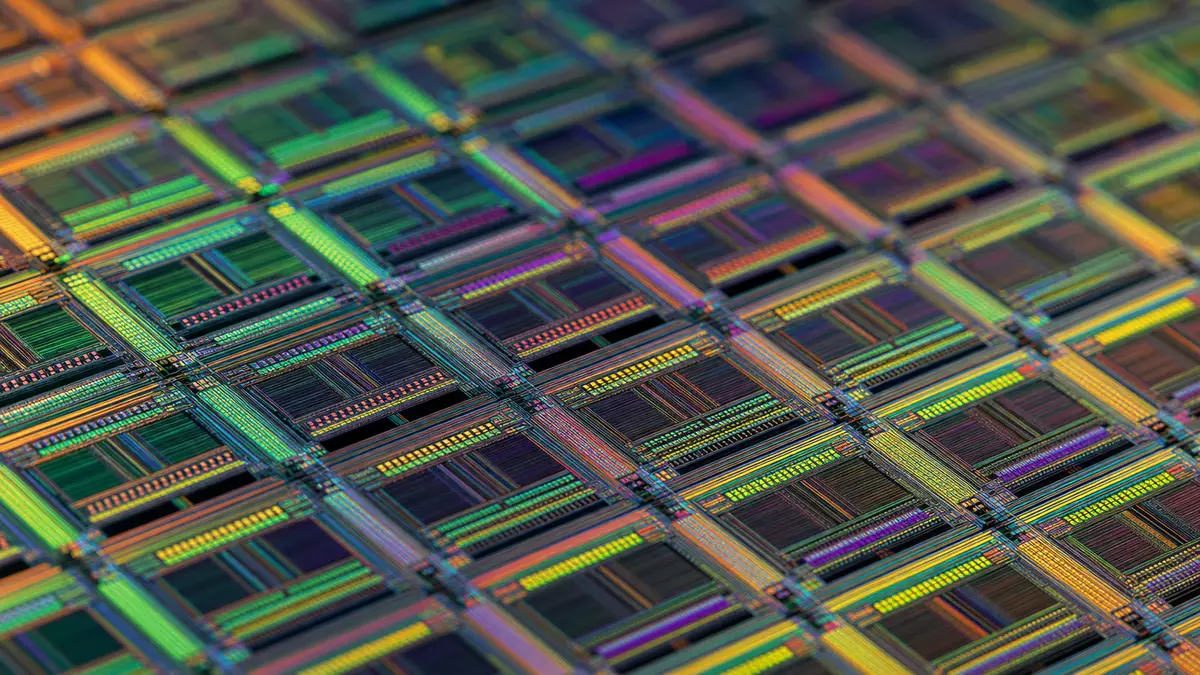
One representative focus area within Broadcom’s product portfolio is custom AI networking silicon used to link clusters of accelerators in hyperscale data centers. These chips are designed to handle large volumes of data traffic at low latency, enabling efficient training and inference workloads. Broadcom collaborates with major cloud providers and system integrators to tailor solutions to specific architectures, often involving bespoke protocols and features.
The revenue associated with such AI networking products has grown in recent years as customers expand their AI clusters. For Broadcom, this segment exemplifies its strategy of concentrating on complex, high-value components that customers integrate deeply into their systems. The design cycles are lengthy, and once a chip family is qualified, it can generate recurring revenue throughout the life of the platform.
From an investor perspective, the success of custom AI networking silicon serves as a tangible link between Broadcom’s engineering capabilities and its financial results. As AI workloads become more pervasive across industries, demand for robust, scalable networking solutions should remain elevated, supporting the semiconductor segment’s growth trajectory.
Broadcom stock and current valuation context
In the current market environment, Broadcom stock’s valuation reflects both its strong recent performance and investors’ expectations for sustained growth. With the share price around the $1,700 area as of 26 July 2026 and annual non-GAAP EPS in the low $30s for fiscal 2023, the price-to-earnings multiple sits in the mid-50s range on that historical basis, although forward estimates anticipating higher earnings would imply a lower multiple.
On a price-to-sales basis, using full-year revenue of approximately $35 billion for fiscal 2023 and a market capitalization above $700 billion, Broadcom trades at a price-to-sales ratio of around 20. This level is high relative to more cyclical chipmakers but is more in line with fast-growing technology companies benefiting from structural trends such as AI. Free cash flow yield, calculated as free cash flow of roughly $16 billion against market value, comes out near 2.3%, indicating that investors are willing to accept a low yield in exchange for expected growth.
These metrics illustrate the balance between optimism and caution in the market’s view of Broadcom stock. The company’s ability to deliver on its growth and margin targets, execute integrations, and manage its balance sheet will be critical in supporting this valuation over time.
Stock price and market context
Broadcom stock is listed on Nasdaq under the ticker AVGO, and it is included in major benchmarks such as the S&P 500 and Nasdaq 100. As of the close on 26 July 2026, the share price was around $1,700, with intraday moves reflecting broader technology sector sentiment and company-specific news. Trading volumes tend to rise around earnings releases and major macroeconomic data, but day-to-day liquidity is generally healthy, facilitating institutional and retail participation.
For investors monitoring Broadcom, the combination of high absolute price level, strong recent gains, and substantial index inclusion means that the stock can have a notable impact on portfolio performance and benchmark tracking. The company’s future quarterly results, guidance updates, and any new AI-related product announcements are likely to remain key catalysts for the share price.
Fact box and investor snapshot
Broadcom Inc., headquartered in the United States, operates with a dual focus on Semiconductor Solutions and infrastructure software. The company’s shares trade on Nasdaq under the symbol AVGO, and it is a constituent of major indices such as the S&P 500 and Nasdaq 100. Broadcom’s market capitalization has surpassed $700 billion as of late July 2026, underlining its role as one of the largest technology companies in global equity markets.
For the latest fiscal year and most recent quarter, Broadcom has reported strong revenue, high margins, and robust free cash flow, while continuing to increase its dividend. These elements, combined with exposure to AI infrastructure and enterprise software, shape the investment narrative around Broadcom stock.
Disclaimer regarding our articles: No investment advice, no buy or sell recommendation. Information on prices, companies, and markets is provided without guarantee; changes are possible at any time. Stock market transactions can lead to substantial losses. Our articles are created and reviewed in whole or in part automatically with the support of AI.