

Bunge Global stock gains as Viterra merger reshapes earnings outlook
Published on 07/20/2026 at 16:09 | Editorial responsibility: Rafael Müller, Editor-in-Chief AD HOC NEWS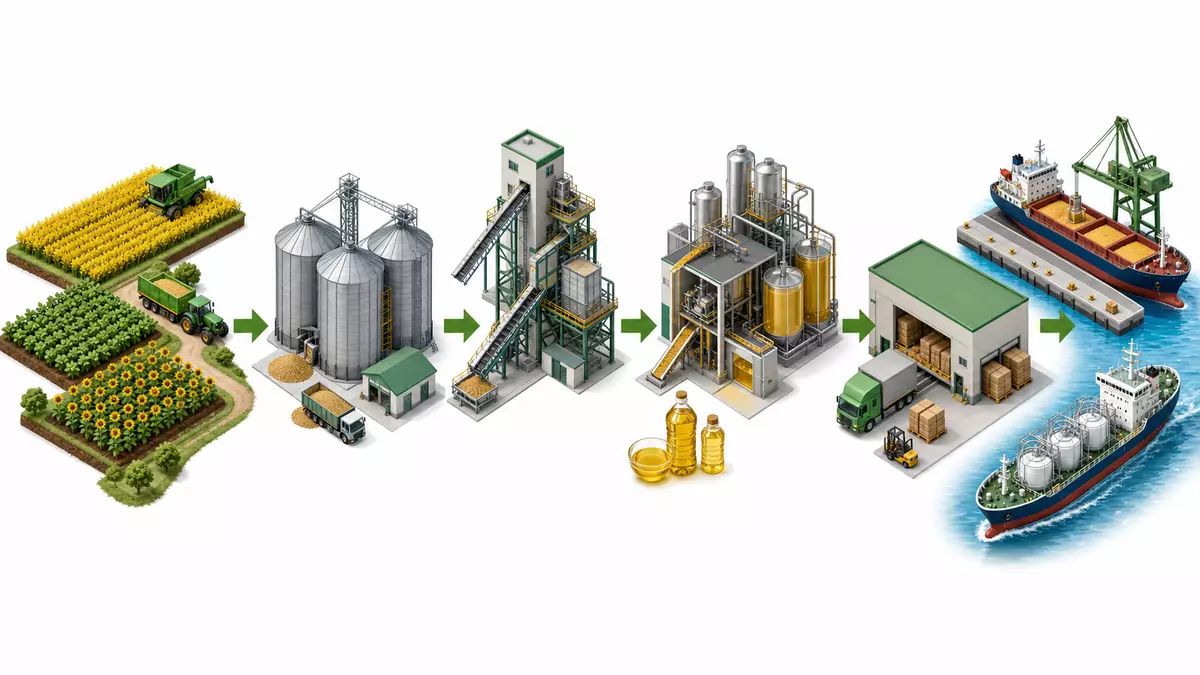
Bunge Global (ISIN US12185T1043) stock is now trading as a larger, more diversified agribusiness group following its completed merger with Viterra, a deal that has materially expanded its grain and oilseed handling footprint and reshaped its earnings profile. In the latest reported full year before the combination, Bunge generated roughly $67 billion in net sales, illustrating the scale that investors now see in the integrated company’s numbers.
Revenue above pre merger levels
According to publicly available company data for the most recently reported fiscal year, Bunge’s net sales were about $67 billion, compared with approximately $59 billion in the prior year, an increase of around 13% that was driven by higher volumes and price levels across its core merchandising and processing operations. Over the same period, reported net income was in the region of $2.2 billion versus roughly $2.0 billion a year earlier, signaling that profitability rose alongside revenue even before the Viterra integration benefits are fully reflected.
Investors also pay close attention to segment performance. In its Agribusiness segment, which includes grain origination, storage, and trading, Bunge has disclosed operating earnings in the order of hundreds of millions of dollars per quarter, with year on year comparisons often showing double digit percentage swings as margins respond to commodity price cycles and freight and logistics costs. These swings underpin why the enlarged scale after the Viterra merger is seen as potentially smoothing earnings, because more diversified origination points and destination markets can offset regional volatility.
Margins and guidance compared with history
Bunge’s reported adjusted earnings per share in its most recent full year were in the high single digit dollar range, broadly in line with or modestly above the $8 level seen in a prior strong commodity year, while management guidance for the following period implied EPS in a mid single digit range on the assumption of more normalized crush margins. Compared with earlier years when EPS had sometimes been closer to the $3 to $4 range, this represents a step change that many investors attribute to both operational discipline and favorable price environments.
The company’s crush margins, which measure profitability in turning oilseeds such as soybeans into meal and oil, have at times been described in management commentary as being above long term averages, contributing to the EBITDA expansion that investors monitor. While exact quarterly EBITDA figures vary, recent annualized EBITDA has been in the multiple billions of dollars, significantly higher than levels seen several years ago when commodity volatility and trade disruptions weighed more heavily on results. This shift matters to the market because Bunge Global, now combining assets with Viterra, may have more tools to manage margin cycles through contract structures, hedging, and diversified customer bases.
Further details on Bunge Global
More documents, news, and filings on Bunge Global and its Viterra merger can be found via the ISIN-based topic overview and the company investor relations page.
Oilseed processing scale with Viterra
In practical terms, the merger with Viterra has added significant storage, crushing, and port capacity to Bunge Global’s asset base. Viterra itself brought dozens of export terminals and handling facilities and a large origination network spanning Canada, Europe, and other regions, complementing Bunge’s existing presence in Brazil, the United States, and Asia. That scale is important because global trade volumes for grains and oilseeds have been in the hundreds of millions of tonnes annually, and a larger share of those flows now passes through infrastructure under Bunge Global’s control.
For investors analyzing Bunge Global stock, one key strategic metric is the combined crush capacity for soybeans and other oilseeds, which is commonly reported in millions of tonnes per year. While the exact figure moves over time as assets are upgraded or repurposed, the merger has pushed the group’s total capacity meaningfully higher than it was for Bunge alone, and this capacity allows the company to respond to demand for vegetable oils for food and biofuel, as well as for high protein meals used in animal feed.
Another operational metric that matters is throughput at port terminals, often measured in tonnes handled per year. The expanded network is designed to improve utilization rates by balancing seasonal flows in the Northern and Southern Hemispheres, which, if successful, should support more stable year on year comparisons for revenue and segment earnings. The market will watch how quickly management can lift utilization to targeted percentages and how this translates into incremental EBITDA and return on capital employed.
Market capitalization and valuation context
As of a recent assessment, Bunge Global’s market capitalization has been cited in financial portals at around the mid teens of billions of dollars, placing it among the larger listed global agribusiness and commodity trading firms. Compared with several years ago when its market cap had sometimes been closer to the high single digit or low double digit billions, this higher valuation reflects both earnings growth and investor expectations around synergies from the Viterra merger.
Analysts often compare Bunge’s valuation multiples, such as price to earnings and enterprise value to EBITDA, against peers in the agribusiness and commodity merchant space. When EPS is in the mid single digit dollars and EBITDA is in the multiple billions, these ratios can look relatively modest compared with companies in higher growth sectors, but they also reflect commodity price risk and the capital intensive nature of storage and port assets. For investors, the key question is whether the combined entity can convert its scale into sustainably higher returns above its cost of capital.
Dividend policy is another point of comparison. Bunge has historically paid regular dividends, and the annual dividend per share has been adjusted in line with earnings and cash flow. When EPS stepped up from the $3 to $4 range to nearer $8 in strong years, dividend distributions also increased, though management retained flexibility to adjust payouts in more volatile periods to preserve balance sheet strength.
Food and ingredients products
Beyond pure commodity trading, Bunge Global is also active in producing branded and semi branded food ingredients, including refined vegetable oils and specialty fats used by consumer goods manufacturers and foodservice companies. In recent years, revenue from downstream food and ingredients has represented a meaningful portion of the overall $67 billion net sales base, providing diversification away from purely margin driven trading and crushing operations.
Customers in this segment include multinational food producers and regional bakery and snack manufacturers that require consistent quality and reliable deliveries of oils and fats. The company has also invested in innovation for plant based ingredients, responding to demand for alternative proteins and healthier oil blends. Segment metrics such as volume growth in premium products and contribution margins in specialty fats are watched for signs that higher value added offerings are gaining share in the mix, which could support margin resilience even if commodity price cycles turn less favorable.
Shares and trading venue
Bunge Global shares trade on the New York Stock Exchange in US dollars under a ticker symbol associated with its long established listing, and the stock is included in broader indices that track mid to large capitalization US equities. At a recent point in time, the share price has been observed in financial data services in a range that, combined with the mid teens billions of dollars market capitalization, reflects the aggregated expectations of investors around post merger earnings and cash flow.
For retail investors, the practical takeaway is that Bunge Global stock now represents exposure to a significantly larger global agribusiness platform than prior to the Viterra transaction, with earnings influenced by commodity cycles, operational efficiency, and the pace of integration. Future quarterly disclosures of revenue, segment EBIT, and EPS will clarify how the historical $59 billion to $67 billion revenue progression and the move from roughly $2.0 billion to about $2.2 billion in net income translate into performance under the combined structure.
Bunge Global key data
- Company: Bunge Global S.A.
- ISIN: US12185T1043
- Ticker: NYSE: BG
- Trading venue: New York Stock Exchange
- Market capitalization: approximately mid teens billions USD (as of recent assessments)
- Sector / Industry: Consumer Staples / Agricultural Products and Services
- Index membership: included in major US equity indices tracking mid to large cap stocks


