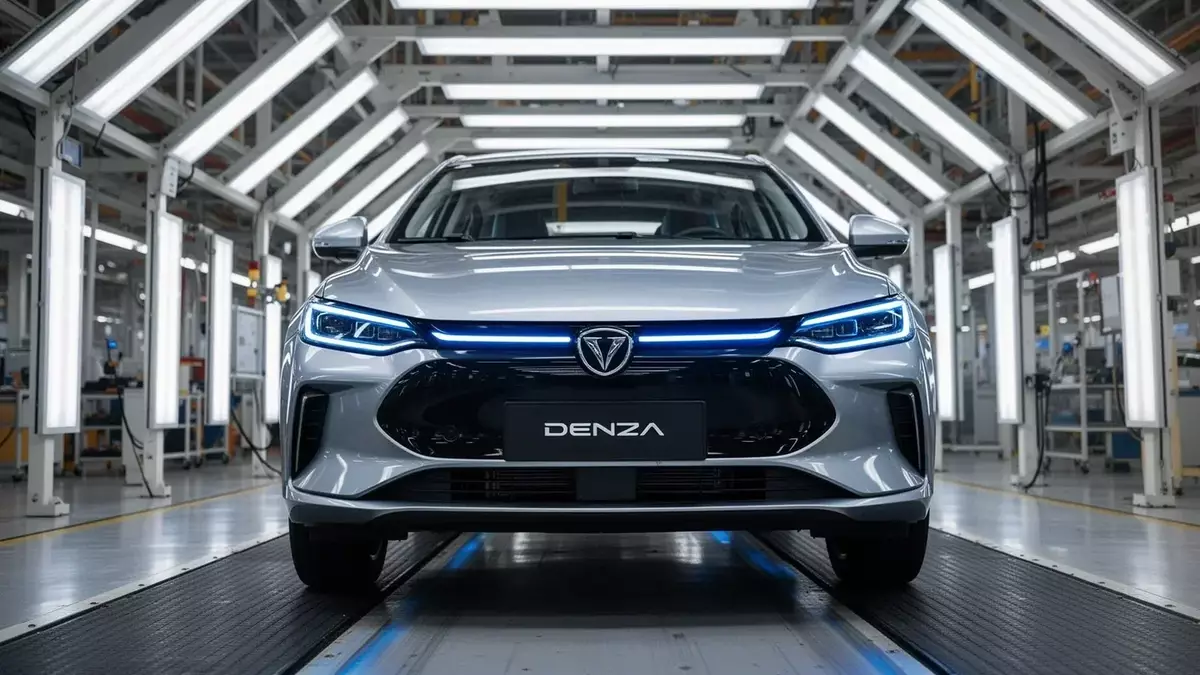
BYD Races Away from Price War, Doubles Down on Autonomy and Global Production
Published on 06/01/2026 at 07:01 | Redaktion boerse-global.de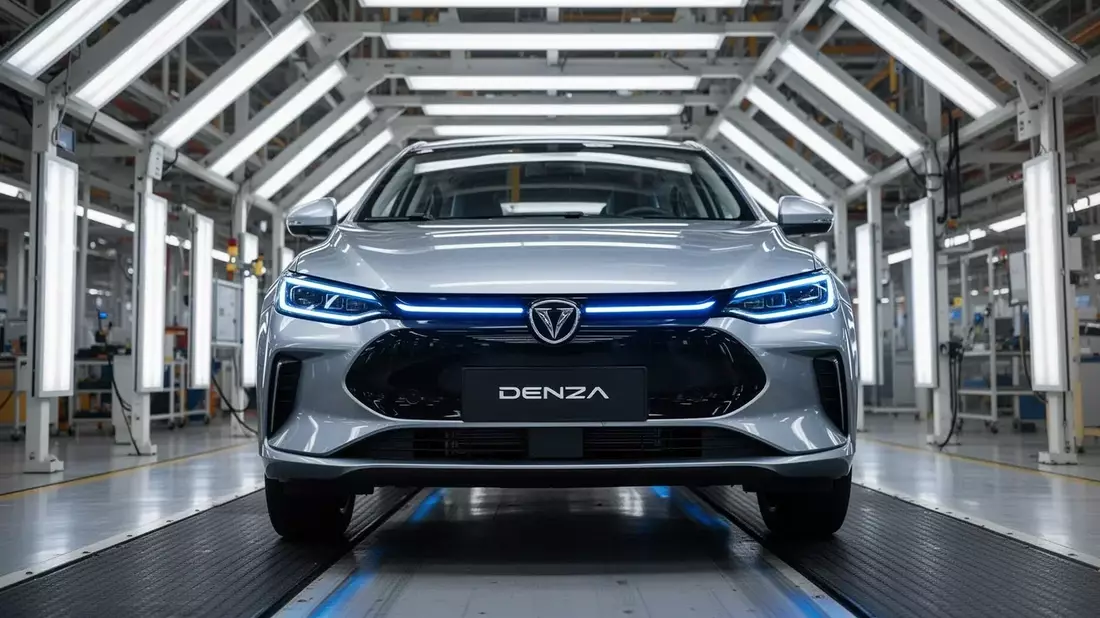
The Chinese electric-vehicle giant is rewriting its playbook. After years of aggressive discounting to grab market share, BYD is shifting focus to technology leadership — pouring record sums into autonomous driving while simultaneously expanding its manufacturing footprint from Latin America to Southeast Asia.
In the northeastern Brazilian state of Bahia, construction is under way on a former Ford site in Camaçari. BYD is funnelling around 5.5 billion Reais into the facility, which will handle full production from body stamping and welding through to painting. The plant’s initial capacity of 150,000 vehicles per year is earmarked for a rapid scale-up to 300,000 units. Notably, it will be the world’s first factory to build plug-in hybrids compatible with Flex-Fuel technology — allowing them to run on either ethanol or petrol. The project is expected to generate roughly 20,000 jobs and will operate entirely on renewable energy. First output is slated for next year.
At the same time, BYD is ploughing 100 billion yuan into research and development for artificial intelligence and autonomous driving. That war chest is being used to develop Level 3 and Level 4 systems, with the company’s in-house “God’s Eye” driver-assistance platform already active across 3 million vehicles spanning more than 60 models. Internal data show severe accidents have fallen to one-sixth the rate of human drivers. The system ingests 190 million kilometres of driving data daily, and the underlying algorithms are refreshed every three days.
Central to this push is a new integrated architecture BYD calls “Lobster”, which merges cockpit controls, driver assistance and chassis management into a single AI brain. The DiSus intelligent body-control system forms part of this concept, which BYD describes as a “vehicle AI mind”. The long-term ambition is to eliminate traffic accidents altogether.
Should investors sell immediately? Or is it worth buying BYD?
Hardware development is keeping pace. The second-generation Blade battery supports megawatt-level charging. On the upcoming E-segment SUV Datang, for instance, a five-minute charge adds 200 kilometres of range, and the rear-wheel-drive version delivers a total range of up to 950 kilometres.
Despite the technological blitz, near-term market data is mixed. China’s new-energy vehicle sales in the first 24 days of May reached 619,000 units — an 11 percent drop year-on-year. Penetration of NEVs, however, climbed to 62.5 percent. Advanced features such as City NOA and LiDAR are now available even in cars priced below 150,000 yuan.
International momentum is building. In March 2026, BYD exported 120,000 vehicles, a 65.2 percent jump from the same month last year. The company is targeting 1.5 million export units for the full year. New production hubs in Morocco and Europe are planned to sidestep trade barriers and tighten supply chains, while in Malaysia the refreshed Atto 3 is set to launch on June 5. Those models include an “Evo” variant with an 800-volt architecture, a 74.8 kWh battery and 220 kW DC fast-charging capability.
BYD at a turning point? This analysis reveals what investors need to know now.
BYD has been selective about partnering for autonomy. While the Fangchengbao Bao 8 uses Huawei’s ADS 3.0 system, that remains an exception. The company’s own DiPilot technology is the strategic priority, reflecting a determination to keep full control of its software ecosystem and electronic architectures. The long-range aim is a “zero accident” standard, achieved entirely through in-house integration. Dependence on external suppliers is not part of that vision.
Ad
BYD Stock: New Analysis - 1 June
Fresh BYD information released. What's the impact for investors? Our latest independent report examines recent figures and market trends.
Disclaimer regarding our articles: No investment advice, no buy or sell recommendation. Information on prices, companies, and markets is provided without guarantee; changes are possible at any time. Stock market transactions can lead to substantial losses. Our articles are created and reviewed in whole or in part automatically with the support of AI.