BYD’s 1,500-kW Charging Blitz and Record 160,000 Monthly Exports Clash With a 55% Profit Slide
Published on 06/17/2026 at 15:57 | Redaktion boerse-global.de
[This article was originally published on a financial news platform.]
Few stocks dramatise the gap between operational reality and market sentiment as sharply as BYD’s. The Shenzhen-based automaker is selling more electric vehicles overseas than ever before, launching a hyper-fast charging network that dwarfs industry benchmarks, and bringing premium branding to Germany — yet its shares barely budge from the 52-week floor. At €9.03, the equity has lost nearly 18% since January and more than a third over the past twelve months. The stock is technically oversold, with a relative strength index of 27.3, but the fundamental picture remains deeply split.
A brutal price war at home
The root of the slump is China. BYD’s domestic passenger-vehicle sales fell to roughly 220,000 units in May 2026, a 24% drop year on year, as a savage price war erodes margins across the world’s largest EV market. That domestic weakness was already visible in the first quarter, when net profit collapsed by 55% — a figure that has spooked the investment community. The stock now trades almost 16% below its 50-day moving average of €10.71, and the 52-week high of €14.80, set last July, feels like ancient history.
Record overseas sales flip the script
Yet the narrative shifts when you look beyond China’s borders. In May, BYD delivered more than 160,000 vehicles abroad for the first time, an 80% surge from the same month a year earlier. International markets now account for 42% of total sales of electrified and hybrid vehicles. That pace supports the company’s full-year target of 1.5 million overseas deliveries — a milestone that looked audacious two years ago but now appears within reach. The export strategy is critical for margin recovery: European buyers pay higher prices, which helps offset the discount-driven squeeze at home.
Should investors sell immediately? Or is it worth buying BYD?
Building a charging empire to lock in loyalty
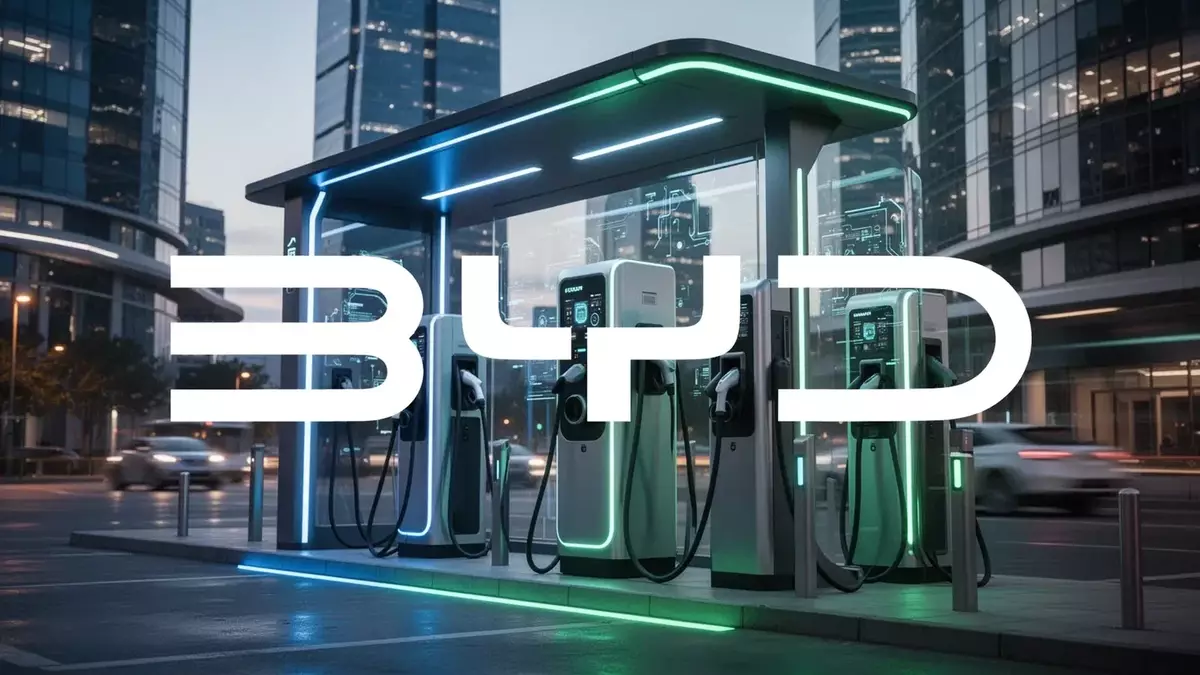
Management is reinforcing that international push with a technological leap. BYD recently unveiled the second generation of its Blade battery, alongside the “FLASH Charging” system that can boost a compatible vehicle from 10% to 70% state of charge in just five minutes — roughly the time it takes to fill a petrol tank. To underpin the advantage, the company plans to install 20,000 ultra-fast charging stations in China by the end of 2026, with thousands more to follow in Europe. With a peak power output of 1,500 kilowatts, these stations outclass existing industry standards and effectively transform BYD from a pure carmaker into an infrastructure operator. The move is designed to lock in customers for the long haul.
Europe: the big bet on local production and premium branding
The long-term case for BYD hinges heavily on Europe. Vice-president Stella Li has confirmed that the company’s first European plant, located in Szeged, Hungary, will begin vehicle assembly in the fourth quarter of 2026. Local production is the direct answer to EU tariffs on Chinese-built EVs and avoids a major cost disadvantage. At the same time, BYD is taking on established premium marques on their home turf through its upscale Denza brand. Denza opened its first German showroom in Hamburg in June 2026 and plans to have 40 sales points across the country by year-end.
Chairman Wang Chuanfu remains laser-focused on a goal that once seemed aspirational: becoming the world’s largest automaker within five years. For that to happen, the European engine must fire on all cylinders.
BYD at a turning point? This analysis reveals what investors need to know now.
The stock obviously carries near-term risk. As long as domestic sales languish and margins stay compressed, the share price will feel the heat. But the direction of travel is clear. BYD is pivoting away from a cut-throat home market toward higher-margin international business, while simultaneously building a proprietary ultra-fast charging network that could become a sticky competitive moat. The market has yet to price in that transformation. Investors who buy at these levels are betting that the current earnings shock is cyclical, not structural — and the evidence from overseas suggests it may be.
Ad
BYD Stock: New Analysis - 17 June
Fresh BYD information released. What's the impact for investors? Our latest independent report examines recent figures and market trends.
Disclaimer regarding our articles: No investment advice, no buy or sell recommendation. Information on prices, companies, and markets is provided without guarantee; changes are possible at any time. Stock market transactions can lead to substantial losses. Our articles are created and reviewed in whole or in part automatically with the support of AI.