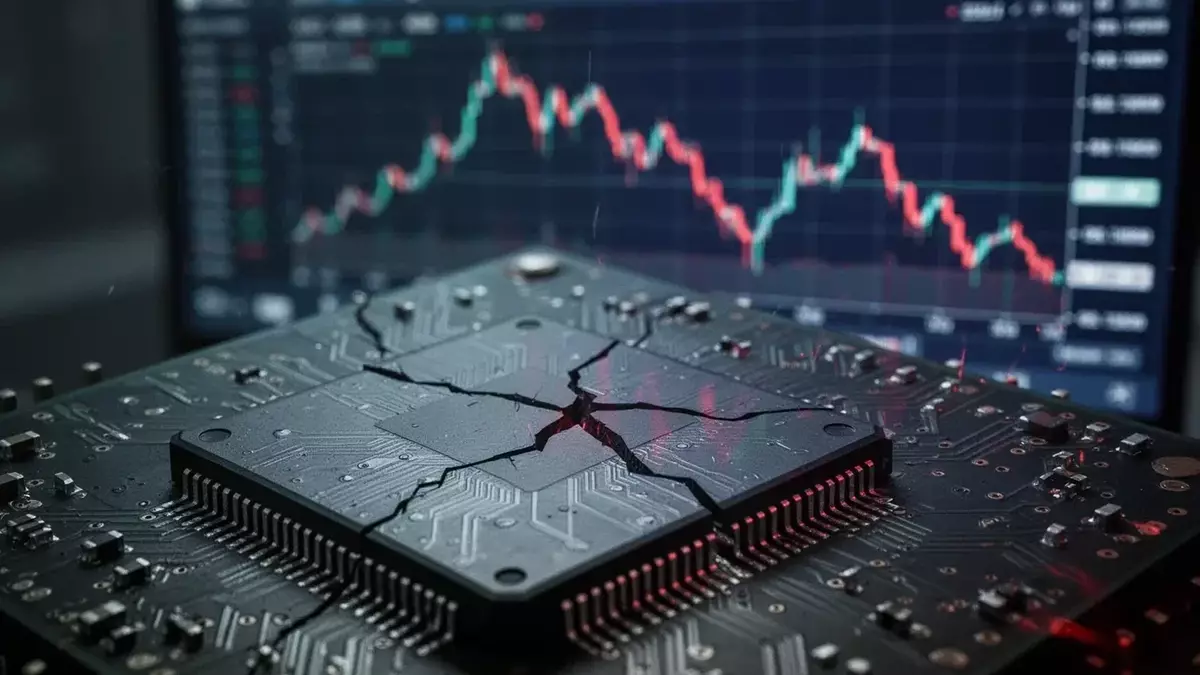
Chip ETF’s 4% Snapback Highlights a Sector Caught Between Profit-Taking and TSMC’s Capex Firepower
Published on 07/21/2026 at 18:44 | Redaktion boerse-global.de
The iShares MSCI Global Semiconductors UCITS ETF surged 4.04% to €17.80 on Tuesday, staging its sharpest one-day recovery in weeks. The bounce came as Asian markets rallied and Nvidia’s stake in neocloud provider Nebius provided a fresh catalyst, but it only partially reversed a brutal stretch that had erased nearly 17% in the previous 30 days. As of Monday’s close at €17.11, the fund was down 20.17% over the past month, a slide that has tested the conviction of investors who rode the AI-driven semiconductor boom to extraordinary gains.
The Tuesday rally was broad-based. Futures on the Nasdaq-100 climbed 1.3% ahead of the US open, led by semiconductor names. In Asia, the MSCI Asia Pacific Index rose 1.7%, while South Korea’s KOSPI and Taiwan’s benchmark each added more than 2.5%. Samsung Electronics and Taiwan Semiconductor Manufacturing were among the top contributors, directly boosting the ETF’s heavy Asian exposure. Nvidia’s announcement that it had taken a stake in Nebius helped lift sentiment around the AI ecosystem, offsetting lingering worries about US tariffs on Canada and rising tensions in the Middle East.
Yet the context of the month-long correction suggests this is a rotation, not a trend reversal. The fund remains up 79.03% year-to-date and 135.23% over the past 12 months — gains that have made profit-taking almost inevitable. The annualized 30-day volatility stood at 68.03% after Tuesday’s rebound, up from 67.35% a day earlier, reflecting the whipsaw nature of current trading. The relative strength index sits at 40.8, a neutral reading that indicates the market is still digesting the recent moves.
The selloff traces directly to the fund’s concentrated exposure to a handful of high-momentum names. Micron Technology (9.02%), Advanced Micro Devices (8.09%), and Broadcom (7.05%) top the holdings, followed by Taiwan Semiconductor Manufacturing (6.99%), Nvidia (6.21%), and SK Hynix (5.22%). Lam Research, ASML, Intel, and Applied Materials each account for roughly 4% to 4.4%. This structure makes the ETF a sensitive barometer for sentiment around TSMC, which has been the epicentre of the recent volatility.
TSMC delivered record quarterly sales and raised its 2026 capital expenditure guidance to between $60 billion and $64 billion, at least $4 billion above previous estimates. Revenue growth is now expected to come in slightly above 40%, up from a prior forecast of just over 30%. Despite the upgrades, TSMC’s stock fell roughly 3% in pre-market US trading — a textbook sell-the-news reaction that cascaded through the entire semiconductor complex. The market had already priced in the optimism, and the higher capex raised concerns about margin pressure.
The pattern is playing out across the sector. The VanEck Semiconductor ETF suffered its third weekly loss in four weeks, dropping nearly 9%, while the iShares Semiconductor ETF was on track for a 6.9% weekly decline over the same period. The uniform selloff across multiple funds underscores a sector-wide recalibration after an extraordinary run rather than a problem specific to any single product.
Technically, the ETF closed Monday 7.62% below its 50-day moving average of €18.52, but it remains a towering 34.96% above its 200-day average of €12.68. The 52-week high of €21.52, set on 22 June, now sits 17.31% above Tuesday’s close (or 20.52% from Monday’s trough). The 52-week low of €6.89, reached last August, shows both the magnitude of the prior rally and the distance the fund has already corrected.
This week’s slate of big-tech earnings will determine whether the bounce gains traction. The Nasdaq-100 and the Philadelphia Semiconductor Index both appear technically oversold, but the market needs more than price action to reignite conviction. Investors are waiting for clarity on capital spending plans and demand outlooks from the industry’s heavyweights. If the messaging confirms that the AI infrastructure buildout remains intact, Tuesday’s snapback could prove the start of a genuine recovery. If not, the volatility that has defined recent weeks will likely persist — with the ETF’s 68% annualized volatility serving as a stark reminder of how fast the semiconductor trade can turn.
Ad
iShares MSCI Global Semiconductors UCITS ETF USD Acc Stock: New Analysis - 21 July
Fresh iShares MSCI Global Semiconductors UCITS ETF USD Acc information released. What's the impact for investors? Our latest independent report examines recent figures and market trends.
Read our updated iShares MSCI Global Semiconductors UCITS ETF USD Acc analysis...
Disclaimer regarding our articles: No investment advice, no buy or sell recommendation. Information on prices, companies, and markets is provided without guarantee; changes are possible at any time. Stock market transactions can lead to substantial losses. Our articles are created and reviewed in whole or in part automatically with the support of AI.