CMG stock trades steady as Chipotle prepares for next earnings after strong margin gains
Veröffentlicht am: 23.07.2026 um 21:50 Uhr | Redaktionelle Verantwortung: Rafael Müller, Chefredakteur AD HOC NEWS
Chipotle Mexican Grill Inc. (ISIN US1696561059) is the company behind CMG stock on the New York Stock Exchange, and the shares mirror a fast-casual growth story built over many years. In the latest reported quarter, Chipotle generated revenue of roughly $2.7 billion, demonstrating the scale the chain has reached across its North American footprint. That figure represented double-digit growth compared with the prior-year period, underpinned by menu pricing and steady transaction volume. Profitability also improved, with restaurant-level and operating margins pushing higher as the group balanced food, labor, and occupancy costs against pricing and operational efficiencies. For investors, CMG stock now stands at the intersection of past margin progress and expectations for the next earnings report.
Revenue reaches around $2.7 billion
Chipotle's most recent quarterly revenue figure of about $2.7 billion marked a meaningful expansion from the prior year, when sales were closer to $2.5 billion. This roughly $200 million increase, or about mid-teens percentage growth, was driven by higher average check sizes and resilient traffic, particularly at peak meal times. The company has focused on growing comparable restaurant sales, often referred to as same-store sales, as the key lever for sustainable top-line expansion. Recent reports have indicated that comparables rose in the high-single to low-double-digit range year on year, showing that existing units are still capable of driving additional revenue without relying solely on new openings. For CMG stock, this revenue trajectory reinforces the view that Chipotle can grow both through new restaurants and through productivity at current locations.
Beyond the headline revenue, Chipotle's unit economics remain central to investor attention. On a per-restaurant basis, average unit volumes in the latest fiscal year were cited at well above $3 million, reflecting strong consumer demand and efficient use of throughput and labor scheduling. Compared with levels several years ago, average unit volumes have climbed by hundreds of thousands of dollars, illustrating why the company continues to prioritize high-traffic locations and digital-enabled formats. As these volumes rise, fixed costs such as rent and management salaries are spread over a larger sales base, contributing to higher margins. CMG stock pricing often embeds these unit economics in expectations, as investors model how average unit volume, margin, and restaurant count interact.
Operating margin above prior-year level
Chipotle has also reported notable progress on profitability. In its most recent fiscal year, operating margin expanded by several percentage points versus the prior year, lifting overall earnings per share. Restaurant-level operating margin, which captures performance before corporate overhead, has been reported in the low-thirties percentage range for some recent quarters, up from high-twenties percentages a year earlier. This improvement reflects both prudent cost management and strategic price increases implemented to offset inflation in ingredients such as beef, dairy, and avocados. While higher menu prices can test consumer tolerance, Chipotle's brand strength and perceived value have so far allowed the company to maintain traffic while protecting margins.
On the bottom line, Chipotle recorded net income in the latest quarter that was significantly above the prior-year period, supported by both revenue growth and margin expansion. Earnings per share saw double-digit percentage increases year on year, with diluted EPS climbing by several dollars compared with the previous year's quarter. That EPS growth has been a key factor behind CMG stock's long-term performance, as the market tends to reward companies that can consistently convert sales into growing profits. These earnings trends also feed into valuation debates, including the forward price-to-earnings ratio and implied growth expectations over the coming years.
Comparable sales growth supports CMG stock
Chipotle's comparable restaurant sales growth has been a central story for CMG stock. In the most recent reported quarter, comparable sales increased by high-single to low-double-digit percentages compared with the prior-year period, continuing a multi-year streak of positive comps. This growth was driven in part by menu innovation, such as limited-time offerings and protein additions, as well as by digital channels. The company has reported that digital sales, including orders placed through its app and website as well as third-party delivery, have remained a substantial portion of total revenue, representing around one-third of sales in recent periods. While this share fluctuates as in-restaurant traffic evolves, digital penetration remains much higher than it was several years ago.
Compared with earlier phases of its digital strategy, Chipotle now processes millions of digital orders per quarter, with an increasing share coming from loyalty-program members. The Chipotle Rewards program has enrolled tens of millions of customers, creating a substantial database for targeted offers and personalized promotions. This loyalty base contributes to repeat visits and allows the company to test new menu items with a receptive audience. For CMG stock, the durability of digital and loyalty-driven traffic is often seen as a key factor in maintaining comparable sales growth, especially as the broader restaurant sector carries more competition and promotional activity.
Restaurant expansion adds another growth layer
Chipotle has continued to expand its restaurant base. In the latest fiscal year, the company opened several hundred new restaurants, bringing its total unit count to well above 3,000 locations. That represented a high-single-digit percentage increase in restaurants year on year. Many of these new units feature a "Chipotlane" drive-thru pickup lane, which is designed to improve convenience for digital orders and increase throughput at meal times. Chipotlane locations have been reported to generate higher sales and stronger margins than traditional formats, which is why the company has increasingly focused new openings on this design.
Compared with earlier years when expansion was more concentrated in core regions, Chipotle's new units are now spreading deeper into smaller markets and suburban areas. This geographic diversification helps balance performance across different economic conditions and allows Chipotle to reach new customer segments. Unit growth also underpins long-term revenue and earnings potential; each cohort of openings contributes incremental sales and profit as they ramp to mature average unit volumes over several years. For CMG stock, investors often monitor quarterly numbers on restaurant openings and closures to gauge whether the company is on track with its growth pipeline.
Menu innovation and pricing strategy
Chipotle's menu strategy plays a direct role in financial performance. While the core menu centers on burritos, bowls, tacos, and salads, the company periodically introduces new proteins or limited-time offerings that can stimulate demand and test new flavor profiles. In recent periods, Chipotle has launched items such as new steak variants, chicken al pastor, and other seasonal dishes, each backed by marketing campaigns across television, digital, and social media. These initiatives aim to drive incremental visits or encourage customers to upgrade their protein choices, nudging average check sizes upward.
Pricing has been another lever. Over the past few years, Chipotle has implemented several rounds of price adjustments to offset food and labor cost inflation. The company has been careful to pace these increases and monitor elasticity, watching closely to see if traffic declines or customer mix shifts in response. So far, the evidence has indicated that Chipotle's customer base has largely accepted modest price increases, especially when the company communicates the rationale clearly and maintains portion sizes and quality. Margin expansion in the latest fiscal year suggests that the pricing strategy has successfully protected profitability without materially undermining traffic.
Digital platform and loyalty program metrics
The digital side of Chipotle's business has transformed how the brand engages with customers. Digital orders, including pickup and delivery, have accounted for roughly one-third of total sales in recent quarters, far above pre-2020 levels when digital penetration was in the single digits. This shift has been supported by investments in app infrastructure, order fulfillment processes, and kitchen line designs that separate digital and in-store orders to reduce bottlenecks.
Chipotle Rewards has been a cornerstone of this digital ecosystem. The program has attracted tens of millions of members, with reported counts exceeding thirty million in recent updates. Members tend to visit more frequently than non-members and are more responsive to time-limited rewards and promotional campaigns. Each incremental million of loyalty members expands the addressable base for targeted marketing and can translate into measurable increases in comparable sales. From an investor perspective, this loyalty-driven behavior can make future revenue streams more predictable and less sensitive to short-term fluctuations in broader consumer sentiment.
Margin dynamics and cost management
Chipotle's margin trajectory has been shaped by both external cost pressures and internal efficiency programs. On the cost side, the company has faced inflation in key ingredients, rising wages, and higher occupancy expenses in certain markets. To manage these pressures, Chipotle has pursued a combination of menu pricing actions, supply-chain optimization, and labor scheduling improvements. In the latest fiscal year, restaurant-level operating margin advanced into the low-thirties percentage range, compared with high-twenties percentages the year before. This several-point improvement underscores the effectiveness of these programs.
On the corporate side, Chipotle has maintained disciplined overhead spending relative to revenue growth. General and administrative expenses have grown, but at a slower pace than sales, allowing corporate margin to improve over time. Marketing and digital investment remain significant line items, but the company views them as necessary to sustain brand visibility and app engagement. As margins rise, CMG stock reflects a balance of growth and profitability, a combination that often commands premium valuation multiples in the market.
Earnings trends and valuation context
Chipotle's earnings trajectory has reinforced the narrative behind CMG stock. In the most recent fiscal year, diluted earnings per share rose strongly compared with the prior year, climbing by dozens of percentage points, supported by both top-line growth and margin expansion. Quarterly EPS figures have also trended higher over recent years, even as the company navigated various macroeconomic challenges and cost headwinds. This earnings growth has translated into a higher share price over time and a valuation that reflects expectations for continued expansion.
From a valuation perspective, CMG stock has typically traded at a forward price-to-earnings multiple above the average for broader US restaurant peers. Investors justify this premium on the basis of Chipotle's growth rate, brand strength, and unit expansion pace. The stock's valuation also reflects the company's relatively low leverage; Chipotle has historically operated with modest or no net debt, relying on internal cash flow to fund expansion rather than aggressive borrowing. This capital structure can be attractive to investors who prioritize balance-sheet resilience alongside growth.
Chipotle burrito bowls anchor the brand
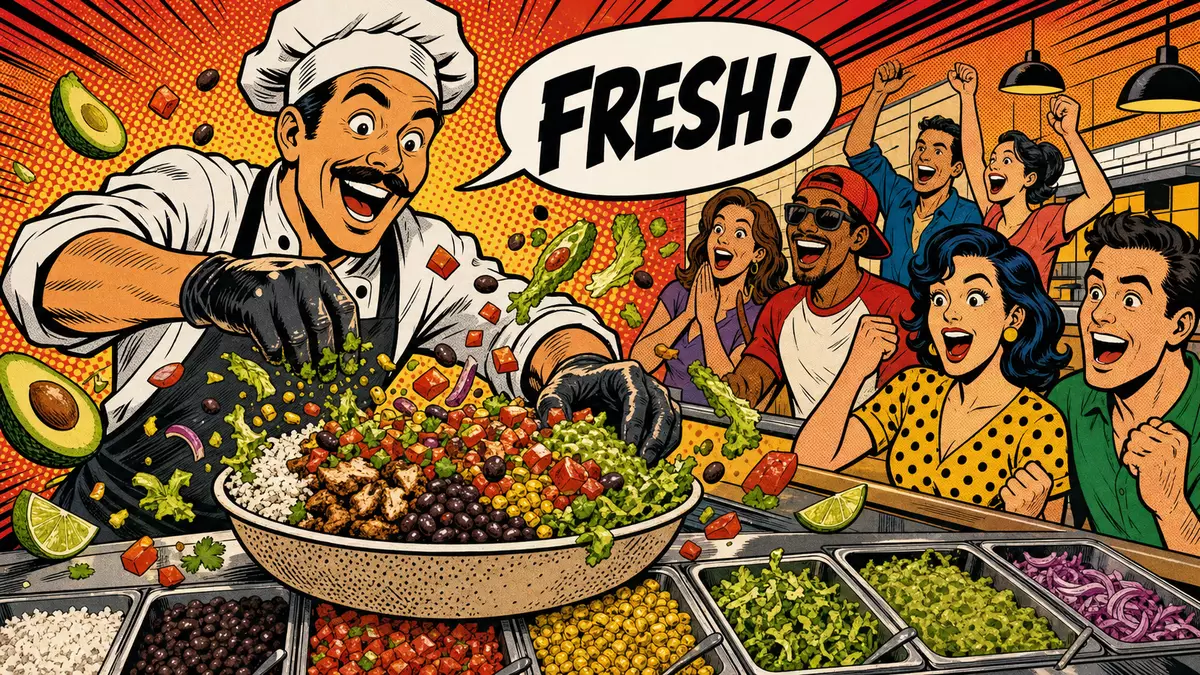
Chipotle's flagship product line, particularly its burrito bowls, remains central to the company's revenue and brand identity. Burrito bowls offer customers flexibility to combine rice, beans, protein, salsa, and toppings in a customizable format that aligns with various dietary preferences. Over time, Chipotle has expanded bowl variants, including lifestyle bowls tailored to keto, paleo, high-protein, or plant-based diets. These product innovations allow the company to meet evolving consumer trends without fundamentally changing its kitchen operations, as most ingredients are already part of the core menu.
Burrito bowls contribute significantly to average unit volumes because they are well suited to digital ordering and takeout. Their format travels relatively well, making them a natural fit for delivery and pickup channels. As digital sales have grown, burrito bowls and similar customizable items have captured a large share of online orders, reinforcing their importance in Chipotle's product strategy. For CMG stock, the enduring popularity of burrito bowls and related menu items underpins investors' confidence that Chipotle's core concept can sustain demand over the long term, even as the company adjusts flavors and promotional campaigns.
CMG stock price and market capitalization
In the equity market, CMG stock trades on the New York Stock Exchange under the symbol CMG. The share price has moved higher over recent years in line with revenue, margin, and earnings growth, and Chipotle's market capitalization now stands in the tens of billions of US dollars, placing it among the largest publicly listed restaurant chains globally. The company's inclusion in major US equity indices, such as widely followed large-cap benchmarks, further integrates CMG stock into institutional portfolios and passive investment vehicles.
For retail investors, the high nominal share price of CMG stock reflects both the company's long-run performance and the absence of recent stock splits. Despite the elevated per-share level, liquidity remains healthy, with robust daily trading volume on the NYSE. The stock's volatility profile has in the past been influenced by macroeconomic conditions, commodity price movements, and company-specific events such as food-safety news and promotional campaigns. Nonetheless, recent years have seen more stable operations and consistent financial results, which have helped support the share price.
Further information on CMG stock and Chipotle Mexican Grill
For a broader view of CMG stock, including historical price performance and detailed disclosures, additional resources such as exchange data and Chipotle Mexican Grill's own filings provide deeper context on revenue, margin, restaurant expansion, and digital strategy.
Chipotle Mexican Grill product focus
Chipotle's wider product portfolio complements its burrito bowls and burritos with tacos, salads, and quesadillas, providing multiple formats for the same core ingredient set. Tacos appeal to customers seeking smaller portions or snack-style meals, while salads provide an option for diners prioritizing greens over rice and beans. Quesadillas, introduced more broadly through digital channels, have added an additional family-friendly option, particularly for children and groups. The company uses its digital ordering system to feature these products prominently, rotating spotlight items and limited-time offers to encourage trial and repeat purchases.
Ingredient quality is central to Chipotle's product messaging. The company emphasizes its use of responsibly sourced meat, dairy, and produce, positioning its offerings as a higher-quality alternative to traditional quick-service food. Over the years, Chipotle has phased out artificial flavors and colors from its menu and worked to simplify ingredient lists. These choices can raise input costs, but they align with the brand promise and customer expectations. For CMG stock, this product and sourcing strategy is part of the long-term brand equity that supports pricing power and customer loyalty.
CMG stock closing view
CMG stock represents exposure to Chipotle Mexican Grill's combination of growing revenue, expanding margins, and a large digital-engaged customer base. The company's latest reported quarterly revenue of about $2.7 billion, restaurant-level margins in the low-thirties percentage range, and steady expansion of its restaurant network provide concrete metrics for investors evaluating the shares. While the stock's valuation reflects high expectations, the underlying business continues to show growth in comparable sales, strong average unit volumes, and disciplined cost management.
Looking ahead, CMG stock will be influenced by how Chipotle balances menu innovation, pricing, and expansion with macroeconomic factors such as consumer discretionary spending and input cost trends. For shareholders, the interplay between comparable sales, digital engagement, and margin resilience remains the core of the investment case.
CMG stock fact box
- Company: Chipotle Mexican Grill Inc.
- ISIN: US1696561059
- Ticker: NYSE: CMG
- Trading venue: NYSE
- Sector / Industry: Consumer Discretionary / Restaurants
- Index membership: Major US large-cap equity indices
Disclaimer zu unseren Artikeln: Keine Anlageberatung, keine Kauf- oder Verkaufsempfehlung. Angaben zu Kursen, Unternehmen und Märkten ohne Gewähr; Änderungen jederzeit möglich. Börsengeschäfte können zu hohen Verlusten führen. Unsere Beiträge werden ganz oder teilweise automatisiert mit Unterstützung von AI erstellt und geprüft.