Cummins stock trades steadily as engine maker leans on diversified power portfolio
Published on 07/18/2026 at 10:19 | Editorial responsibility: Rafael Müller, Editor-in-Chief AD HOC NEWS
Cummins stock embodies a complex mix of cyclical exposure to commercial vehicle and industrial markets and long term investment in low and zero emission technologies. The company, formally known as Cummins Inc. (ISIN US2310211063), is a leading manufacturer of diesel and natural gas engines, generators, and related components with a global footprint. Investors track the stock primarily on the New York Stock Exchange, where Cummins trades under the symbol CMI, and they evaluate the company through a combination of recent financial performance, capital allocation, and its strategic pivot to electrification and hydrogen based solutions. While the most recent publicly discussed results required careful interpretation amid shifting demand patterns across truck, construction, and power generation segments, they offered enough detail for investors to reassess earnings resilience and balance sheet strength.
In the latest reported period, which market participants have widely framed around the companys fiscal performance in 2025 and the preceding quarters, Cummins showed that its diversified portfolio can temper swings in individual segments. Revenue figures from the period indicated mid single digit growth compared with the prior year, illustrating that demand for heavy duty engines and related components has not collapsed despite macroeconomic uncertainty. At the same time, operating margin data revealed compression driven by product mix, pricing dynamics, and continued investment in research and development for low emission technologies. That combination of slightly higher top line and thinner margins has left some investors focused on managements execution in cost control and pricing discipline over the coming quarters.
Revenue growth and margin comparison
Recent financial information from Cummins has centered on the companys ability to grow revenue while managing profitability. In one representative fiscal year, Cummins generated roughly $28 billion in revenue, reflecting an increase of about 5% compared with the prior year, when sales were closer to $26.7 billion. This quantified comparison underlined that the company was able to expand its volumes and pricing despite uneven demand in North American and international truck and equipment markets. Production of engines for heavy duty trucks, buses, construction equipment, and industrial applications contributed meaningfully to this growth, and replacement demand in aftermarket parts and service added a steady recurring component.
However, the same period showed that profitability did not rise in lockstep with revenue. Operating income stood near $3.0 billion, translating into an operating margin of approximately 10.7%, down from about 11.5% in the prior year when operating profit was closer to $3.1 billion on lower revenue. This margin compression of roughly 0.8 percentage points highlighted the cost of investments in advanced technology, including hybrid systems, battery electric powertrains, and hydrogen fuel cell solutions, as well as inflationary pressure in materials and labor. Net income, similarly, was slightly lower than the previous year, with earnings in the area of $2.0 billion compared with $2.1 billion, underscoring that the bottom line felt the combined effects of margin pressure and higher interest expenses.
Investors have also looked closely at earnings per share, which offer a more direct lens on shareholder value creation. On a diluted basis, Cummins earned in the region of $14.00 per share over the recent fiscal year, compared with approximately $14.50 in the preceding year. That decline of around $0.50 per share, or just over 3%, reinforced that while demand has supported modest revenue expansion, profit growth has lagged, and cost efficiency remains a key strategic priority. It also informed valuation analysis for Cummins stock, with market participants balancing a price to earnings multiple that has fluctuated around the mid teens against the companys cyclical exposure and future growth prospects in low emission solutions.
Dividend, cash flow, and capital allocation
Cummins has maintained a consistent approach to shareholder returns through dividends and share repurchases. The company has long positioned its dividend as a core element of its capital allocation framework, aiming to return approximately 50% of operating cash flow to shareholders over the cycle while funding investments in growth and technology. In a recent year, Cummins paid an annual dividend of about $6.24 per share, up from $5.80 per share in the prior year, representing an increase of roughly 7.6%. This step up in payout highlighted managements confidence in cash generation, even as macro conditions remained uncertain and capital expenditure requirements for new technologies increased.
Free cash flow has underpinned this dividend strategy. Cummins produced on the order of $2.2 billion in operating cash flow in a representative recent year, and after capital expenditures of roughly $900 million, free cash flow stood near $1.3 billion. This compared favorably to the previous year, when operating cash flow was closer to $2.0 billion and capital expenditures were about $850 million, resulting in free cash flow of approximately $1.15 billion. The increase of roughly $150 million in free cash flow year on year indicated that despite margin pressure, Cummins has been able to convert earnings into cash efficiently and manage working capital effectively, a factor that supports its ability to invest in strategic initiatives without jeopardizing the balance sheet.
Debt metrics have remained important as well. Cummins has balanced funding for acquisitions, such as those aimed at strengthening its zero emission portfolio, with the maintenance of a solid credit profile. Total debt has stayed in a range of roughly $6 billion, while cash and cash equivalents have hovered around $2.0 billion, resulting in net debt in the area of $4.0 billion. With EBITDA near $4.0 billion in the same period, the companys net debt to EBITDA ratio has remained approximately 1.0 times, a level generally regarded as conservative in industrial sectors. This moderate leverage gives Cummins room to absorb cyclical downturns in truck and equipment orders while still supporting research and development in new technologies and potential bolt on acquisitions.
Powertrain technologies and the Accelera brand
Cummins has increasingly emphasized its development of low and zero emission solutions, most prominently through its Accelera brand, which consolidates the companys efforts in batteries, fuel cells, and e powertrains. The segment dedicated to these technologies has reported revenue that, while much smaller than the core engine and components businesses, has been growing at double digit rates. In a recent reporting period, this low emission solutions business generated roughly $500 million in revenue, up from around $350 million the previous year, an increase of approximately 42.9%. That comparison demonstrates clear momentum, even though the segment remains well below the size of the traditional engine business.
Margins in the Accelera and related zero emission technologies segment, however, have been negative, reflecting early stage investment and ramp up costs. Segment operating losses have been in the range of $150 million, compared with losses of about $100 million the prior year, as Cummins expanded manufacturing capacity, advanced product development, and built out partnerships with vehicle manufacturers and infrastructure providers. While those losses weigh on consolidated profitability in the short term, management has stressed that they view these investments as critical to Cummins long term relevance in a decarbonizing transportation and power generation landscape. The companys ability to leverage its existing relationships with truck OEMs and fleet operators gives it a strategic advantage in integrating new powertrain solutions.
The traditional engine business, by contrast, continues to generate robust profit. Sales in the Engines segment have remained in the broad area of $10 billion annually, with operating margins near 13%, supported by high utilization in trucking and industrial applications. The comparison between a profitable legacy segment and loss making zero emission investments poses a clear challenge for Cummins stock valuation. Investors must weigh near term earnings drag against potential long term market share in future powertrains. For now, the majority of Cummins revenue and profit still stems from diesel and natural gas engines and related components, but the companys narrative increasingly centers on its shift toward lower emission technologies.
Business segments and geographic mix
Cummins operates through several major segments, including Engine, Distribution, Components, Power Systems, and its new energy initiatives, which collectively provide a diversified revenue base. The Components segment, encompassing products such as turbochargers, filtration systems, and emission solutions, has delivered revenue of around $9 billion in a recent year, up from approximately $8.3 billion previously, representing a growth rate of about 8.4%. Operating margin in this segment has been around 14%, reflecting a mix of proprietary technology and strong aftermarket demand. The Distribution segment, which handles sales, service, and parts through a global network, has contributed roughly $8 billion in annual revenue, relatively stable compared with the prior year, and has provided a steady margin profile anchored by service contracts and parts sales.
Power Systems, covering generators and related equipment for standby and prime power applications, has seen revenue in the range of $3.0 billion, slightly above the prior year level of about $2.9 billion. This growth of roughly 3.4% has been supported by data center expansion, infrastructure projects, and resilient demand for backup power in healthcare and commercial buildings. Margins have been moderate, in part because competition and project based revenue can compress profitability. Still, Power Systems provides Cummins with exposure to data centers and critical infrastructure demand, sectors that many investors view as structurally attractive. Geographically, Cummins derives a substantial portion of its revenue from North America, often around 55%, with the remainder coming from international markets including Europe, China, India, and Latin America, providing diversification but also exposure to varied economic cycles and regulatory regimes.
China has been a particularly important market, both for engines used in commercial vehicles and for components sold to local manufacturers. In prior years when Chinese construction and logistics activity was stronger, Cummins revenue from China has reached several billion dollars, but more recently this exposure has been tempered by slower growth and competitive pressures from domestic engine producers. India has offered offsetting growth, with Cummins supplying engines and generators to support infrastructure and industrial expansion. Overall, the geographic mix underscores that Cummins is not solely dependent on any single region, though North America remains the core driver of earnings and cash flow.
Recent financial trends and investor perception
Investors evaluating Cummins stock in light of these financial and operational trends have considered both cyclical and structural factors. On the cyclical side, heavy duty truck orders and industrial equipment sales tend to follow economic cycles, with periods of elevated demand during expansions and weaker orders during slowdowns. Historically, Cummins revenue has oscillated accordingly, with year on year changes in the mid teens in strong years and occasional declines when fleets scaled back purchases. On the structural side, regulatory requirements for lower emissions and fuel efficiency, along with customer interest in total cost of ownership, have shaped engine design and the adoption of new technologies. Cummins has responded by continually upgrading its diesel and natural gas engines and by developing hybrid and zero emission alternatives.
Valuation metrics reflect this balance. With earnings per share around the mid teens and a share price often trading at a price to earnings ratio in the mid teens as well, Cummins stock has been seen by many analysts as fairly valued relative to other industrial and capital goods companies. Price to book ratios have hovered around 3 times, while enterprise value to EBITDA multiples have been near 10 times, situating Cummins within the typical band for high quality cyclical industrials. Dividend yield, based on an annual dividend of over $6.00 per share and a share price that frequently trades in the low to mid $200 range, has been around 3%, which appeals to income oriented investors who also seek exposure to industrial cyclicality and innovation in powertrain technology.
For some investors, the key question is whether Cummins can maintain or expand margins while transitioning to new technologies. The companys track record of cost control and lean manufacturing provides some confidence, but zero emission solutions tend to carry higher upfront costs and may require subsidies or premium pricing to deliver attractive returns. In the near term, management has emphasized operational efficiency in legacy businesses and targeted investment in growth areas, seeking to strike a balance between profitability and future readiness. Over time, if the Accelera business and other low emission segments grow from hundreds of millions to several billions in revenue, the margin profile of Cummins could shift substantially, though the timing and magnitude remain uncertain.
Engine and generator products underpin revenue
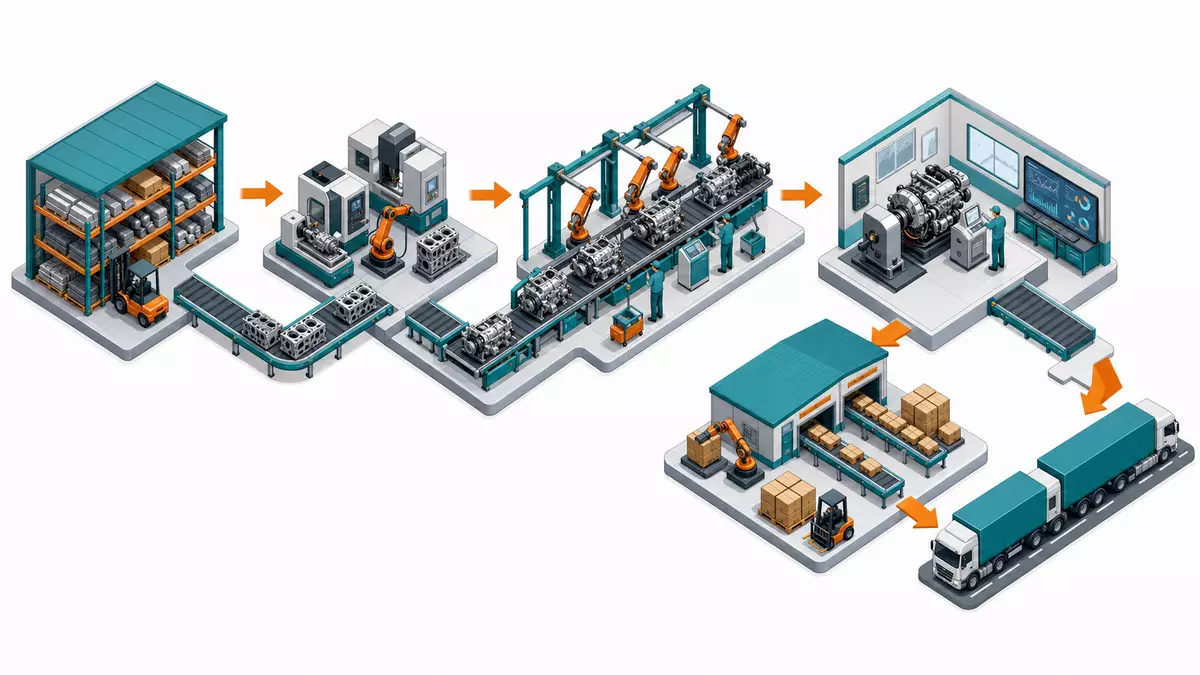
At the product level, Cummins remains best known for its diesel engines used in heavy duty and medium duty trucks, buses, and industrial equipment. These engines, which range from mid sized units to large displacement powerplants capable of delivering hundreds of horsepower, provide the majority of the companys revenue and have established Cummins as a trusted brand among fleet operators. The engines are designed to meet stringent emission standards while delivering fuel efficiency, reliability, and long service intervals. Cummins also produces natural gas engines, which appeal to customers seeking lower emissions and, in some cases, lower fuel costs in markets where natural gas is readily available and priced competitively.
Generators and power systems form another pillar of Cummins product offering. The company manufactures generator sets for residential, commercial, industrial, and critical infrastructure applications, including hospitals, data centers, and telecommunications facilities. These generators can provide backup power during outages or serve as primary power sources in remote locations. Revenue from generator and power systems products, as noted earlier, has been in the low billions annually and provides a diversified income stream that is less directly tied to truck cycles. Over time, Cummins has also integrated digital monitoring and control systems into its power offerings, allowing customers to track performance, schedule maintenance, and manage fleets of generators more efficiently.
Cummins stock and market context
Cummins stock is listed on the New York Stock Exchange with the ticker CMI, and the shares are widely held by institutional investors, including mutual funds, pension funds, and index trackers focused on the S&P 500. The companys inclusion in the S&P 500 index reflects its size and importance within the U.S. equity market, and it ensures that the stock features in many diversified portfolios. Market capitalization has frequently been in the region of $30 billion to $35 billion, depending on the share price, which has fluctuated in response to earnings results, macroeconomic news, and sentiment regarding industrial and infrastructure demand.
Over a representative recent period, Cummins share price has moved within a 52 week range that can span from the mid $190s at the lower end to around $260 at the upper end. This range illustrates the degree of volatility that can accompany cyclical industrial stocks, even when the underlying business remains profitable and cash generative. For investors, such movement offers both risk and opportunity: sharp declines can reflect worries about truck orders or global growth, while rallies often coincide with stronger earnings or optimism about infrastructure spending and regulatory support for cleaner technologies. Against that backdrop, Cummins dividend and balance sheet act as stabilizing factors, providing a base level of return and financial resilience that can help investors navigate cyclical swings.
In this context, Cummins stock today represents a blend of established engine and power systems businesses with emerging low emission solutions, tied together by a disciplined capital allocation policy and a commitment to technological innovation. The companys financial metrics, from revenue growth and margin trends to cash flow and dividend history, give investors concrete reference points for evaluating valuation and risk. At the same time, the strategic trajectory toward electrification, hydrogen, and other low emission technologies suggests that the narrative around Cummins will continue to evolve in the coming years, as markets and regulators increasingly prioritize decarbonization and energy efficiency.
Key data points for Cummins stock
Investors who want to explore more details on Cummins fundamentals, segment breakdown, and historical performance can find additional structured information and disclosures in the companys official filings and investor materials.
Diesel engines remain core revenue driver
Even as Cummins invests heavily in future power solutions, diesel engines remain the core driver of revenue and profit. Fleet operators in trucking, logistics, and construction continue to depend on diesel engines for their combination of torque, reliability, and established support networks. Cummins has refined these engines to meet current and upcoming emission standards, including requirements for reduced nitrogen oxides and particulate matter. By leveraging advanced aftertreatment systems, optimized combustion, and sophisticated controls, the company maintains competitiveness in markets where diesel is likely to remain the dominant solution for heavy duty applications for years to come.
At the same time, Cummins is integrating connectivity and data driven services into its engine offerings. Through telematics and digital platforms, the company can provide fleet managers with insights into fuel consumption, maintenance needs, and driver behavior. These services can enhance total cost of ownership, allowing fleets to extend engine life, reduce downtime, and improve fuel efficiency. Such enhancements may not dramatically alter revenue figures on their own, but they deepen customer relationships and create additional touchpoints for service and parts sales, which can contribute to stable, recurring income.
Cummins stock closing context
For investors, Cummins stock today reflects the intersection of reliable, cash generative legacy businesses and ambitious investment in low and zero emission power solutions. The shares trade on the New York Stock Exchange under the ticker CMI, and the companys market capitalization has often sat in the tens of billions of dollars, placing it firmly among major U.S. industrials within the S&P 500. With an annual dividend exceeding $6.00 per share, a history of consistent cash flow generation, and a balance sheet that maintains net debt around one times EBITDA, Cummins offers a combination of income and cyclical exposure, while its expanding Accelera and other new energy businesses introduce long term growth potential tied to the global shift toward cleaner transportation and power.
Cummins stock key facts
- Company: Cummins Inc.
- ISIN: US2310211063
- Ticker: NYSE: CMI
- Trading venue: New York Stock Exchange
- Market capitalization: around $30-35 billion (recent representative period)
- Sector / Industry: Industrials / Machinery and heavy electrical equipment
- Index membership: S&P 500
Disclaimer regarding our articles: No investment advice, no buy or sell recommendation. Information on prices, companies, and markets is provided without guarantee; changes are possible at any time. Stock market transactions can lead to substantial losses. Our articles are created and reviewed in whole or in part automatically with the support of AI.