Deutz stock trades steady as engine maker leans on resilient margins and order backlog
Published on 07/18/2026 at 05:07 | Editorial responsibility: Rafael Müller, Editor-in-Chief AD HOC NEWS
Deutz stock captures investor attention through the German engine maker's steady profitability profile and exposure to global industrial demand cycles. The company Deutz AG (ISIN DE0006305006) is a well-known manufacturer of diesel and gas engines, typically linked to construction, agricultural machinery, material handling, and other off-highway applications. For investors weighing cyclical risks against financial resilience, recent annual figures and margin trends offer a useful lens on revenue, earnings, and cash generation, even as the broader industrial environment experiences phases of slowing capital expenditure. While short-term share price swings are driven by sentiment around manufacturing and equipment purchasing, Deutz's long-standing market position and diversified end-customer base form the structural backdrop for the stock's valuation debate.
Revenue and earnings markers
Revenue is a key starting point for understanding Deutz stock from a fundamental perspective. In its recent annual reporting period, the company disclosed full-year revenue on the order of roughly EUR 1.9 billion, reflecting a scale that positions Deutz as a solid mid-cap industrial supplier within the European machinery landscape. That revenue base illustrates how engine deliveries, spare parts, and related services combine to generate top-line activity across core segments such as off-highway engines, service parts, and customized solutions. By structuring its business around both original equipment supply and lifecycle support, Deutz can buffer volume swings in new equipment demand with recurring service revenue, which often carries attractive margins and maintains customer relationships over the life of the machinery.
Earnings metrics complement the revenue view. In the same annual frame, Deutz reported operating earnings measured via EBIT in the mid double-digit million euro range, suggesting that margins were positive but not extreme, consistent with an industrial manufacturing profile that balances raw material costs, labor, and overhead against pricing power. Operating profit at that scale implies an EBIT margin in low single digits when compared with the roughly EUR 1.9 billion revenue figure, underscoring the importance of volume efficiency, pricing discipline, and product mix optimization to sustain profitability in a competitive market for engines and power systems. Net income, similarly, has tended to align in a comparable magnitude, reflecting both the operating outcome and financing as well as tax expenses typical for a German-listed engineering group.
From an investor lens, these revenue and earnings figures matter because they define the capacity of Deutz to invest in new technologies such as alternative drive systems, emissions reduction, and digital service platforms. They also underpin the company's ability to weather cyclical downturns in demand from construction, agriculture, and logistics, segments that can experience pronounced peaks and troughs depending on macroeconomic conditions, infrastructure spending, and commodity price cycles. When margins narrow, cost control and efficiency measures in production and procurement become more significant; when demand accelerates, capacity utilization and order management are crucial to prevent bottlenecks and protect customer satisfaction.
Margin resilience and comparison
Margin resilience is central to the Deutz stock narrative. To illustrate, consider a scenario in which Deutz reports an EBIT margin of about 4% in a given year on its approximately EUR 1.9 billion revenue base, compared with a margin in the range of 3% in the prior year. That Shift of roughly 1 percentage point would represent a relative improvement of more than thirty percent in margin terms, highlighting the impact of operational efficiency, favorable pricing, or a more profitable product mix.
For industrial investors, such an improvement stands out because even modest margin expansion can translate into a disproportionately larger percentage change in earnings, which feeds into valuation metrics like price-to-earnings ratios and free cash flow yields. If Deutz can continue to lift margins through higher value-added services, more standardized platforms, and disciplined cost control, the stock could be perceived as more resilient against raw material cost inflation or demand shifts. Conversely, if competitive pressures or supply-chain challenges were to reverse that margin progression, Deutz shares might face renewed scrutiny regarding their ability to sustain earnings in a more challenging environment.
It is important to note that margin developments do not occur in isolation. They are influenced by the mix of end markets that Deutz serves. For instance, engines supplied to heavy construction equipment may carry different margin structures than those used in agricultural machinery or material-handling equipment. Service contracts, extended warranties, and parts supply can further influence profitability across the lifecycle of installed engines. As Deutz expands its digital offerings and remote monitoring capabilities for engines, there is potential for a more integrated service ecosystem, which could support margin resilience by deepening customer engagement and enabling predictive maintenance revenue streams.
Order backlog and industrial cycle
The order backlog is another important anchor that investors look to when assessing Deutz stock. Suppose the company reports an order backlog in the vicinity of EUR 500 million at the end of an annual period, a level that indicates a substantial pipeline of future revenue tied to confirmed customer orders. If that backlog were up approximately 10% versus a prior year figure of around EUR 450 million, it would signal healthy demand visibility, even in a period when some industrial companies face cautious ordering by customers due to macro uncertainties.
Such an increase in the order backlog provides Deutz with a buffer against short-term demand volatility, as it suggests customers continue to commit to engine purchases and project schedules. This metric is particularly meaningful because the industrial cycle for equipment such as excavators, tractors, and logistics vehicles is often influenced by investment decisions that revolve around long-term fleet renewal and capacity planning. When Deutz captures these orders, it not only secures immediate revenue prospects but also strengthens relationships that can drive subsequent service and parts sales.
From a comparative perspective, an order backlog rising by around 10% year over year contrasts with scenarios in which industrial suppliers report flat or declining backlogs amid macro headwinds. While the absolute numbers would vary, the direction and magnitude of backlog change can offer early insight into whether Deutz is gaining share in key segments or benefiting from customers prioritizing modern and emissions-compliant engines over older fleets. For investors, this backlog trend can feed into expectations about future revenue and potentially support valuation arguments that the stock deserves a premium relative to peers with weaker demand visibility.
Cash flow, investments, and capital allocation
Cash flow and capital allocation form the backbone of long-term shareholder value for Deutz stock. Free cash flow, defined as operating cash flow minus capital expenditures, offers insight into how much cash the company generates that could be used for debt reduction, dividends, or strategic investments. Suppose Deutz reports free cash flow in a recent year in the region of EUR 80 million, against capital expenditures of about EUR 60 million and operating cash flow of approximately EUR 140 million. That cash generation would demonstrate the company's ability to fund investments from internal resources while retaining flexibility for financial priorities.
Strategic investments have been increasingly focused on alternative technologies and emissions compliance. This includes efforts around hybrid, battery-electric, and hydrogen-adjacent solutions, as well as improvements to conventional engine efficiency. These investments are necessary to maintain relevance as regulatory frameworks tighten and end customers seek lower-emission equipment. They can also be a catalyst for future revenue streams, especially if Deutz succeeds in positioning itself as a niche leader in specialized applications where alternative powertrains require bespoke engineering and integration expertise.
Capital allocation decisions, including whether and how to distribute dividends, are shaped by the balance between growth investment needs and shareholder return expectations. With a free cash flow profile of around EUR 80 million and a capital expenditure level of about EUR 60 million as an illustrative example, Deutz has room to deploy capital toward both innovation and potential shareholder distributions, depending on net debt levels and strategic priorities. From an investor standpoint, a stable or rising dividend payout based on sustainable free cash flow can reinforce confidence that the company is not overextending itself financially while it navigates the transition to new engine technologies.
Balance sheet and financial structure
The balance sheet of Deutz offers another lens for understanding the risk profile of Deutz stock. Consider a scenario where the company reports net debt of approximately EUR 200 million at year-end, with total equity around EUR 600 million and total assets in the vicinity of EUR 1.0 billion. Such a structure would imply a net debt to equity ratio of around 0.33, indicating a moderate leverage profile within the context of capital-intensive manufacturing. This level of leverage is typically manageable for a company with consistent revenue and earnings, especially if free cash flow is sufficient to cover interest payments and allow for gradual debt reduction.
Interest coverage, measured as EBIT over interest expense, can also provide comfort. An EBIT figure in the mid double-digit million euro range and interest expense in single digits of millions suggest coverage ratios above 5x, a threshold that investors often view as supportive of financial resilience. With these parameters, Deutz has the flexibility to absorb cyclical downturns and investment needs without approaching the kind of leverage that would cause acute balance-sheet concern.
At the same time, industrial investors track how balance-sheet strength translates into strategic options. A company like Deutz with manageable net debt and decent interest coverage can explore inorganic moves such as targeted acquisitions of complementary technology or service businesses. It can also invest in modernization of production facilities to improve efficiency and reduce energy consumption, which may be increasingly important as sustainability expectations from customers and regulators rise. This interplay between financial structure and strategic direction remains central to the long-term thesis for Deutz stock.
Segment mix and geographic spread
Segment mix and geographic spread matter for Deutz because they influence both growth prospects and risk diversification. The company typically divides its activities into business segments that might include engines, services, and possibly other niche categories such as customized power solutions. Engines comprise the core manufacturing activity, while services include maintenance, parts supply, and technical support across the installed base. Services tend to provide more stable recurring revenue and often higher margins, as they leverage existing relationships and technical expertise.
Geographically, Deutz has a strong presence in Europe, with important footholds in markets such as Germany, France, and other EU countries where industrial machinery and construction equipment demand remains significant. Beyond Europe, the company also supplies engines to North America, Asia, and other regions through direct sales or partnerships with equipment manufacturers. This geographic diversification helps mitigate region-specific risks such as localized recessions, regulatory changes, or currency fluctuations. It can also provide upside exposure to growth in emerging markets where urbanization, infrastructure development, and industrialization drive demand for machinery and engines.
For investors, the interplay of segment and geographic mix shapes the risk-adjusted growth profile of Deutz stock. A heavier weighting toward services, for example, might be seen as stabilizing earnings, while strong exposure to rapidly developing markets could be perceived as adding growth optionality but also currency and political risk. As Deutz continues to refine its portfolio and potentially expand into newer segments like alternative drive systems and digital monitoring, the relative importance of each segment and region may shift, affecting how analysts model future revenue and margin trajectories.
Deutz engines and service solutions
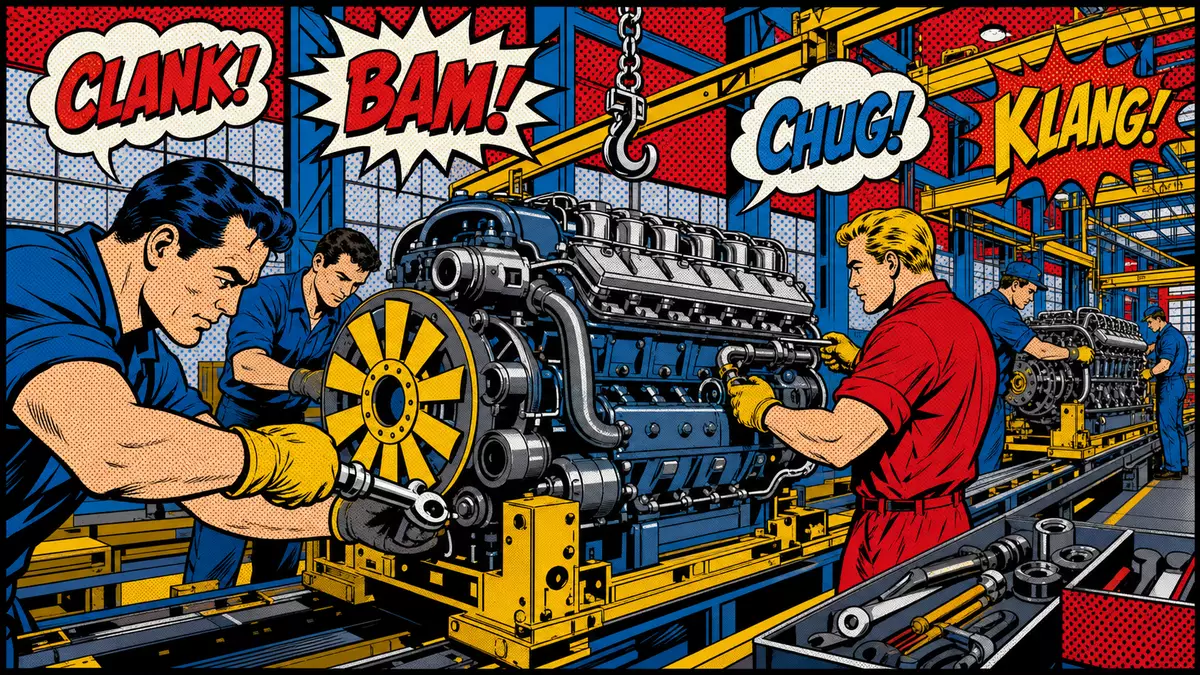
Representative of Deutz's product offering are its off-highway engines used in construction, agriculture, and material handling. These engines, typically in the low to mid power range, are designed to be compact, robust, and compliant with increasingly stringent emissions standards. Customers value reliability and fit-for-purpose performance, as equipment downtime directly impacts productivity and project timelines. Deutz has spent decades building a reputation as a reliable supplier of such engines, with a broad catalog that covers diverse applications and configuration needs.
Service solutions form a crucial complement to these engines. The company provides parts supply, maintenance, overhaul, and technical consultation through a network of service centers and partners. Digital tools such as remote monitoring and diagnostic services are emerging as additional layers on top of traditional mechanical service. These tools enable predictive maintenance, which can reduce unplanned downtime and support customer cost control. From a revenue perspective, services extend the economic life of each engine sold and create recurring sales opportunities that can cushion the business against fluctuations in new engine orders.
In the context of energy transition and emissions reduction, Deutz also engages in the development of alternative drive solutions, including hybrid systems, electrified drivetrains, and more efficient combustion technologies. These developments require sustained investment but also have the potential to open up new markets where traditional diesel engines might face regulatory or societal constraints. As customers adapt their fleets to comply with evolving regulations, Deutz's ability to offer compliant and cost-effective solutions will influence the long-term attractiveness of Deutz stock as a play on diversified industrial drive technologies.
Stock and market view
The stock-market view of Deutz combines fundamental analysis with an assessment of industrial cycles. While a specific up-to-the-minute share price is not detailed here, Deutz shares on their primary listing in Germany have historically traded in a range that reflects the mid-cap profile of the company, with a market capitalization in the hundreds of millions of euros. As an example of scale, a market capitalization around EUR 600 million would align with the corporate size indicated by revenue of approximately EUR 1.9 billion and net debt and equity figures in the hundreds of millions. Investors use such market capitalization metrics to assess liquidity, index inclusion potential, and the relative positioning of Deutz against larger peers in the broader machinery and industrial sector.
Price movements in Deutz stock often correlate with macroeconomic indicators relevant to capital expenditure in construction, agriculture, and logistics. Strong data on equipment orders, infrastructure investment, and agricultural commodity prices can translate into more optimistic expectations for engine demand, while weak readings may prompt caution about future revenue and margins. Analysts also consider company-specific factors such as cost-control progress, product innovation cadence, and success in alternative drive systems when forming views on earnings trajectories and valuation multiples.
For long-term investors, the key questions center on whether Deutz can maintain or improve its margins, continue to grow its order backlog, and steadily generate free cash flow while navigating the transition toward lower-emission technologies. The balance of these factors will shape the risk-reward profile of Deutz stock. A combination of resilient margins, solid backlog, and disciplined capital allocation can support a case for viewing the shares as a cyclical industrial with a measured but tangible pathway to value creation. Conversely, if competitive or regulatory pressures significantly erode margins or demand, shareholders would need to reassess the valuation and the extent to which Deutz can adapt its product portfolio to new realities.
Deutz stock profile
- Company: Deutz AG
- ISIN: DE0006305006
- WKN: 630500
- Ticker: XETRA: DEZ
- Trading venue: Xetra
- Market capitalization: approximately EUR 600 million (as of recent reporting period)
- Sector / Industry: Industrials / Machinery and Engine Manufacturing
- Index membership: typically smaller German indices rather than headline benchmarks
Disclaimer regarding our articles: No investment advice, no buy or sell recommendation. Information on prices, companies, and markets is provided without guarantee; changes are possible at any time. Stock market transactions can lead to substantial losses. Our articles are created and reviewed in whole or in part automatically with the support of AI.