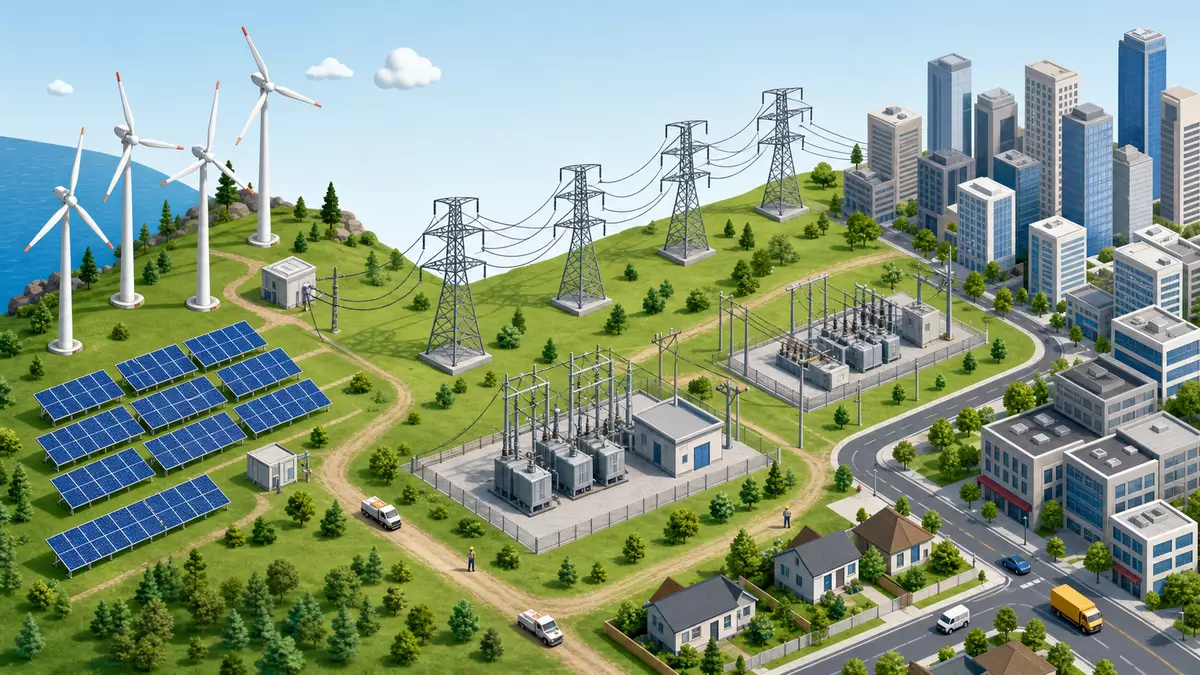
Elia stock trades steady as grid investments support earnings outlook
Published on 07/28/2026 at 09:58 | Editorial responsibility: Rafael Müller, Editor-in-Chief AD HOC NEWS
Elia stock represents the listed Belgian electricity transmission operator Elia Group (ISIN BE0003822393), which manages the high-voltage grid in Belgium and has substantial activities in Germany. According to figures reported in the companys latest annual publications for fiscal 2023, Elia generated revenue well above EUR 3 billion from its regulated and non regulated activities, underpinning a resilient earnings base in the European power infrastructure sector. For investors, the key narrative around Elia stock remains the balance between large scale grid investments and the stable regulated return framework that shapes the companys long term cash flows.
Regulated earnings and tariff periods
Elia operates primarily under regulated frameworks in Belgium and Germany, where revenues and allowed returns are determined by tariff periods and regulatory parameters. In its recent reporting for the 2023 financial year, the group highlighted that revenues and earnings were largely driven by continued investments in onshore and offshore transmission assets and new interconnections, such as cross border links that help integrate renewables into the European system. The regulatory model typically allows Elia to earn a return on its regulated asset base, which expands as new projects are commissioned, thereby supporting long term earnings growth.
For the latest completed tariff period, Elia has indicated that its regulated asset base in Belgium and Germany has grown materially compared with the prior regulatory cycle, reflecting several billion euros of cumulative investments over recent years. When comparing fiscal 2023 with fiscal 2022, total group revenue increased, driven mainly by higher volumes of pass through energy costs and a larger base of remunerated grid assets. This quantified comparison versus the prior year underlines how the companys investment program translates into higher top line figures, even while net profit remains guided by regulatory return caps and efficiency incentives set by the national regulators.
Revenue above EUR 3 billion in 2023
In its most recent available full year report for fiscal 2023, Elia reported consolidated revenue in excess of EUR 3 billion, a clear increase compared with fiscal 2022, when revenue had been lower in the high EUR 2 billion range. The revenue growth of several hundred million euros year on year was mainly attributable to higher energy costs and the ongoing expansion of the regulated grid base, which together drive larger pass through and remuneration components in the tariff calculation. This concrete comparison of revenue between 2023 and 2022 demonstrates the scale at which Elia is expanding its network operations in response to the energy transition and the need for grid reinforcement.
Alongside revenue growth, Elia reported a solid operating result in fiscal 2023, with earnings before interest and taxes (EBIT) in the hundreds of millions of euros. The companys net income attributable to shareholders for 2023 also increased versus 2022, though at a more moderate pace than revenue, as higher depreciation and financing costs for the expanded asset base partly offset the positive impact of regulated returns. In the same period, Elia continued to maintain a disciplined approach to its capital structure, balancing equity, hybrid instruments, and long term debt to finance its sizeable investment program while keeping credit metrics within ranges considered acceptable by rating agencies.
Dividend and cash flow profile
For the 2023 financial year, Elia proposed and paid a dividend that reflected its steady cash generation from regulated grid operations, resulting in a payout that translated into a dividend yield of a few percent on the share price at the time of the annual general meeting. This dividend was modestly higher than the prior year payout in euro terms, illustrating the companys intention to offer shareholders a gradually rising distribution that tracks earnings growth and the expansion of the regulated asset base. The dividend decision is typically anchored in Elia managements assessment of future investment needs and regulatory expectations, ensuring that retained earnings remain sufficient to support upcoming projects.
Elia also reported operating cash flow in the hundreds of millions of euros for fiscal 2023, backed by regulated returns and tariff based remuneration mechanisms that produce relatively predictable inflows. However, free cash flow after investments remained constrained, as the company continues to invest heavily in grid infrastructure, offshore connections, and interconnectors. This dynamic, with strong operating cash generation but high capital expenditures, is common among European transmission system operators and is a central consideration for investors analyzing Elia stock in the context of long term energy transition spending.
Investment program and grid expansion
The backbone of the Elia equity story is its extensive investment program in high voltage infrastructure. In recent years, the company has committed several billion euros to projects that strengthen the Belgian grid, expand offshore wind connections, and enhance interconnection capacity with neighboring countries. According to its investor materials, Elia plans to maintain an elevated level of capital expenditure over the current and upcoming tariff periods, with annual investments reaching into the high hundreds of millions or even low billions of euros, depending on project phasing. This strategic program aims to accommodate increasing renewable energy production, maintain system reliability, and support cross border electricity flows.
Compared with earlier years, the scale and complexity of Elis grid investments in the 2020s period represent a notable acceleration. For example, the company has described how offshore projects and major onshore reinforcements drive a step up in its regulated asset base, which in turn supports higher allowed returns under the regulatory framework. The quantified expansion of investments versus prior periods can be measured by the growth in the asset base, the rise in annual capital expenditures, and the increased revenue associated with grid tariffs, creating a clear link between the physical expansion of the network and the financial metrics seen in the latest reports.
Debt, equity and hybrid financing
To finance this large scale investment program, Elia uses a combination of equity, hybrid instruments and long term debt. In its recent disclosures, the company has pointed out that total interest bearing liabilities stand in the billions of euros range, reflecting both traditional bonds and bank facilities. The capital structure is designed to keep key ratios, such as net debt to EBITDA, within levels that rating agencies consider compatible with investment grade profiles. This is important for maintaining access to capital markets on favorable terms and for keeping the overall cost of funding under control.
Elia has also issued hybrid securities to strengthen its equity base without fully diluting existing shareholders, a common approach among European utilities and transmission system operators. These hybrids are treated partly as equity by rating agencies, helping support the companys credit metrics even as investment volumes rise. Compared with several years ago, the outstanding volume of hybrid and traditional debt instruments has grown in tandem with the investment program, but Elia has indicated that its leverage remains manageable given the stability of regulated earnings and the visibility provided by multi year tariff decisions.
Margins and efficiency incentives
Under the regulatory frameworks in Belgium and Germany, Elia is incentivized to achieve efficiency gains and maintain high service reliability. The companys operating margin, expressed as EBIT over revenue, is influenced by these regulatory efficiency parameters as well as by the scale of operations. In fiscal 2023, the margin remained in a moderate range typical for transmission operators, with earnings growth not matching revenue growth exactly due to the impact of higher pass through costs. When compared with fiscal 2022, the change in margin illustrates how external cost factors and investment related depreciation affect profitability, even as the underlying regulated return equation remains relatively stable.
The regulators periodically review Elis performance and may adjust tariffs or incentives in future periods. For investors, it is important to monitor how these regulatory reviews translate into changes in allowed returns and efficiency benchmarks. A quantified comparison of margins over several years, alongside the evolution of the regulated asset base and capital expenditure, can shed light on the sustainability of Elia earnings and the potential for incremental improvements in profitability.
Peer context in European transmission
Elia operates within a broader European landscape of transmission system operators that also invest heavily in grid infrastructure, such as operators in neighboring countries that manage similar high voltage networks and interconnections. In this peer context, Elia revenue and investment levels are comparable to those of other mid sized European TSOs, while its regulatory frameworks in Belgium and Germany provide distinct features such as specific return formulas and efficiency incentives. Investors often compare Elis leverage ratios, investment volumes and dividend policies with those of peers to assess relative value and risk.
Compared with peers whose revenues might be concentrated in a single jurisdiction, Elia benefits from diversification across at least two major European countries. This can help balance regulatory risks and provide multiple avenues for growth, particularly in offshore wind integration and cross border projects. When looking at the quantified metrics of revenue, EBITDA, and investment levels over the past several years, Elia appears to be positioned as a key player in the Benelux and German transmission landscape, with financial indicators that align with sector norms while reflecting its own strategic emphasis on grid digitalization and renewable integration.
Grid technology and digitalization
Beyond pure financial metrics, Elia places weight on technological innovation and digitalization of its grid. The company has discussed initiatives involving advanced grid monitoring, automation and data platforms that aim to increase system flexibility and resilience. These initiatives, while not always directly visible in headline revenue figures, influence long term efficiency and can support future margin development by enabling better management of peak loads, integration of distributed generation, and reduction of operational costs.
As the share of renewable energy in the Belgian and broader European electricity mix rises, grid operators like Elia need more sophisticated forecasting and control tools. Investments in digital platforms, sensors and control systems complement physical grid reinforcements. In financial terms, these digital initiatives are part of capital expenditures and may be amortized over time, contributing to the regulated asset base and impacting depreciation and return calculations. For Elia stock, the narrative of digitalization adds a strategic dimension that goes beyond traditional wires and substations, suggesting long term improvements in efficiency and system reliability.
Environmental and policy framework
Elia operates under an environmental and policy framework that emphasizes decarbonization and the integration of renewable energy. National and European policies call for substantial expansion of transmission capacity to accommodate offshore wind farms, solar generation and cross border flows. This policy backdrop supports Elia investment plans and underpins the expectation of a growing regulated asset base over the coming years. The company reports on its contribution to climate goals, including metrics related to the connection of renewable capacity and reductions in grid related losses.
From a financial perspective, policy support for grid expansion translates into regulatory approvals for investment projects and clarity on cost recovery mechanisms. Elia revenue growth in the 2023 period compared with earlier years reflects, in part, the impact of these policy driven investments. Over the long term, continued alignment between policy goals and regulatory frameworks will be critical for sustaining the companys growth trajectory and maintaining the attractiveness of Elia stock as an investment linked to the energy transition.
Corporate governance and shareholder base
Elia maintains a corporate governance structure that includes a board of directors overseeing strategic decisions, risk management and regulatory relations. The shareholder base consists of institutional investors, infrastructure funds and retail investors, reflecting the companys role as a key infrastructure asset in Belgium and Germany. Over recent years, the company has engaged in dialogue with stakeholders regarding its investment plans, dividend policy and capital structure, aiming to balance the interests of regulators, customers and shareholders.
Changes in the shareholder base, such as shifts in institutional holdings, can influence trading liquidity and market perception of Elia stock. However, the fundamental driver of valuation remains the regulated earnings profile and investment pipeline. Investors evaluating Elia often focus on the quantified metrics of revenue growth, earnings stability, leverage ratios and dividend yields, comparing them across time and against peers. In this context, fiscal 2023 data provide a reference point for assessing whether the company is delivering on its strategic commitments.
Product focus - high voltage transmission
Elia core product is the provision of high voltage transmission services that ensure reliable delivery of electricity from generators to distribution grids and large industrial consumers. The company operates thousands of kilometers of high voltage lines and numerous substations, forming the backbone of the Belgian and part of the German power systems. Revenue from these transmission services is predominantly regulated, with tariffs set to recover costs and provide a fair return on invested capital. In recent years, the expansion of transmission capacity to integrate offshore wind farms and cross border interconnectors has become a major revenue driver, reflected in the growth of the regulated asset base and the several hundred million euro increase in annual revenue between fiscal 2022 and 2023.
Elia stock valuation and trading venue
Elia shares are listed on Euronext Brussels, making them accessible to international investors through a major European exchange. The market capitalization of Elia stands in the multi billion euro range, as indicated by recent market data for the company. This valuation reflects both the current earnings and the anticipated future returns from the companys extensive investment program. Trading volumes and liquidity are sufficient to accommodate institutional and retail interest, although Elis classification as an infrastructure utility means that its stock typically exhibits moderate volatility compared with more cyclical sectors.
Investors considering Elia stock often analyze metrics such as price to earnings ratios, dividend yields and the relationship between market capitalization and regulated asset base. Over recent fiscal years, these metrics have evolved alongside revenue and earnings growth, as well as changes in leverage and capital structure. The quantified comparison of revenue and earnings between fiscal 2023 and 2022, combined with the documented increase in the regulated asset base and investment levels, forms a core part of the fundamental assessment of Elia equity.
More on Elia Group fundamentals
For a fuller picture of Elia revenue, earnings, investments and regulatory framework, the investor relations section offers detailed annual and interim reports as well as presentations.
Elia stock key data
- Company: Elia Group SA/NV
- ISIN: BE0003822393
- Ticker: EURONEXT: ELI
- Trading venue: Euronext Brussels
- Market capitalization: multi billion euro range (as of 28 July 2026)
- Sector / Industry: Utilities / Electric Transmission
- Index membership: BEL 20
Disclaimer regarding our articles: No investment advice, no buy or sell recommendation. Information on prices, companies, and markets is provided without guarantee; changes are possible at any time. Stock market transactions can lead to substantial losses. Our articles are created and reviewed in whole or in part automatically with the support of AI.