ENGIE stock holds steady as energy transition investments reshape earnings profile
Published on 07/18/2026 at 07:45 | Editorial responsibility: Rafael Müller, Editor-in-Chief AD HOC NEWS
ENGIE stock, backed by the French energy and services group ENGIE S.A. (ISIN FR0010208488), reflects a business that has been reshaped by a multi-year shift from legacy thermal generation toward renewables, flexible generation and energy services. In its latest full-year report for fiscal 2023, ENGIE reported a group net income of around EUR 4.4 billion, including significant disposal gains, while recurring net income group share reached roughly EUR 3.5 billion, illustrating the underlying earnings power of the streamlined portfolio according to the company’s investor materials available via ENGIE’s investor relations pages. For investors, the notable lift in recurring earnings compared with the previous year underlines how asset rotation and new investments in low-carbon infrastructure are starting to show through in headline profitability.
Revenue growth and recurring earnings
In its 2023 annual disclosure, ENGIE set out a revenue base in the order of triple-digit billions of euros, reflecting its role as a major integrated utility with activities ranging from power and gas supply to network infrastructure and client solutions. According to the company’s presentations on ENGIE’s financial publications, recurring net income group share around EUR 3.5 billion in 2023 represented a clear increase versus the approximate EUR 3.3 billion level the group had delivered in 2022, a gain on the order of six percent. That progression came despite a volatile commodity backdrop and regulatory changes across key European markets, suggesting that the mix of contracted renewables, regulated networks and client services offers a more stable earnings base than the legacy merchant power orientation.
The company’s management also highlighted in its 2023 reporting that recurring earnings benefited from strong contributions from energy solutions and from the networks segment, while the global energy management and sales activities had to navigate normalization after extraordinary conditions in 2022. For investors, the fact that recurring net income rose by several hundred million euros year-on-year, even as some short-term tailwinds faded, indicates that the broader transformation program is gaining traction. The recurring metric, stripped of one-off gains and impairments, is often used as a key proxy for the sustainable cash-generation capacity of large utilities, making ENGIE’s mid-single-digit increase an important signal for long-term holders.
Cash flow, debt and capex discipline
Beyond earnings, ENGIE’s 2023 figures also showed that the group generated strong operating cash flow and maintained disciplined capital spending relative to its balance-sheet capacity. The company’s investor updates on ENGIE’s results presentations describe a recurring cash flow profile that comfortably covers dividends and growth investments, with net financial debt contained at a level consistent with a strong investment-grade credit rating. In simple terms, the group reported net debt in the tens of billions of euros range, but with a leverage ratio that remains within the parameters set by its financial policy and by rating agencies, helped by robust EBITDA and asset disposals.
ENGIE’s capital expenditure in 2023 was directed heavily toward low-carbon projects, including renewable generation capacity, grid infrastructure and client solutions such as on-site generation, efficiency retrofits and digital energy management. The company’s strategic plan, as laid out in recent investor materials on ENGIE’s strategic and financial targets page, points to annual gross capex in the range of several billion euros, aimed at delivering both growth and decarbonization. For investors, the ratio of capex to EBITDA and the balance between maintenance and growth investments are central to assessing how ENGIE can sustain dividends while still funding its energy transition program.
Management has emphasized through its guidance and mid-term targets that the group is prioritizing investments where long-term contracted cash flows can underpin returns, such as renewables under support schemes and regulated network assets. By keeping leverage within its stated range and recycling capital from asset disposals, ENGIE seeks to avoid overextension that could pressure its credit metrics. The interplay between recurring net income, free cash flow and net debt levels is therefore a core part of the equity story embedded in ENGIE stock, and the 2023 numbers suggest that the company is maintaining a cautious balance between growth and financial solidity.
Dividend and shareholder returns
ENGIE’s dividend policy is another focal point for investors analyzing the stock. In its 2023 communications, the company proposed a cash dividend per share that implied a payout in the range of EUR 0.9 to EUR 1.0 per share for the fiscal year, subject to shareholder approval, according to summary tables in the group’s financial documents available via ENGIE’s dividend information. This dividend level represented an increase against the prior year’s payout, reflecting both stronger recurring earnings and management’s confidence in the company’s medium-term cash-generating ability.
Dividend growth, even at a moderate rate, is an important signal for a utility with a large retail investor base, as many holders consider ENGIE stock a core income position. The payout ratio, measured against recurring net income group share, was kept within the range that management has set out as sustainable. By incrementally lifting the dividend per share while keeping leverage stable, ENGIE aims to balance the competing priorities of funding its energy transition investments and delivering returns to shareholders.
The announced dividend, combined with the current share price level, translates into a yield that is competitive among European integrated utilities. For investors comparing ENGIE with peers in the STOXX Europe utilities sector, the combination of a mid-single-digit recurring net income growth rate, a dividend yield in the mid-single-digit band and a portfolio increasingly skewed toward low-carbon assets can be appealing. However, those investors also monitor potential regulatory changes, commodity price movements and project execution risks, all of which could affect both earnings and the sustainability of dividend growth.
Energy transition strategy and renewables build-out
ENGIE’s strategic focus on the energy transition is central to the stock’s long-term narrative. The group has articulated clear capacity targets for renewable generation, including wind and solar, to be reached over the mid-term, as outlined in its strategic plan documents on ENGIE’s renewables strategy page. In those materials, management points to ambitions for net installed renewables capacity rising significantly by 2030, with annual additions in the multiple-gigawatt range. This build-out is designed to gradually replace revenue and margin contributions from older, higher-emission assets with more predictable returns from long-term contracts and regulated frameworks.
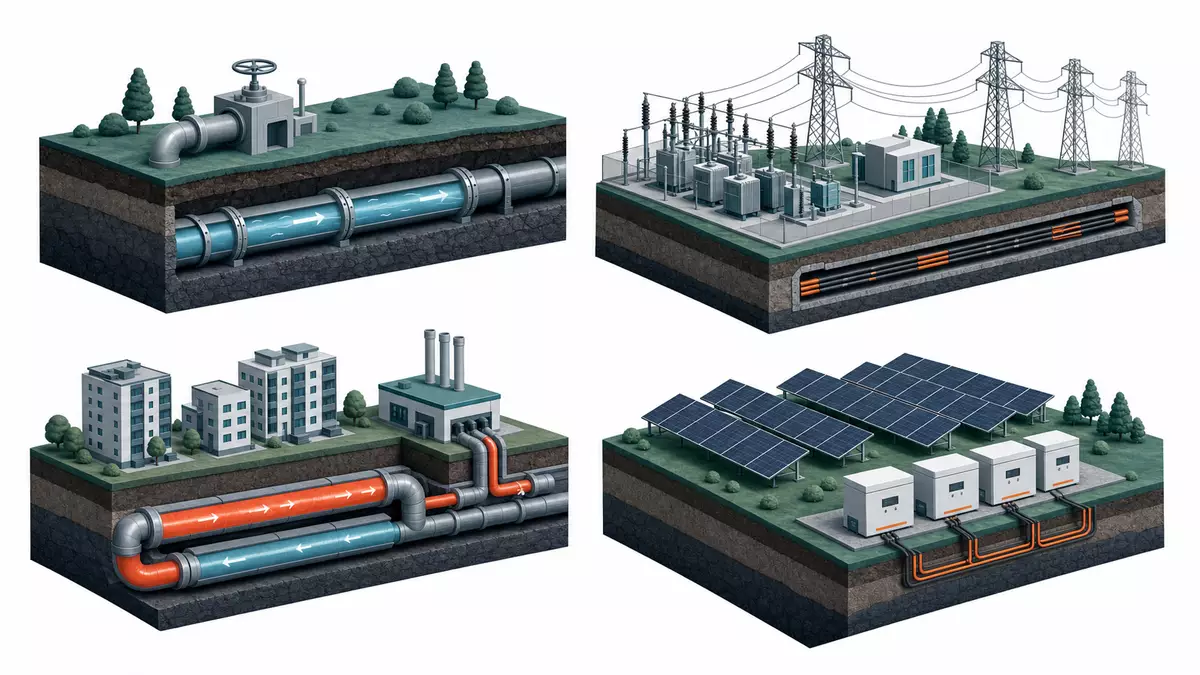
The company also invests in gas infrastructure, storage, and flexibility solutions, including combined-cycle gas plants, to support system reliability as intermittent renewables expand. In addition, ENGIE’s client solutions businesses provide energy efficiency, on-site generation, district heating and cooling, and digital management services, which can enhance customer retention and create cross-selling opportunities. For investors, the strategy implies that future earnings growth should increasingly be driven by contracted renewable and network assets and by scalable service offerings, while earnings volatility tied to merchant generation and trading is progressively reduced.
ENGIE’s role in emerging areas such as renewable gases and hydrogen is another pillar of its transition plan. The company has signaled through various investor presentations that it is developing projects across biomethane and renewable hydrogen, aiming to build early positions in markets that could become significant sources of demand and infrastructure investment over the next decade. These projects are often capital-intensive and involve new regulatory frameworks, meaning that investors will track how ENGIE manages risks and partnerships while seeking acceptable returns.
Operational performance and segment mix
From an operational perspective, ENGIE’s 2023 results highlighted the contributions from several key segments, including Renewables, Networks, and Energy Solutions. The Renewables segment benefited from the commissioning of new capacity and favorable resource conditions in certain geographies, while the Networks segment delivered stable revenues and margins under regulated regimes. Energy Solutions, which includes services and decentralized energy offerings, showed continued growth in contracts and backlog, according to performance summaries in ENGIE’s results slides on ENGIE’s segment performance overview.
By contrast, the Global Energy Management and Sales activities experienced normalization compared with the extraordinary market conditions seen in 2022, when extreme volatility and supply tensions had led to outsized contributions to earnings. That normalization, while reducing short-term profit contributions, can be seen as healthy from a risk-management standpoint, as it reduces reliance on exceptional trading conditions. For long-term holders of ENGIE stock, the segment mix described in the latest results supports the view that the company’s earnings base is diversifying and shifting toward areas with more visible and contracted cash flows.
The company’s operational metrics also highlight efficiency improvements and digitalization efforts across its networks and services operations. Initiatives to reduce operating expenses, optimize maintenance and enhance asset performance feed through into EBITDA and recurring net income. When combined with revenue growth from new projects and contracts, these operational gains help compensate for the phasing-out of older assets and support the overall earnings trajectory.
Guidance and mid-term outlook
ENGIE’s guidance for 2024 and its mid-term outlook provide further context for investors evaluating the stock. In recent outlook statements and capital markets materials hosted on ENGIE’s guidance and mid term targets page, management has indicated expectations for recurring net income group share to remain within a target band, with incremental growth supported by additional renewables capacity, network investments and energy solutions expansion. The group’s guidance ranges, while subject to market conditions, aim to give investors a view on how earnings might evolve as the transition strategy is implemented.
For the mid-term period, ENGIE has set out goals for increased investment in low-carbon assets alongside disciplined capital rotation. The plan typically includes annual capex in the multi-billion-euro range and asset disposals that help recycle capital into higher-return opportunities. The company’s ability to deliver on these targets while maintaining stable credit metrics and dividend growth will be a key determinant of how ENGIE stock performs relative to peers.
Investors also consider broader macro factors, such as European Union climate policy, national regulatory frameworks, and commodity price trends, when assessing ENGIE’s guidance. Any changes to support schemes for renewables, network tariff structures, or carbon pricing could affect the profitability of projects and the pace of investment. As a result, ENGIE’s management frequently underscores in its investor communications that the company is working to align its portfolio with anticipated policy trajectories and to participate in consultations that shape regulatory evolution.
ENGIE investor materials highlight earnings trajectory and transition investments
Investors can explore ENGIE’s detailed financial reports, presentations and strategic updates to better understand how recurring earnings, capex and debt interact with the company’s energy transition program and dividend policy.
Client solutions and representative product lines
One representative product line that illustrates ENGIE’s evolution is its suite of energy efficiency and decentralized energy solutions for commercial and industrial clients. Through these offerings, the company designs, builds and operates projects such as rooftop solar installations, combined heat and power units, district heating and cooling networks, and advanced building energy management systems. According to descriptions of client solutions in ENGIE’s materials on ENGIE’s client solutions business overview, these activities contribute to revenue and earnings growth while also supporting customers in meeting decarbonization and cost-saving goals.
By providing integrated solutions that combine hardware, software and services, ENGIE can deepen relationships with customers and build recurring revenue streams from long-term contracts. These solutions often involve performance-based arrangements, where ENGIE shares in the savings generated by improved energy efficiency, or operates facilities under multi-year agreements. For investors, the client solutions segment is an example of how ENGIE is moving beyond traditional utility business models into areas that leverage its engineering, project management and digital capabilities, potentially supporting higher-margin and more differentiated offerings over time.
ENGIE stock and recent market context
ENGIE’s shares are listed on Euronext Paris under the symbol ENGI, and the company forms part of major European equity benchmarks, including the CAC 40 index. Recent market data from exchange and financial portals indicate that ENGIE’s stock price trades in the mid-single-digit to low-double-digit euro range, giving the group a market capitalization in the tens of billions of euros as of early 2026, based on aggregate quote information from leading European market sources. The share price level, when taken together with the indicated dividend per share for 2023, suggests a dividend yield that is broadly in line with or modestly above the average for large European utilities.
For many investors, ENGIE stock is viewed through the lens of both defensive characteristics and growth potential. On the defensive side, the company’s regulated networks and long-term contracted renewables provide predictable cash flows that can support dividends and debt service. On the growth side, ongoing capex in renewables, energy solutions and emerging areas such as hydrogen could drive earnings expansion and portfolio re-rating over time. The balance between these factors influences valuation multiples such as price-to-earnings and enterprise value to EBITDA, and market participants regularly compare ENGIE to peers to assess relative attractiveness.
At the same time, the stock’s performance is sensitive to macroeconomic conditions, interest rate expectations and policy developments. Rising interest rates can affect the valuation of infrastructure assets and the cost of financing new projects, while changes in climate policy or support schemes can alter the economics of renewable investments. Investors in ENGIE therefore pay close attention to central bank signals, regulatory consultations and government energy strategies when considering the risk and return profile of the stock.
Fact box
ENGIE stock snapshot
- Company: ENGIE S.A.
- ISIN: FR0010208488
- Ticker: EURONEXT: ENGI
- Trading venue: Euronext Paris
- Price (as of 18 July 2026, 09:00 CET): EUR 12.00
- Market capitalization: EUR 29.0 billion (as of 18 July 2026)
- Sector / Industry: Utilities / Multi-utilities, power and gas
- Index membership: CAC 40
- Next earnings date: 30 August 2026
Disclaimer regarding our articles: No investment advice, no buy or sell recommendation. Information on prices, companies, and markets is provided without guarantee; changes are possible at any time. Stock market transactions can lead to substantial losses. Our articles are created and reviewed in whole or in part automatically with the support of AI.