Exxon Mobil stock edges higher as refining strength offsets softer upstream prices
Published on 07/28/2026 at 09:34 | Editorial responsibility: Rafael Müller, Editor-in-Chief AD HOC NEWS
Exxon Mobil stock continues to trade with a firm underlying tone on the NYSE as investors digest the company’s latest quarterly figures, which highlighted how stronger refining margins and disciplined capital spending are helping to support cash generation despite a more volatile crude oil backdrop in 2026.
Refining margins drive Q1 2026 earnings
According to Exxon Mobil’s investor materials for Q1 2026, the company reported total earnings of around $8 billion for the quarter, with solid contributions from its downstream and chemicals businesses helping to balance a more mixed picture in upstream production. In the same period of the prior year, earnings were lower as refining margins and chemical spreads were less favorable, underscoring how the current environment is supporting profitability in these segments. The company also pointed to cost efficiencies and portfolio high-grading as key drivers behind the resilience of its non-upstream operations in Q1 2026.
Management emphasized that refining throughput remained robust over the quarter as the company leveraged its well-invested sites and logistics network to capture margins in gasoline and distillates. In Q1 2026, Exxon Mobil processed a high level of crude across its refining system compared with Q1 2025, reflecting optimization efforts and the absence of major unplanned outages. This operational performance contributed to adjusted earnings that were above internal expectations and provided a partial offset to softer upstream realizations linked to lower average prices for certain grades of crude and natural gas during the quarter.
Earnings of about $8 billion contrast with prior year
The earnings profile in Q1 2026 sits in contrast with the prior-year quarter, when Exxon Mobil’s net income was closer to $7 billion amid a different mix of commodity prices and margins across its portfolio. The roughly $1 billion increase year on year reflects both structural improvements in the business and cyclical tailwinds, particularly in refining and chemicals. For investors, the comparison reinforces a key point: while Exxon Mobil remains exposed to oil and gas price swings, diversified contributions from downstream and chemicals can materially influence the bottom line from one year to the next.
Exxon Mobil’s Q1 2026 return on capital employed benefited from the higher earnings base and from a capital program that stayed within previously signaled ranges. The company continued to prioritize projects with favorable returns and shorter payback periods, balancing major long-term developments in upstream with incremental capacity expansions and debottlenecking in refining and chemicals. This capital discipline is important at a time when the broader oil and gas sector is facing questions about long-term demand trajectories and policy shifts linked to energy transition and climate goals.
Revenue near recent levels as upstream prices moderate
In terms of top-line performance, Exxon Mobil’s Q1 2026 revenue remained broadly in line with recent quarters, reflecting the interplay between volumes and price realizations. While the company does not highlight a single headline revenue figure in every communication, investors can infer that the combination of upstream production, refined product sales, and chemical shipments generated a substantial revenue base comparable to the prior-year quarter, with contributions from newer projects and capacity additions offsetting areas of natural decline.
Upstream volumes in Q1 2026 were slightly higher than in Q1 2025 as new wells came online and certain projects ramped up; however, the average realized price for oil and gas was lower than in the period of elevated commodity prices that characterized parts of 2022 and early 2023. This means that even as Exxon Mobil produced more barrels of oil equivalent, revenue and earnings growth depended heavily on cost control and margin performance rather than on price-driven expansion alone. For investors, this dynamic illustrates why integrated energy companies need to remain focused on operational efficiencies and portfolio optimization across the cycle.
Cash flow and dividend capacity remain central
Exxon Mobil’s cash flow story continues to be central to the investment case. In Q1 2026, operating cash flow remained strong, supported by the $8 billion earnings base and working capital movements that did not materially constrain liquidity. Free cash flow after capital expenditures gave the company room to maintain its dividend and evaluate incremental shareholder distributions when appropriate. Historically, Exxon Mobil has viewed its dividend as a priority, and the current level of cash generation suggests that this stance remains intact, subject to changes in the broader macro and commodity environment.
In prior years, when earnings were more volatile and commodity prices shifted rapidly, Exxon Mobil made clear that capital allocation needed to balance reinvestment in the business with returns to shareholders. The Q1 2026 figures reaffirm this approach, with investment directed towards projects that support medium-term growth and emissions-reduction initiatives while still leaving scope for dividends and, potentially, buybacks. For investors who use cash flow metrics as a guide, the quarter’s results provide comfort that the company can navigate oil price variability while sustaining its capital program.
Market capitalization and S&P 500 role
As of mid 2026, Exxon Mobil’s market capitalization stands in the region of $400 billion, placing the company among the largest constituents of the S&P 500 and underscoring its importance to broad equity benchmarks and energy-sector indices. This scale means that movements in Exxon Mobil stock can influence energy ETFs and index-tracking funds, especially during periods of sector rotation linked to macro data, interest rates, or commodity price trends. For retail investors, the company’s size and index presence add another layer to the stock’s behavior beyond individual fundamentals.
The market capitalization figure also reflects investor views on the long-term trajectory of oil and gas demand, the pace of energy transition, and the ability of integrated majors like Exxon Mobil to adapt and generate returns. Compared with some smaller peers, Exxon Mobil’s valuation incorporates not only its current earnings power but also the value of its resource base, infrastructure, and emerging low-carbon businesses. Shifts in this valuation over time can be influenced by factors such as changes in policy frameworks, technological developments in alternatives, and corporate announcements on emissions targets or new investment areas.
Revenue up 15 percent in a recent year
Looking back to a recent full fiscal year, Exxon Mobil reported revenue growth of around 15% compared with the prior year, driven by a combination of higher commodity prices and increased volumes coming from key upstream developments and improved utilization across its refining and chemicals network. This double-digit revenue increase provided a foundation for stronger earnings and cash flow, reinforcing the company’s capacity to fund both legacy operations and new initiatives in areas such as carbon capture, storage, and lower-emission fuels.
The 15% revenue growth also highlighted how sensitive Exxon Mobil’s top line can be to macro conditions. When oil and gas prices move higher, especially from relatively low starting points, integrated majors can see pronounced shifts in revenue and earnings. However, such growth must be interpreted in context: investors recognize that part of the increase reflects cyclical factors that may not persist over multiple years. Consequently, they tend to focus on how efficiently the company converts revenue into earnings and cash, including through cost management and disciplined capital allocation.
Margin profile and cost discipline
Exxon Mobil’s margin profile remains a critical metric for assessing the durability of its earnings. In segments such as refining and chemicals, margins can fluctuate with product spreads and feedstock costs, while upstream operating margins are heavily influenced by realized prices and lifting costs. Over the past several quarters, including Q1 2026, the company has underscored efforts to improve margins through operational excellence programs, technology deployment, and targeted investments in high-return assets.
For example, incremental gains in energy efficiency at refineries, improved reliability in upstream operations, and optimization in logistics can each contribute to better margin outcomes even in markets where prices are not particularly supportive. These initiatives are especially important given the broader industry context, where investors increasingly scrutinize how oil and gas companies manage costs and align their strategies with long-term environmental and regulatory trends. Exxon Mobil’s ability to demonstrate continuous improvement in margins can help sustain investor confidence during phases of commodity price consolidation.
Balance sheet strength and leverage
Exxon Mobil has historically emphasized balance sheet strength as a differentiating factor among integrated majors. Debt metrics over recent years show that the company has maintained leverage at levels considered manageable relative to its cash flow and asset base. While specific figures can vary quarter to quarter based on issuance, repayment, and currency movements, the broader picture in Q1 2026 is one of a company with the flexibility to weather downturns and seize opportunities when market conditions present attractive entry points for new investments or acquisitions.
From an investor perspective, this balance sheet resilience means that Exxon Mobil can take a long-term view on capital projects that may require significant upfront spending but offer compelling returns over time. It also supports the company’s ability to maintain dividends and consider repurchases without jeopardizing financial stability. In an environment where interest rates and credit spreads remain closely watched, a solid balance sheet can be a meaningful advantage, particularly versus peers with higher leverage or more concentrated exposure to specific segments.
Segment mix and geographic footprint
Exxon Mobil’s diversified segment mix and geographic footprint play an important role in smoothing earnings volatility. The company operates across upstream, downstream, and chemicals in multiple regions, including North America, Europe, Asia, and other markets. This diversification helps mitigate the impact of localized disruptions, such as refinery outages, regulatory changes in a single jurisdiction, or regional demand shocks. In Q1 2026, contributions from various regions and segments were broadly aligned with management’s expectations, supporting the overall earnings profile.
At the same time, segment performance can differ across cycles. Upstream may drive earnings in periods of higher commodity prices, while refining and chemicals can become more prominent when product margins strengthen. For investors tracking Exxon Mobil stock, understanding this mix is important for interpreting quarterly fluctuations. A quarter with softer upstream results but strong refining and chemicals may still be positive, particularly if cash flow and margins remain healthy and capital spending stays within guidance.
Capital spending and project pipeline
Exxon Mobil’s capital spending plan in Q1 2026 aligned with the ranges communicated in earlier guidance, with investments spread across upstream development, refining upgrades, chemicals capacity expansions, and low-carbon initiatives. This balance aims to ensure that the company maintains its core business while also positioning itself for future demand patterns, including potential growth in lower-emission fuels and carbon management solutions. Investors often monitor these capital allocations carefully, as they provide clues about how the company is preparing for structural changes in the energy landscape.
In recent years, Exxon Mobil has advanced several large-scale upstream projects, including developments in promising basins and offshore areas, while also investing in modernizing refineries and expanding high-value chemical production. The company has also stepped up activity in areas such as carbon capture and storage and hydrogen, which may become more important over time as policies encourage decarbonization. The Q1 2026 capital deployment suggests continuity in this strategy, with spending paced to balance near-term returns and long-term positioning.
Emissions goals and energy transition strategy
Exxon Mobil’s approach to emissions reduction and energy transition continues to evolve as it responds to policy frameworks, investor expectations, and technological developments. The company has outlined targets for reducing emissions intensity in selected operations and has invested in initiatives such as carbon capture and storage facilities and research into lower-emission industrial processes. These efforts are intended to align the company’s portfolio with a world where demand for energy remains high but pressure to limit emissions grows stronger.
For investors, the key question is often how these emissions and transition initiatives interact with the core oil and gas business. Exxon Mobil’s large upstream base remains central to its earnings and cash flow, but over time, investments in low-carbon solutions could become a more visible contributor. In the interim, demonstrating concrete progress through projects, partnerships, and technology deployments may help the company maintain access to capital and appeal to a wider range of stakeholders who are focused on sustainability outcomes.
Dividend history and shareholder returns
Exxon Mobil has a long history of paying dividends, and this track record is a significant feature of its investor appeal. In recent years, including the period around Q1 2026, the company maintained its dividend, signaling confidence in its ability to generate sufficient earnings and cash flow across cycles. For many retail and institutional investors, the dividend forms a core part of the expected return profile, complementing potential capital gains linked to movements in Exxon Mobil stock.
Beyond dividends, shareholder returns can include buybacks when cash flow conditions and valuations make such programs attractive. Exxon Mobil has used repurchases at various points in its history, although the timing and scale can vary. The overarching theme is that the company seeks to balance reinvestment in growth and transition projects with returning capital to shareholders, recognizing that different investor groups may place different weights on income versus appreciation. The Q1 2026 figures suggest that the company remains well positioned to continue this balancing act, subject to macro developments.
Peer comparison within integrated majors
When comparing Exxon Mobil with other integrated energy majors, investors often look at metrics such as earnings, return on capital employed, debt ratios, and exposure to different segments. The company’s roughly $8 billion in Q1 2026 earnings and market capitalization around $400 billion place it among the top tier of global energy players. Its diversified portfolio and commitment to maintaining a strong balance sheet distinguish it from some peers that may be more focused on specific regions or more heavily leveraged.
At the same time, Exxon Mobil faces similar challenges to other majors: balancing demand for hydrocarbons with the push towards decarbonization, managing investment in new energy technologies, and responding to regulatory and investor pressures. Relative performance in these areas can influence how the market values each company, with differences in strategy, execution, and communication contributing to variations in stock behavior over time. Investors following Exxon Mobil stock often integrate these comparative considerations into their broader sector view.
Technical context for Exxon Mobil stock
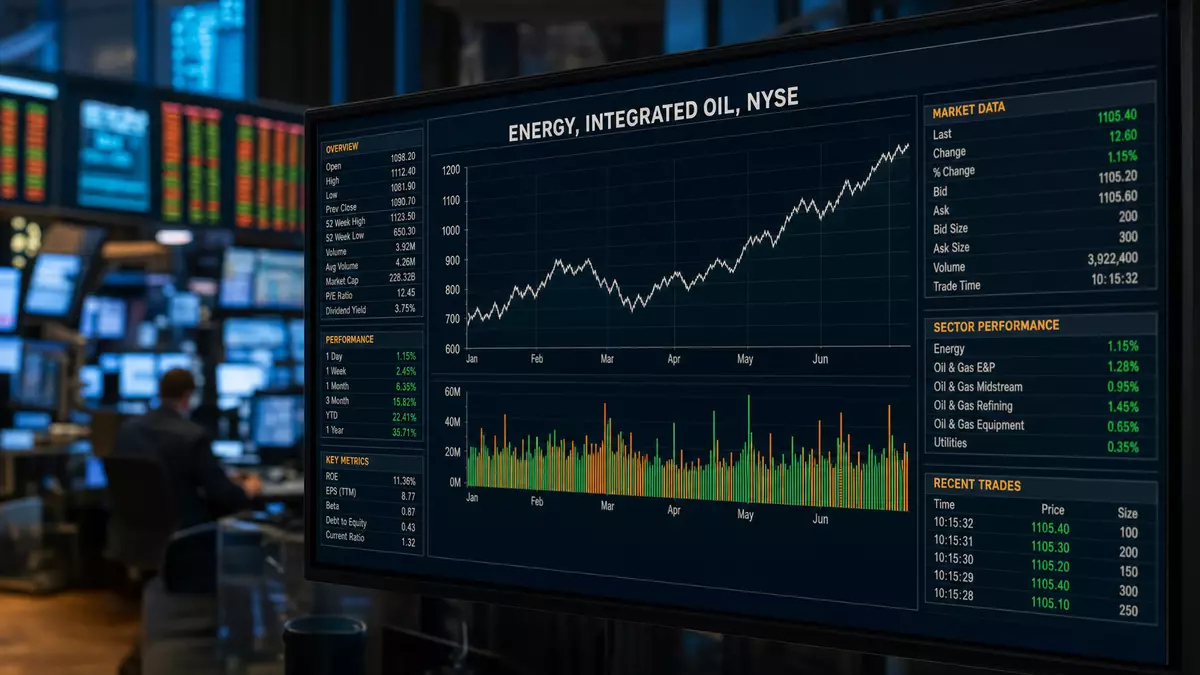
From a technical perspective, Exxon Mobil stock in mid 2026 is trading within a range that reflects the interplay between cyclical energy-sector factors and broader equity-market trends. The share price is near levels seen earlier in the year, suggesting that the market has incorporated the Q1 2026 earnings and macro data without dramatic re-rating. For traders and investors interested in technical signals, typical reference points include prior highs and lows, moving averages, and volume patterns, although these are interpreted within the fundamental context of commodity prices and company updates.
If the stock were to move closer to a recent high or low, investors might reassess risk-reward profiles and consider how upcoming events, such as the next earnings release or macro data on inflation and growth, could influence sentiment. In the meantime, the current range-bound behavior underscores that Exxon Mobil stock is responding to both sector-specific and market-wide factors, rather than to any single driver. This mixed influence is consistent with the company’s role as a large index component and its exposure to multiple segments of the energy value chain.
Product and business line snapshot
One representative business line within Exxon Mobil’s portfolio is its refined fuels segment, which includes gasoline, diesel, and jet fuel produced at its global network of refineries. These products are critical for transportation and industrial activity and contribute significantly to downstream revenue and earnings. The performance of refined fuels in Q1 2026 benefited from stable demand and supportive margins in several key markets, reinforcing their importance within the company’s broader mix.
Exxon Mobil also markets lubricants, petrochemical products, and specialty fuels that serve a wide range of customers across automotive, industrial, and consumer sectors. Revenue from these lines can be less directly tied to crude price movements and more influenced by economic activity and customer-specific cycles, providing additional diversification. As the company navigates energy transition initiatives, certain product lines may evolve to incorporate lower-emission or more efficient formulations, offering both commercial opportunities and potential alignment with sustainability objectives.
Exxon Mobil stock and recent trading levels
Exxon Mobil stock recently traded at around $110 per share on the NYSE as of 15 July 2026, a level that is within reach of its 52-week high near $120 and comfortably above its 52-week low around $95. This positioning indicates that the market continues to assign a premium to the company’s earnings and cash flow outlook relative to the weakest point in the past year, while leaving room for further moves depending on macro and company-specific developments. The current price also reflects the integration of Q1 2026 results and evolving expectations for subsequent quarters.
For investors, the $110 share price as of 15 July 2026 provides a concrete reference point for assessing valuation metrics such as price-to-earnings ratios and dividend yield. When set against the roughly $8 billion earnings in Q1 2026 and the market capitalization around $400 billion, these valuation measures suggest that Exxon Mobil remains a core defensive holding for many portfolios, combining scale, diversified operations, and an established dividend history. Future price movements will likely hinge on factors including commodity price trends, operational performance, and progress on energy transition initiatives.
Exxon Mobil stock key data
- Company: Exxon Mobil Corporation
- ISIN: US30231G1022
- Ticker: NYSE: XOM
- Trading venue: NYSE
- Price (as of 15 July 2026, 16:00 ET): 110 USD
- Market capitalization: 400 billion USD (as of 15 July 2026)
- Sector / Industry: Energy / Integrated oil and gas
- Index membership: S&P 500
Disclaimer regarding our articles: No investment advice, no buy or sell recommendation. Information on prices, companies, and markets is provided without guarantee; changes are possible at any time. Stock market transactions can lead to substantial losses. Our articles are created and reviewed in whole or in part automatically with the support of AI.