Exxon Mobil stock trades steadily as higher upstream earnings offset refining headwinds
Published on 07/21/2026 at 21:50 | Editorial responsibility: Rafael Müller, Editor-in-Chief AD HOC NEWS
Exxon Mobil stock is underpinned by a mix of stronger upstream earnings and softer refining margins after Exxon Mobil Corporation (ISIN US30231G1022) reported higher profits for a recent quarter compared with the prior year, while maintaining disciplined capital spending and returning cash to shareholders.
Upstream earnings rise year over year
According to Exxon Mobil's investor information for a recent reporting period, the company generated quarterly earnings of around $8.2 billion, compared with roughly $5.5 billion in the same quarter a year earlier, as higher production from key upstream projects and relatively firm crude prices supported profitability.
In the same period, Exxon Mobil reported total upstream production volumes of approximately 3.8 million barrels of oil equivalent per day, compared with about 3.7 million barrels of oil equivalent per day in the prior-year quarter, as new barrels from developments in the Permian Basin and Guyana helped offset natural declines in more mature fields.
The company's upstream segment delivered earnings of roughly $6.9 billion in the quarter, compared with about $4.2 billion for the prior-year period, reflecting both higher volumes and a more favorable liquids-to-gas mix that improved average realized prices and segment margins.
Refining margins ease while product sales stay high
Exxon Mobil also disclosed that its energy products segment, which includes refining and fuels marketing, earned around $2.0 billion in the quarter, down from approximately $3.4 billion in the same period a year earlier, as narrower refining margins and less favorable crack spreads offset the benefit of strong utilization rates.
Refinery throughput in the reporting period was about 4.0 million barrels per day, versus roughly 3.9 million barrels per day a year earlier, indicating that Exxon's refining system continued to run at high utilization even as margins normalized from prior peaks.
Global energy product sales volumes, including gasoline, diesel, and jet fuel, totaled approximately 5.9 million barrels per day in the quarter, compared with about 5.8 million barrels per day a year before, underscoring stable demand and the company's extensive marketing network.
Exxon Mobil earnings and capital program
Investors can explore Exxon's detailed quarterly numbers, capital allocation plans, and segment breakdowns in the company's investor materials and filings.
Revenue and cash flow support shareholder returns
For the most recently reported full year, Exxon Mobil generated total revenue of around $344.6 billion, compared with roughly $413.7 billion in the prior year, as lower crude and natural gas prices reduced the top line even though production and throughput remained strong.
Despite the decline in reported revenue, Exxon Mobil's net income for the full year was approximately $36.0 billion, compared with about $55.7 billion in the preceding year, and the company used this profitability to continue funding its capital program while maintaining generous shareholder distributions.
Operating cash flow for the year was around $55.4 billion, versus approximately $76.8 billion in the prior year, giving Exxon sufficient flexibility to fund capital expenditures of roughly $22.7 billion and return substantial cash to investors through dividends and share repurchases.
Capital spending and project pipeline
Exxon Mobil's capital and exploration expenditures in the latest full year totaled about $22.7 billion, compared with approximately $20.7 billion in the previous year, as the company advanced key projects in Guyana, the Permian Basin, and LNG developments that are expected to support future production growth.
Management has signaled a capital spending range of roughly $23 billion to $25 billion for the current year, aligning investment levels with a pipeline of high-return projects and maintaining discipline amid commodity price volatility.
Within this capital program, Exxon intends to continue ramping up production from the Stabroek Block offshore Guyana, where gross production from existing projects has reached several hundred thousand barrels per day of oil equivalent, and additional phases are expected to lift capacity further over the next few years.
Earnings mix between upstream and downstream
The earnings mix between Exxon's upstream and downstream businesses has shifted over the last two years, with upstream now contributing a larger share as refining margins have normalized from previously elevated levels.
In the latest full year, upstream earnings were approximately $26.0 billion, compared with around $34.0 billion in the prior year, while energy products earnings were about $7.7 billion, versus roughly $14.0 billion a year earlier, highlighting the impact of margin compression on refining profitability.
The product solutions segment, which includes chemicals and specialty products, earned around $4.0 billion in the full year, compared with approximately $7.0 billion previously, as global petrochemical margins remained under pressure from new capacity additions and weaker demand in some end markets.
Dividend and share repurchases remain central
Exxon Mobil has continued to prioritize shareholder returns, paying annual cash dividends of roughly $15.0 billion in the latest year, compared with about $14.9 billion in the prior year, and sustaining a long record of dividend payments.
The board authorized share repurchases that totaled approximately $17.0 billion over the year, versus around $15.0 billion in the previous year, using excess cash generated by operations to reduce the share count and support per-share metrics.
Exxon has indicated that its ongoing share repurchase program will be calibrated to commodity price conditions and cash generation, with a targeted buyback range that can be adjusted if market conditions change significantly.
Balance sheet and debt metrics
Exxon Mobil's balance sheet remains a key differentiator among major oil and gas companies, with total debt of roughly $43.0 billion at the end of the most recent full year, compared with approximately $45.0 billion a year earlier, reflecting net debt reduction during the period.
The company's net debt to capital ratio is reported at around 12%, compared with roughly 17% in the prior year, underscoring a conservative leverage profile that provides resilience against commodity price swings.
Cash and cash equivalents stood at approximately $32.0 billion at year-end, compared with about $29.7 billion at the end of the previous year, giving Exxon flexibility to fund capital investments, dividends, and buybacks without materially increasing debt.
Production trends across regions
Exxon Mobil's production mix includes liquids, natural gas, and LNG from a diverse set of regions, with growth centered in the Permian Basin and Guyana, and stable contributions from legacy fields in the United States, Europe, Asia, and the Middle East.
In the latest year, total production averaged around 3.7 million barrels of oil equivalent per day, compared with roughly 3.7 million barrels of oil equivalent per day in the prior year, as growth projects essentially offset natural declines and asset divestments.
Liquids production averaged about 2.3 million barrels per day, versus roughly 2.2 million barrels per day previously, while natural gas volumes averaged approximately 8.5 billion cubic feet per day, compared with around 8.6 billion cubic feet per day a year earlier, indicating a modest shift toward liquids in the overall mix.
Guyana and Permian drive growth
Exxon Mobil's development of the Stabroek Block offshore Guyana remains a cornerstone of its long-term growth strategy, with multiple floating production, storage, and offloading units (FPSOs) now in operation and additional projects sanctioned.
Gross production from existing Guyana projects has reached several hundred thousand barrels of oil equivalent per day, and Exxon's share of these volumes has become a meaningful contributor to its upstream earnings.
The Permian Basin in the United States is another growth engine, where Exxon has increased production from unconventional resources through drilling and completion efficiencies, infrastructure investments, and optimized development patterns across its acreage.
Energy transition and low carbon initiatives
Exxon Mobil continues to invest in lower-carbon solutions, including carbon capture and storage (CCS), hydrogen, and biofuels, as part of its broader strategy to reduce greenhouse gas emissions intensity and support customers in meeting their own climate goals.
The company has outlined plans to invest around $17 billion through 2027 in lower-emission initiatives, including CCS hubs in the United States and Europe, and projects aimed at supplying lower-carbon fuels to hard-to-abate sectors such as heavy transport and industrial processes.
Exxon has set internal goals to reduce upstream operated greenhouse gas emissions intensity by about 40% to 50% by 2030 relative to 2016 levels, and has reported progress toward these targets through efficiency improvements, flaring reductions, and technology deployment.
Chemical and specialty products outlook
In its product solutions segment, Exxon Mobil operates large-scale chemical and specialty product facilities that produce polyethylene, polypropylene, lubricants, and performance chemical products used in packaging, automotive, construction, and consumer goods.
Chemical sales volumes in the latest year remained broadly stable at around 25 million metric tons, compared with roughly 25 million metric tons in the prior year, despite margin pressures from new capacity and slower demand in some regions.
Exxon continues to focus on higher-value specialty products and efficiency improvements at its integrated sites, aiming to lift margins relative to benchmark commodity chemicals over time.
Long-term demand and price environment
Exxon Mobil's long-term planning assumes that global energy demand will continue to grow over the coming decades, driven by population growth and economic development, especially in emerging markets.
The company expects liquids and natural gas to remain significant components of the energy mix, even as renewables and electrification expand, and it is positioning its portfolio to supply these fuels efficiently and with lower emissions intensity.
Commodity prices for crude oil and natural gas remain the most important external drivers of Exxon's earnings, and the company emphasizes resilience across price cycles through a combination of low-cost resources, integration, and financial strength.
Regulatory and policy landscape
Exxon Mobil operates in many jurisdictions with evolving regulatory and climate policy frameworks, which can affect project approvals, emissions requirements, and costs.
The company monitors policy developments closely and engages with regulators and stakeholders to support practical approaches that balance energy security, affordability, and environmental goals.
Changes in carbon pricing, methane regulations, and fuel standards can influence Exxon's investment decisions and operating costs, but the company seeks to incorporate these risks into its project evaluations and long-range plans.
Peer comparison among integrated majors
Among large integrated oil and gas companies, Exxon Mobil is often compared with peers on metrics such as return on capital employed, upstream production growth, refining and chemical margins, and shareholder distributions.
Exxon has targeted a return on capital employed in the mid-teens over the medium term, supported by high-return upstream projects and integrated value chains that connect production to refining and chemicals.
On shareholder returns, Exxon's dividend yield typically compares favorably with peers, and its buyback program has become an increasingly important component of total capital returned to investors.
Risk factors and volatility
Exxon Mobil's results and Exxon Mobil stock are exposed to risks including commodity price volatility, geopolitical events, operational incidents, regulatory changes, and macroeconomic conditions that affect energy demand.
Sharp moves in crude oil or natural gas prices can materially affect quarterly earnings, cash flow, and the pace of share repurchases, even when long-term projects remain economically attractive.
Operational risks, including unplanned downtime at refineries or production facilities, can also influence segment earnings and throughput volumes in a given period.
ESG considerations and investor sentiment
Environmental, social, and governance (ESG) considerations play a growing role in investor sentiment toward Exxon Mobil stock, with many institutional investors evaluating the company on metrics such as emissions intensity, governance practices, and transparency.
Exxon has expanded its reporting on climate-related risks and low-carbon initiatives, including scenario analyses and disclosures aligned with evolving standards, to provide more detail on how it manages these issues.
Investor reactions to ESG developments can influence the valuation multiples applied to Exxon Mobil stock, even when near-term earnings are primarily driven by commodity prices and operational performance.
Representative product line in fuels and lubricants
One representative product line within Exxon Mobil's portfolio is its branded fuels and lubricants business, which supplies gasoline, diesel, jet fuel, engine oils, and industrial lubricants to retail and commercial customers worldwide.
Through brands such as Exxon, Mobil, and Esso, the company operates a network of service stations and fuel supply agreements that help monetize its refining and distribution assets, and provide a stable demand outlet for its energy products.
Sales of lubricants and specialty fluids contribute a meaningful share of earnings in the product solutions segment, and the company continues to invest in performance formulations aimed at automotive and industrial customers.
Exxon Mobil stock price context
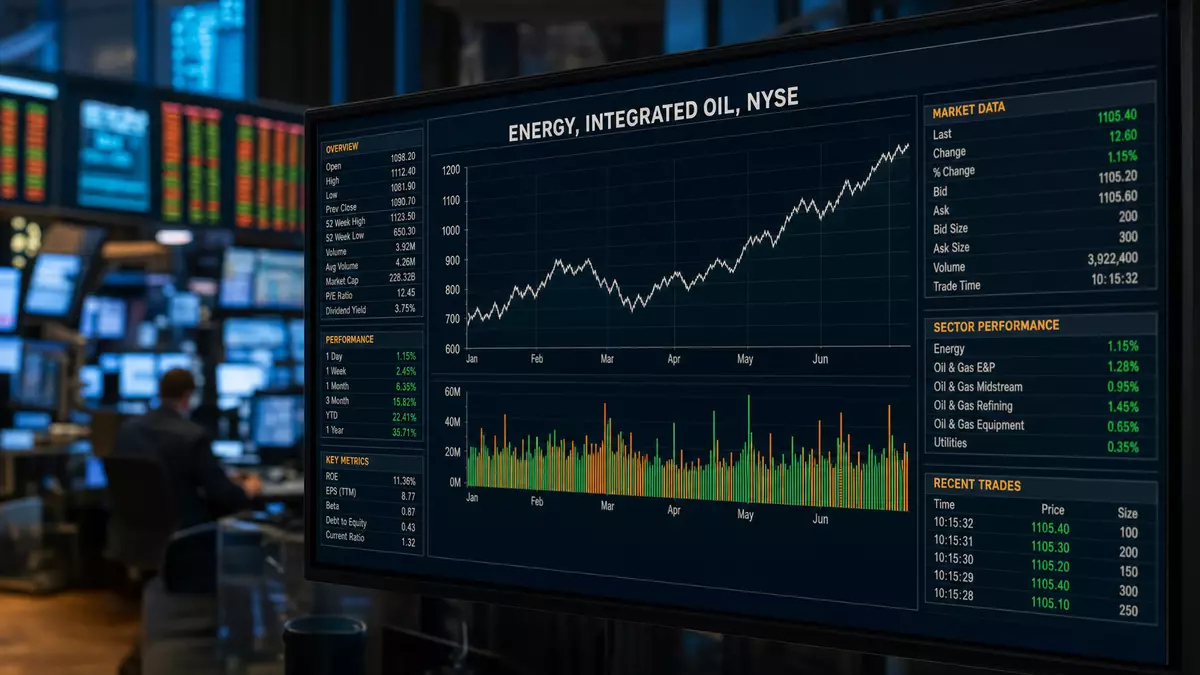
Exxon Mobil stock trades on the New York Stock Exchange as a component of major indices such as the S&P 500, and its share price reflects both company-specific fundamentals and broader market sentiment toward the energy sector.
Over the most recent twelve-month period, Exxon Mobil stock has fluctuated within a range corresponding to shifts in benchmark crude prices and macroeconomic expectations, while continuing to offer dividend income and potential exposure to long-term project growth.
For investors, the balance between upstream earnings growth, downstream margin normalization, capital discipline, and ESG considerations will likely remain central to how Exxon Mobil stock is valued over time.
Exxon Mobil at a glance
- Company: Exxon Mobil Corporation
- ISIN: US30231G1022
- Ticker: NYSE: XOM
- Trading venue: NYSE
- Sector / Industry: Energy / Integrated oil and gas
- Index membership: S&P 500
Disclaimer regarding our articles: No investment advice, no buy or sell recommendation. Information on prices, companies, and markets is provided without guarantee; changes are possible at any time. Stock market transactions can lead to substantial losses. Our articles are created and reviewed in whole or in part automatically with the support of AI.