From Unmanned Mini-Marts to a Constitutional Challenge: Germany's Sunday Shopping Debate Shifts
Published on 07/14/2026 at 05:15 | Redaktion boerse-global.de
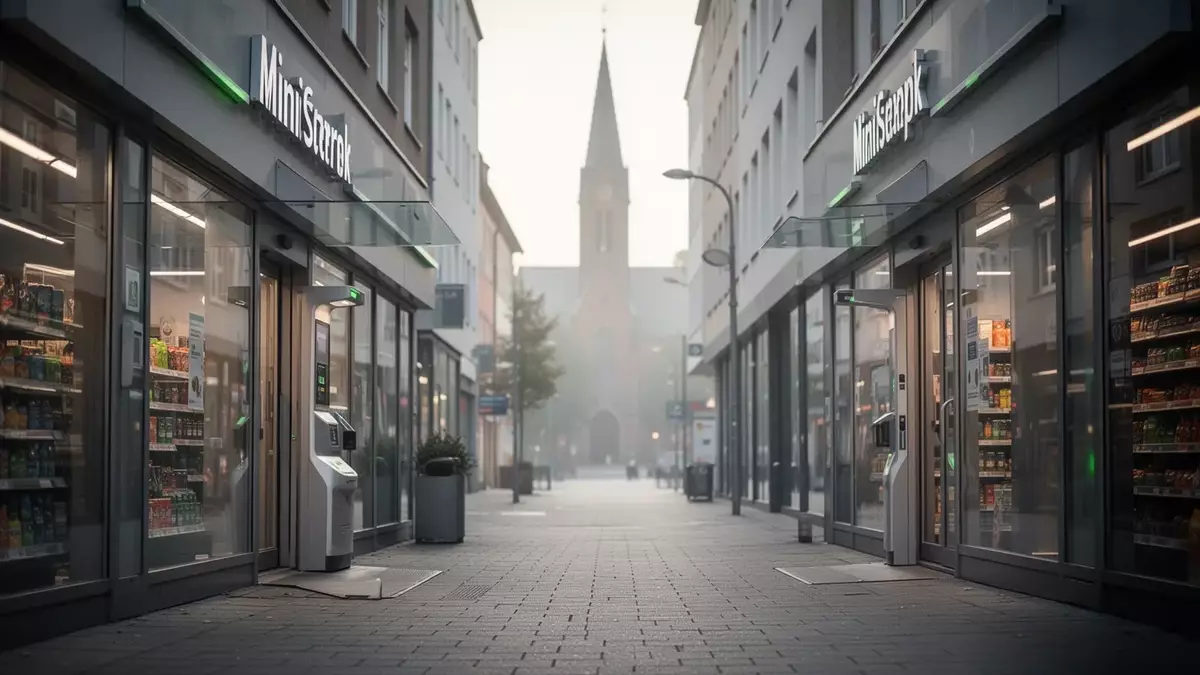
In Schleswig-Holstein and Thüringen, a quiet experiment is already underway. Small supermarkets without any staff on site operate on Sundays, sidestepping centuries-old restrictions through a legal loophole. These miniature outlets could become the blueprint for a much broader transformation — one that the German government wants to introduce nationwide by 2027.
The black-red coalition led by Chancellor Merz has announced concrete reforms to take effect on 1 January 2027. Under the planned changes, bakeries would be allowed to work up to eight hours on Sundays, while libraries could operate for six hours. The Bakers' Guild welcomed the move in principle but cautioned that the expansion applies to production, not necessarily to retail opening hours — in Bavaria, Sunday store openings would remain capped at three hours.
Yet the most radical push comes from Peter Adrian, president of the German Chamber of Commerce and Industry (DIHK). He wants to scrap the entire Shop Closing Act, calling the current rules a "relic of the past." Adrian argues that retailers should be free to set their own opening hours, even if that requires amending the constitution. The problem: Germany's Federal Constitutional Court reinforced Sunday protection in 2009, citing the Weimar Constitution, which defines Sunday as a "day of rest and spiritual elevation." Changing that would need a two-thirds majority in both the Bundestag and the Bundesrat — a high hurdle Adrian says is justified by the freedom of people and businesses.
Support comes from Günter Althaus, president of the German SME Association (BVMU). He points to the competitive pressure from online retail, which already generates sales on Sundays, and calls for a uniform federal rule to replace the current patchwork of state regulations. Althaus also proposes a weekly maximum working time of 48 hours instead of rigid daily limits.
Not everyone is convinced. The retail associations themselves are split — Stefan Genth, managing director of the German Retail Federation, demands a general permission for Sunday openings, while the Baden-Württemberg regional association suggests only raising the number of permitted Sunday openings per municipality from three to four. Ver.di, the service workers' union, warns of health consequences for employees and says large chains would benefit at the expense of small shops. Churches insist Sunday must remain a protected space for rest and community.
Public opinion is shifting, though slowly. A YouGov survey published this Monday found that 43 percent of Germans now support more frequent Sunday openings, up from 34 percent last year. Opposition fell from 59 to 50 percent over the same period.
Branches are also worried about a separate government plan to raise the flat tax on mini-jobs from 2 to 5 percent — a measure they say would add to the cost pressures already created by the Sunday-work debate.
Disclaimer regarding our articles: No investment advice, no buy or sell recommendation. Information on prices, companies, and markets is provided without guarantee; changes are possible at any time. Stock market transactions can lead to substantial losses. Our articles are created and reviewed in whole or in part automatically with the support of AI.