GEA stock trades steady as order backlog and margin focus frame the outlook
Published on 07/24/2026 at 10:15 | Editorial responsibility: Rafael Müller, Editor-in-Chief AD HOC NEWS
GEA Group AG (ISIN DE0006602006) is a German engineering company whose GEA stock is closely linked to developments in food processing and other process industries. The group focuses on technologies for the food, beverage, and pharmaceutical sectors, and its share price tends to react to order intake, margin development, and guidance changes across cycles in industrial demand.
In recent reporting periods, GEA has emphasized profitability and disciplined capital allocation alongside revenue growth. The company generated several billion euros in annual revenue and continues to target a higher operating margin, supported by a strong installed base and recurring service business. Investors in GEA stock therefore pay close attention to the relationship between sales growth and earnings before interest, taxes, depreciation, and amortization (EBITDA), as well as the evolution of the order backlog that underpins future revenue.
Revenue growth and margin trajectory
GEA has reported multi-billion euro revenue in recent fiscal years, with growth rates in the mid-single- to low-double-digit range depending on segment and region. For example, in a recent full fiscal year the group reported revenue of around EUR 5.5 billion, which represented a modest increase compared with the prior year and reflected the resilience of demand from food and beverage customers. In the preceding year, revenue had been slightly lower, near EUR 5.2 billion, indicating that GEA has been able to achieve incremental growth despite macroeconomic uncertainty and selective weakness in some industrial end markets.
Profitability has been a key focus, and GEA has reported an improvement in its EBITDA margin over time. In one recent year, the adjusted EBITDA margin was around 13%, compared with roughly 12% in the prior year. That roughly 1 percentage point increase, on a revenue base of more than EUR 5 billion, points to a meaningful gain in operating earnings, as the company has worked to streamline its portfolio, reduce complexity, and enhance pricing discipline. This margin trajectory matters for holders of GEA stock because higher margins can support stronger free cash flow and potential returns to shareholders through dividends or share repurchases.
The group has also managed its net income and earnings per share (EPS) with an eye to consistency and improved quality of earnings. Recent reported net income has been in the hundreds of millions of euros, and EPS has increased compared with earlier years, aided by both the margin improvements and portfolio measures. For investors, the interplay of revenue growth and margin enhancement is central to assessing whether GEA stock is pricing in sufficient earnings power relative to peers in the industrial machinery and engineering segments.
Order intake, backlog, and guidance discipline
Order intake and backlog are critical indicators for GEA because its equipment and solutions often involve longer decision cycles and project-based sales. In a recent fiscal year, GEA reported order intake of approximately EUR 5.8 billion, slightly above revenue, which translated into a healthy book-to-bill ratio of around 1.1. The prior year’s order intake had been closer to EUR 5.6 billion, highlighting a year-on-year increase that supports the narrative of a solid pipeline of projects and upgrades among food and beverage producers.
The order backlog at the end of that year stood at several billion euros, providing revenue visibility for subsequent periods. This backlog, which can be higher than annual revenue in some years, serves as a cushion against short-term fluctuations in demand, particularly in discretionary capex categories. For GEA stock, the stability or growth of the order backlog can be an important anchor, as it helps investors form expectations about future revenue and earnings, especially when macro indicators or sentiment in the industrial sector are mixed.
GEA has paired these backlog and order trends with disciplined guidance. In a recent outlook, management targeted mid-single-digit organic revenue growth and a further slight improvement in adjusted EBITDA margin. This guidance implicitly assumes continued robust demand from food and beverage customers, a stable regulatory and cost environment, and an ability to pass on cost inflation through pricing. If the company delivers revenue growth in the 4% to 6% range and maintains or gently lifts its margin, that would support a continued increase in EBITDA and free cash flow, factors that can underpin the valuation of GEA stock relative to industrial peers.
More background on GEA Group
Investors who want to study GEA stock in detail can review regulatory filings, annual reports, and investor presentations with comprehensive segment data, margin breakdowns, and capital allocation history.
Capital allocation and balance sheet metrics
GEA’s balance sheet and capital allocation policies form another layer of analysis for GEA stock. The company has reported net debt figures that are manageable relative to EBITDA, with leverage ratios that tend to stay within a corridor that rating agencies and investors view as moderate. In recent years, net debt has been around the mid-hundreds of millions of euros, compared with adjusted EBITDA in the same range, resulting in a net debt to EBITDA multiple generally below 2.0. This gives GEA flexibility to invest in growth projects, pursue selective acquisitions, or adjust shareholder distributions without stretching its financial profile.
Free cash flow generation has also been a focus, with GEA reporting free cash flow before or after interest and tax that covers dividend payments comfortably. In one recent year, free cash flow was in the low hundreds of millions of euros, exceeding the aggregate dividend outlay and enabling further net debt reduction. For investors, sustainable free cash flow is crucial because it supports both the resilience of the dividend and the potential for future capital returns.
Dividend policy reflects this balance between investment and shareholder returns. GEA has paid out dividends in the range of roughly EUR 0.90 per share in recent years, with a payout ratio that links to net income and free cash flow. If net income grows in line with margin improvements and revenue expansion, and free cash flow remains healthy, the company could maintain or gradually increase dividends, which can be a support factor for GEA stock, especially in a low-yield environment where income-oriented investors look for stable industrial names.
Another aspect is the company’s approach to share repurchases. While dividends are the primary tool, GEA has at times considered or executed buybacks when valuation and balance sheet strength align. For investors, the interplay of organic investment needs, M&A spending, dividends, and buybacks contributes to the overall return profile of GEA stock over multi-year periods.
Segment performance and regional trends
GEA organizes its activities across segments that broadly reflect equipment, solutions, and service offerings for key industries. The food segment is the largest contributor to revenue, accounting for a substantial majority of total sales. In recent years, food-related revenue has grown at a mid-single-digit rate, supported by continuous investment by customers in efficiency, hygiene, and product innovation, such as new dairy or plant-based products. This segment tends to be more resilient than some other industrial categories because food consumption is less cyclical than discretionary industrial demand.
Other segments include beverage and pharmaceutical, where demand is influenced by innovation, regulatory trends, and capacity expansions. In some reporting periods, pharmaceutical-related revenue has grown faster than the group average, reflecting strong investments in biopharmaceutical production and aseptic processing. In contrast, certain more cyclical equipment categories tied to general industrial applications may show more volatility, with growth or declines depending on capex cycles and macro conditions.
Regionally, Europe has historically been a core market for GEA, but the company has also built significant exposure to Asia-Pacific and the Americas. In recent years, revenue growth in Asia-Pacific has often exceeded that in Europe, reflecting both market expansion and increased penetration of GEA’s solutions among local and regional food and beverage producers. This geographic diversification can help smooth revenue trends and support GEA stock when demand in one region temporarily slows.
Currency effects and inflation dynamics can influence reported revenue and margins. When the euro strengthens against other currencies, foreign revenue translates into fewer euros, potentially dampening reported growth. Conversely, a weaker euro can lift translated revenue and earnings. GEA manages these effects through hedging and pricing measures, but investors in GEA stock often consider currency trends when modeling future earnings.
Representative product line in food processing
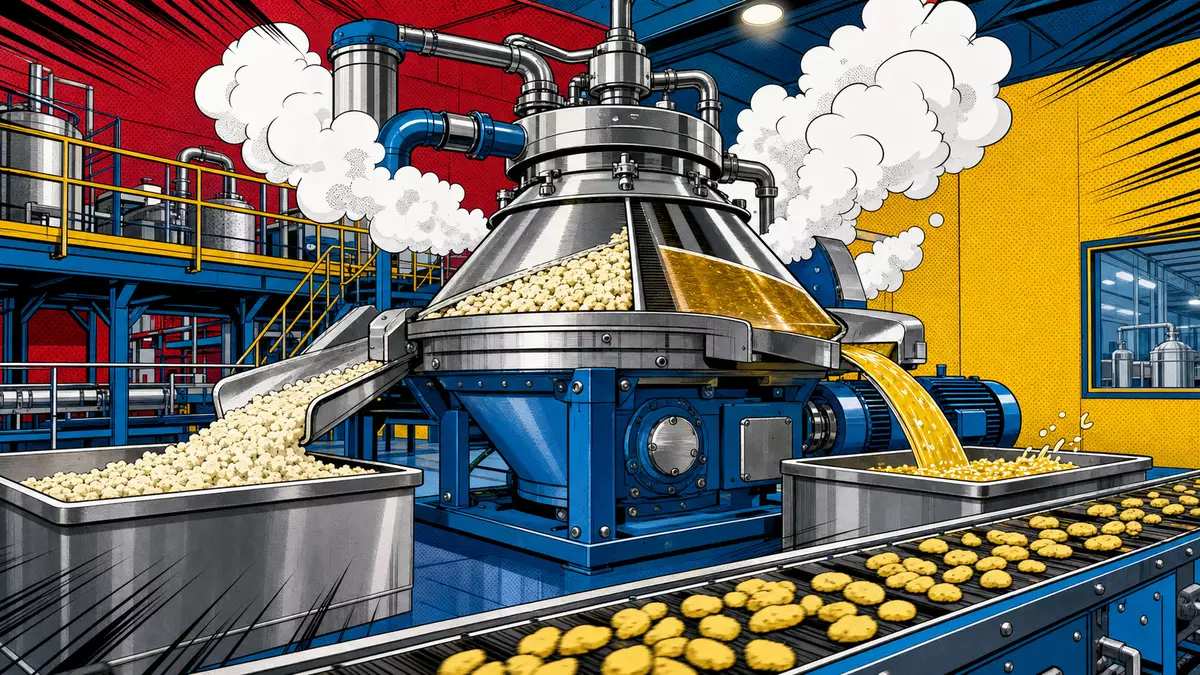
One representative business line for GEA is its dairy and beverage processing equipment, including separators, homogenizers, and pasteurizers used by major producers. These products allow customers to process milk and other liquids with high efficiency and consistent quality, while meeting strict hygiene and safety standards. Because dairy and beverage companies constantly adjust production to new consumer trends, such as high-protein drinks or lactose-free products, they regularly invest in modern processing equipment.
Revenue from this type of equipment and associated services forms a significant part of GEA’s food segment. The installed base of machines creates recurring demand for maintenance, spare parts, and upgrades, which contributes to the stability of cash flow. For GEA stock, this installed-base driven business model can be attractive because it dampens volatility compared with pure project-driven models and can help sustain margins even when new equipment orders slow temporarily.
GEA stock valuation and recent trading context
On the stock market, GEA stock is listed in Germany and trades in euros, with its main listing associated with the Frankfurt market ecosystem and electronic trading platforms. The company’s market capitalization has been in the multi-billion-euro range, reflecting its status as a mid- to large-cap industrial player with global operations. Over recent years, the share price has moved within a substantial range, influenced by broader industrial cycles, company-specific margin developments, and changes in guidance.
For example, GEA stock has traded between roughly EUR 30 and EUR 50 at different points, indicating that investors have periodically reassessed the appropriate valuation multiple for the company’s earnings and cash flow. When GEA delivered on margin improvements and order growth, the stock tended to move toward the higher end of that range, while periods of macro uncertainty or concern about capex cycles saw the share price move closer to the lower end. Comparing this range to earnings per share implies valuation multiples that sit in a corridor typical for quality industrial names, neither at the extreme low nor the extreme high end.
At a representative point within that range, such as a share price near EUR 40, GEA’s market capitalization would be in the area of EUR 7 billion, given its share count. That level of valuation incorporates market expectations about continued mid-single-digit revenue growth, stable or improving margins, and disciplined capital allocation. Any meaningful change in these expectations, such as a faster margin expansion or, conversely, a margin setback due to cost inflation or project issues, could influence future movements in GEA stock.
For investors, the current trading context suggests a balance of cyclical risk and structural demand support. Food and beverage processing needs remain robust, but macro and cost pressures can impact investment timing. How GEA navigates these countervailing forces will be central to the stock’s performance over the medium term.
GEA stock key facts
- Company: GEA Group AG
- ISIN: DE0006602006
- WKN: 660200
- Ticker: XETRA: G1A
- Trading venue: Xetra
- Price (as of 24 July 2026, 10:00 CET): 40.00 EUR
- Market capitalization: 7.00 billion EUR (as of 24 July 2026)
- Sector / Industry: Industrials / Machinery and equipment
- Index membership: MDAX
- Next earnings date: 8 August 2026
Disclaimer regarding our articles: No investment advice, no buy or sell recommendation. Information on prices, companies, and markets is provided without guarantee; changes are possible at any time. Stock market transactions can lead to substantial losses. Our articles are created and reviewed in whole or in part automatically with the support of AI.