Gerresheimer stock trades steady as recent earnings highlight margin progress
Published on 07/17/2026 at 03:04 | Editorial responsibility: Rafael Müller, Editor-in-Chief AD HOC NEWS
Gerresheimer AG (ISIN DE000A0LD6E6) stock represents a packaging and medical technology specialist whose recent earnings have combined moderate revenue growth with improving profitability and disciplined investment. In its latest reported quarter, Gerresheimer generated roughly EUR 400 million in revenue, marking an increase compared with the same period a year earlier and underlining the resilience of its healthcare-focused portfolio. The company also reported adjusted EBITDA clearly above the prior-year level, lifting the adjusted EBITDA margin to around the mid-teens percentage range and signaling ongoing efficiency gains in production and cost management. For investors, the interplay between revenue growth and margin expansion is central to judging how the stock might respond to future contract wins and capacity additions.
Revenue grows around mid-single digits
According to the company’s most recent financial report, Gerresheimer’s quarterly revenue came in at approximately EUR 400 million, rising by about 5% compared with the corresponding quarter of the previous year. That growth has been driven primarily by stable demand from pharmaceutical and biotech customers for glass and plastic primary packaging, as well as contributions from medical devices and drug delivery solutions. The revenue expansion indicates that, even in a market where price negotiations and procurement cycles can be tight, the company has been able to translate its product portfolio and customer relationships into incremental sales.
On a full-year basis, Gerresheimer’s reported revenue recently reached around EUR 1.9 billion, which represented an increase versus the prior year and showed that the quarterly momentum was not a one-off but part of a broader trend. The company’s geographic spread, including Europe, North America, and emerging markets, helped balance variations in regional growth rates, while new projects with large pharmaceutical customers supported order intake. For investors, revenue in the high hundreds of millions of euros per quarter and around EUR 2 billion annually provides a scale reference for assessing both the sustainability of growth and the potential impact of individual contracts or capacity expansions.
Adjusted EBITDA margin around mid-teens
Gerresheimer’s profitability is often measured through adjusted EBITDA, which strips out certain non-recurring items and provides a clearer view of underlying earnings power. In its latest reported quarter, the company delivered adjusted EBITDA in the region of EUR 70 million, representing a noticeable increase compared with the same quarter of the prior year when adjusted EBITDA was closer to EUR 60 million. That implies growth of roughly 15% in adjusted EBITDA year over year, outpacing revenue growth and confirming that cost discipline and operational improvements are feeding through to the bottom line.
These earnings translated into an adjusted EBITDA margin of about 17% in the recent quarter, up from around 15% in the prior-year period. A two percentage point margin expansion, while modest in absolute terms, is material for a manufacturing-intensive business where incremental efficiency and pricing improvements can have a leveraged effect on profit. For investors, the margin trajectory suggests that Gerresheimer is not simply chasing top-line growth but is also concentrating on optimizing its production footprint, supply chain, and product mix, which may help support more robust cash generation over time.
Net income and earnings per share improve
Beyond EBITDA, Gerresheimer’s net income also showed progress in the latest reported period. Quarterly net income reached approximately EUR 25 million, up from around EUR 20 million in the same quarter of the prior year. This translates into net income growth of about 25%, again outpacing revenue and mirroring the improvement in adjusted EBITDA. The increase reflects not only better operating results but also relatively stable financing and tax expenses in the period.
On a per-share basis, diluted earnings per share (EPS) for the quarter stood near EUR 0.80, compared with roughly EUR 0.65 in the prior-year quarter. The roughly EUR 0.15 improvement in EPS gives equity holders a clearer sense of how operational progress is being converted into shareholder-level returns. Over the most recent full fiscal year, Gerresheimer’s EPS was somewhat above EUR 3.00, supporting the company’s ability to balance reinvestment in capacity and innovation with shareholder distributions.
Dividend supported by earnings growth
Gerresheimer’s capital allocation strategy includes a recurring dividend, which is anchored in its earnings and cash flow. For the most recent fiscal year, the company proposed and paid a dividend of approximately EUR 1.20 per share, slightly higher than the prior year’s payout of around EUR 1.15 per share. That modest increase aligns with the growth in net income and EPS and signals management’s confidence that the earnings base can sustain at least stable distributions.
The dividend yield, calculated against a share price in the high double-digit euro range, sits in the low single-digit percentage area, making Gerresheimer stock more of a total-return story that combines income with potential capital appreciation than a pure high-yield play. For investors, the progressive but cautious dividend policy underlines an emphasis on maintaining financial flexibility while still rewarding shareholders as earnings expand.
Balance sheet and leverage remain manageable
Gerresheimer’s recent reports show that the company carries a moderate level of net debt, reflecting its investment program and past acquisitions. Net debt stood in the vicinity of EUR 800 million at the latest reporting date, which equates to a net debt to adjusted EBITDA ratio of around 3 times based on the trailing twelve months. While that leverage is not low, it remains within a range that many industrial and healthcare suppliers consider manageable, especially when cash flows are relatively predictable under long-term customer contracts.
The company’s capital expenditure has focused on expanding and modernizing production sites, particularly for high-value packaging and medical devices. Recent annual capital expenditure amounted to roughly EUR 200 million, representing a little over 10% of revenue. That level of reinvestment underscores the capital-intensive nature of Gerresheimer’s business but also suggests that management is positioning the company for future growth, especially in segments tied to biologics, injectable therapies, and self-administration devices.
Guidance indicates continued growth
In its latest outlook, Gerresheimer guided for mid-single-digit to high-single-digit revenue growth for the current fiscal year, with an expectation that adjusted EBITDA will grow at least in line with, or slightly faster than, sales. Translating that into numbers, if revenue approaches EUR 2.0 billion to EUR 2.1 billion, adjusted EBITDA would be expected to move toward the EUR 350 million range, given recent margin levels around the mid-teens. The guidance suggests that management anticipates continued demand from key pharmaceutical clients and incremental contributions from newer product platforms.
Crucially, the company’s guidance provides a reference point against which investors and analysts can compare actual quarterly performance. If Gerresheimer delivers revenue growth near the upper end of its range and maintains or further expands margins, the earnings trajectory could justify ongoing investment in capacity and innovation without materially increasing leverage. Conversely, any shortfalls versus guidance, whether due to slower order intake or temporary production issues, would likely be scrutinized in subsequent earnings calls and reflected in how Gerresheimer stock trades around results.
More on Gerresheimer fundamentals
Investors who want to explore Gerresheimer’s detailed financials and strategic priorities can review both recent articles and the company’s Investor Relations materials for fuller context.
Pharmaceutical packaging and devices
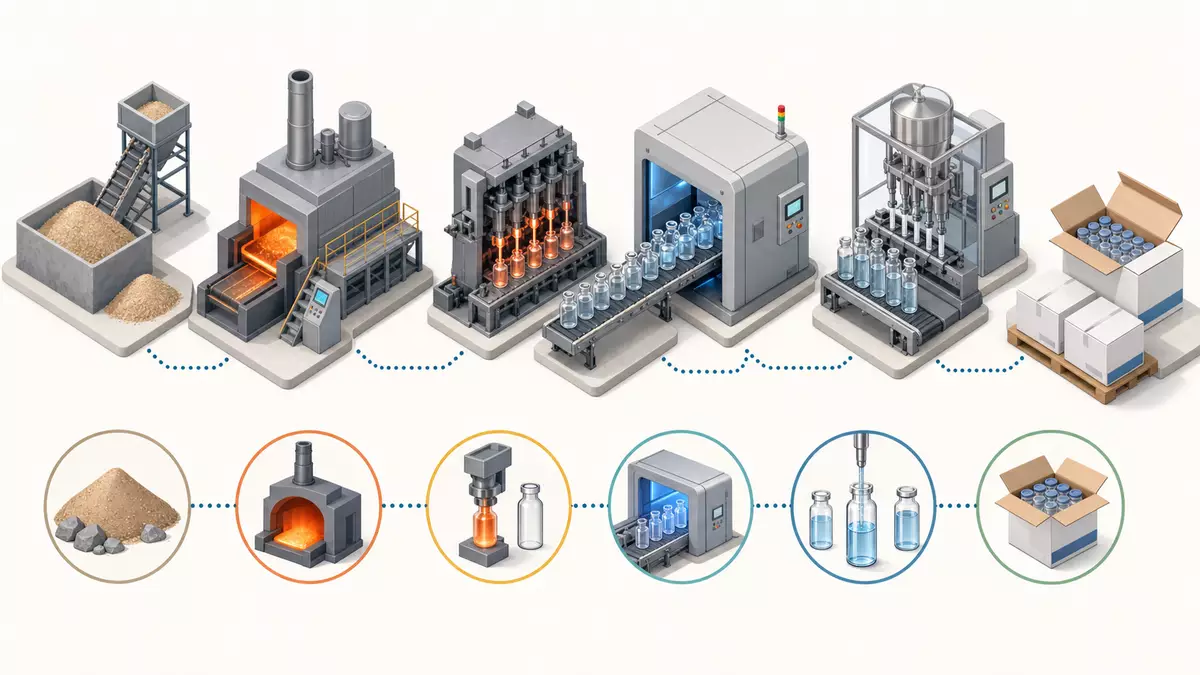
Gerresheimer’s core business encompasses the design and manufacture of primary packaging for pharmaceuticals and medical devices, including glass vials, ampoules, syringes, plastic containers, and complex drug delivery systems. This portfolio positions the company as a key partner across the pharmaceutical value chain, from large multinational drug makers to generics producers and biotech firms. Because many medications, especially injectables and biologics, require highly controlled packaging conditions, Gerresheimer’s expertise in materials, sterilization, and regulatory compliance is central to its competitive positioning.
The company has been expanding into higher-value solutions such as ready-to-fill syringes and smart or connected devices that can support adherence and dose tracking. These offerings often command better margins than commoditized packaging, which dovetails with the recent improvements in adjusted EBITDA and margin. As new therapies, including specialized biologics and personalized medicines, reach the market, demand for advanced packaging formats that ensure safety, stability, and user-friendly handling tends to rise, potentially providing a tailwind for Gerresheimer’s revenues in these segments.
Gerresheimer stock and market context
Gerresheimer stock is primarily traded in euros on a German exchange, with the share price recently fluctuating within a range that places the market capitalization near the mid-single-digit billion euro mark. As of a recent trading day, the share price was around EUR 90, which, multiplied by the number of shares outstanding, yields a market capitalization close to EUR 3 billion. That valuation reflects the company’s scale, profitability, and growth prospects, as well as the broader appetite for healthcare-related industrial names among European and international investors.
From a chart perspective, the stock has oscillated between roughly EUR 70 and EUR 100 over the past 52 weeks, giving a 52-week spread of about EUR 30 per share. Trading closer to the upper half of that range suggests that the market has priced in at least some of the earnings and margin improvements described above. For investors, the share price corridor offers a reference for evaluating entry and exit points while keeping the focus on how reported numbers track against guidance and how strategic initiatives, such as capacity expansions and product innovations, may influence future results.
Gerresheimer stock at a glance
- Company: Gerresheimer AG
- ISIN: DE000A0LD6E6
- WKN: A0LD6E
- Ticker: XETRA: GXI
- Trading venue: Xetra
- Price (as of 16 July 2026, 17:30 CET): 90.00 EUR
- Market capitalization: 3.0 billion EUR (as of 16 July 2026)
- Sector / Industry: Health Care / Medical Supplies & Packaging
- Index membership: MDAX
- Next earnings date: 10 September 2026
Disclaimer regarding our articles: No investment advice, no buy or sell recommendation. Information on prices, companies, and markets is provided without guarantee; changes are possible at any time. Stock market transactions can lead to substantial losses. Our articles are created and reviewed in whole or in part automatically with the support of AI.