Global Authorities Crack Down on Hazardous Substance Safety Failures
Published on 07/16/2026 at 07:09 | Redaktion boerse-global.de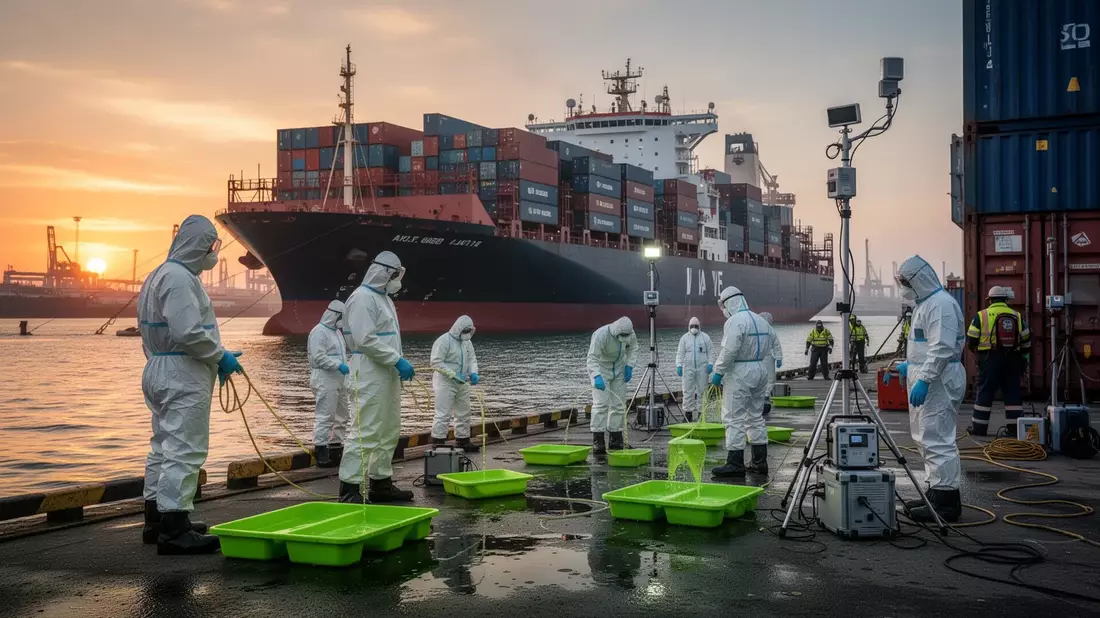
Regulators and port authorities across Europe, North America and Asia have escalated enforcement actions this week following a series of toxic chemical incidents that have left workers dead, hospitalised or exposed to carcinogens. The developments underscore mounting pressure on employers to comply with hazardous substance regulations or face severe legal and financial consequences.
Belgian Port Shut Down After Acid Leak
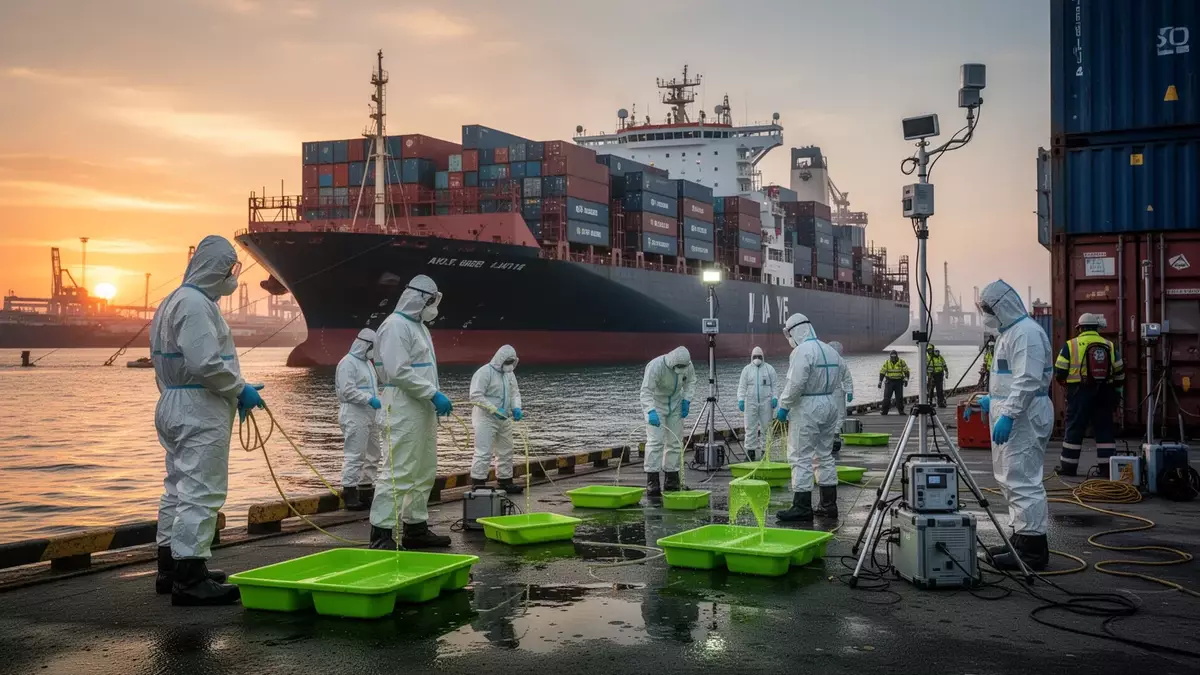
The Port of Antwerp suspended shipping operations at the Deurganckdock on July 15 after a significant chemical leak aboard the cargo ship MSC Mia Summer II. The vessel was carrying hydrogen fluoride (HF) when the leak occurred on July 14, sending 28 people to hospital — one of whom remains in intensive care.
Port officials and medical teams examined 155 people, including crew members and dockworkers, many of whom are of Filipino nationality. Emergency responders deployed lime drip trays to stabilise the leaking container, and a safety perimeter remains in place while air monitoring continues. Shipping activity at the affected dock will remain suspended until the damaged container is fully sealed and removed.
When hazardous substances are involved, many workplaces unknowingly overlook critical gaps in their safety documentation — and that can have serious legal consequences. A free COSHH toolkit provides 43 ready-to-use templates, checklists and toolbox talks to help you comply with UK regulations on hazardous substance risk assessment. Get the free COSHH Toolkit
Lancashire Manufacturer Fined for Welding Fume Failures
In the UK, skip manufacturer Samson Containers Ltd has been ordered to pay more than £36,000 after exposing employees to carcinogenic welding fumes. The Thornton-Cleveleys firm was fined £30,000, alongside £4,571 in costs and a £2,000 victim surcharge.
The Health and Safety Executive (HSE) brought the prosecution after the company failed to provide adequate ventilation or personal protective equipment (PPE) for workers. Investigators noted that the firm had ignored previous enforcement notices served in 2024 and 2025 regarding the same safety risks.
Fatal Toxic Gas Incidents Trigger US Enforcement
Federal investigators in the United States released findings on July 15 regarding a preventable toxic gas release at the Woodland Pulp mill in Maine. The Chemical Safety Board (CSB) report detailed how hydrogen sulfide (H2S) levels exceeded 500 ppm during the January 27 incident, killing two workers and exposing ten others. Investigators cited a lack of H2S detectors, inadequate ventilation and failures in personnel accountability as primary causes.
In a separate action on the same day, the Occupational Safety and Health Administration (OSHA) proposed fines totalling $264,380 against FleetPride Inc. following the asphyxiation of a 63-year-old worker in Corpus Christi. The employee died on January 7 while inspecting a tanker trailer. OSHA cited the company for 19 violations, highlighting the absence of respiratory protection and a required confined space programme.
Similar safety failures have led to legal charges in Singapore, where a manager and a contractor were charged on July 15 over a 2024 toxic gas incident at the Choa Chu Kang Waterworks that killed two people through hydrogen sulfide exposure.
Keeping your risk assessments up to date doesn't have to mean hours of paperwork. Over 37,000 UK companies already use a free toolkit with 41 ready-to-use templates covering fire safety, manual handling, lone working and more — helping you document and manage workplace hazards effectively. Download the free Risk Assessment Toolkit
Global Inspection Drive Finds Widespread Gaps
In Vietnam, health authorities in Hue City reported significant compliance failures after inspecting 464 hazardous enterprises. Officials found that 10 out of 12 businesses lacked assigned medical staff, and 20% of environmental samples failed to meet safety standards.
As industrial facilities face intensifying scrutiny, researchers in India have developed new technology to help prevent future incidents. Scientists at CeNS Bengaluru published research in ACS Sensors this week detailing a portable, self-powered ammonia sensor capable of detecting leaks as low as 319 parts per billion — a potential tool for industrial safety and wearable environmental monitoring.
Disclaimer regarding our articles: No investment advice, no buy or sell recommendation. Information on prices, companies, and markets is provided without guarantee; changes are possible at any time. Stock market transactions can lead to substantial losses. Our articles are created and reviewed in whole or in part automatically with the support of AI.