Global Courts and Regulators Grapple with Workplace Temperature Disputes
Published on 07/22/2026 at 13:37 | Redaktion boerse-global.de
From frozen food factories to prison cells and fire engines, employers around the world are facing mounting legal pressure over extreme temperatures in the workplace. Recent rulings and legislative moves in the UK, Canada, and the US highlight the growing tension between operational demands and worker safety — and the patchwork of protections that currently exists.
Cold Claim Dismissed in South Wales
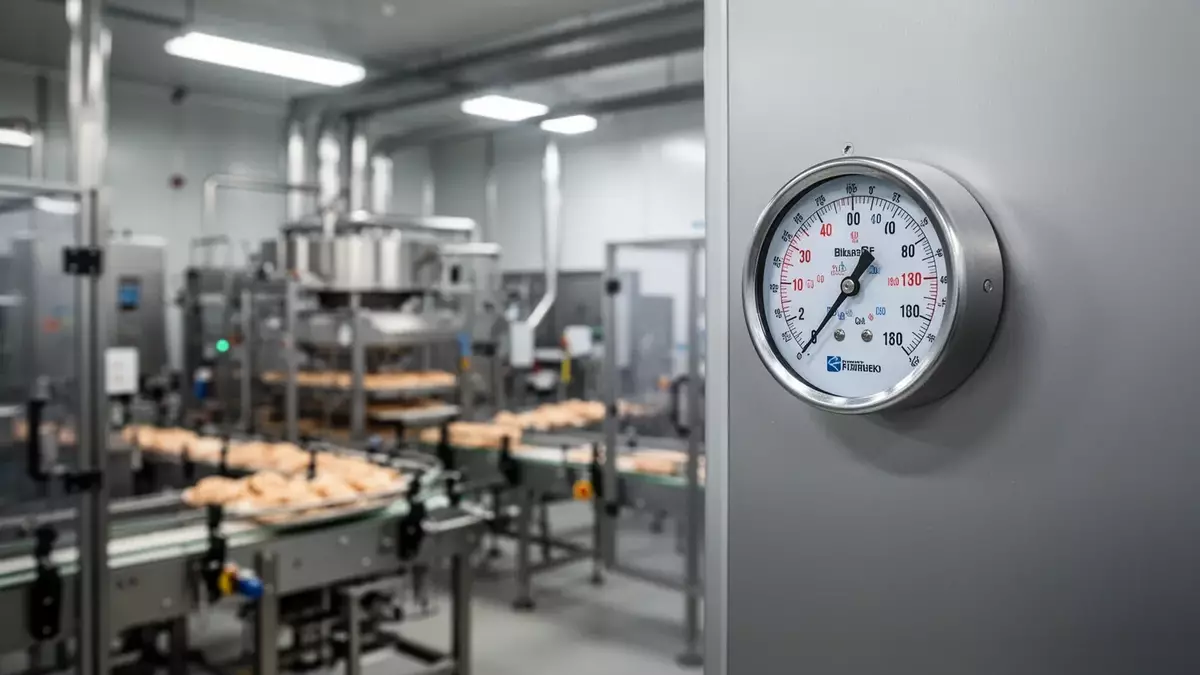
An employment tribunal in South Wales has thrown out a claim brought by a frozen food packer who argued that her working conditions were too cold. Gabriela Bolohan, who started work at Solway Foods in Newport in July 2024, was later diagnosed with Raynaud's disease, a condition that affects blood circulation.
The tribunal judge ruled against the claim, noting that the nature of the role — producing chilled ready meals — inherently involves working with temperature-controlled products. Evidence showed that management at the facility, operated by 2 Sisters Food Group and employing 1,600 people, had made reasonable adjustments to ensure safe working conditions.
These cases underline how vital it is to document every workplace risk properly — including temperature hazards. A free Risk Assessment Toolkit offers 41 ready-to-use templates and checklists to help you stay compliant and protect your workforce. Download the free Risk Assessment Toolkit
Federal Court Orders Cooling in Alberta Prison
In a separate ruling on July 16, 2026, the Federal Court of Canada addressed extreme heat at the Edmonton Institution for Women. Justice Meaghan Conroy ordered Correctional Service Canada (CSC) to seek immediate authorisation for air conditioning installation in the facility's secure unit.
The court heard that temperatures in some cells had exceeded 40°C, with design flaws known to the CSC since 2012. Despite a history of complaints spanning roughly 20 years, the service had failed to maintain written temperature records. The court also directed the CSC to begin formal temperature monitoring. A separate complaint about the facility has been referred to the Canadian Human Rights Tribunal.
UK Bill Seeks Legal Maximum Temperature
The absence of a statutory maximum workplace temperature has prompted fresh legislative action in the UK. Green MP Hannah Spencer has introduced the Maximum Workplace Temperature Bill, which aims to establish a legal upper limit for heat in professional environments. The bill is scheduled for its second reading on October 16, 2026.
Current UK guidance under the Workplace Regulations 1992 sets a minimum temperature of 16°C, or 13°C for physically demanding work, but does not define a maximum. Supporters of the bill noted that the current year has already recorded more days above 30°C than the heatwave year of 1976.
British Columbia Calls for Heat Protection Overhaul
In Western Canada, WorkSafeBC and policy advocates are pushing for stronger protections as heat-related injury claims rise. A report released by BC Policy Solutions on July 21, 2026, highlighted that provincial heat exposure regulations have not been substantially updated since 2005. The report recommends mandatory heat illness training, acclimatisation plans, and clear temperature triggers for rest breaks.
Data from WorkSafeBC shows that 335 heat-related injury claims were accepted between 2021 and 2025, with 47 of those claims occurring in 2025 alone. While the agency stressed that protecting workers is more complex than monitoring a single temperature threshold, it reminded employers that they must conduct risk assessments and provide adequate water and shade for both indoor and outdoor staff.
California Enforces Heat Rules as Temperatures Soar
In Southern California, Cal/OSHA has reminded employers to implement heat illness prevention measures as triple-digit temperatures are forecast between July 22 and July 27, 2026. Regional predictions suggest temperatures could reach 114°F in some counties. California regulations require indoor heat mitigation at 82°F, while outdoor standards mandate water and shade at 80°F, with additional high-heat procedures triggered at 95°F.
With heat regulations tightening globally, having a complete health and safety framework in place is more important than ever. A free Health & Safety Toolkit provides risk assessments, checklists, and toolbox talks covering key UK regulations — helping you protect employees from heat stress and other workplace hazards. Get the free Health & Safety Toolkit
Meanwhile, infrastructure issues have drawn criticism from labour groups. In Baltimore, the firefighters' union reported that several reserve emergency vehicles lack functioning air conditioning, leading to internal cab temperatures exceeding 100°F. While department officials cited mechanical problems with aging apparatus, the union has demanded accelerated equipment replacements to protect members from heat stress during the current summer period.
Disclaimer regarding our articles: No investment advice, no buy or sell recommendation. Information on prices, companies, and markets is provided without guarantee; changes are possible at any time. Stock market transactions can lead to substantial losses. Our articles are created and reviewed in whole or in part automatically with the support of AI.