
Global Workplace Safety Shifts: AI, Heat, and New Technology Reshape Employer Duties
Published on 07/28/2026 at 14:07 | Editorial boerse-global.de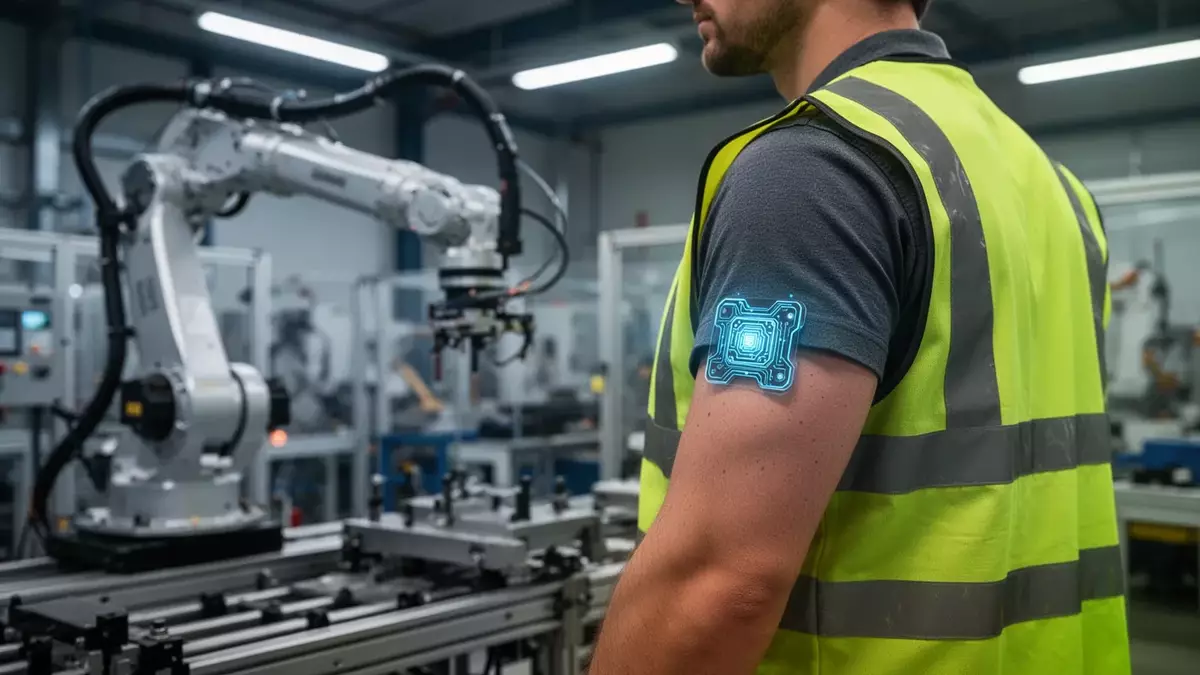
Employers worldwide are facing a rapidly evolving safety landscape as artificial intelligence, extreme temperatures, and technological innovations force regulators and businesses to rethink how they protect workers. From new Australian AI guidance to South Korean heat crackdowns and wearable hazard sensors, the developments signal a fundamental shift in workplace risk management.
Australia Sets Out AI Safety Rules for Employers
Safe Work Australia released new guidance on July 28, 2026, requiring businesses to manage Work Health and Safety (WHS) risks from artificial intelligence and digital technologies with the same rigour as traditional hazards. The agency warned that automation can drive work intensification and increase worker fatigue, and stressed that proper training and consultation are essential.
The regulatory push comes as manufacturers report strong financial incentives for AI adoption. A study by Zebra Technologies and Oxford Economics, also published on July 28, found that 56% of manufacturers have achieved productivity gains through AI and automation. The research estimated potential profit increases of $6.6 million in supply chain operations and $6.2 million in maintenance departments.
Labour organisations are pushing back against unchecked automation. Recent collective bargaining in the US has secured clauses ensuring AI functions as a support tool rather than a replacement for human staff. Examples include agreements by the SAG-AFTRA union and Microsoft’s ZeniMax union, as well as Politico’s decision to scrap an AI tool following union arbitration.
Wearable Sensors and Smarter Safety Gear
Researchers at North Carolina State University announced a wearable sensor patch on July 27, 2026, that detects gases and heavy metals. The solar-powered device has a 24-hour battery life and alerts the wearer through distinct haptic vibrations. The technology is also being adapted as an electronic skin for robots to help them navigate hazardous environments.
In the maritime sector, Intellian and Iridium commercially launched the C100M GMDSS system on July 27. The compact safety communications system, which carries the MED Wheelmark approval, features a touch-screen interface for distress alerts and safety voice communications.
Enerpac introduced new cribbing rings and hydraulic toe jacks in India on July 27, designed to improve precision and safety in heavy-duty lifting. The company supports the equipment with training at its academy in Bengaluru.
Heat Crackdowns and Cabin Temperature Concerns
South Korea’s Ministry of Employment and Labor announced it will inspect 1,000 heat-vulnerable workplaces between August 3 and August 14, 2026. The inspections will target construction, shipbuilding, and logistics sectors, enforcing rules that require outdoor work to stop at an apparent temperature of 35°C and halt entirely at 38°C.
In aviation, a report released on July 27 by the National Academies of Sciences, Engineering, and Medicine (NASEM) recommended that flight attendants have more input on cabin temperatures. The report warned that extreme heat affects concentration and safety, urging the FAA to establish a research programme and encouraging airlines to offer more flexible uniform options.
Arizona has implemented S.B. 1121, signed earlier this summer, allowing hospitals to use approved alternative radiation protection systems instead of traditional lead aprons. Medical professionals who opt for these systems must wear real-time dosimeters to monitor exposure levels.
New Services for Compliance and Accident Prevention
CHEMTREC launched a dedicated site safety and compliance service for the personal care and cosmetics industry on July 27, 2026. The service provides 24-hour medical assistance, incident reporting, and support for OSHA and EPA compliance.
Abaqus Inc. introduced a field workforce suite on July 27 that automates labour and safety compliance using GPS-verified tracking and real-time exception management. In the delivery sector, KB Insurance signed an agreement on July 28 to develop an AI-based accident prevention platform, following a significant rise in delivery-related workers' compensation claims over recent years.


