Gold Rating, Fee Pressure, and a 94.6 RSI: The iShares MSCI World ETF’s Conflicting Signals at Record Highs
30.05.2026 - 11:01:25 | boerse-global.de
The iShares MSCI World ETF closed May at a fresh 52-week high of $204.93, then pushed to $205.37 on the first Friday of June. With a 5.93% monthly gain and a Morningstar Gold rating secured in late April, the outlook seems pristine. But beneath the surface, the fund is navigating fee competition, an extreme overbought reading, and a structural index overhaul that changed the portfolio’s composition.
Morningstar’s top medal is unequivocal: the ETF earns the highest conviction rating for long-term outperformance. The fund holds five stars in the Global Large-Stock Blend category over a decade, and its tracking difference of just 0.02% is technically best-in-class. Yet the analysts explicitly noted the fund could be cheaper. That caveat has become a live issue. Invesco slashed the cost of a competing MSCI World product to 0.05%, leaving BlackRock’s 0.24% fee 19 basis points higher. UBS and BNP Paribas have also cut their rates. For a core holding held across decades, those basis points compound into real money.
Despite the pricing gap, the ETF continues to attract capital. Net inflows over the past twelve months reached roughly $1.86 billion, pushing assets under management to about $8.25 billion. Investors seem willing to pay a premium for the fund’s liquidity, scale, and precision tracking. Tuesday’s session illustrated that liquidity: trading volume of 1.86 million shares surpassed the 30-day average of 1.56 million, yet the price moved only 0.28%. Institutional rebalancing and end-of-month positioning likely drove the spike rather than any stock-specific catalyst.
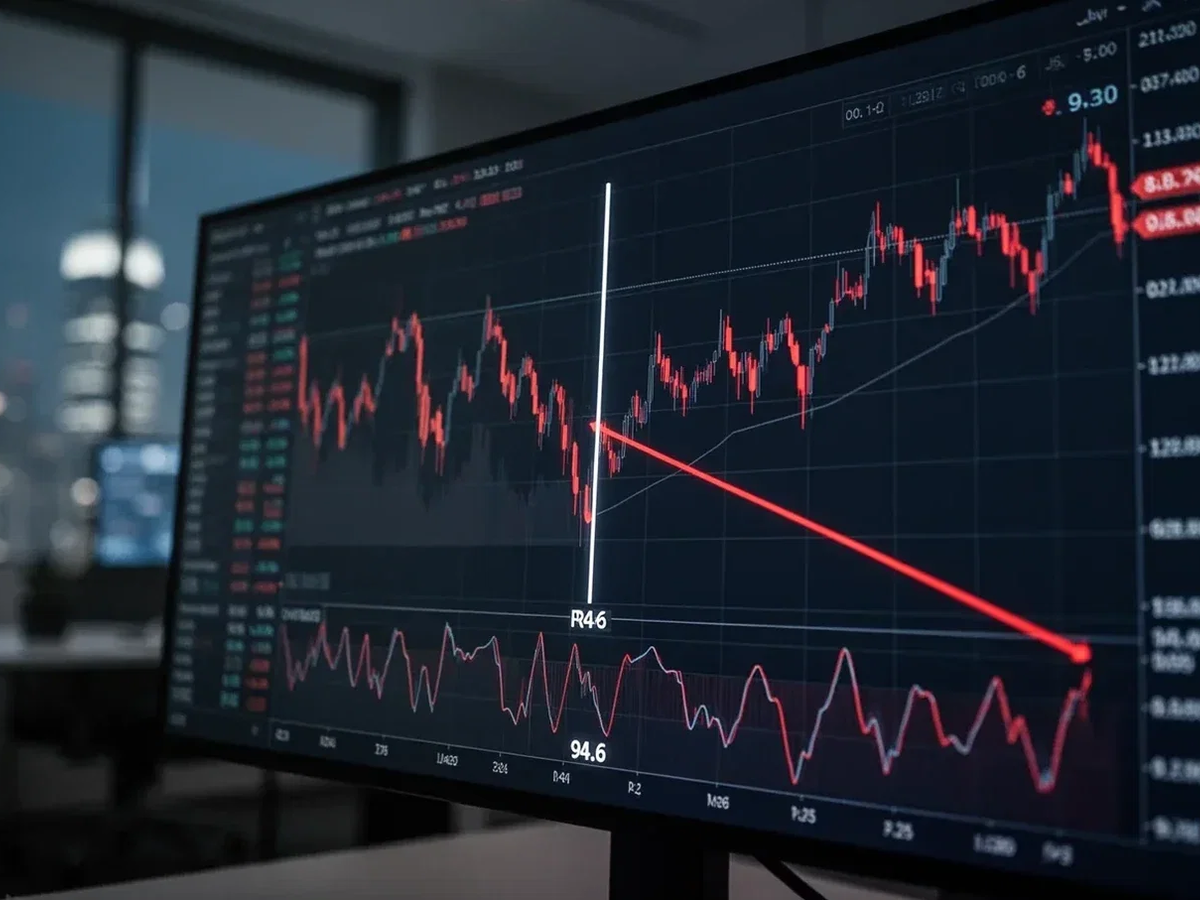
The ETF’s momentum, however, has reached technically extreme levels. The 14-day relative strength index stands at 94.6 — well above the 70 threshold deemed overbought and into territory that typically signals exhaustion. The fund gained 1.40% in seven days and nearly 6% in thirty, compressing the rally into a tight window. A pullback toward $200 in the weeks ahead would not be surprising; it would instead be a healthy consolidation after an aggressive run.
Should investors sell immediately? Or is it worth buying MSCI World ETF?
Nvidia remains the dominant force in the portfolio, with a 6.36% weighting. Apple follows at 4.86% and Microsoft at 3.21%, with Amazon and Alphabet Class A rounding out the top five. The technology sector accounts for 27.61% of the fund, while financials take 15.99% and industrials 11.76%. US stocks represent over 70% of assets. That concentration in mega-cap growth names makes the ETF acutely sensitive to sentiment shifts on tech, though the underlying earnings picture remains robust: first-quarter profits among the fund’s 1,060 holdings rose 22% year-over-year, beating expectations by an average of 6.3%. Some 72% of companies surpassed forecasts.
The MSCI World index itself underwent a major reconstitution effective the end of May. A net 52 companies were removed: 49 additions versus 101 deletions, an unusually large clean-up. A methodological change to the Foreign Inclusion Factor also took effect on June 1, aimed at better reflecting free-float and boosting trading volumes around the rebalance date.
Investors should also be aware of the fund’s pure developed-market mandate. Unlike the MSCI ACWI or Vanguard Total World ETF — the latter charges 0.22% — this fund excludes emerging markets entirely. That keeps the portfolio focused on the US, Japan, and Europe, but means it misses broader global diversification.
A dividend is on the calendar: the ETF goes ex-dividend on June 15 with an expected payout of $1.26 per share, payable June 18. That is 16% below the previous semi-annual distribution of $1.50 in December, though the longer-term trend remains positive. The dividend has grown 18.54% year-over-year, with a three-year compound growth rate of 8.52%.
MSCI World ETF at a turning point? This analysis reveals what investors need to know now.
The macro backdrop shifts two days after the ex-date, when Kevin Warsh chairs his first Federal Reserve meeting after succeeding Jerome Powell. Warsh has signaled openness to lower rates while stressing his independence. His first policy signal will set the tone for the second half — and for a fund whose fortunes are tied to US growth stocks as tightly as any global product.
For now, the iShares MSCI World ETF sits at an all-time high with a Gold rating, strong flows, and an extreme RSI. The fee war, the index shake-up, and the incoming Fed chair all add layers of uncertainty to a fund that looks flawless on paper but is flashing warnings a disciplined investor cannot ignore.
Ad
MSCI World ETF Stock: New Analysis - 30 May
Fresh MSCI World ETF information released. What's the impact for investors? Our latest independent report examines recent figures and market trends.
So schätzen die Börsenprofis Gold Aktien ein!

Für. Immer. Kostenlos.