Gold's $4,000 Crossroads: Central Banks' Record Hoarding Collides with Technical Breakdown and Fed Hawkishness
Published on 07/01/2026 at 13:44 | Redaktion boerse-global.de
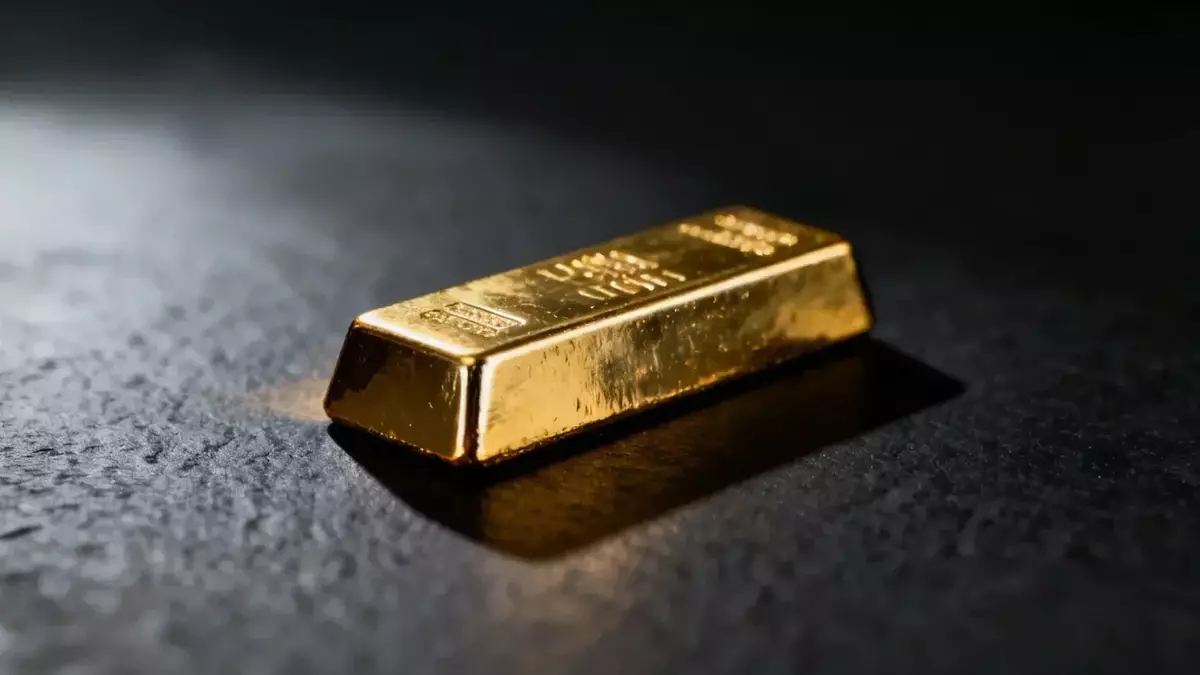
The psychology of a round number meets a war of competing narratives. Gold is trading near $4,003 an ounce, down almost 29% from its January peak of $5,627, as a death cross on the chart compounds the pressure from a hawkish shift at the Federal Reserve. Yet behind the selloff, a different story is playing out in central bank vaults—one of record accumulation that suggests long-term believers are taking the other side of the trade.
The technical damage is unmistakable. The 50-day moving average has dropped below the 200-day line, a death cross that chartists view as a harbinger of sustained downside. Since bouncing off resistance at $4,773 on May 12, the decline has accelerated. The break below $4,400 in early June triggered a sharp selloff, and with the relative strength index now at 32.9, gold is flirting with oversold territory—a level that can be both a stabilizer and a trap. The 50-day average sits at $4,436, a level that has acted as an unbreachable barrier in recent months.
The precious metal briefly touched $3,984 on July 1, its lowest in nearly eight months. The immediate trigger was fresh data showing the US labor market refuses to cool. The JOLTS report on June 30 recorded 7.6 million job openings in May, unchanged from the prior month's upwardly revised reading and the highest in two years. Futures markets now assign a 30% probability of a rate hike at the next FOMC meeting, with the chance of a move by September already above 60%, according to the CME FedWatch tool. Core inflation remains stubbornly above the Fed's 2% target, while rising bond yields further undermine the appeal of a zero-yielding asset.
Fed President Kevin Warsh, speaking this afternoon at the ECB's annual forum in Sintra, Portugal, is the focal point for near-term direction. He shares the podium with ECB chief Christine Lagarde and his counterparts from the Bank of England and the Bank of Canada. Warsh made headlines at his first FOMC press conference by scrapping forward guidance entirely. His stated approach—no more forecasts—creates a paradox: the less orientation he offers, the more intently markets parse every public appearance. The stakes are high because the data does not argue for imminent rate cuts. Warsh has also announced five independent task forces, formed on June 17, to review the Fed's communication, balance-sheet management, data governance, inflation framework, and labor market trends. The balance-sheet review is especially consequential: the Fed still holds $6.7 trillion in bonds, and a potential move to begin selling assets would tighten financial conditions further. The June dot plot underscored the hawkish tilt, with nearly all policymakers expecting rates to remain unchanged or rise through end-2026.
Should investors sell immediately? Or is it worth buying Gold?
Amid the short-term headwinds, central banks are voting with their reserves. A survey by the World Gold Council with a record 76 participating central banks found that 89% expect global gold reserves to increase over the next twelve months, and 45% plan to buy outright. Over the past four years, central banks have purchased an average of roughly 1,000 tonnes annually—double the pace of the previous decade. In the first quarter of 2026, official reported data showed net sales of 129 tonnes, largely due to Turkey offloading 60 tonnes in March alone. But when the World Gold Council adjusts for unreported transactions on the London over-the-counter market and Swiss refinery flows, the real picture flips to net purchases of 244 tonnes—up from 208 tonnes in the fourth quarter of 2025 and the highest Q1 total on record. Total global gold demand hit 1,231 tonnes in the first quarter, another Q1 record.
China has been a particularly aggressive buyer. The People's Bank of China added 8 tonnes in April, marking its 18th consecutive monthly purchase. J.P. Morgan reports that China's net gold imports reached 317 tonnes in the first quarter, nearly three times the level of the prior quarter.
Analyst estimates for year-end are sharply divided, reflecting the market's uncertainty. Goldman Sachs cut its end-2026 price target from $5,400 to $4,900 on June 20, citing fading ETF inflows and the removal of any Fed rate cuts from its 2026 forecast. Goldman now expects the first easing in June and December 2027. J.P. Morgan takes the opposite view, forecasting an average gold price of $6,000 in the fourth quarter of 2026 and $6,300 by the end of 2027. The bank notes that gold is currently bumping along above its 200-day moving average of $4,340 but capped below the 50-day average of $4,730, with retail investors largely absent from the market.
Gold at a turning point? This analysis reveals what investors need to know now.
Geopolitical crosscurrents add another layer. US-Iran talks in Qatar have made no progress, and direct negotiations are not expected. Gold has been under pressure since late February, when the Middle East crisis and rising energy prices reignited inflation fears. The next major test comes on July 2 with the release of the nonfarm payrolls report, which economists forecast will show an increase of 110,000 jobs. A strong number would likely intensify the selloff. For now, the market is caught between a technical breakdown, a hawkish Fed, and a central bank buying spree that suggests at least some investors see today's prices as a once-in-a-cycle opportunity.
Ad
Gold Stock: New Analysis - 1 July
Fresh Gold information released. What's the impact for investors? Our latest independent report examines recent figures and market trends.
Disclaimer regarding our articles: No investment advice, no buy or sell recommendation. Information on prices, companies, and markets is provided without guarantee; changes are possible at any time. Stock market transactions can lead to substantial losses. Our articles are created and reviewed in whole or in part automatically with the support of AI.