Gold’s $4,050 Crossroads: When an Oil Shock Becomes a Headwind for Bullion
Published on 07/24/2026 at 08:41 | Redaktion boerse-global.de
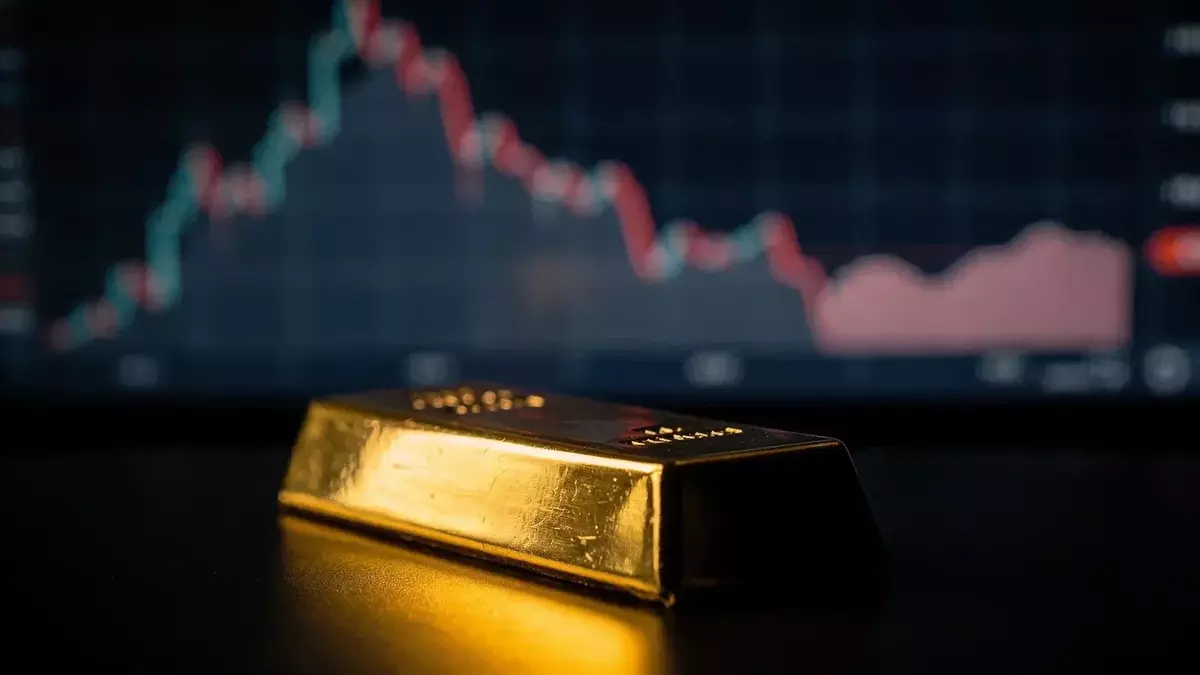
Gold investors are confronting an unusual paradox: a geopolitical crisis that would typically send bullion soaring is instead driving it lower. The yellow metal tumbled 2 percent on Thursday to close at $4,052.30 per troy ounce, as surging crude prices and hawkish Federal Reserve expectations overwhelmed traditional safe-haven demand.
The sell-off marks a sharp reversal from earlier in the session, when gold briefly pushed above $4,100 before succumbing to selling pressure. The precious metal now sits nearly 28 percent below its 52-week high of $5,626.80 reached in January, underscoring how dramatically the market has cooled since the start of the year.
Oil’s Vicious Cycle
The catalyst for the decline lies in an unlikely source: escalating attacks on oil tankers in the Red Sea and the Strait of Hormuz. Houthi rebels claimed responsibility for striking two Saudi Arabian tankers as part of a maritime blockade, while US military operations against Iran entered a twelfth consecutive night. German Chancellor Merz condemned the attacks as an unacceptable blockade, and President Trump warned that Iran could face frozen assets being seized to compensate for damage to commercial shipping.
Brent crude surged past $100 a barrel, while West Texas Intermediate jumped more than 6 percent to top $92. The spike in energy costs has reignited inflation fears, and that is precisely what is hurting gold. Higher oil prices feed expectations that the Federal Reserve will need to keep interest rates elevated — or even raise them further — to contain price pressures. For a non-yielding asset like gold, a higher rate environment raises the opportunity cost of holding it.
Should investors sell immediately? Or is it worth buying Gold?
The market is already pricing in the shift. Fed funds futures now assign a 78 percent probability to a rate hike at the September FOMC meeting, a dramatic repricing that has strengthened the US dollar and pushed the 10-year Treasury yield to around 4.7 percent, its highest level in 18 months. Both developments are headwinds for bullion.
Data Adds to the Pressure
Thursday’s economic data only reinforced the hawkish narrative. US initial jobless claims came in at 187,000, the lowest reading since 1969, signaling a labor market that remains exceptionally tight. The robust numbers gave policymakers more cover to maintain a restrictive stance.
The European Central Bank, meanwhile, held its deposit rate steady at 2.25 percent, but President Lagarde warned of risks stemming from the Iran conflict and rising oil prices, adding another layer of uncertainty to the global outlook.
Central Banks Remain in the Game
Despite the near-term weakness, structural demand from official institutions continues to provide a floor. A World Gold Council survey found that 89 percent of reserve managers expect global gold reserves to increase over the next 12 months, with 45 percent planning purchases of their own. Central banks have been buying roughly 1,000 tonnes of gold annually for the past four years.
US Treasury Secretary Bessent recently valued America’s gold reserves at over $1 trillion and confirmed that the holdings at Fort Knox are fully accounted for, a statement aimed at quelling any doubts about the integrity of the stockpile.
Analyst Views Diverge
The outlook among Wall Street firms is far from uniform. Goldman Sachs maintains its year-end target of $4,900, while Bank of America views the current pullback as a buying opportunity. Citi, however, forecasts a decline to $4,300 over the next three months, and Commerzbank has trimmed its year-end forecast to $4,800.
Gold at a turning point? This analysis reveals what investors need to know now.
A Market in Limbo
The question hanging over the market is whether gold can still function as a reliable safe haven when the very crisis that should support it — geopolitical turmoil in the Middle East — is generating headwinds through higher oil prices and tighter monetary policy expectations.
The technical picture offers little clarity. Gold briefly rallied to $4,150 earlier in the week, its highest since July 7, before the sell-off erased those gains. The Relative Strength Index sits at 44.5, indicating neither oversold nor overbought conditions, leaving room for moves in either direction.
All eyes now turn to the FOMC meeting on July 28-29. While no rate change is expected at that gathering, the accompanying statement and Chair Powell’s press conference will be scrutinized for signals about the September path. Until tensions in the Strait of Hormuz and the Red Sea ease, oil will remain the dominant driver of inflation expectations — and by extension, the trajectory of gold prices.
Ad
Gold Stock: New Analysis - 24 July
Fresh Gold information released. What's the impact for investors? Our latest independent report examines recent figures and market trends.
Disclaimer regarding our articles: No investment advice, no buy or sell recommendation. Information on prices, companies, and markets is provided without guarantee; changes are possible at any time. Stock market transactions can lead to substantial losses. Our articles are created and reviewed in whole or in part automatically with the support of AI.