Gold’s $4,090 Pivot: Oil Shock, Fed Anxiety, and Central Bank Demand Collide
Published on 07/23/2026 at 13:32 | Redaktion boerse-global.de
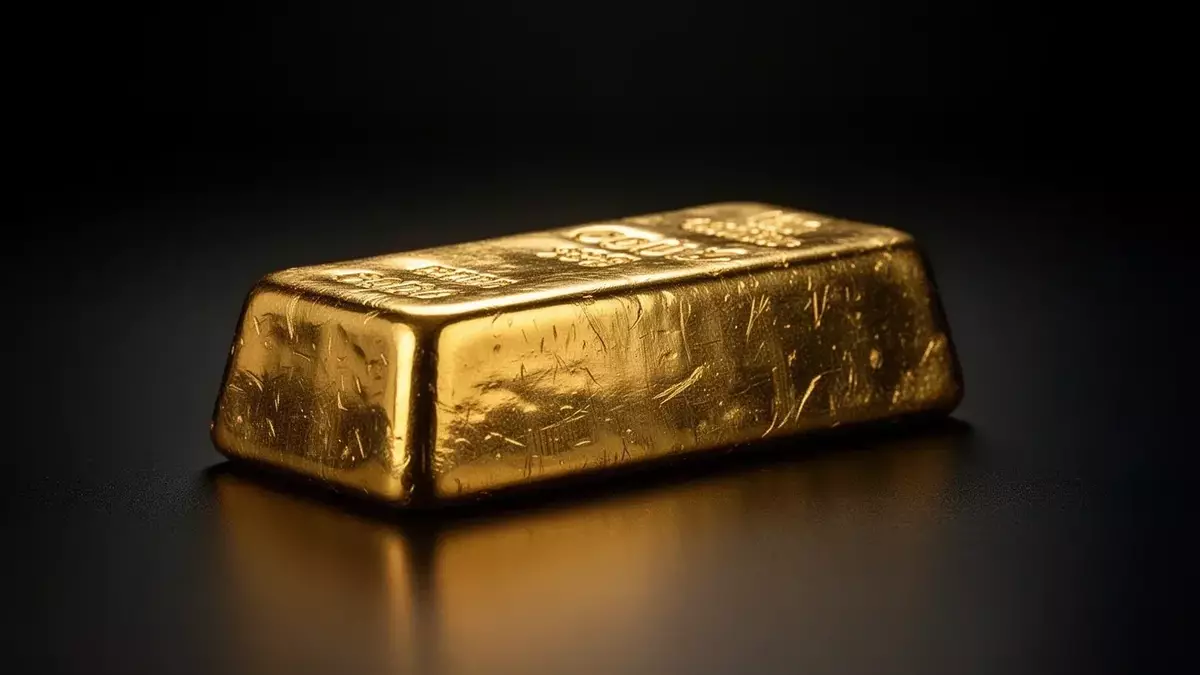
Gold prices slipped on Thursday, with the precious metal trading at $4,090.70 per ounce, a 1.07% decline from Wednesday’s close of $4,135. The trigger came from a sharp rally in oil markets, as Brent crude surged to a six-week high near $96 a barrel following the 12th consecutive night of US military strikes against Iran. The escalation, compounded by Houthi attacks on tankers in the Red Sea, has stoked inflation fears and fueled speculation that the Federal Reserve could strike a more hawkish tone at its policy meeting next week—a combination that historically weighs on bullion.
The day’s retreat is part of a deeper correction that has now pushed gold 27.30% below its all-time high of $5,626.80, set on January 29, 2026. Year-to-date, the metal is down 5.59%, though it has clawed back 2.77% over the past seven sessions. Despite that bounce, gold remains 3.83% beneath its 50-day moving average of $4,253.69, suggesting the recovery lacks conviction. The Relative Strength Index sits at 46.8, placing it in neutral territory—neither oversold nor overbought.
Analysts remain divided on whether the recent uptick is a genuine reversal or merely a technical dead-cat bounce. HSBC characterizes it as a purely technical recovery without a fundamental trend shift, while still acknowledging gold’s traditional safe-haven appeal in times of elevated risk aversion. JPMorgan pegs resistance between $4,197 and $4,264, with support at $3,886. The Bank of Montreal has trimmed its year-end target to $4,625, citing a strong US dollar, rising bond yields, and lingering fears of further rate hikes. Wells Fargo, however, sees the risk-reward profile as having improved.
On the speculative side, ANZ reports that net-long positions on gold futures have reached their highest level since January, while gold-backed ETFs are seeing meaningful inflows. For ANZ, the $4,200 resistance level is the key pivot: a sustained breakout above that threshold could open the door to a fresh upswing, while a fall back below $4,000 would put the fragile stabilization at risk.
Should investors sell immediately? Or is it worth buying Gold?
Central banks continue to underpin the market structurally. China’s central bank raised its gold reserves to 2,331.52 metric tons at the end of May, marking the 19th consecutive month of accumulation, with roughly 480,000 ounces added in the second quarter alone. A World Gold Council survey shows 45% of central banks plan further purchases. This sustained buying has already reshaped global reserve composition: in 2025, gold’s share of global reserves surpassed that of US Treasuries for the first time, at 27% versus 22%.
Not all central banks are following the same script. Russia sold roughly 43.5 tons of gold in the first half of 2026, apparently driven by its budget deficit, leaving it with 73.4 million ounces. Turkey trimmed its holdings by 81 tons over the same period. UBS, which views the recent pullback to $3,850 as a buying opportunity, still expects global central bank purchases of 750 to 1,000 tons for the full year—a level it considers price-supportive.
Looking ahead, VanEck sees greater potential in gold mining equities than in bullion itself, arguing that record cash flows and production costs below $2,000 per ounce could fuel outsized gains if the uptrend resumes. Analyst Alasdair Macleod believes a significant floor has been established and expects a medium-term reversal to the upside. Shawn Khunkhun of Contango Silver & Gold places gold and silver in a “pre-mania phase” with higher long-term prices, but warns of near-term downside risk—in a worst-case scenario, gold could slip to $3,400 to $3,500.
Gold at a turning point? This analysis reveals what investors need to know now.
Silver, meanwhile, is flashing a more ominous signal. The white metal fell to $54.77 an ounce, an eight-month low and roughly 55% below its January 29 record of $121.64. Analyst Florian Grummes points to technical support between $54 and $56, anchored by the October 2025 high of $54.48. In his view, gold needs to establish a trading range between $3,900 and $4,200 to build a durable base. A break below $3,900 could trigger targets of $3,500 for gold and $45 for silver—a scenario market participants will be watching closely as the Fed’s decision looms.
Ad
Gold Stock: New Analysis - 23 July
Fresh Gold information released. What's the impact for investors? Our latest independent report examines recent figures and market trends.
Disclaimer regarding our articles: No investment advice, no buy or sell recommendation. Information on prices, companies, and markets is provided without guarantee; changes are possible at any time. Stock market transactions can lead to substantial losses. Our articles are created and reviewed in whole or in part automatically with the support of AI.