Gold’s Divergent Paths: Central Banks Scoop Up Bullion as Death Cross Signals Further Pain
Published on 07/09/2026 at 13:12 | Redaktion boerse-global.de
The yellow metal is caught in a tug-of-war between mounting rate-hike expectations and a wave of official-sector buying that shows no signs of abating. While private investors flee, sovereign buyers are adding to their hoards at the fastest pace in years.
Gold edged up 0.71% on Thursday to trade at $4,116.50 per ounce, a modest bounce from the session’s earlier plunge near the $4,040 mark. That recovery did little to repair the damage: the metal still sits 5.19% lower since the start of the year and a staggering 27% below the January record of $5,626.80. The weakness comes despite an escalation in geopolitical turmoil that would normally send investors scrambling for safety.
Fed Minutes Deliver a Hawkish Shock
The catalyst for the latest rout was the release of the Federal Reserve’s June meeting minutes on Wednesday evening. The document revealed a committee firmly committed to keeping borrowing costs elevated as inflation proves stubborn. Under new Chair Kevin Warsh, the discussion has shifted toward the possibility of further tightening rather than the cuts that markets had hoped for earlier in the year.
Traders are now pricing in at least one rate increase by the end of 2026, with the July and September meetings seen as live candidates. That repricing has crushed the expectation of a pivot that had supported gold in the first quarter. Higher rates boost the opportunity cost of holding non-yielding bullion and strengthen the dollar, making dollar-denominated gold more expensive for overseas buyers. The greenback’s recent rally has already pushed the metal to multi-month lows.
Should investors sell immediately? Or is it worth buying Gold?
Oil Blockade Fans Inflation Fears
The Fed’s hawkish turn is inextricably linked to the energy shock emanating from the Middle East. Since late February, a virtual blockade of the Strait of Hormuz has choked a substantial portion of global oil and gas shipments. On Wednesday, President Trump declared the provisional ceasefire with Iran “over,” triggering a fresh 5% spike in crude prices and confirming another day of US strikes aimed at curbing Tehran’s ability to threaten shipping. Iran has promised a large-scale retaliation against American bases.
US inflation, already running at 4.2% in May—a three-year high—is now expected to receive another jolt from rising energy costs. For gold, the implications are perverse: normally a crisis hedge, the metal is being sold off precisely because the crisis stokes inflation that keeps rates high.
Technicals Flash a Death Cross
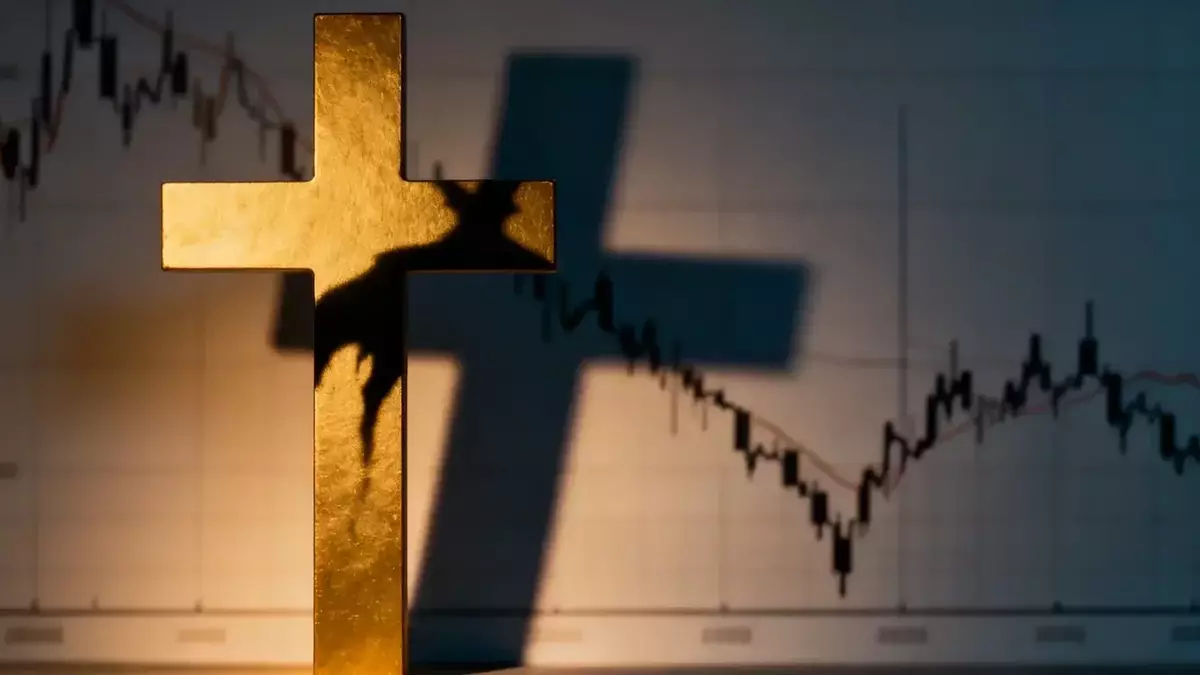
The chart picture has turned decisively bearish. The 50-day moving average has fallen below the 200-day moving average, a pattern known as a “death cross” that many analysts interpret as a signal for a prolonged correction. Gold currently trades 7.78% below its 50-day average and 10.91% below the 200-day line. The relative strength index stands at 38.4, indicating oversold conditions, but with 30-day volatility near 28%, nerves remain frayed.
A break below the $4,000 psychological level could open the door to the next support zone near $3,500, while the 52-week low of $3,901.30 is only 3.65% away. All eyes are on upcoming US inflation data; another upside surprise would compound the pressure.
Gold at a turning point? This analysis reveals what investors need to know now.
Central Banks Defy the Selloff
Yet the official sector is voting with its feet in the opposite direction. China’s central bank reported its largest monthly increase in gold reserves in more than two and a half years for June, underscoring a persistent sovereign appetite for bullion that stands in stark contrast to the exodus from physically backed ETFs. While private investors and speculative funds have been net sellers, central banks continue to diversify away from dollar assets amid the geopolitical uncertainty.
For now, the metal’s fate rests on the dual drivers of oil and interest rates. The Strait of Hormuz remains the linchpin: any de-escalation would ease inflation fears and revive hopes for a Fed pause, while further escalation risks cementing the hawkish policy path that has so thoroughly undermined gold’s traditional safe-haven appeal.
Ad
Gold Stock: New Analysis - 9 July
Fresh Gold information released. What's the impact for investors? Our latest independent report examines recent figures and market trends.
Disclaimer regarding our articles: No investment advice, no buy or sell recommendation. Information on prices, companies, and markets is provided without guarantee; changes are possible at any time. Stock market transactions can lead to substantial losses. Our articles are created and reviewed in whole or in part automatically with the support of AI.