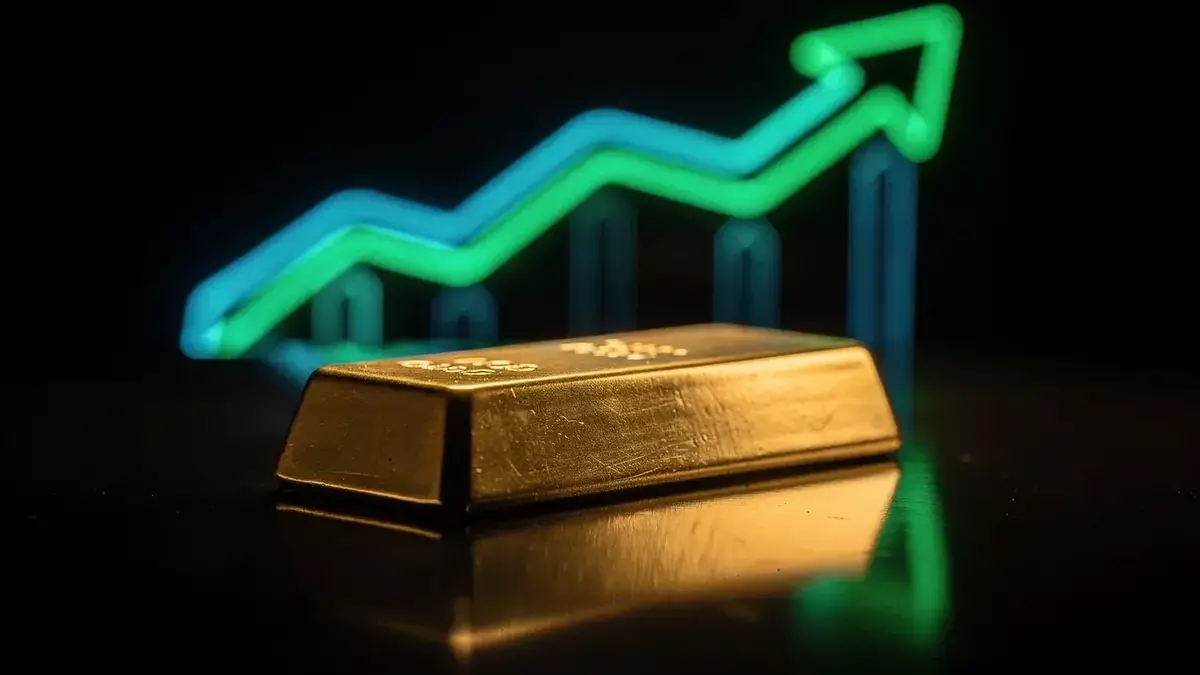
Gold’s Dual Headache: Record ETF Exodus and Hawkish Fed Eclipse Middle East Turmoil
Published on 07/20/2026 at 10:42 | Redaktion boerse-global.de
Gold teetered around the $4,000 mark on Monday, but the metal’s famed safe-haven reflex remains conspicuously absent. Despite a ninth consecutive night of US strikes on Iranian targets and fresh attacks on shipping in the Strait of Hormuz, bullion futures barely budged. The August contract edged up to $4,017.40 per ounce, a mere $1.40 off Friday’s close, while Brent crude surged almost 3% to $90.71 and WTI jumped 2.55% to $84.59.
The disconnect is stark. Geopolitical risk is feeding oil, not gold. Investors appear far more concerned about the Federal Reserve’s next move than about a spreading conflict in the Middle East. Rising real yields and a stronger dollar have decisively overshadowed the traditional flight-to-safety narrative.
ETF Bleeding Exceeds $14 Billion
The reluctance to buy gold is most visible in the world’s largest bullion-backed ETF. Between March and July, the SPDR Gold Shares (GLD) shed roughly $14.4 billion in assets, shrinking its net holdings to about $128.61 billion. March alone saw an $8.5 billion outflow—the biggest monthly withdrawal in the fund’s history—followed by further redemptions of $1.7 billion in April, $872 million in May, and $3.2 billion in June.
There was a glimmer of a reversal last week: GLD recorded a weekly inflow of $446.8 million and the number of outstanding shares rose, suggesting that some institutional buyers are using the dip to add exposure. But that single inflow is a drop in the ocean against the broader exodus, and the trend since March remains firmly negative.
Should investors sell immediately? Or is it worth buying Gold?
Fed Expectations Keep Tightening
The interest-rate outlook is the primary headwind. Cleveland Fed President Beth Hammack warned on Friday that inflation remains persistent, joining a growing chorus of policymakers cautioning against premature easing. The CME Group’s FedWatch Tool now assigns a 60% probability to a rate increase at the Fed’s September 16 meeting, down from 70% a week earlier after softer US consumer and producer price data. Yet that still leaves the door wide open for a hike, and the one-day jump from 47% to 53% in the broader September probability underscores how quickly sentiment can shift.
For a zero-yielding asset like gold, higher rates raise the opportunity cost of holding it. The market is essentially pricing in a higher-for-longer Fed, and that logic is overwhelming the geopolitical bid.
Wall Street Banks Pare Their Outlooks
Major sell-side institutions have been marking down their gold forecasts since late June, though the cuts vary in severity and rationale. Goldman Sachs lowered its year-end 2026 target to $4,900 from $5,400 in mid-June, citing the bank’s view that the Fed will deliver no rate cut this year. JPMorgan made the steepest revision in early July, slashing its Q4 2026 target by roughly a quarter to $4,500 from $6,000, blaming weaker demand from key buyer segments. Bank of America trimmed its 2026 forecast by 14% to $4,360 on July 8, pointing to the Fed’s restrictive stance—though it kept its long-term target of $6,000 intact, contingent on the end of the tightening cycle.
HSBC was the most recent to adjust, cutting its 2026 average price forecast from $4,864 to $4,560 on July 9, while leaving its year-end 2026 target unchanged at $4,750. The bank now expects gold to trade in a $3,800–$4,700 range for the rest of the year. HSBC’s reasoning mirrors that of its peers: a hawkish Fed and a strengthening dollar are the dominant near-term forces. Still, it maintains that the long-term supports—sovereign debt concerns, geopolitical instability, and central bank diversification—remain intact.
Gold at a turning point? This analysis reveals what investors need to know now.
The Path Ahead: Oil, Data, and a Delicate Balance
For the near term, two factors will determine whether gold breaks out of its $4,000 rut or sinks toward the $3,800 level flagged by HSBC. The first is the oil price: a further escalation in the Strait of Hormuz could push Brent above $90 and reignite inflation fears, which would reinforce the Fed’s hawkish stance and keep gold under pressure. The second is US economic data. If upcoming releases confirm a softening economy without triggering a full-blown risk-off move, they could dampen rate-hike expectations and give gold room to recover.
The metal is caught between a geopolitical rock and a monetary-policy hard place. Until one of those forces clearly gives way, the stalemate around $4,000 is likely to persist.
Ad
Gold Stock: New Analysis - 20 July
Fresh Gold information released. What's the impact for investors? Our latest independent report examines recent figures and market trends.
Disclaimer regarding our articles: No investment advice, no buy or sell recommendation. Information on prices, companies, and markets is provided without guarantee; changes are possible at any time. Stock market transactions can lead to substantial losses. Our articles are created and reviewed in whole or in part automatically with the support of AI.