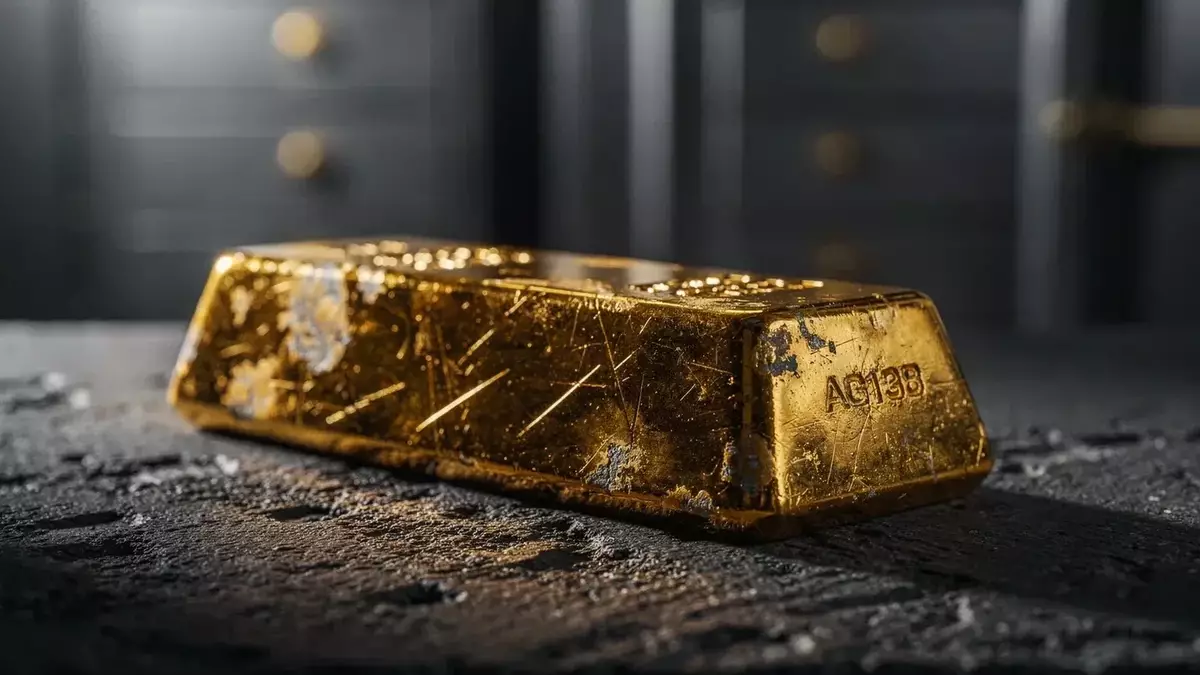
Gold's Fragile Calm: Fed Decision Looms as Chinese Retail Crackdown Reshapes Demand
Published on 07/27/2026 at 19:11 | Redaktion boerse-global.de
Gold markets entered the week on uncertain footing, with the precious metal opening higher Monday only to pare gains as traders weighed a complex mix of geopolitical easing, shifting Chinese demand dynamics, and the looming Federal Reserve interest-rate decision. Spot gold currently trades at $4,081 per ounce, a level that has repeatedly found support near the $4,000 mark since late June but remains 27% below January's 52-week high of $5,627.
A Fragile Ceasefire Reshapes the Trading Floor
The weekend brought an unexpected turn in the Middle East. After 13 days of hostilities, the United States suspended its strikes on Iran, and Tehran halted retaliatory operations. The de-escalation triggered a sharp selloff in oil markets—crude dropped more than 5%—while gold initially benefited from a weaker dollar and the evaporation of the war premium that had been built into commodity prices since late February.
Oman has stepped in as mediator on the sensitive question of the Strait of Hormuz, and reports suggest the White House abandoned plans for a larger military strike against Iran, partly due to dwindling air-defense stockpiles. Yet the situation remains far from settled. Houthi attacks on Saudi assets in the Red Sea are reportedly intensifying, and a formal ceasefire has not been signed. For gold, the net effect Monday morning was a gap higher that faded as the session wore on—a pattern that reflects the market's reluctance to place aggressive bets ahead of Wednesday's Fed announcement.
China's Quiet Pivot Away from Paper Gold
A structural shift underway in China is drawing increasing attention from analysts. Since July 24, the country's largest state-owned banks—including ICBC—have suspended retail trading in paper gold derivatives. The official explanation cites risk management following volatile market conditions, but market observers see a deeper strategic intent: a deliberate push to steer individual investors away from speculative paper contracts and toward physical gold ownership.
Should investors sell immediately? Or is it worth buying Gold?
Gold savings plans and physical bullion holdings remain unaffected by the ban. The implication is that Beijing is quietly encouraging its vast retail investor base to accumulate real metal rather than synthetic exposure. Over the medium term, this could strengthen the physical gold market relative to the western futures exchanges, potentially altering the pricing dynamics that have long been dominated by COMEX and London.
The People's Bank of China continues to walk the walk. Revised data show the central bank added approximately 9.95 tonnes of gold to its reserves in May, extending a multi-year accumulation campaign aimed at diversifying the country's foreign-exchange holdings. Gold's share of global official currency reserves has now reached roughly 27%, underscoring the structural bid that central banks have provided to the market.
The Fed Crossroads: Dovish Hopes vs. Hawkish Reality
All eyes are on the Federal Reserve's rate decision Wednesday, followed by the PCE inflation data Thursday—the central bank's preferred gauge of price pressures. The outcome will shape the trajectory for the dollar and real yields, two forces that have kept gold on a short leash in recent months.
Citi analysts expect the Fed to hold rates steady while striking a dovish tone, arguing that the market overestimates the probability of a hike at roughly 30%. They point to softer core inflation in June and moderating wage growth as evidence that the tightening cycle has peaked. Dissent within the Federal Open Market Committee is considered possible, with policymakers Hammack and Logan flagged as potential outliers. Citi sees the central bank resuming its rate-cutting cycle as early as October.
A dovish outcome would typically weigh on bond yields and the dollar, creating a tailwind for non-yielding gold. A more hawkish stance, by contrast, would add to the headwinds that have already prompted several major banks to trim their year-end forecasts. Goldman Sachs lowered its 2026 target from $5,400 to $4,900 per ounce, citing expectations for fewer rate cuts. HSBC cut its forecast from $4,900 to $4,560, while J.P. Morgan sees gold around $4,500 by the fourth quarter. All three cite stable U.S. yields and a firmer dollar index as the primary reasons for the downward revision.
Gold at a turning point? This analysis reveals what investors need to know now.
Chart Levels: The Battle for $4,200
Technically, gold is trading near its 21-day moving average and wrestling with the $4,100 handle. A sustained breakout above $4,200 is widely viewed as necessary to resume the long-term uptrend. The relative strength index sits at 46.8—a neutral reading that offers little directional bias.
A break below $4,000 could trigger selling pressure toward the year's low at $3,942. The 52-week trough of $3,901.30, set in late October, is just 4% below current levels, underscoring how close the metal is to testing its worst levels of the past year. On the upside, a move above the resistance zone near $4,350 would signal that the correction is over and the broader bull trend is intact.
For now, gold remains caught between competing forces: geopolitical relief and a weaker dollar on one side, the Fed's uncertain path and China's structural shift away from paper gold on the other. Until Wednesday's decision and Thursday's inflation data provide clarity, the metal is likely to remain rangebound—testing support at $4,000 while struggling to reclaim $4,200.
Ad
Gold Stock: New Analysis - 27 July
Fresh Gold information released. What's the impact for investors? Our latest independent report examines recent figures and market trends.
Disclaimer regarding our articles: No investment advice, no buy or sell recommendation. Information on prices, companies, and markets is provided without guarantee; changes are possible at any time. Stock market transactions can lead to substantial losses. Our articles are created and reviewed in whole or in part automatically with the support of AI.