Gold’s Paradox: An Oil Shock That Hurts Rather Than Helps Bullion
Published on 07/24/2026 at 13:02 | Redaktion boerse-global.de
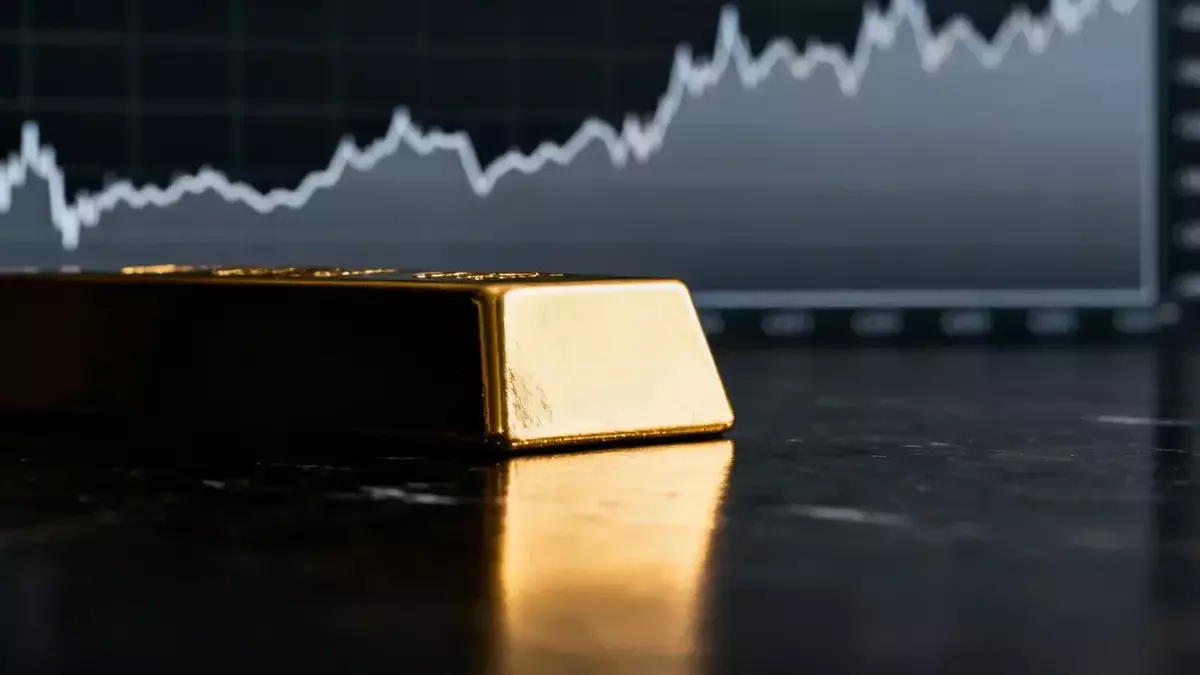
The yellow metal is caught in a peculiar bind. At Friday midday, gold was trading around $4,055 per troy ounce, hugging its weekly low. The immediate trigger for the slide below $4,100 came from an unexpected corner: the same geopolitical turmoil that should theoretically boost safe-haven demand is instead fueling an inflation narrative that undermines it.
The Oil-Gold Contradiction
Houthi rebels in Yemen claimed responsibility for attacks on two Saudi oil tankers as part of a maritime blockade, while the US conducted airstrikes on Iran for a twelfth consecutive night. Brent crude surged past $100 a barrel. Normally, such developments would send investors scrambling for gold. Instead, the opposite happened.
The mechanism is straightforward but punishing for bullion. Higher energy prices stoke inflation expectations, which in turn reinforce the view that central banks will keep interest rates elevated for longer. Gold, which pays no yield, becomes less attractive relative to fixed-income assets. The classic flight-to-safety trade is being overwhelmed by this inflation-driven headwind.
President Trump added fuel to the fire by warning of strikes on Iranian infrastructure if shipping through the Strait of Hormuz comes under threat. He also announced new tariffs of between 10 and 12.5 percent on numerous trading partners in response to the maritime disruptions, a move that strengthens the dollar and makes gold more expensive for buyers outside the US currency zone.
Should investors sell immediately? Or is it worth buying Gold?
Labor Market Adds to the Pressure
The sell-off accelerated after US data showed initial jobless claims falling to 187,000 — the lowest level since 1969. A robust labor market reinforces expectations of tight monetary policy. Markets now price in roughly an 82 percent probability of a rate hike in September, up from around 78 percent in earlier estimates. The yield on ten-year US Treasuries climbed to approximately 4.71 percent, the highest in eighteen months.
For gold, rising bond yields translate directly into higher opportunity costs. Investors are rotating toward the bond market, where they can lock in attractive returns without the volatility that has plagued bullion.
A Brief Rally That Fizzled
The decline to $4,053.40 on Thursday represented a 1.97 percent drop and came after a short-lived recovery. Gold had briefly touched $4,150, its highest since July 7, driven by safe-haven buying and technical purchases. That rally evaporated quickly, underscoring how sensitive the metal has become to the interplay between oil, the dollar, and rate expectations.
The current price sits just 3.9 percent above the 52-week low of $3,901.30. The gap to the 50-day moving average of $4,252.94 has widened to 4.69 percent, signaling that the short-term trend remains bearish. The relative strength index stands at 44.5, leaving room for further moves in either direction without signaling an oversold condition.
Central Banks and Institutions Still Buying
Despite the headwinds, there are pockets of support. The People’s Bank of China added 40 tonnes to its gold reserves in the first half of 2026, already surpassing the 27 tonnes purchased in all of last year. Institutional investors are also taking advantage of the lower prices. Hedge fund manager John Paulson recently reiterated his bullish outlook, arguing that the market is in the early stages of a long-term uptrend driven by waning confidence in fiat currencies.
Gold at a turning point? This analysis reveals what investors need to know now.
The Fed Looms Large
All eyes are now on the Federal Reserve. The FOMC meeting is scheduled for July 28-29, with the rate decision due at 2:00 PM ET on the 29th. No change is expected at this meeting, but the September meeting is where the action is anticipated. The market is pricing in a 78-82 percent chance of a hike, depending on the source.
The key question is whether the Fed will validate the market’s hawkish expectations or offer any signals that could shift the calculus. Until there is clarity on both the oil situation in the Strait of Hormuz and the Red Sea, crude will remain the primary driver of inflation expectations — and by extension, the dominant force shaping gold’s trajectory.
Chartists are watching the $4,000 level as a critical support zone. If that holds, gold could still break the downtrend that has been in place since June. A break below, however, would likely accelerate selling pressure from the bond market.
Ad
Gold Stock: New Analysis - 24 July
Fresh Gold information released. What's the impact for investors? Our latest independent report examines recent figures and market trends.
Disclaimer regarding our articles: No investment advice, no buy or sell recommendation. Information on prices, companies, and markets is provided without guarantee; changes are possible at any time. Stock market transactions can lead to substantial losses. Our articles are created and reviewed in whole or in part automatically with the support of AI.