Gold's Rebound Powered by a One-Two Punch: Weak Hiring and Unrelenting Central Bank Demand
Published on 07/05/2026 at 12:44 | Redaktion boerse-global.de
Gold has spent the past month sliding as the dollar firmed and rate-cut expectations faded, but two forces converged last week to pull it back from the brink: a disastrous June payrolls report and a steady accumulation by central banks that shows no sign of letting up.
The yellow metal closed Friday at $4,187.30 an ounce, up 1.23% on the day and 2.04% for the week, snapping a four-week losing streak. On a monthly basis, however, it remains 6.16% in the red, and the year-to-date deficit still stands at 3.56%. The January high of around $5,600 is more than 25% above current levels.
Central Banks Keep Stockpiling
The institutional bid beneath gold has become one of the market’s most reliable supports. According to the World Gold Council, central banks added a net 41 tonnes to their reserves in May. Poland led the charge with 18 tonnes, while China extended its buying streak to a 20th consecutive month, pushing its total holdings to 2,331 tonnes.
The forward-looking picture is even more striking. A WGC survey found that 45% of central banks intend to increase their gold reserves over the next twelve months — a record high. Gold now accounts for a larger share of global reserve assets than US Treasuries, underscoring a structural shift in sovereign portfolio allocation.
Should investors sell immediately? Or is it worth buying Gold?
Jobs Disappointment Reshapes Rate Outlook
While central bank demand provides a long-term floor, the immediate spark for Friday’s rally came from the US labour market. The economy added just 57,000 new jobs in June, far below the 110,000 to 115,000 economists had penciled in and a sharp deceleration from the prior month.
The miss sent ripples through rate expectations. The probability of a Federal Reserve rate hike at the September meeting dropped from 66% to roughly 53%. Because gold pays no yield, lower real rates reduce the opportunity cost of holding the metal, and bullion often gains in such an environment.
Attention now turns to the minutes of the last Fed meeting, the first chaired by Kevin Warsh, who has recently described inflation risks as diminishing. Across the Atlantic, the European Central Bank, which raised its benchmark rate to 2.25% in June, will deliver its next decision on July 23. The widening rate divergence between the Fed and the ECB could drive the dollar — and, by extension, gold’s path of least resistance.
Technical Resistance Holds the Key
Chartists see a pivotal test ahead. The zone between $4,200 and $4,300 represents the most immediate resistance, while the 50-day moving average sits well above at $4,415. The relative strength index at 46.6 leaves room for moves in either direction.
On the downside, the $4,000 level has proved a sturdy floor, with the 52-week low of $3,901.30 lying 7.33% below Friday’s close. A clean breakout above $4,200 could revive medium-term bullish targets. Goldman Sachs forecasts $4,900 next year, and JPMorgan projects $4,500 for the fourth quarter of 2026.
Silver Acts as a Leading Indicator
The precious-metals complex is not moving in isolation. Silver jumped 2.06% on Friday to $62.72 an ounce, gaining 5.09% over the week. The gold-to-silver ratio slipped to 66.9, often interpreted as a sign that a broader recovery in the sector is underway.
Silver’s fundamentals remain tight. Analysts expect a supply deficit of 46.3 million ounces in 2026, with structural demand outstripping output for years. Yet the white metal is still down 13.21% year-to-date and trades 12.49% below its 50-day average of $71.67. JPMorgan sees silver averaging $81 this year, while Commerzbank thinks falling rates could push it to $90.
Gold at a turning point? This analysis reveals what investors need to know now.
Divergent Forces Across Commodities
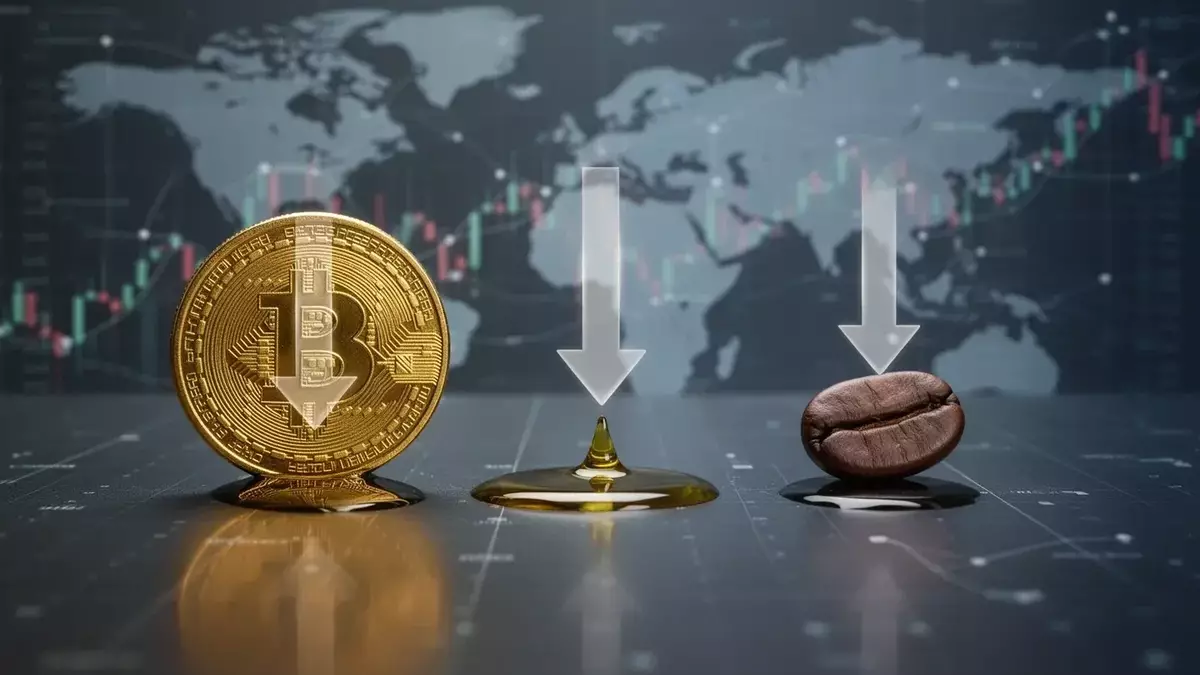
Gold and silver were not the only assets reacting to the payrolls shock, but they were among the clearest beneficiaries. Crude oil, by contrast, barely budged, as traders focused on diplomatic progress between Washington and Tehran and the normalization of Gulf supply. Brent crude settled at $72.13, while WTI hovered just below $70. Coffee, meanwhile, remained preoccupied with Brazilian harvest delays and a drawdown in Arabica inventories to the lowest in over two years.
The divergence underscores a market driven less by a single macro narrative than by asset-specific catalysts. For gold, the interplay between a dovish rate repricing and unwavering central bank appetite will determine whether the rebound gains traction or fizzles at resistance.
What to Watch Next
The coming days will test gold’s ability to hold gains. The Fed minutes could either reinforce or undermine the new rate expectations, while any fresh signs of a hiring rebound would shift the calculus again. For now, the combination of a disappointing jobs number and a record sovereign desire to hold bullion has given the market a fragile but genuine lift. Whether that lift carries gold through $4,200 — or leaves it stranded below — will set the tone for the rest of the summer.
Ad
Gold Stock: New Analysis - 5 July
Fresh Gold information released. What's the impact for investors? Our latest independent report examines recent figures and market trends.
Disclaimer regarding our articles: No investment advice, no buy or sell recommendation. Information on prices, companies, and markets is provided without guarantee; changes are possible at any time. Stock market transactions can lead to substantial losses. Our articles are created and reviewed in whole or in part automatically with the support of AI.