Gold's Safe-Haven Charm Falters as Dollar Strength and Fed Caution Eclipse Iran Crisis
Published on 05/28/2026 at 10:13 | Redaktion boerse-global.de
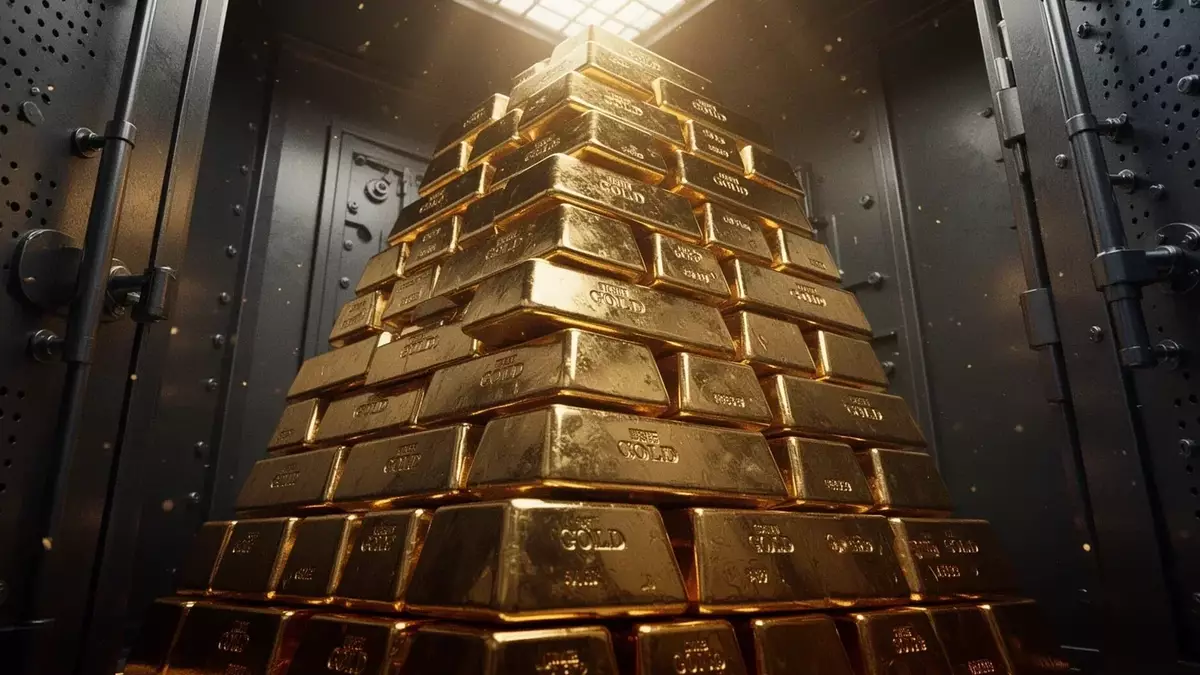
The yellow metal has landed in an unusual spot: geopolitical tension that would normally lift gold is instead dragging it lower. Spot bullion tumbled to $4,397.86 per ounce on Thursday, its weakest level in nearly two months, as a strengthening dollar and hawkish signals from the Federal Reserve overwhelmed typical safe-haven demand. The daily loss of roughly one percent from the prior close of $4,481.30 extends the monthly decline to nearly 2.8 percent, leaving gold a full 18 percent below the 52-week peak of $5,450.
The culprit is a classic combination: rising oil prices and a flight into the greenback. Escalation near the Strait of Hormuz pushed crude up by about two dollars a barrel, igniting a rush to the US dollar that automatically made gold more expensive for international buyers. That dynamic has flipped the script on the traditional crisis playbook, where investors usually pile into bullion for protection.
Federal Reserve policymakers have piled on the pressure. Governor Lisa Cook said interest rates must remain stable for now and did not rule out further hikes, while Vice Chair Philip Jefferson described current monetary policy as appropriate. For gold, which offers no yield, the message is blunt: higher-for-longer rates raise the opportunity cost of holding the metal, making it less attractive against interest-bearing assets like Treasuries.
Should investors sell immediately? Or is it worth buying Gold?
The military developments themselves are stark. US forces shot down four Iranian drones near the Strait of Hormuz and struck a ground station in Bandar Abbas. Washington also imposed fresh sanctions on an Iranian authority trying to control shipping through the chokepoint, which handles roughly a fifth of the world's oil and gas. President Donald Trump insisted a diplomatic deal was close even as the new sanctions and strikes were confirmed, adding another layer of uncertainty.
The broader precious metals complex suffered alongside gold. Silver lost 1.7 percent to $73.34, platinum slipped 0.5 percent, and palladium dropped 0.7 percent. The S&P GSCI Precious Metals Index hovered around 5,962 points, marking a year-to-date loss of more than 3.2 percent. The pattern is clear: macro factors and the dollar's strength are dictating prices, not physical demand or geopolitical hedging.
All eyes now turn to the April PCE price index, the Federal Reserve's preferred inflation gauge, due later in the session. Should the data come in hotter than expected, that would further dampen hopes of rate cuts, likely propping up the dollar and delivering another blow to gold. A cooler reading could reverse sentiment quickly. Gold has been trapped in a tight $4,400–$4,600 range for roughly ten days; the PCE numbers look set to break that deadlock.
Ad
Gold Stock: New Analysis - 28 May
Fresh Gold information released. What's the impact for investors? Our latest independent report examines recent figures and market trends.
Disclaimer regarding our articles: No investment advice, no buy or sell recommendation. Information on prices, companies, and markets is provided without guarantee; changes are possible at any time. Stock market transactions can lead to substantial losses. Our articles are created and reviewed in whole or in part automatically with the support of AI.