Gold's Structural Support from Central Banks Faces a Near-Term Test from Sticky Inflation
Published on 05/30/2026 at 08:12 | Redaktion boerse-global.de
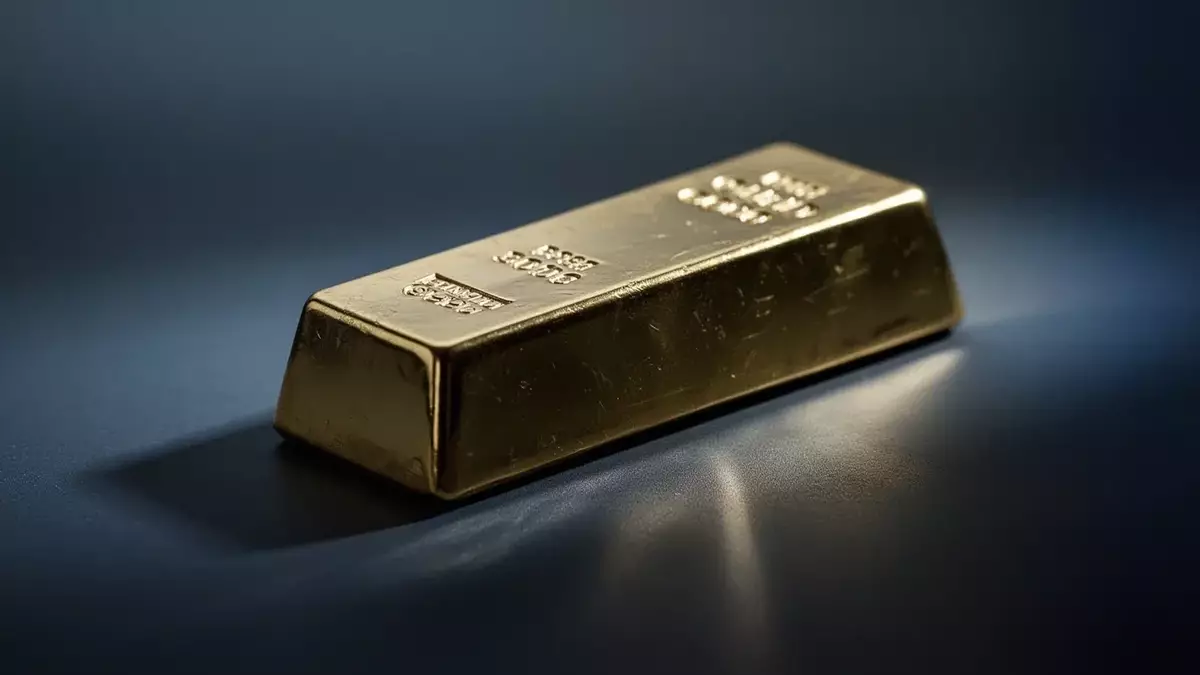
Gold rounded out the trading week at $4,596.60 an ounce on Friday, notching a 1.53% daily gain and a weekly advance of roughly 1.7%. The yellow metal has climbed about 5.9% since the start of the year, yet it remains nearly 16% below its 52-week high of $5,450. The rally, however, masks a tug-of-war between robust institutional demand and mounting headwinds from US inflation and interest-rate expectations.
Central banks are hoarding gold at a pace that has surpassed even the most bullish forecasts. Net purchases by official institutions reached 244 metric tons in the first quarter of 2026, according to the World Gold Council — a figure that exceeds both the previous quarter and the five-year average. Goldman Sachs has revised its estimate upward, now projecting monthly buying of roughly 60 tons through the end of the year. The bank had systematically underestimated purchases since last August; its updated model shows January purchases jumping to an estimated 66 tons, up from 54 tons under the old calculation.
Poland leads the charge in 2026, having added more than 20 tons to its reserves since January as part of a multiyear plan to reach a 700-ton stockpile, driven by heightened security concerns along NATO’s eastern flank. The People’s Bank of China, meanwhile, extended its buying streak to 17 consecutive months in March, adding five tons to bring total holdings to 2,313 tons — equivalent to about 9% of the country’s total foreign-exchange reserves.
A fresh dose of geopolitical optimism provided an additional tailwind last week. Reports of a potential memorandum of understanding between Washington and Tehran — aimed at a 60-day ceasefire and the reopening of the Strait of Hormuz — helped lift gold prices even as oil retreated. Iranian spokesman Baghaei dampened expectations of an imminent deal, saying nuclear talks are continuing and no final agreement has been reached. Yet the mere prospect of rapprochement was enough to buoy safe-haven demand.
Should investors sell immediately? Or is it worth buying Gold?
Hardly had the geopolitical news settled before the macro backdrop delivered a counterpunch. The core PCE price index — the Federal Reserve’s preferred inflation gauge — rose to 3.3% year-on-year in April, slightly above the March reading. The Chicago Purchasing Managers’ Index for May surged to 62.7, far exceeding the 50.5 consensus estimate. The market is now pricing in a 42% to 50% probability of another Fed rate hike by the end of the year. For gold, which offers no yield, that remains a structural drag — strong enough to cap gains but not to derail the uptrend entirely.
Technically, the metal staged a bullish reversal on Friday after touching a two-month low of $4,370. The support zone around $4,381 held firm, triggering a rebound that coincided with new record highs in the Nasdaq 100 and S&P 500. Analysts now eye $4,660 as the next upside target. Should the $4,381 support give way, the next floor lies near $4,094. On the derivatives side, net-long positions on COMEX gold futures rose by roughly 5,000 contracts last week, bringing the total to about 100,000 contracts.
The big Wall Street houses remain broadly constructive. JPMorgan sees gold reaching $6,000 by year-end, while Goldman Sachs reaffirms its $5,400 target for the end of 2026. Both warn, however, that forced selling of liquid assets during broad market stress could temporarily knock the metal off course.
Gold at a turning point? This analysis reveals what investors need to know now.
The coming week is stacked with event risk that could determine whether gold breaks out of its monthly downtrend or succumbs again to inflation and rate fears. Federal Reserve Chair Jerome Powell speaks on June 1, followed by JOLTS job openings data on June 2, ADP employment figures and the Fed’s Beige Book on June 3, weekly jobless claims on June 4, and the all-important nonfarm payrolls report with the unemployment rate on June 5.
One lingering concern from Asia: India raised its import duty on gold to 15%, which has at times pushed physical gold prices below the global benchmark in the domestic market. That move, together with still-elevated US yields, could keep gold’s ascent bumpy in the near term — even as central banks continue to provide a steady floor under the market.
Ad
Gold Stock: New Analysis - 30 May
Fresh Gold information released. What's the impact for investors? Our latest independent report examines recent figures and market trends.
Disclaimer regarding our articles: No investment advice, no buy or sell recommendation. Information on prices, companies, and markets is provided without guarantee; changes are possible at any time. Stock market transactions can lead to substantial losses. Our articles are created and reviewed in whole or in part automatically with the support of AI.