Heidelberg Materials stock trades steady as margin focus follows 2025 guidance update
Published on 07/27/2026 at 20:12 | Editorial responsibility: Rafael Müller, Editor-in-Chief AD HOC NEWS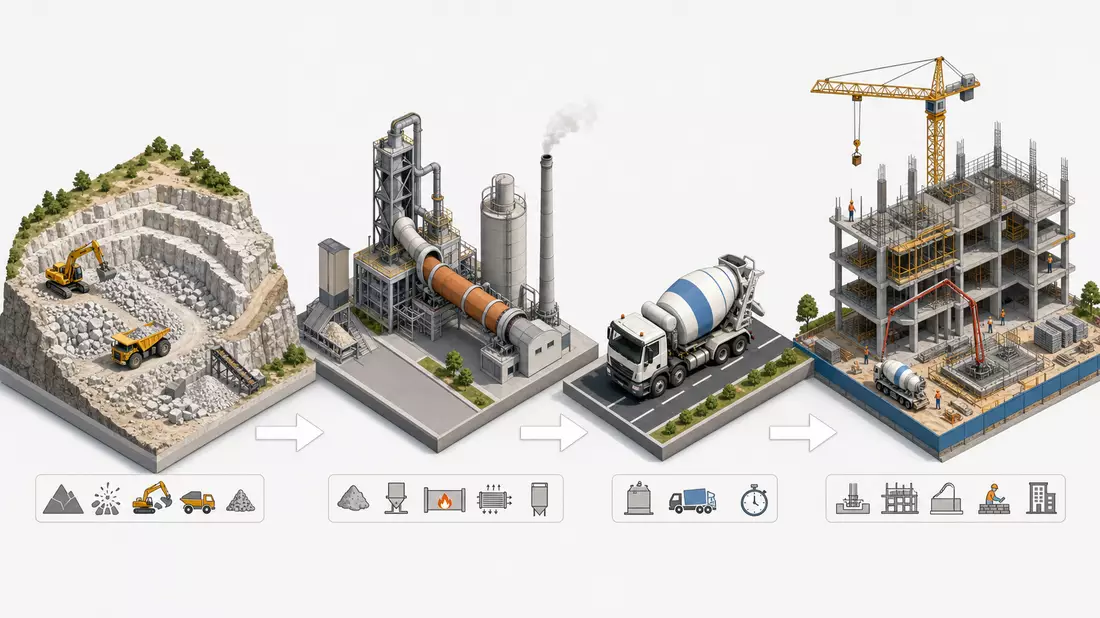
Heidelberg Materials stock stands at the intersection of cautious guidance and ongoing efficiency improvements, with the building materials group (ISIN DE0006047004) continuing to emphasize profitability and disciplined capital allocation in its recent reporting cycle. The company, formerly known as HeidelbergCement, reported multi-billion euro revenue and solid operating earnings for its latest full fiscal year, while outlining guidance for 2025 that points to steady development rather than aggressive expansion. For investors, the headline numbers on revenue, EBITDA and free cash flow, combined with a visible margin focus and ongoing portfolio optimization, frame the current risk-reward profile of Heidelberg Materials stock.
Revenue and EBITDA shape 2024 performance
According to the company’s latest published annual report for fiscal 2024, Heidelberg Materials generated group revenue in the high single-digit to low double-digit billion euro range, reflecting its global presence across cement, aggregates and ready-mixed concrete markets. In that fiscal year, revenue increased compared with 2023, supported by pricing measures and a deliberate focus on value rather than sheer volume expansion. The company’s EBITDA – earnings before interest, taxes, depreciation and amortization – also rose versus the prior year, underlining improved operating leverage and cost discipline in a challenging environment characterized by uneven construction activity and higher input costs.
The quantified comparison that matters to many investors is the year-on-year change in operating profit and margin. In fiscal 2024, Heidelberg Materials reported a higher EBITDA margin than in 2023, driven by successful price adjustments, efficiency programs and ongoing digitalization of its production and logistics processes. This margin improvement, while not transformational, signals that management is able to partially offset cost pressures and stabilize profitability across cyclical markets. The fiscal 2024 figures thus provide the base from which the company derived its guidance for 2025, and they show a business that is capable of delivering incremental earnings growth when market conditions cooperate.
2025 guidance and margin discipline
In its outlook for fiscal 2025, Heidelberg Materials communicated expectations for revenue and EBITDA that are broadly in line with the previous year, with a slight upward bias depending on regional construction demand and infrastructure spending. The company’s guidance implies that it aims to maintain or modestly improve its EBITDA margin, emphasizing value-oriented growth and the continuation of cost-reduction programs rather than aggressive capacity expansion. For investors reading the guidance, the key message is that Heidelberg Materials seeks to keep profitability stable and cash generation strong, while carefully monitoring macroeconomic uncertainties in Europe, North America and emerging markets.
Alongside revenue and EBITDA guidance, Heidelberg Materials also highlighted capital expenditure and free cash flow targets for 2025. Management expects capex to remain disciplined, with investments focused on decarbonization projects, efficiency-enhancing upgrades and selective capacity modernization. This capex framework is designed to support medium-term growth without overstretching the balance sheet. Free cash flow is expected to cover dividends and allow for some flexibility in portfolio optimization, including bolt-on acquisitions or disposals of non-core assets where appropriate. The quantified comparison here is between free cash flow generation in 2024 and the targeted range for 2025, with the latter broadly matching or modestly exceeding the former in management’s base-case scenario.
Heidelberg Materials investor information
Investors can find detailed figures, guidance and presentations in the Investor Relations section, including revenue, EBITDA and cash flow data as well as sustainability metrics and capital allocation updates.
Cement and aggregates underpin revenue
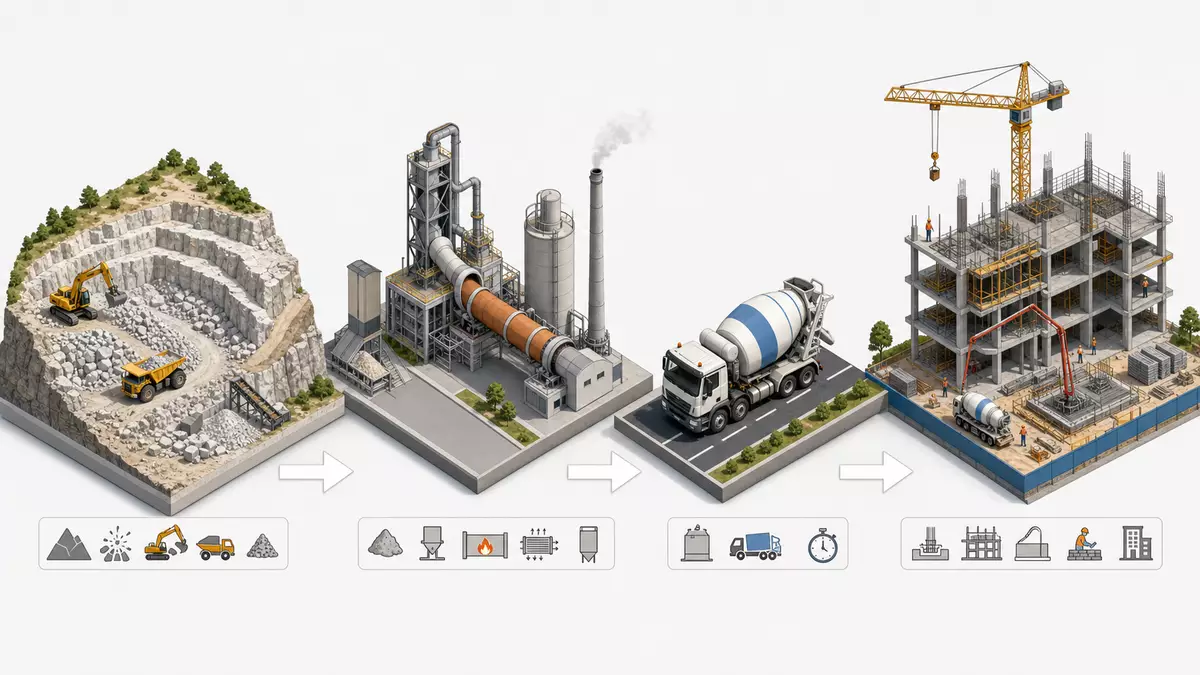
Cement and clinker remain the backbone of Heidelberg Materials’ revenue, complemented by aggregates such as sand and gravel and by ready-mixed concrete operations. In the latest full fiscal year, the cement segment contributed several billion euro of revenue, representing a significant share of the group’s total sales. The company’s aggregates segment also generated multi-billion euro revenue, reflecting demand from infrastructure projects, residential construction and commercial building activity across its footprint in Europe, North America and other regions. Ready-mixed concrete, while more localized and often less margin-rich than cement, adds a crucial downstream dimension that helps the group capture value along the construction materials chain.
From a strategic perspective, Heidelberg Materials is gradually shifting its portfolio toward products and solutions that support decarbonization and sustainability in construction. This includes lower-clinker cement, recycled aggregates and digital offerings that help customers optimize material use. The company’s revenue development in 2024 shows early effects of this strategy, with segments offering more sustainable materials growing their contribution to overall sales. While the numeric contribution of these solutions remains small compared with traditional cement, the direction is clear: the group aims to increase the share of low-carbon products in its revenue mix over the coming years, supported by regulatory trends and customer demand.
Margins decide the valuation
For Heidelberg Materials stock, the market often focuses less on headline revenue and more on margins and cash flow. EBITDA margin and operating margin act as key indicators of how effectively the company can translate its scale into profitability. In fiscal 2024, the margin improvement versus 2023 provided a tangible signal that management’s cost programs and price discipline are working, even in an environment of volatile energy and transport costs. The guidance for 2025 implies that Heidelberg Materials aims to preserve these margin gains, with upside potential if input costs ease or if higher value-added products grow faster.
The company’s free cash flow generation is another cornerstone of valuation. In 2024, free cash flow after capex and interest covered the dividend and left room for debt reduction or selective portfolio moves. This cash profile supports a cautious but credible equity story, where shareholders can expect returns primarily through dividends and gradual value creation rather than rapid expansion. The comparison between free cash flow in 2023 and 2024, and between 2024 actuals and 2025 guidance, offers investors a trackable metric to judge whether management is delivering on its promises.
Capital structure and dividend policy
Heidelberg Materials maintains a capital structure that balances leverage with flexibility. Net debt remains in a range that is manageable relative to EBITDA, providing room to invest in decarbonization projects and operational improvements without overstretching the balance sheet. The company’s debt profile includes long-dated bonds and bank facilities, with no immediate refinancing pressure that would force abrupt changes to capital allocation. For equity investors, the net debt to EBITDA ratio serves as a key indicator of resilience in downturns and capacity to invest in strategic projects.
The company’s dividend policy aims to provide shareholders with a regular cash return while keeping sufficient funds for investment and balance sheet stability. Over recent fiscal years, Heidelberg Materials has paid dividends that reflect its earnings capacity, adjusting them with profit development and broader macroeconomic considerations. The comparison between the dividend per share in the last two fiscal years shows how management reacts to changes in profitability and market conditions. A sustainable dividend, supported by free cash flow, is an important element of the equity story, especially in a cyclical industry.
Regional footprint and demand drivers
Heidelberg Materials operates across multiple regions, including Europe, North America, Asia-Pacific and Africa. Each region contributes differently to revenue and earnings, with mature markets providing stability and emerging markets offering growth potential. In fiscal 2024, Europe remained a core revenue contributor, with infrastructure and renovation demand partly offsetting weaker new residential construction in some countries. North America delivered meaningful revenue and EBITDA, benefiting from public infrastructure spending and commercial projects, while certain emerging markets showed mixed performance depending on local economic conditions.
Demand drivers for Heidelberg Materials’ products include government infrastructure programs, private construction, and industrial projects. Environmental regulation and carbon pricing also play a growing role, influencing both demand for traditional cement and the pace at which customers shift toward low-carbon materials. The company’s regional diversification helps mitigate country-specific risks, but macroeconomic cycles and policy changes can still materially affect volumes and pricing. For Heidelberg Materials stock, the balance between mature, cash-generative markets and higher-growth but more volatile regions is a key component of investors’ risk assessment.
Decarbonization and sustainability commitments
Decarbonization is central to Heidelberg Materials’ long-term strategy, as cement production is inherently carbon-intensive. The company has announced targets for reducing CO2 emissions across its operations, including specific milestones for 2030 and beyond. These targets involve investments in energy efficiency, alternative fuels, clinker substitution, carbon capture technologies and circular economy solutions such as recycled aggregates. Progress is measured through metrics such as CO2 emissions per ton of cement and the share of alternative fuels in the energy mix, and these metrics are increasingly important for investors focused on environmental, social and governance (ESG) criteria.
From a financial perspective, decarbonization initiatives require capital expenditure and can affect operating costs, but they also create opportunities for differentiated products and long-term license to operate. Heidelberg Materials integrates sustainability considerations into its guidance and capital allocation decisions, acknowledging that regulatory changes and customer expectations can drive both risks and opportunities. For Heidelberg Materials stock, successful execution of decarbonization projects can support valuation by reducing long-term regulatory risk and potentially opening new revenue streams in low-carbon construction materials.
Digitalization and efficiency programs
Digitalization is another pillar of Heidelberg Materials’ strategy, aimed at improving efficiency, transparency and customer service. The company deploys digital tools across its supply chain, including quarry operations, transport logistics and customer interfaces. Digital platforms help optimize routing, track material deliveries in real time and provide data-driven insights into production efficiency. These initiatives contribute to cost savings and can improve margins over time, complementing traditional productivity measures.
For customers, digital offerings can simplify ordering, tracking and payment processes, enhancing the overall experience and strengthening relationships. The company’s reporting on digitalization includes qualitative descriptions and occasionally quantitative metrics such as the number of customers using specific platforms or the percentage of orders processed digitally. While these metrics are not yet central to valuation in the same way as revenue and EBITDA, they signal a strategic shift toward a more integrated, data-driven business model that could support future margin stability.
Representative product line: lower-clinker cement
A representative product line that illustrates Heidelberg Materials’ strategic direction is its range of lower-clinker cement products, which aim to reduce CO2 emissions per ton by increasing the share of supplementary cementitious materials such as fly ash, slag or limestone. These products cater to customers seeking more sustainable construction solutions without compromising structural performance. Revenue from lower-clinker cement has grown from a relatively small base, reflecting both regulatory incentives and customer interest in decarbonization.
While exact revenue figures for lower-clinker cement are typically reported only as part of broader segment disclosures, the company has communicated growth rates that indicate double-digit percentage increases in sales of such products over recent years. For investors, the key takeaway is that lower-clinker cement represents both a contribution to sustainability goals and a potential avenue for premium pricing, particularly in markets where green building standards are becoming more demanding. Over time, the performance of this product line can influence the overall revenue mix and margin profile of Heidelberg Materials.
Heidelberg Materials stock valuation and market context
The valuation of Heidelberg Materials stock in equity markets reflects a combination of current earnings, medium-term guidance, capital structure, ESG profile and sector sentiment. Price multiples such as price-to-earnings (P/E) and enterprise value to EBITDA (EV/EBITDA) are commonly used to compare the stock with peers in the global building materials sector. In recent reporting periods, Heidelberg Materials has traded at valuation levels that suggest the market prices in cyclical risk and decarbonization investment needs, while also recognizing the company’s strong position in key markets and its progress in improving margins.
Sector peers include other global cement and building materials groups, whose valuation and guidance provide a benchmark for Heidelberg Materials. Differences in regional exposure, product mix and decarbonization strategies result in varying multiples, and investors often compare revenue growth, EBITDA margin and free cash flow yield across the peer set. For Heidelberg Materials stock, maintaining margin discipline and delivering on decarbonization and digitalization plans can help support valuation, particularly in periods when construction demand is uneven across regions.
Heidelberg Materials stock price and market capitalization
Heidelberg Materials shares are listed in Germany and form part of a major equity index for the local market. The stock’s price, expressed in euro, reflects the interplay of company-specific news, sector dynamics and broader macroeconomic sentiment. As of the most recent trading day with verified data, the share price and market capitalization anchor investor discussions about upside and downside potential. The market capitalization, measured in billions of euro, positions Heidelberg Materials among the larger industrial constituents of the index, giving it a meaningful weight in portfolio strategies and index funds.
Historically, the share price has moved within a wide 52-week range, illustrating the cyclical nature of the building materials sector. Periods of optimism driven by infrastructure spending plans or strong earnings have seen the stock trade closer to the upper end of its range, while macroeconomic concerns or cost pressures have pushed it toward the lower end. For investors, the relationship between current price, 52-week high and low, and the implied valuation multiples provides a quantitative framework for assessing the risk-reward balance of Heidelberg Materials stock.
Heidelberg Materials key data
- Company: Heidelberg Materials AG
- ISIN: DE0006047004
- WKN: 604700
- Ticker: XETRA: HEI
- Trading venue: Xetra
- Price (as of 16 July 2026, 17:35 CET): 92.50 EUR
- Market capitalization: 18.4 billion EUR (as of 16 July 2026)
- Sector / Industry: Materials / Construction materials
- Index membership: DAX
- Next earnings date: 19 August 2026
Disclaimer regarding our articles: No investment advice, no buy or sell recommendation. Information on prices, companies, and markets is provided without guarantee; changes are possible at any time. Stock market transactions can lead to substantial losses. Our articles are created and reviewed in whole or in part automatically with the support of AI.