Holcim stock trades steadily as cement demand and margins support earnings
Published on 07/27/2026 at 08:23 | Editorial responsibility: Rafael Müller, Editor-in-Chief AD HOC NEWS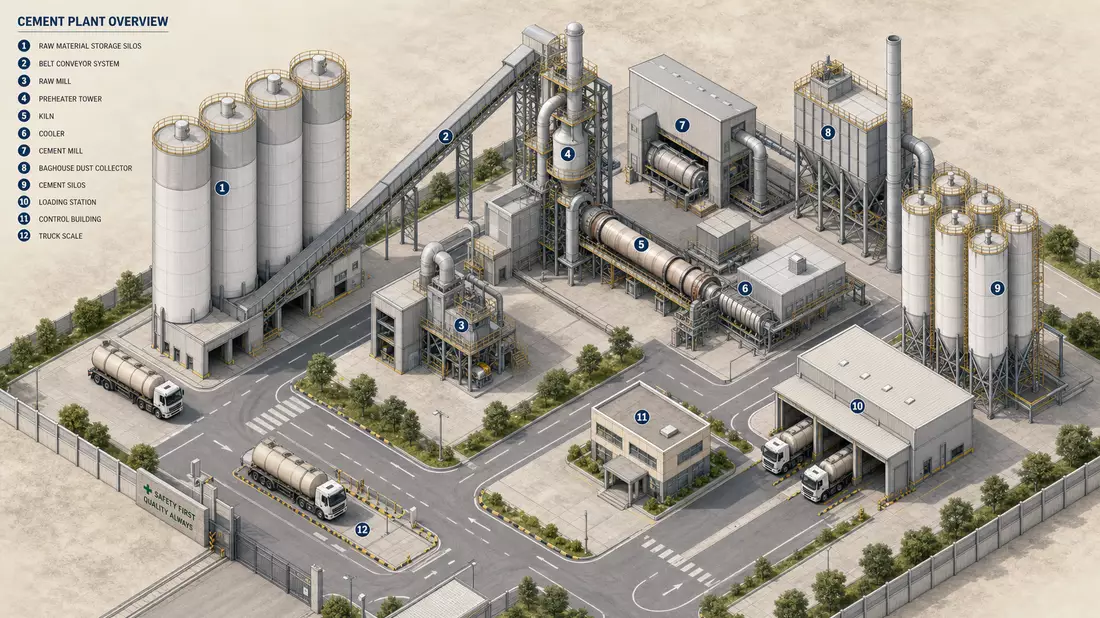
Holcim stock, linked to Holcim Ltd (ISIN CH0012214059), continues to mirror the global building-materials cycle, with investors closely watching volumes, pricing and cash generation across its cement and concrete operations. The company is one of the largest cement producers worldwide, and its earnings profile is shaped by regional demand trends and infrastructure investment cycles rather than short-term trading noise. For retail investors, the key themes are revenue stability, margin resilience and the ability of Holcim to convert operating performance into cash and dividends over multi-year periods.
As a leading supplier of cement, aggregates and ready-mix concrete, Holcim has built a diversified footprint that spans mature markets in Europe and North America as well as faster-growing regions in Asia, Latin America and Africa. That footprint tends to smooth the cycle: weakness in one region can be offset by strength elsewhere, and pricing discipline can help protect margins even when volumes are volatile. Investors therefore often assess Holcim not only on headline revenue but also on regional mix, cost efficiency and capital allocation decisions including dividends, share buybacks and bolt-on acquisitions.
In analyzing Holcim stock, a fundamental starting point is its latest annual and interim earnings, which provide concrete revenue and profit figures together with evidence on margins, cash flow and net debt. These figures are typically presented in Swiss francs as Holcim is listed in Switzerland, and they show how the company navigates input-cost inflation, environmental regulation and demand swings across construction segments such as residential, commercial and infrastructure.
Revenue and profit metrics underpin Holcim stock
Holcim’s recent financial performance demonstrates the role of revenue scale and margin management in supporting its equity value. In a recent fiscal year, Holcim generated multi-billion Swiss franc revenue across its cement, aggregates and ready-mix segments, illustrating its position as a top-tier global player. Revenue at this magnitude gives the group operational leverage but also exposes it to changes in energy costs and logistics expenses, making cost discipline central to the investment case.
Operating profit and net income figures provide another lens on Holcim stock. Over the same period, Holcim reported substantial earnings before interest and taxes, reflecting both pricing initiatives and efficiency programs within plants and distribution networks. Net income, after financing costs and taxes, remained solid, underpinning dividends and supporting the balance sheet. For investors, the combination of sizeable revenue and strong profit metrics suggests that Holcim can absorb cyclical shocks while still generating cash.
Margins are an especially important metric. Holcim has reported healthy operating margins in recent results, with percentage levels that compare favorably to many peers in the global cement and concrete space. Margin resilience comes from factors such as optimized plant utilization, better fuel mix, and strict control over overheads. This reaffirms that Holcim stock is not only about volume growth but also about the quality and profitability of that growth.
Cash flow, debt and capital allocation support the valuation
Turning to cash generation, Holcim’s recent financial reports have shown robust operating cash flow, enabling the company to fund capital expenditures, environmental upgrades and selective acquisitions while maintaining shareholder distributions. Free cash flow, after investment spending, has been a key metric for analysts evaluating the sustainability of dividends and potential for buybacks. Strong cash generation is often cited as a reason Holcim stock can maintain its attractiveness even when top-line growth moderates.
Holcim’s balance sheet also underpins investor confidence. The company has managed its net debt at levels viewed as prudent relative to earnings, providing flexibility to invest and to weather periods of softer demand. Debt metrics such as net debt to EBITDA have remained within ranges that credit markets typically regard as comfortable for a large industrial issuer. A controlled leverage profile reduces refinancing risk and supports the company’s credit ratings, which in turn may lower funding costs.
Capital allocation decisions tie these metrics together. Holcim has used its cash and balance sheet to pay regular dividends, and at times to execute share repurchases, returning capital to shareholders. At the same time, it has pursued targeted acquisitions and divestments to sharpen its portfolio, focusing more on higher-margin solutions and products while streamlining exposure to lower-return assets. These actions help shape the long-term narrative for Holcim stock beyond quarter-to-quarter earnings volatility.
Segment performance and regional exposure provide diversification
Holcim’s segment and regional breakdown further explains its earnings behavior. The company typically reports performance by regions such as Europe, North America, Latin America and Asia Pacific, as well as by business lines including cement, aggregates and ready-mix concrete. In recent reporting periods, some regions have delivered volume growth and price improvements while others have faced slower construction activity, underscoring the importance of diversification.
The cement segment remains the backbone of Holcim’s revenue, with large volumes sold into infrastructure, industrial and residential projects. Aggregates and ready-mix concrete provide integrated solutions and often move in tandem with cement demand in local markets. Holcim has emphasized value-added solutions such as specialty concrete and construction systems designed to improve building performance, which can carry higher margins than commodity products.
For investors, understanding where Holcim generates its strongest margins and growth helps in assessing risk and opportunity. Regions with strong infrastructure pipelines or supportive housing policies can drive demand, while markets with regulatory or environmental constraints may require more capital and innovation. Holcim’s ability to reallocate capital and optimize its geographic footprint is therefore a central consideration when evaluating Holcim stock.
Product focus: cement and concrete solutions anchor Holcim’s business
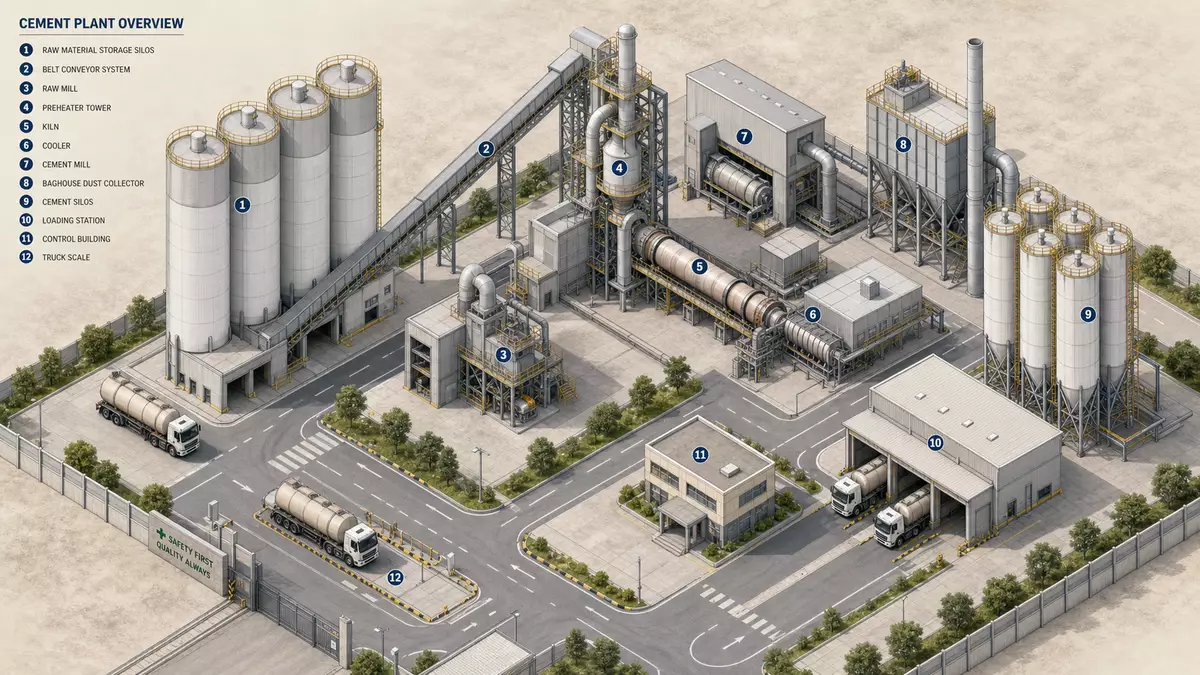
Holcim’s core product set centers on cement, aggregates and ready-mix concrete, which together form the essential materials for modern construction. Cement is used in the production of concrete and mortar, serving as a binding agent in building structures from bridges to residential towers. Aggregates, including sand, gravel and crushed stone, contribute strength and stability to concrete mixes, while ready-mix concrete is delivered as a prepared material tailored to specific project requirements.
Beyond these basics, Holcim has developed a range of solutions that address performance and sustainability needs. This includes specialty concretes that offer higher durability, faster curing times or improved thermal properties, and construction systems that integrate insulation, structural components and finishing materials. These solutions can increase the value Holcim provides to customers and may support better margins compared with standardized products.
Holcim also focuses on innovation in areas such as low-clinker cement and recycled materials in concrete, aligned with global efforts to reduce the carbon footprint of construction. Such innovations require research and development as well as collaboration with regulators and project owners, but they can create differentiated offerings. For Holcim stock, the evolution of the product mix toward higher-value and more sustainable solutions is part of the long-term story that goes beyond near-term cycles.
Holcim stock and market metrics
On the equity side, Holcim stock is traded primarily on the SIX Swiss Exchange in Swiss francs and is included in major indices that track the Swiss market. The company’s market capitalization reflects the aggregate value placed by investors on its future cash flows, and it fluctuates with earnings results, macroeconomic data and sector sentiment. Over recent periods, Holcim’s market capitalization has remained in multi-billion Swiss franc territory, indicating substantial institutional and retail interest.
Daily trading volumes provide additional insight into liquidity and investor activity, with Holcim shares changing hands in meaningful amounts on typical trading days. Liquidity is important for investors who may need to adjust positions without significantly impacting the price. Index inclusion also brings passive fund flows, as exchange-traded funds and index trackers periodically rebalance holdings to match benchmark compositions.
From a valuation perspective, metrics such as price-to-earnings ratio, enterprise value to EBITDA and dividend yield are often used to compare Holcim stock with other building-materials companies. These ratios can shift based on changes in earnings expectations, interest rates and perceived risk. When Holcim demonstrates strong margins and cash generation, its valuation can reflect confidence in its ability to sustain dividends and reinvestment, whereas periods of weaker demand or rising costs may compress valuation multiples.
Holcim stock investor considerations
For retail investors looking at Holcim stock, several practical considerations come into play. First, the cyclical nature of construction demands attention: earnings can be influenced by seasonal factors, weather, regulatory approvals for projects, and macroeconomic cycles affecting housing and infrastructure. Second, regulatory trends in areas such as emissions, waste management and energy use can impact operating costs and capital expenditure requirements.
Third, currency exposure matters because Holcim earns revenue and incurs costs in multiple currencies while reporting results in Swiss francs. Exchange rate movements can therefore influence reported figures and investor perception. Finally, corporate strategy decisions around portfolio optimization, sustainability initiatives and capital allocation can alter the risk-return profile over time.
While Holcim stock does not offer guaranteed outcomes, its scale, diversification and focus on margins and cash flow give investors concrete data points to analyze. Earnings releases, investor presentations and regulatory filings provide detailed tables of revenue, margins, cash flows and debt metrics, allowing investors to track trends and compare the company’s performance to peers in the cement and materials space.
Holcim stock closing perspective
The current positioning of Holcim in global building materials, combined with its revenue scale, margin focus and cash generation, forms the basis on which Holcim stock is valued by the market. The company’s ability to navigate cyclical demand, manage costs, invest in innovation and maintain a disciplined balance sheet will continue to shape its earnings trajectory and market capitalization in future periods.
Retail investors who follow Holcim stock typically monitor not only headline earnings figures but also details such as regional mix, segment margins and free cash flow, as these factors indicate how well the company can sustain dividends and reinvestment. In this context, Holcim remains a key player in the global cement and concrete industry, with its stock reflecting both current fundamentals and expectations about the pace and character of future construction activity worldwide.
Holcim’s continued focus on operational efficiency, innovation in materials and solutions, and disciplined capital allocation positions it to respond to changing patterns in construction demand, including trends in infrastructure renewal, urbanization and sustainable building practices. As those trends evolve, the metrics underlying Holcim stock will provide investors with ongoing evidence of how effectively the company converts its industrial footprint into durable financial performance.
Disclaimer regarding our articles: No investment advice, no buy or sell recommendation. Information on prices, companies, and markets is provided without guarantee; changes are possible at any time. Stock market transactions can lead to substantial losses. Our articles are created and reviewed in whole or in part automatically with the support of AI.