Holcim stock trades steady as higher margins and cash generation support valuation
Published on 07/20/2026 at 05:52 | Editorial responsibility: Rafael Müller, Editor-in-Chief AD HOC NEWS
Holcim stock represents exposure to one of the worlds largest building materials groups, with the Swiss-based company (ISIN CH0012214059) combining cement, ready-mix concrete, aggregates, and roofing businesses under a global portfolio. In recent reporting periods, Holcim has emphasized margin expansion and disciplined capital allocation, with revenue measured in the tens of billions of Swiss francs and profitability supported by pricing and efficiency programs. For investors, the interplay between construction demand, infrastructure spending, and decarbonization investments is central to how Holcim stock is valued over time.
Revenue and profitability trends
Holcims revenue profile reflects its scale and geographic breadth across Europe, North America, Latin America, Asia Pacific, and the Middle East and Africa. The company generates substantial annual sales from cement, concrete, aggregates, and increasingly from solutions and products such as roofing systems, insulation and building envelopes. Over recent fiscal years, reported revenue has been broadly stable to slightly higher, supported by acquisitions and portfolio rebalancing, even as volumes in some mature markets faced cyclical pressures. Holcim has focused on improving its operating margins by driving pricing, cutting costs, and shifting the mix toward higher value-added products. As a result, recurring EBIT margins have trended upward compared with earlier years, signaling that the group is extracting more profit from each unit of revenue.
Profitability has also benefited from energy cost management and the optimization of manufacturing footprints. Cement production is energy-intensive, and Holcim has worked to reduce exposure to volatile fuel prices through alternative fuels, efficiency upgrades, and long-term procurement strategies. These efforts, together with pricing discipline, have supported earnings before interest, tax, depreciation and amortization (EBITDA) and helped offset inflationary pressures in labor and raw materials. The improvement in margins is a key driver for valuation, especially in a sector where investors closely track the balance between volume growth and price realization.
Free cash flow generation and capital returns
Holcim emphasizes free cash flow generation as a cornerstone of its financial strategy. Strong cash conversion from earnings enables the company to fund capital expenditure, invest in decarbonization technologies, pay dividends, and execute share buybacks. In recent fiscal periods, Holcim has reported free cash flow in the order of billions of Swiss francs, underpinned by disciplined working capital management and selective investment in growth projects. The company has also used proceeds from divestments in certain markets to strengthen its balance sheet and redeploy capital into higher-return segments.
The capital return profile of Holcim stock includes regular dividends and, at times, share repurchase programs that reduce the share count and can support earnings per share. Dividends are paid in Swiss francs, reflecting the companys domicile, and the payout ratio is aligned with maintaining investment-grade credit metrics while funding growth. This combination of yield and potential buyback support is an important element of total shareholder return for long-term holders of Holcim stock.
Balance sheet, leverage and credit profile
Holcims balance sheet has been managed with an eye to preserving financial flexibility. Net debt, measured in Swiss francs, is kept within a range consistent with investment-grade credit ratings, and the company targets leverage metrics that are robust across cycles. Debt financing includes bonds and bank facilities, with maturities staggered to avoid refinancing concentration in any single year. Interest costs are influenced by global rate conditions, and Holcim has taken steps to optimize its capital structure by balancing fixed and floating rate exposure.
Liquidity sources for Holcim include cash on hand, committed credit lines, and access to capital markets. The balance sheet also reflects significant tangible assets, including cement plants, quarries, ready-mix facilities, and logistics infrastructure. These assets underpin long-term production capacity but also require ongoing maintenance investment. Capital expenditure plans typically prioritize efficiency upgrades, sustainability projects, and capacity adjustments in markets where demand trends justify expansion or modernization.
Margin resilience across cycles
For a cyclical business like building materials, margin resilience across economic cycles is critical. Holcims focus on pricing, cost discipline and portfolio optimization has aimed to deliver more stable margins even when volumes fluctuate. By shifting toward solutions and products with higher value-added content and by increasing exposure to roofing and building envelope systems, the company seeks to lessen its dependence on purely commodity cement volumes. This strategic shift can help to smooth earnings and support valuation multiples over time.
In downturns, construction and real estate activity may slow, affecting demand for cement and concrete. However, infrastructure projects, public spending on roads, bridges, and public buildings, and renovation activity can provide counterbalances. Holcims diversified geographic footprint helps mitigate region-specific cycles, and managements ability to adjust capacity, pricing and costs is central to maintaining profitability in weaker macro environments.
Decarbonization and sustainability investments
Cement production is a major source of CO2 emissions, and Holcim has committed to reducing its environmental footprint through a range of initiatives. These include increasing the use of alternative materials such as calcined clay and recycled construction waste in cement, expanding low-carbon product lines, and investing in carbon capture and storage technologies. Sustainability-linked capex forms a growing share of Holcims investment budget, and the company communicates emissions reduction targets for medium and long-term horizons.
Holcim participates in regulatory frameworks such as emissions trading schemes in Europe and engages with stakeholders on sustainable construction standards. Customers increasingly demand greener building materials, and Holcims ability to provide lower-carbon solutions can be a competitive advantage. This strategic orientation toward sustainability can affect future profitability by opening new markets and protecting margins where regulations favor greener products.
Regional portfolio and market exposure
Holcims regional portfolio spans mature markets in Europe and North America and faster-growing regions in Asia, Latin America and Africa. In Europe, volumes are influenced by infrastructure, residential and commercial construction trends, along with regulatory and environmental policies. In North America, the company benefits from public infrastructure programs, housing starts and industrial projects. Emerging markets offer long-term growth potential as urbanization and infrastructure needs rise, though they may also come with currency volatility and political risk.
The company has undertaken portfolio adjustments over the years, exiting certain markets with lower strategic fit or returns and deepening exposure in areas where it sees better prospects. Roofing and building envelope activities, for example, provide exposure to repair and renovation cycles that can be more stable than new-build construction. This mix of regions and segments helps to diversify Holcims earnings base and can make Holcim stock more resilient to localized shocks.
Dividend policy and shareholder returns
Holcims dividend policy aims to balance shareholder returns with investment needs. Dividends are typically proposed annually and subject to shareholder approval at the general meeting. The yield on Holcim stock depends on the dividends declared, the share price and currency considerations for investors outside Switzerland. Over time, dividend adjustments reflect changes in earnings, cash flow, and strategic priorities, including decarbonization investments and acquisitions.
Share buybacks, when implemented, can amplify earnings per share by reducing the number of shares outstanding. They may also signal managements confidence in the companys valuation. However, Holcim must weigh buybacks against alternative uses of capital, such as reducing debt, funding growth or building reserves. The overall capital return framework is a key factor for income-oriented and total-return investors assessing Holcim stock.
Competitive landscape and peers
Holcim operates in a competitive global landscape alongside other multinational cement and building materials companies and regional players. Competition occurs at both the commodity level in cement and aggregates and in more specialized products such as roofing and insulation. Market dynamics vary by region; some markets are highly consolidated, while others feature numerous smaller producers. Holcims scale can provide procurement advantages, broader product offerings and the ability to invest in technology and sustainability at levels that smaller firms may find challenging.
Peer comparisons often consider metrics such as EBITDA margins, return on capital employed, leverage, free cash flow yield and emissions intensity. Investors may assess Holcim relative to its peers to determine valuation premiums or discounts, taking into account factors such as portfolio composition, geographic exposure, and sustainability strategy. Holcims positioning as a diversified building materials group with a growing share of solutions and products can differentiate its investment profile within the sector.
Strategic priorities and portfolio evolution
Holcims strategic priorities include strengthening its leadership in sustainable building materials, expanding higher-margin solutions and products, and optimizing its asset base. Organic initiatives involve developing new low-carbon products, enhancing service offerings for customers, and improving operational efficiency. Inorganic moves may include bolt-on acquisitions that complement existing operations, particularly in areas such as roofing, insulation and recycling of construction materials.
Portfolio evolution also involves divestments where returns or strategic fit do not meet Holcims criteria. By reallocating capital from lower-return assets to higher-potential segments, Holcim aims to improve its overall return profile and support shareholder value creation. This dynamic approach to the portfolio requires careful integration of acquired businesses and effective execution of divestment programs.
Risk factors and cyclical exposures
Investors in Holcim stock need to consider a range of risk factors inherent to the building materials industry. Macroeconomic risk is central; construction activity is sensitive to economic growth, interest rates, and credit availability. Regulatory risk includes environmental rules, emissions pricing and safety standards that can affect costs and capital requirements. Operational risks involve plant reliability, supply chain disruptions and labor relations.
Currency and country risks are relevant given Holcims global footprint. Movements in exchange rates can influence reported figures and debt metrics, while political or regulatory changes in individual countries may alter operating conditions. Commodity price risks, particularly for energy and raw materials, can affect margins. Holcim seeks to manage these exposures through diversification, hedging strategies, long-term planning and engagement with stakeholders.
Holcim solutions and products segment
Beyond core cement and aggregates, Holcims solutions and products segment has gained strategic importance. This area includes roofing systems, building envelopes, insulation solutions, precast components and other value-added offerings. These products often carry higher margins than commodity materials and can be less cyclical, tapping into maintenance, renovation and energy-efficiency trends. The solutions and products segment allows Holcim to participate more directly in the design and performance of buildings rather than just supplying basic materials.
Integrating solutions and products with traditional materials positions Holcim as a partner for customers seeking comprehensive building solutions. This can deepen relationships with developers, contractors and architects and open cross-selling opportunities. Over time, the relative share of revenue and profit from solutions and products may increase, contributing to the companys margin profile and valuation appeal.
Holcim roofing and building envelope focus
Holcims roofing and building envelope activities give the group exposure to trends in urbanization, climate resilience and energy efficiency. Roofing systems are critical for protecting structures from weather, and modern solutions can improve insulation, reduce energy consumption and support integrated solar technologies. Building envelopes, which encompass walls, windows and related components, influence the thermal performance and comfort of buildings.
By developing and marketing roofing and envelope solutions, Holcim taps into regulatory and customer demand for greener, more efficient buildings. These offerings complement core materials and can be bundled in project solutions. For investors, the growth trajectory and margin profile of roofing and building envelope activities are important factors in assessing Holcims long-term earnings potential and diversification beyond traditional cement.
Holcim stock trading and valuation context
Holcim stock is listed on the Swiss market, with trading in Swiss francs reflecting domestic listing conventions. Liquidity is supported by its status as a major constituent of Swiss equity indices, and the shares are held by a broad mix of institutional and retail investors. Valuation metrics such as price to earnings, enterprise value to EBITDA and price to book are commonly used to assess Holcim stock relative to peers and historical ranges.
Analysts evaluating Holcim consider factors such as volume outlook, pricing trends, cost inflation, decarbonization investments, capital returns and macro conditions in key regions. Market expectations about construction and infrastructure cycles can influence valuation multiples. When margins and cash flow strengthen, investors may be more willing to assign higher valuations, whereas periods of weaker demand or rising costs can compress multiples.
Holcim cement and concrete offerings
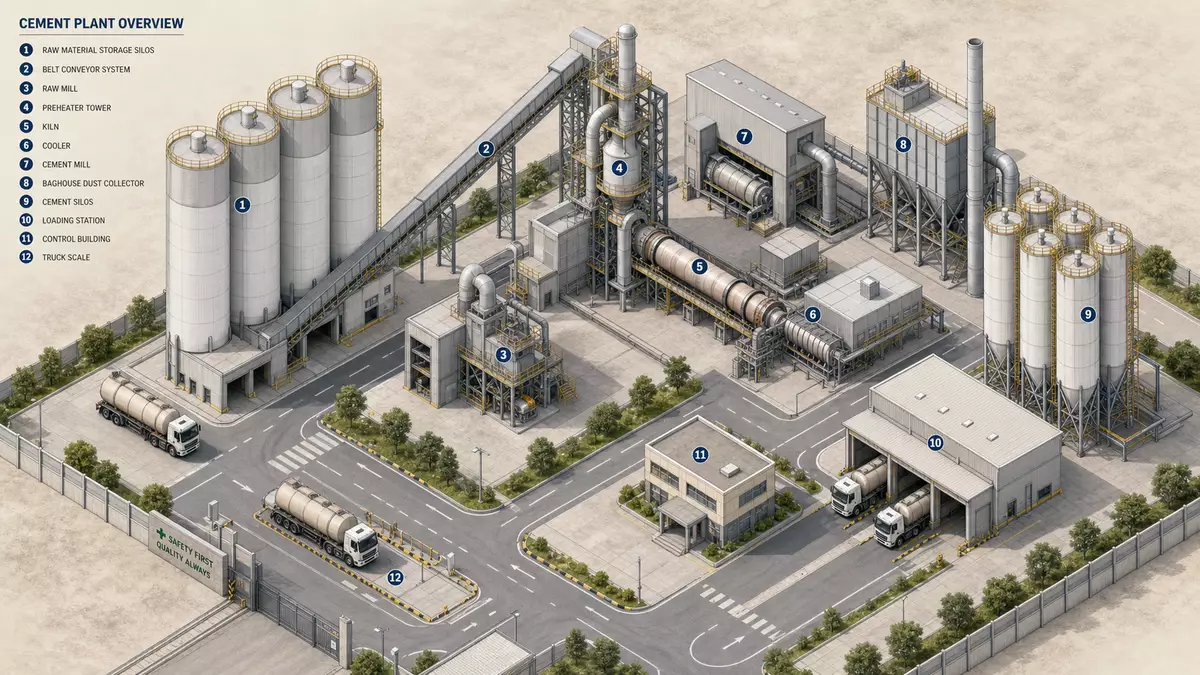
Cement and ready-mix concrete remain at the core of Holcims business. Cement is produced in large kilns, ground into powder and combined with aggregates and water to form concrete, a fundamental material for infrastructure, residential and non-residential construction. Holcim offers a range of cement types and concrete formulations tailored to local standards, project requirements and climatic conditions.
Product innovation in cement and concrete includes formulations designed for lower carbon footprint, improved durability, faster curing and specific structural properties. By extending its portfolio in these ways, Holcim seeks to differentiate itself from competitors and meet evolving customer demands. The scale of its cement and concrete operations supports economies of scale but also underscores the importance of operational efficiency and environmental management.
Infrastructure demand and public spending
Infrastructure demand is a key driver for Holcim, as public spending on roads, bridges, railways, tunnels, airports and utilities translates into substantial cement and concrete volumes. Government programs in various regions, including stimulus packages and long-term infrastructure plans, can shape demand profiles for building materials. Holcim aims to position itself as a reliable supplier for major infrastructure projects, leveraging its network of plants and logistics assets.
Long-term infrastructure investments often stretch over many years and can provide underlying support even when private construction slows. However, project timing, budgeting and political decisions can introduce variability. Holcims exposure to infrastructure is an important factor for investors considering the cyclicality and stability of its revenue base.
Residential and commercial construction cycles
Residential building cycles influence demand for Holcims materials through housing starts, renovations and extensions. Low interest rates and favorable credit conditions can support housing activity, while higher rates or economic uncertainty may dampen new construction. Holcim supplies materials for foundations, structures, facades, and finishing elements. Renovation activity provides an additional source of demand, particularly for solutions and products that improve energy efficiency or aesthetics.
Commercial construction, including offices, retail spaces, industrial facilities and logistics centers, also relies on Holcims materials. Trends such as e-commerce growth, changing work patterns and urban development can influence the types and quantities of structures being built or refurbished. Holcims broad product range and geographic reach allow it to participate in diverse construction segments.
Digitalization and operational efficiency
Holcim invests in digital tools and technologies to enhance operational efficiency and customer service. Applications include predictive maintenance for plants, optimization of logistics routes, inventory management and data-driven decision-making in production planning. Digital platforms for customers can facilitate ordering, tracking and technical support, improving convenience and relationship management.
Operational efficiency gains from digitalization can reduce costs, improve reliability and support sustainability objectives by optimizing resource usage. Over time, digital capabilities may also enable new business models, such as integrated construction services or data-driven consultancy offerings, although these remain complementary to the core materials business.
Holcim and circular economy initiatives
Circular economy principles are increasingly integrated into Holcims operations. The company works on recycling construction and demolition waste into new materials, reducing the need for virgin aggregates and lowering environmental impact. By developing processes and products that use recycled content, Holcim supports customers seeking to meet green building standards and regulatory requirements.
Circular initiatives can open revenue streams in waste management and recycling, while enhancing Holcims sustainability profile. They also contribute to emissions reduction goals by lessening the energy intensity of materials and preserving natural resources. Holcims capacity to scale circular solutions across its global footprint is an important differentiator in the building materials sector.
Holcim governance and stakeholder engagement
Corporate governance structures at Holcim include a board of directors, executive management and committees responsible for areas such as audit, risk and sustainability. Governance frameworks aim to ensure transparency, accountability and alignment with shareholder and stakeholder interests. Holcim engages with investors, employees, customers, regulators and communities through various channels, communicating strategy, performance and sustainability progress.
Environmental, social and governance (ESG) considerations are increasingly relevant for investors, and Holcim reports on metrics such as emissions, safety records, diversity and community initiatives. Strong governance and ESG performance can influence the pool of investors willing to hold Holcim stock, particularly as ESG-focused funds gain prominence.
Holcim innovation in low-carbon materials
Innovation in low-carbon materials is central to Holcims long-term competitiveness. Research and development teams explore new cement chemistries, alternative binders and production processes that reduce emissions. Pilot projects and partnerships with universities, technology firms and customers help accelerate innovation and validate new solutions in real-world applications.
Commercializing low-carbon materials at scale requires significant investment and collaboration, but success can unlock new markets and support regulatory compliance. Holcims focus on innovation underscores its commitment to evolving beyond traditional cement formulas and aligning with global climate objectives.
Holcim customer segments and relationships
Holcims customer base includes contractors, developers, distributors, infrastructure authorities and industrial clients. Relationships can be long-term, particularly for large projects and recurring supply agreements. Holcim provides technical support, logistics coordination and product choice advisory services to help customers meet project specifications and timelines.
Customer segmentation allows Holcim to tailor offerings and service levels to different needs, from small-scale contractors needing reliable local supply to multinational developers requiring coordinated deliveries across regions. Strong customer relationships contribute to retention and can support premium pricing for differentiated products and services.
Holcim risk management frameworks
Risk management frameworks at Holcim encompass strategic, financial, operational and compliance risks. Strategic risk involves assessing market trends, competitor actions and technological shifts. Financial risk covers interest rates, currency movements, credit exposures and liquidity. Operational risk relates to plant performance, safety, environmental incidents and supply chain disruptions.
Holcim uses risk registers, scenario analyses and internal controls to monitor and mitigate risks. The company also invests in safety programs, environmental management systems and training to reduce the likelihood and impact of adverse events. Effective risk management is essential to maintaining stable operations and protecting shareholder value.
Holcim workforce and safety culture
Holcims workforce spans a wide range of roles, including plant operators, engineers, logistics staff, sales teams and corporate functions. The company emphasizes safety culture, with programs designed to reduce workplace accidents and promote health and well-being. Safety metrics are closely monitored, and continuous improvement initiatives aim to embed safe practices at all levels.
Training and development programs support employee skills and career progression, aligning with Holcims need for technical expertise in areas such as process engineering, sustainability and digitalization. A strong workforce and safety culture contribute to operational reliability and public reputation.
Holcim brand and market positioning
The Holcim brand is associated with building materials expertise and increasingly with sustainability and innovation. Brand positioning varies by region and product segment but generally emphasizes reliability, quality and partnership orientation. Marketing and communications highlight case studies of major projects, sustainable materials and customer collaborations.
Brand strength can influence customer choices, particularly in markets where quality and reliable delivery are critical. Holcims brand, combined with its scale and technical capabilities, supports its positioning as a preferred supplier for complex and large-scale construction projects.
Holcim long-term outlook
The long-term outlook for Holcim is tied to global trends in urbanization, infrastructure investment, housing demand and sustainability. As populations grow and cities expand, demand for building materials is expected to remain significant. At the same time, climate goals and environmental regulations will shape the types of materials and solutions that are acceptable and attractive to customers.
Holcims ability to innovate, manage its portfolio and deliver strong margins and cash flow will determine how Holcim stock performs over long horizons. Strategic choices about decarbonization, digitalization and market focus will be important in maintaining competitiveness. Investors will continue to monitor the companys progress on these fronts, alongside traditional financial metrics.
Holcim solutions for energy-efficient buildings
Holcims solutions for energy-efficient buildings connect its materials expertise with customer needs for lower energy consumption and improved comfort. This includes insulation products, high-performance concrete formulations, reflective roofing and integrated systems that reduce thermal loss. Regulatory frameworks promoting energy efficiency in buildings shape demand for such solutions.
By offering materials that help meet energy codes and green building certifications, Holcim anchors itself in the evolving landscape of sustainable construction. Energy-efficient solutions can command premiums and contribute to brand differentiation, supporting profitability and growth.
Holcim stock investor considerations
For investors considering Holcim stock, key considerations include the cyclicality of construction demand, the pace and cost of decarbonization, competitive dynamics, capital allocation and governance. The stock offers exposure to infrastructure and housing themes with a layer of sustainability transformation. Holcims diversified geography and product mix can help manage volatility, but the business remains subject to macroeconomic swings.
Investors may assess Holcim within diversified portfolios, balancing it against other cyclical and defensive holdings. The companys communication of strategy, targets and progress on sustainability and financial performance provides inputs for such assessments.
Holcim roofing and envelope in practice
In practical terms, Holcims roofing and envelope products are deployed across residential, commercial and industrial structures. Solutions range from flat and pitched roof systems to integrated insulation layers and facade components. Performance metrics include durability, weather resistance, thermal properties and compatibility with other building elements.
Holcims technical support teams work with architects and contractors to specify products that meet project requirements, including climate conditions and regulatory standards. Such collaboration is central to ensuring that roofing and envelope solutions deliver expected performance over the long term.
Holcim stock and sector sentiment
Sector sentiment toward building materials stocks can be influenced by macroeconomic news, interest rate expectations, infrastructure policy announcements and commodity price trends. Holcim stock, as part of this sector, may see sentiment shifts that reflect broader themes rather than company-specific events. In periods when investors favor cyclical exposure tied to growth and infrastructure, valuations may benefit. Conversely, when markets focus on defensive sectors or higher-rate environments, building materials stocks can be less favored.
Holcims individual performance on margins, cash flow and sustainability can help differentiate it within sector sentiment. Clear communication about strategic progress and financial discipline can support investor confidence even when broader sentiment is mixed.
Holcim innovation in construction solutions
Innovation in construction solutions extends beyond materials to methods and services. Holcim participates in initiatives to streamline construction processes, such as prefabrication and modular building, which can shorten project timelines and improve resource efficiency. Its products and systems can be integrated into these methods, providing both materials and technical support.
By engaging in construction innovation, Holcim strengthens its role as a partner in the built environment, potentially opening new revenue streams and contributing to sustainability gains. This direction fits within the broader trend of making construction more efficient, less wasteful and more digital.
Holcim community and environmental engagement
Holcim engages with local communities around its plants and quarries, addressing concerns related to noise, dust, traffic and environmental impact. Community programs may include support for education, infrastructure improvements and environmental initiatives. Environmental engagement includes rehabilitation of quarry sites, biodiversity projects and partnerships with conservation organizations.
Such engagement can influence social license to operate and contribute to long-term sustainability. Holcims ability to demonstrate responsible behavior at local levels complements its global sustainability strategy and can affect stakeholder perceptions.
Holcim and regulatory frameworks
Regulatory frameworks governing construction materials include standards for quality, safety, emissions and waste management. Holcim must comply with a complex web of national and regional regulations, adapting products and processes accordingly. Emissions rules, in particular, can necessitate significant investments in technology and operational changes.
Regulation can also create opportunities; programs promoting green buildings and infrastructure resilience can stimulate demand for Holcims sustainable products. Navigating regulatory landscapes effectively is a critical competency for the company and shapes both costs and revenue opportunities.
Holcim digital customer interfaces
Digital customer interfaces, such as online ordering platforms, technical data portals and mobile apps, enhance Holcims service offering. These tools provide customers with access to product information, order tracking, and support, helping to streamline communication and reduce friction in transactions. Digital channels can also collect data on customer preferences and behavior, supporting tailored offerings.
Investing in digital interfaces aligns with broader business trends and customer expectations. It can contribute to customer satisfaction, operational efficiency and competitive differentiation, particularly in markets where digital adoption is advanced.
Holcim training and knowledge sharing
Holcim invests in training and knowledge sharing, both internally and externally. Internal programs develop employees skills in technical, managerial and sustainability areas. External initiatives may include workshops for customers, joint projects with academic institutions and participation in industry forums. Sharing knowledge about best practices, new materials and sustainable construction methods supports industry progress and positions Holcim as a thought leader.
Knowledge sharing reinforces relationships and can lead to collaborative innovation. It also underpins Holcims ability to adapt to evolving standards and technologies in construction and materials science.
Holcim long-term sustainability commitments
Holcims long-term sustainability commitments encompass emissions reduction targets, circular economy goals and social objectives. The company sets timelines for achieving lower emissions, increasing use of alternative materials and enhancing circularity. Social commitments include safety, diversity, community engagement and respect for human rights in supply chains.
Meeting these commitments requires sustained investment, innovation and cultural alignment across the organization. Progress on sustainability can affect access to financing, customer relationships and regulatory compliance, making it a central strategic pillar for Holcim.
Holcim stock and portfolio diversification
Within diversified investment portfolios, Holcim stock can occupy a role tied to infrastructure and sustainable construction themes. It may be combined with holdings in other sectors to balance risk and opportunities. Portfolio strategies involving Holcim consider exposure to currencies, regions and sectors, as well as correlations with broader market indices.
Holcims evolution toward a more sustainable and solutions-oriented business may influence how it is categorized by investors, including ESG-focused strategies. Understanding Holcims profile helps investors align their portfolios with their objectives and risk preferences.
Holcim corporate culture and values
Corporate culture and values at Holcim underpin its approach to safety, sustainability, customer service and innovation. Values related to responsibility, collaboration and performance guide decision-making and behavior. Culture influences how strategies are implemented, how risks are handled and how opportunities are pursued.
A culture aligned with long-term goals enhances execution and resilience. Holcims efforts to embed sustainability and safety in its culture are particularly relevant given the nature of its operations and the expectations of stakeholders.
Cement and concrete in the built environment
Cement and concrete, Holcims core materials, shape the built environment by forming the structural backbone of buildings, roads, bridges and other infrastructure. Their properties, including strength, durability and versatility, make them indispensable for modern construction. Holcims expertise in producing and supplying these materials at scale supports global development.
Balancing the benefits of cement and concrete with environmental concerns is a key challenge. Holcims work on low-carbon formulations and circular practices aims to reconcile the need for these materials with climate objectives. This balance is central to its role in the built environment.
Holcim supply chain and logistics
Holcims supply chain and logistics operations involve sourcing raw materials, managing inventories and delivering products to customers on time. Efficient logistics are critical given the heavy and bulky nature of cement and aggregates, which make transportation costs significant. Holcim uses rail, road and sometimes water transport, optimizing routes to minimize costs and emissions.
Supply chain resilience, including contingency plans and diversified sourcing, helps manage risks such as disruptions from weather, geopolitical events or infrastructure issues. Effective logistics enhance customer service and support Holcims competitive position.
Holcim and technological partnerships
Holcim collaborates with technology partners to develop new materials, digital tools and sustainability solutions. Partnerships can involve startups, established technology firms and academic institutions. These collaborations bring complementary expertise and can accelerate innovation.
Technological partnerships support Holcims aims in areas such as carbon capture, digital plant management and advanced building solutions. Successful partnerships contribute to strategic differentiation and long-term competitiveness.
Holcim investor communication and transparency
Holcim communicates with investors through results presentations, annual reports, sustainability disclosures and investor days. Transparent communication about strategy, performance and risks helps investors make informed assessments. The investor relations function plays a central role in providing data, answering questions and gathering feedback.
Clear disclosure about financial metrics, sustainability progress and governance practices enhances trust. Holcims communication aims to align investor expectations with the companys realities and plans.
Holcim and macroeconomic sensitivity
Macroeconomic sensitivity of Holcim stock is tied to GDP growth, construction cycles and interest rates. Strong economic conditions with robust infrastructure and housing activity can support revenue and earnings, while recessions or slowdowns may constrain demand. Monetary policy affects borrowing costs and investment decisions across the construction sector.
Holcims diversified footprint can mitigate some macro risks, but global downturns still pose challenges. Investors monitor macro indicators alongside company-specific news when evaluating Holcim stock.
Holcim environmental performance metrics
Environmental performance metrics at Holcim include CO2 emissions per tonne of cementitious material, energy intensity, use of alternative fuels and recycling rates. Reporting on these metrics allows stakeholders to assess progress toward sustainability goals. Improvements in environmental performance can reflect investments in technology, process changes and product innovation.
Environmental metrics also affect regulatory compliance and can influence costs through mechanisms such as emissions pricing. Holcims ability to improve performance while maintaining profitability is a central aspect of its sustainability strategy.
Holcim and innovation ecosystems
Holcim participates in innovation ecosystems that bring together industry players, researchers and policymakers. These ecosystems aim to accelerate developments in sustainable construction, digital tools and circular practices. Holcims contributions include sharing expertise, piloting new solutions and providing feedback on regulatory frameworks.
Participation in innovation ecosystems helps Holcim stay at the forefront of industry trends and may create opportunities for early adoption of competitive technologies. It also reinforces the companys role in shaping the future of construction.
Holcim brand recognition in key markets
Brand recognition for Holcim varies by market but generally reflects its long-standing presence and role in major projects. In some regions, Holcim is closely associated with national infrastructure and iconic buildings. Such recognition can support customer trust and facilitate negotiations for large contracts.
Strengthening brand recognition in growth markets is part of Holcims strategy, especially where urbanization and infrastructure expansion present long-term opportunities. Marketing and showcasing project references contribute to this goal.
Holcim sustainability reporting frameworks
Holcim aligns its sustainability reporting with recognized frameworks, providing data and narratives that help stakeholders understand its environmental and social performance. Frameworks may include global standards and initiatives that guide disclosures on emissions, resource use and social impact.
Adhering to recognized frameworks supports comparability and credibility. Holcims reporting helps investors integrate ESG factors into their assessments and decisions regarding Holcim stock.
Holcim innovation in construction techniques
Innovation in construction techniques, including 3D printing of concrete elements, modular assembly and advanced reinforcement methods, intersects with Holcims materials expertise. The company engages with technology partners and customers to explore and validate such techniques, which can improve efficiency and reduce waste.
As new construction techniques become more mainstream, Holcim aims to provide compatible materials and solutions. This ensures its relevance in evolving construction practices and potentially opens new markets.
Holcim and regional development programs
Regional development programs, such as government initiatives for housing, infrastructure and industrial zones, drive demand for Holcim materials. The company participates in tenders and partnerships associated with these programs, aligning its capacity and logistics to support large-scale projects.
Understanding regional priorities and development trajectories helps Holcim allocate resources and investments effectively. It also informs strategic choices about where to expand or adjust operations.
Holcim human capital and leadership
Human capital and leadership are fundamental to Holcims strategic and operational success. Leadership teams set direction, allocate resources and manage risks, while employees execute plans and bring innovation to life. Holcim invests in leadership development and talent management to maintain strong management capabilities.
Leadership decisions regarding sustainability, digitalization, portfolio management and capital allocation shape Holcims trajectory and influence investor perceptions. Strong leadership supports the execution of complex strategies in a dynamic environment.
Holcim stock and long-term themes
Holcim stock is linked to long-term themes such as urbanization, infrastructure modernization, climate resilience and sustainable construction. These themes are expected to unfold over decades, influencing demand for materials and solutions. Holcims strategic alignment with these themes provides context for long-term investors.
Implementing strategies that capitalize on these themes while managing environmental and social impacts is central to Holcims role in global development. The companys performance against long-term objectives will help determine its position in investor portfolios focused on structural trends.
Holcim engagement with policymakers
Holcim engages with policymakers on issues related to construction standards, emissions regulations, recycling policies and infrastructure planning. Constructive dialogue helps shape feasible and effective policies that support sustainable development and industry competitiveness.
Policymaker engagement also allows Holcim to share practical insights from operations and contribute to informed regulatory frameworks. This engagement adds to the companys influence in the broader ecosystem of construction and environmental policy.
Holcim and academic collaboration
Collaboration with academic institutions supports Holcims innovation agenda through research projects, student programs and joint laboratories. Academic partnerships provide access to cutting-edge knowledge and methodologies in materials science, engineering and sustainability.
Such collaborations enhance Holcims capacity to experiment, test and refine new solutions, bridging theory and practice. They also contribute to talent pipelines and knowledge transfer.
Holcim customer innovation partnerships
Holcim establishes innovation partnerships with customers to co-develop solutions for specific projects or needs. These partnerships may involve tailored materials, construction methods or sustainability approaches. Co-creation strengthens customer relationships and positions Holcim as a collaborative partner rather than just a supplier.
Innovation partnerships can lead to new product lines and improved practices. They also demonstrate Holcims commitment to addressing customer challenges in complex construction environments.
Holcim and supply chain sustainability
Supply chain sustainability at Holcim encompasses sourcing of raw materials, supplier practices and logistics emissions. The company sets expectations for suppliers related to environmental and social standards and may conduct assessments or audits. Sustainable sourcing can include recycled materials, lower-impact raw inputs and responsible mining practices.
Improving supply chain sustainability supports Holcims overall sustainability profile and reduces risks related to reputational and regulatory issues. It also aligns with broader trends toward more responsible value chains in heavy industries.
Holcim stock and investor segments
Investor segments in Holcim stock include institutional investors such as pension funds, mutual funds and insurance companies, as well as retail investors. Different segments may focus on various aspects of Holcim, ranging from dividend yield and growth prospects to ESG performance and macro exposure.
Understanding investor segment priorities can inform Holcims communication strategies and highlight relevant facets of its business in disclosures and presentations.
Holcim corporate resilience and adaptability
Corporate resilience and adaptability enable Holcim to manage shocks and seize opportunities. Resilience is built through diversification, strong balance sheet management, robust governance and a culture of continuous improvement. Adaptability reflects the ability to adjust strategies and operations in response to changing conditions.
Holcims resilience and adaptability are tested by macroeconomic shifts, regulatory changes and technological advances. How it responds to these challenges influences long-term performance and investor confidence.
More perspectives on Holcim stock
For further insights into Holcims financial metrics, sustainability strategy and regional portfolio, investors can explore additional resources that provide detailed data and commentary.
Holcim roofing solutions in focus
Holcim roofing solutions, including systems for flat and pitched roofs, are representative of the companys move into higher-value offerings. These products are designed to provide durability, weather protection and energy efficiency and can be integrated with insulation and building envelope components. Roofing solutions support both new construction and renovation markets, broadening Holcims exposure beyond core structural materials.
Holcim stock price and market context
Holcim stock trades on the Swiss market in Swiss francs, with its price reflecting market assessments of earnings prospects, sustainability progress and macroeconomic conditions. Over time, the share price moves in response to results announcements, sector sentiment and broader equity market dynamics. While short-term movements can be influenced by news and investor flows, longer-term trends relate to Holcims ability to deliver on strategic priorities and financial targets.
Holcim stock data overview
- Company: Holcim Ltd
- ISIN: CH0012214059
- Ticker: SIX: HOLN
- Trading venue: SIX Swiss Exchange
- Sector / Industry: Materials / Building Materials
- Index membership: Swiss Market Index
Disclaimer regarding our articles: No investment advice, no buy or sell recommendation. Information on prices, companies, and markets is provided without guarantee; changes are possible at any time. Stock market transactions can lead to substantial losses. Our articles are created and reviewed in whole or in part automatically with the support of AI.