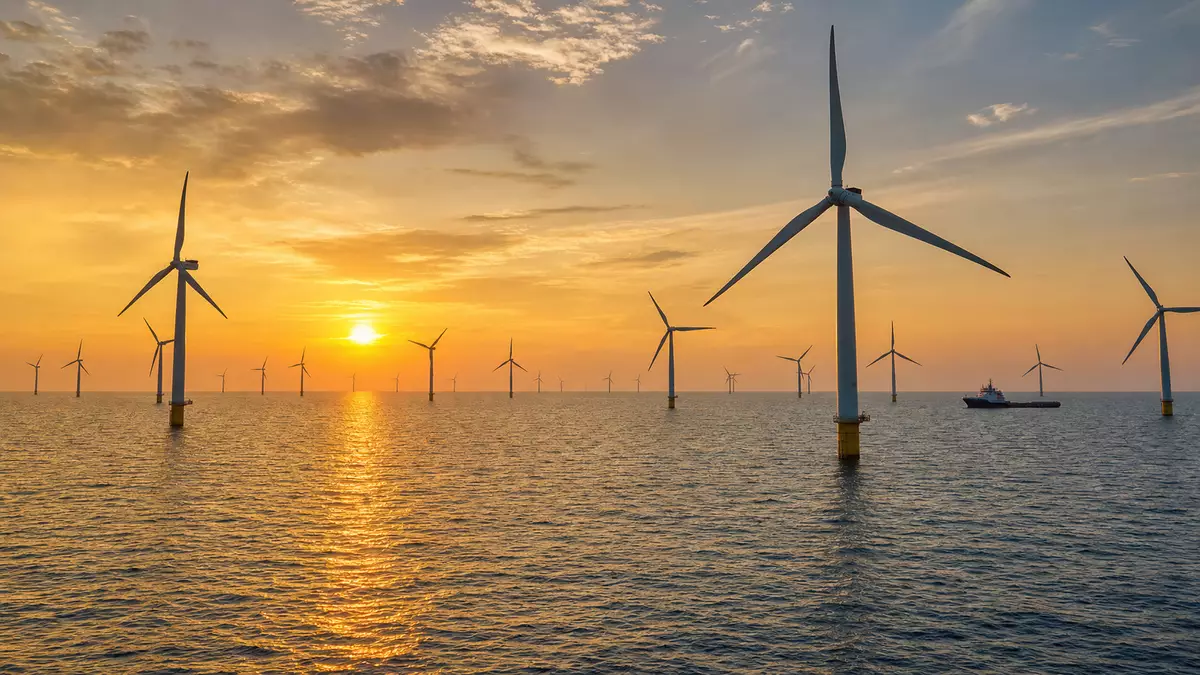
Iberdrola stock trades steadily as regulated networks and renewables support earnings
Published on 07/20/2026 at 09:31 | Editorial responsibility: Rafael Müller, Editor-in-Chief AD HOC NEWS
Iberdrola stock sits at the intersection of regulated electricity networks and a fast-growing renewables portfolio, with recent financial results highlighting rising revenue, strong cash flow generation, and a multibillion euro investment program in grids and clean energy. According to Iberdrola's latest published full-year results for fiscal 2023, group revenue reached about EUR 49.0 billion in 2023, compared with roughly EUR 53.0 billion in 2022, reflecting lower wholesale energy prices but continued robust performance in core businesses as reported by the company in early 2024 in its shareholders and investors section.
Revenue around EUR 49 billion in 2023
In its fiscal 2023 reporting, Iberdrola S.A. stated that total revenues were close to EUR 49.0 billion for the year 2023, down from about EUR 53.0 billion in 2022, as lower energy prices reduced top-line figures even while operational performance in networks and renewables remained resilient. The company highlighted that its adjusted earnings before interest, taxes, depreciation and amortization (EBITDA) in 2023 stood in the region of EUR 15.0 billion, compared with approximately EUR 13.2 billion in 2022, illustrating that profitability expanded even as revenues normalized from the exceptional levels seen in 2022. This combination of lower nominal revenue but higher EBITDA underscores how Iberdrola's focus on regulated network assets and contracted renewables can stabilize margins despite changing commodity price conditions.
Net profit attributable to the group in 2023 was reported at around EUR 4.0 billion, up from approximately EUR 3.0 billion in 2022, marking a year-on-year increase of close to 30% in earnings, according to the company's investor information. That improvement in net income reflects higher contributions from networks, additional renewable capacity coming online, and optimized financial costs, as debt financing structures were actively managed in the face of rising interest rates. For investors following Iberdrola stock, this earnings growth against a backdrop of lower revenue indicates that the Spanish utility was able to protect and even expand its bottom line by leaning on regulated and long-term contracted business lines rather than relying on volatile merchant generation.
EBITDA up roughly EUR 1.8 billion year on year
Looking more closely at operating profitability, Iberdrola's reported EBITDA expansion from about EUR 13.2 billion in 2022 to around EUR 15.0 billion in 2023 represents an increase of approximately EUR 1.8 billion, or roughly 13% year on year. This improvement was driven in part by its networks business, which includes electricity transmission and distribution assets in Spain, the United Kingdom, the United States, and Latin America. Regulated returns linked to investment in these grids allowed the company to record higher earnings even as revenue from energy sales normalized after the exceptional price spikes of 2022. This dynamic is important for Iberdrola stock holders, because regulated networks typically deliver predictable cash flows under multi-year regulatory frameworks, which can underpin dividends and capital spending plans.
The renewables segment also contributed meaningfully to EBITDA growth in 2023, as Iberdrola added new wind and solar capacity and benefited from long-term power purchase agreements that provide price visibility. The company reported that installed renewables capacity exceeded 40 gigawatts by the end of 2023, with a pipeline of additional projects in Europe, the Americas, and other markets. As more projects reach commercial operation, the contribution of renewables to total EBITDA is expected to grow, further shifting the group's earnings mix toward low-carbon generation. This shift is aligned with Iberdrola's strategic positioning as one of the largest renewable energy utilities globally, a factor that many investors consider when evaluating Iberdrola stock alongside peers in the European utilities sector.
Net profit up about 30 percent versus 2022
The jump in net profit from roughly EUR 3.0 billion in 2022 to around EUR 4.0 billion in 2023, an increase of about EUR 1.0 billion or close to 30%, stands out as a key metric in Iberdrola's recent financial performance. According to the company, this earnings growth reflected not only higher operating results but also lower extraordinary charges and more efficient financing. The utility continued to refinance portions of its debt portfolio and issued green and sustainability-linked bonds to support its investment program, helping to manage interest costs and align funding with its decarbonization strategy. For Iberdrola stock investors, the strong net profit growth provides a clearer signal than revenue alone, because it directly influences the capacity to pay dividends and fund future projects.
Dividend distributions have remained an integral part of Iberdrola's shareholder remuneration policy. While exact dividend per share figures for 2023 vary by type of payment and scrip options, the company indicated that total shareholder remuneration for fiscal 2023 was higher than in 2022, reflecting the improved net earnings base. The combination of increasing net profit and rising dividends positions Iberdrola stock as a classic income and growth utility play, backed by regulated infrastructure and renewables. At the same time, management has emphasized maintaining a balanced payout ratio to preserve financial flexibility for its capital expenditure plans in grids and new renewable projects.
Investment plan above EUR 47 billion
Iberdrola has outlined a substantial multi-year investment plan, committing more than EUR 47 billion for the period covering the mid-2020s, according to its strategic presentations and investor materials. A significant share of this planned spending is directed toward electricity networks, which are critical to enabling greater electrification, integrating renewable generation, and ensuring system reliability. The company has indicated that around EUR 27 billion of this investment envelope will be allocated to networks, with the remainder focused on renewables, storage, and customer solutions such as smart grids and electrification services. This level of capital expenditure positions Iberdrola as a central actor in grid modernization across its key markets.
The planned investments are expected to support regulated asset base growth in Iberdrola's network businesses, which in turn can drive higher regulated returns under existing frameworks. For instance, in Spain and the United Kingdom, regulatory regimes allow utilities to earn a specified return on their regulated assets, subject to efficiency and performance criteria. As Iberdrola increases its network asset base through investments in grid reinforcement, digitalization, and interconnections, the earnings contribution from networks is likely to rise. This provides a clearer long-term earnings trajectory for Iberdrola stock holders who monitor the balance between near-term earnings and long-term asset growth.
Net debt and cash flow support flexibility
Alongside its earnings and investment commitments, Iberdrola's balance sheet remains a focal point for investors. The company has reported net debt in the region of EUR 45 billion, reflecting its capital-intensive business model and ongoing investment in assets. However, strong operating cash flow, supported by regulated networks and long-term contracted renewables, has allowed Iberdrola to comfortably service its obligations while continuing to invest. In fiscal 2023, operating cash flow was sufficient to cover dividends and a significant portion of capital expenditures, with the remainder supported by debt issuance and hybrid instruments, as detailed in the company's financial communications.
The issuance of green bonds and sustainability-linked instruments plays a strategic role in Iberdrola's financing approach. By tying financing to environmental objectives and project-level investments, the company can tap into a broad investor base that prioritizes environmental, social, and governance (ESG) criteria. This financing strategy aligns with Iberdrola's position as a leading renewable utility and supports the narrative around Iberdrola stock as part of ESG-oriented investment portfolios. At the same time, management has emphasized maintaining credit metrics compatible with solid investment-grade ratings, seeking to balance growth ambitions with financial discipline.
Regulated networks anchor Iberdrola stock
Iberdrola's core value proposition is rooted in its electricity networks, which provide transmission and distribution services across multiple regions. In Spain, the company operates extensive distribution networks that deliver electricity to millions of customers. In the United Kingdom, Iberdrola owns ScottishPower, which includes regulated network operations. In the United States, through Avangrid, the group has additional regulated network businesses that contribute to its earnings. These regulated network assets generally earn returns determined by regulators, offering long-term visibility on revenue and profit streams. This regulated backbone is a key reason Iberdrola stock is often viewed as a defensive holding within utility portfolios.
The regulated nature of networks means that earnings are less exposed to wholesale electricity price volatility. Instead, they are influenced by regulatory determinations on allowed returns, efficiency factors, and approved capital expenditure. Iberdrola's strategy involves working closely with regulators to demonstrate the need for investments in grid modernization, digitalization, and resilience, which can support rate-base growth and, consequently, earnings growth. As electrification of transport, heating, and industry accelerates, network capacity and flexibility must expand, and Iberdrola's planned investments are intended to position its grids for this future. This strategic alignment provides a structural growth story behind Iberdrola stock in addition to its status as a traditional utility.
Renewables portfolio exceeds 40 GW capacity
Beyond networks, Iberdrola's renewables portfolio is one of the largest among European utilities, with installed capacity exceeding 40 gigawatts across technologies such as onshore wind, offshore wind, solar photovoltaic, hydroelectric, and storage. The company has focused on securing long-term contracts and auctions that provide price visibility, including contracts for difference and feed-in tariffs in various jurisdictions. This approach helps stabilize cash flows from renewables, making them a more predictable contributor to overall earnings. In 2023, the addition of new renewable projects contributed to the increase in EBITDA and net profit, reinforcing the company's strategic shift toward clean generation.
The pipeline of future renewables projects spans Europe, the United States, and other regions, with a mix of offshore wind, large-scale solar, and hybrid projects that integrate storage to enhance grid reliability. Iberdrola's experience in developing, financing, and operating renewables gives it a competitive edge in auctions and bilateral negotiations with customers. For investors assessing Iberdrola stock, the scale and diversification of the renewables portfolio reduce dependence on any single market or technology, lowering risk while maintaining exposure to global decarbonization trends. The company's commitment to expanding renewables capacity is anchored by its multi-year investment plan and supported by supportive policy frameworks in key markets.
Customer solutions and electrification offerings
In addition to networks and generation, Iberdrola has developed customer-facing solutions aimed at accelerating electrification and energy efficiency. These include offerings related to electric vehicle charging, smart home energy management, distributed generation, and energy efficiency services. By providing integrated solutions, Iberdrola seeks to deepen relationships with residential, commercial, and industrial customers, generating additional revenue streams and supporting the broader transition to low-carbon energy systems. These activities can complement network and renewables businesses by increasing electricity demand, optimizing grid usage, and providing data that supports system planning.
While customer solutions represent a smaller portion of total revenue compared with networks and generation, they play a strategic role in Iberdrola's positioning as an integrated energy company. Over time, as electrification progresses, these offerings may contribute more materially to earnings and can differentiate Iberdrola stock from utilities that focus purely on generation or networks. The company's investments in digital platforms, data analytics, and customer interfaces are intended to support this evolution, making Iberdrola's business model more resilient and responsive to changing customer expectations.
Strategic focus on decarbonization and ESG
Iberdrola has long framed its strategy around decarbonization, renewables expansion, and environmental sustainability. The company has committed to ambitious emissions reduction targets and aims to align with global climate goals by steadily reducing the carbon intensity of its generation mix. Investments in renewables, storage, and networks are central to this strategy, while legacy thermal generation plays a diminishing role. Iberdrola regularly reports on its ESG metrics, including emissions, renewable capacity, and governance indicators, as part of its investor communications. These disclosures support the inclusion of Iberdrola stock in ESG-focused indices and funds.
From a governance perspective, Iberdrola emphasizes transparency, stakeholder engagement, and alignment of management incentives with long-term value creation. The company has implemented policies related to board diversity, independence, and oversight of sustainability issues. For investors, strong governance and clear ESG reporting provide additional assurance that the company's strategic commitments are backed by concrete actions and oversight. Iberdrola's positioning as a leading renewable utility, combined with regulated networks and robust ESG credentials, shapes the narrative around the stock and influences how it is valued relative to peers.
Read more about Iberdrola
More on Iberdrola shares and investor information
For further details on Iberdrola's earnings, investment plans, and shareholder remuneration, investors can consult additional resources including an overview page dedicated to the ISIN and the company's own investor relations portal.
Representative product: smart grids and renewables
Iberdrola's representative offerings span smart grid investments and renewable generation rather than a single consumer product. The company's smart grid initiatives involve deploying advanced metering infrastructure, automation, and digital control systems across its networks to improve reliability, reduce losses, and enable better integration of distributed energy resources. These projects support more efficient operation of the electricity system and provide data that can be used to optimize investments and maintenance. At the same time, Iberdrola is continually expanding its fleet of wind and solar farms, which together form the backbone of its renewable generation business and contribute a growing share of its earnings.
Iberdrola stock and market value context
Iberdrola shares are primarily listed on the Spanish stock exchange, and the company is a constituent of the IBEX 35 index, reflecting its status as one of Spain's largest listed companies by market capitalization. As of recent market data in mid 2024, Iberdrola's market capitalization has been reported in the tens of billions of euros, underscoring the scale of its operations and asset base. While specific intraday share prices fluctuate with market conditions, the broader context is that Iberdrola stock is underpinned by regulated networks and a large renewables portfolio, both of which support long-term earnings visibility. The combination of income through dividends and growth through investments in grids and clean energy defines how the market tends to view the stock.
Key facts about Iberdrola
- Company: Iberdrola S.A.
- ISIN: ES0144580Y14
- Ticker: BME: IBE
- Trading venue: Bolsa de Madrid
- Market capitalization: multi billion euro range (as of mid 2024)
- Sector / Industry: Utilities / Electric Utilities
- Index membership: IBEX 35
Disclaimer regarding our articles: No investment advice, no buy or sell recommendation. Information on prices, companies, and markets is provided without guarantee; changes are possible at any time. Stock market transactions can lead to substantial losses. Our articles are created and reviewed in whole or in part automatically with the support of AI.