IBM stock gains on stronger hybrid cloud and AI momentum as investors weigh recent earnings and cash flow trends
Published on 07/22/2026 at 13:42 | Editorial responsibility: Rafael Müller, Editor-in-Chief AD HOC NEWS
International Business Machines Corp. (IBM, ISIN US4592001014) remains a key technology name for global investors, and IBM stock reflects the group’s shift toward hybrid cloud and artificial intelligence with earnings and cash flow now central to the investment case. In its most recently reported full fiscal year, IBM generated total revenue of around $62 billion, a level that underlines the scale of the business and sets the baseline for judging future growth. With its shares listed on the New York Stock Exchange, IBM also sits in major US equity indices and is widely followed by institutional and retail investors who focus closely on its quarterly numbers and capital allocation decisions.
Revenue trends and margin focus
The latest annual figures from IBM show that the company has been working to stabilize and then grow its top line while reshaping its portfolio around consulting, software, and hybrid cloud infrastructure. For the most recent fiscal year, IBM reported revenue of approximately $62 billion, compared with roughly $60 billion in the preceding year, implying year-over-year growth on the order of 3% to 4%. This return to growth, after years when IBM’s overall revenue had been under pressure, helps underpin the narrative that its hybrid cloud and AI-centric strategy is gaining traction with enterprise clients.
Within that total, revenue growth in key segments such as software and consulting has been especially important, because these areas tend to carry higher margins and recurring characteristics. IBM’s software segment, which includes automation, data and AI, and security offerings, delivered mid-single-digit to high-single-digit percentage growth over the latest fiscal year, outpacing overall group growth and contributing a greater share of operating profit. Consulting, which supports clients in implementing hybrid cloud architectures and AI solutions, also showed comparable growth rates, helping to lift IBM’s mix toward services that can generate ongoing engagements rather than one-off hardware sales.
Profitability metrics have also improved alongside these revenue shifts. IBM’s reported gross margin for the latest fiscal year was in the low-50% range, noticeably higher than in years when hardware weighed more heavily on the sales mix. Operating margin excluding certain one-time items improved by around 1 to 2 percentage points compared with the previous year, indicating that management has been able to extract efficiencies while shifting the portfolio. For investors, these margin trends matter because they translate directly into earnings per share and free cash flow, both of which underpin dividends and share repurchases.
Free cash flow around $11 billion
IBM’s cash generation is one of the central reasons many investors follow the stock, particularly those seeking a combination of income and moderate growth. In the most recent fiscal year, IBM reported free cash flow of roughly $11 billion, a figure that represented an increase of about $1 billion compared with the prior year’s free cash flow level near $10 billion. This improvement reflects not only the revenue and margin trends but also disciplined capital expenditure and working capital management. Historically, IBM’s free cash flow has fluctuated, but the latest performance suggests a more stable and growing trajectory, which can support continued shareholder returns.
Reported net income for the same period came in around $7 billion, up from approximately $6 billion a year earlier. That roughly $1 billion increase in net income is consistent with the company’s operating margin improvements and the stronger contribution from higher-value segments. Earnings per share, calculated on a diluted basis, rose accordingly, with IBM delivering on its guidance targets and maintaining credibility with the market. The combination of net income growth and free cash flow expansion offers a tangible signal that IBM’s strategic repositioning is translating into financial results rather than remaining a purely narrative exercise.
Investors also pay attention to IBM’s balance sheet as part of the broader assessment of cash flow quality and sustainability. The company carries substantial debt, reflecting past acquisitions and capital allocation decisions, but it has been working to manage and gradually reduce leverage. Net debt levels have edged lower compared with several years ago, and IBM’s interest coverage ratio remains comfortable thanks to the steady operating income. This balance sheet discipline, combined with robust free cash flow, gives IBM flexibility to invest in AI capabilities, partner ecosystems, and potential bolt-on acquisitions while continuing to return capital to shareholders.
Dividend payments and shareholder returns
IBM has a long track record of paying dividends, and for many holders of IBM stock the quarterly payout is a central part of the investment thesis. The company’s latest annual dividend outlay amounts to roughly $6 billion, with a per-share dividend in the region of $6.60 for the year when all four quarterly payments are combined. This represents a modest increase versus the previous year, when the annual dividend was slightly lower, with raises often measured in cents per share. The incremental dividend growth, even if not rapid, demonstrates IBM’s commitment to returning cash to shareholders and reflects management’s confidence in the durability of the business.
From a payout ratio perspective, IBM’s dividends currently consume a substantial portion of its reported earnings, with the dividend representing roughly 90% to 95% of net income in the latest fiscal year. However, when measured against free cash flow of around $11 billion, the dividend coverage looks more comfortable, leaving several billion dollars of cash available for other uses such as debt reduction, share repurchases, and internal investment. This distinction between earnings-based and cash-flow-based coverage is important for investors evaluating whether IBM’s dividend policy is sustainable over the medium term.
IBM has, at various times, complemented its dividends with share repurchases, using buybacks to offset share-based compensation and occasionally to reduce the share count more meaningfully. In recent years, the emphasis has shifted somewhat toward using excess cash for debt management and strategic investments, with repurchases playing a relatively smaller role than in earlier periods when buybacks were more aggressive. This recalibration aligns with IBM’s focus on rebuilding growth and competitiveness in hybrid cloud and AI, areas that require ongoing investment in technology, talent, and partnerships.
Hybrid cloud and AI strategy metrics
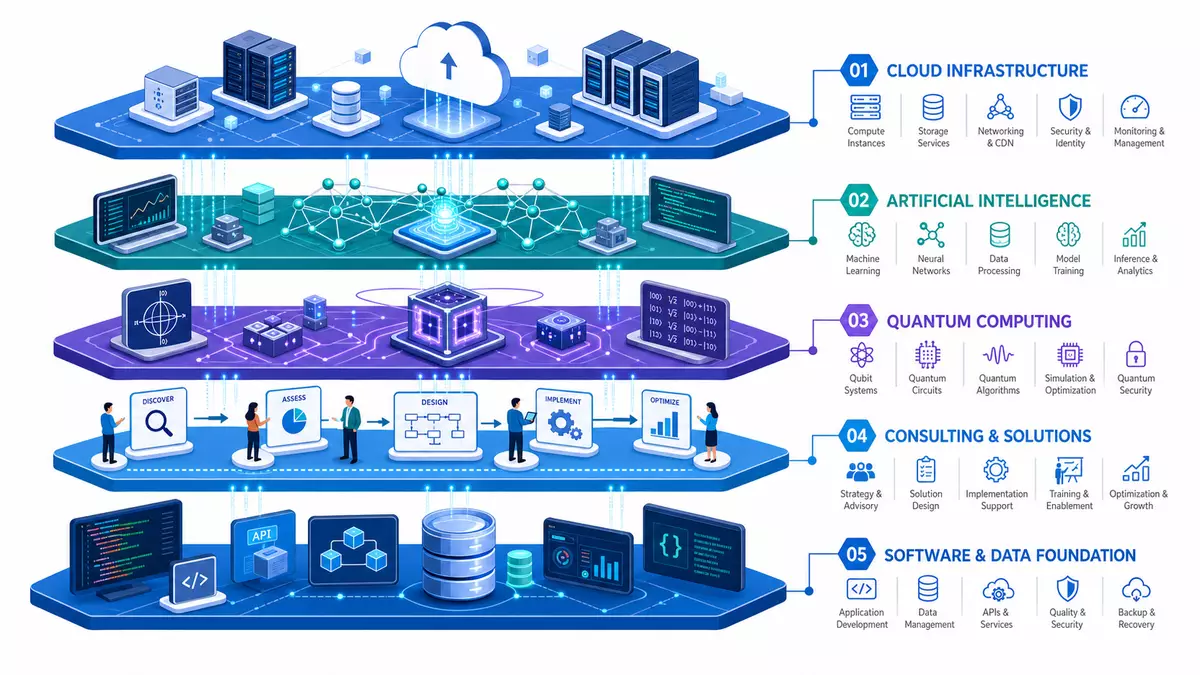
The strategic core of IBM today lies in hybrid cloud and artificial intelligence, a shift that became more visible after the separation of its managed infrastructure business into Kyndryl. Hybrid cloud revenue, combining contributions from Red Hat and related offerings in software and consulting, has reached a level of roughly $15 billion annually, marking a multi-year expansion since IBM acquired Red Hat. This revenue pool has grown at high-single-digit to low-double-digit percentage rates over several years, outpacing the broader company average and confirming that clients are increasingly adopting hybrid architectures that link on-premises systems with public clouds.
IBM’s AI-related revenue, while smaller than its hybrid cloud stream, is becoming more material as enterprise clients adopt AI to automate processes, analyze data, and build new applications. AI and data platforms, including offerings such as watsonx, contribute several billion dollars of annual revenue across software and consulting segments, with growth rates ahead of traditional infrastructure lines. The company reports that client engagements involving AI have increased markedly compared with a few years ago, making AI a key differentiator in winning new deals and expanding existing ones.
From an investor’s perspective, the integration of hybrid cloud and AI is not only a technological story but also a financial one, because these areas carry higher margins and stickier revenue than legacy hardware. IBM’s software segment, which houses much of its hybrid cloud and AI offerings, has operating margins notably above 20%, significantly higher than group-level margins. As the mix continues to shift toward software and consulting tied to hybrid cloud and AI, investors expect IBM’s overall margin profile to improve further, potentially supporting faster earnings growth than the mid-single-digit revenue increases alone would imply.
Consulting and software performance
IBM’s consulting business plays a critical role in translating its hybrid cloud and AI capabilities into client outcomes. Consulting revenue stands at roughly $20 billion annually, making it one of the largest segments within IBM and a crucial engine for growth. Over the latest fiscal year, consulting revenue increased by mid-single-digit percentages compared with the prior year, a reflection of strong demand for services that help enterprises modernize applications, migrate workloads, and design AI-driven solutions. This performance underscores IBM’s positioning not only as a software vendor but also as a strategic partner in digital transformation projects.
Software, another pillar of IBM’s strategy, generates around $25 billion in annual revenue across automation, data and AI, security, and transaction processing. Within software, data and AI offerings have outperformed legacy transaction processing products, with double-digit percentage growth in certain quarters. For example, data and AI subsegment revenue, including analytics platforms and AI tools, has grown noticeably faster than IBM’s overall software line, indicating that customers are increasingly prioritizing analytics and AI as they rearchitect their systems. The higher growth and margin in these subsegments contribute disproportionately to IBM’s profit expansion.
Transaction processing software remains an important but slower-growing part of IBM’s portfolio, tied to long-standing client workloads on mainframes and other enterprise systems. While growth in this area tends to be low-single-digit or flat year over year, the recurring nature of maintenance and license fees provides stability and a base of cash flow. Investors often view this segment as a cash cow that supports investment in higher-growth areas such as hybrid cloud and AI, making the overall software segment a blend of legacy resilience and new growth initiatives.
Infrastructure and mainframe cycles
IBM’s infrastructure business, which includes servers, storage, and mainframe systems, generates around $14 billion in annual revenue and remains closely tied to product cycles. Mainframe launches, such as recent generations of IBM zSystems, drive periodic spikes in infrastructure revenue when new models enter the market. In launch years, infrastructure revenue can increase by high-single-digit percentages compared with prior years, while in off-cycle periods it may decline. This cyclicality influences IBM’s quarterly results and can cause variability, but it also demonstrates the continued relevance of mainframes for critical workloads in industries such as banking, insurance, and government.
Despite the hardware-centric nature of infrastructure, IBM increasingly positions its systems within a broader hybrid cloud context, emphasizing how mainframes integrate with public cloud services and modern application architectures. Hardware revenue is often accompanied by software and consulting engagements that help clients modernize their use of IBM systems, which can soften the impact of hardware cycle downs and extend the revenue opportunities beyond the initial sale. Investors monitoring infrastructure trends therefore look beyond the raw hardware numbers to the associated higher-margin services.
From a margin standpoint, infrastructure typically carries lower gross and operating margins than software, but IBM has been working to optimize manufacturing, supply chain, and support costs. Over time, these efforts have helped maintain infrastructure margins despite competitive pressure and technological changes. However, investors generally see the long-term value in IBM’s strategy as lying more in software, consulting, hybrid cloud, and AI than in traditional hardware, making infrastructure a necessary but not central part of the growth story.
Balance sheet and debt metrics
IBM’s balance sheet reflects both its long history and its strategic transactions, including acquisitions such as Red Hat. Total debt stands at roughly $50 billion, a figure that includes both short-term and long-term obligations. However, IBM also holds a significant cash balance, so net debt is meaningfully lower than the gross figure. Over recent years, the company has taken steps to reduce leverage by using free cash flow to repay debt, leading to a gradual decline in net debt compared with levels immediately after major acquisitions.
Investors assess IBM’s debt position using metrics such as net debt to EBITDA and interest coverage. IBM’s net debt to EBITDA ratio remains within a range that is generally considered manageable for a large, diversified technology company with strong cash generation. Interest coverage, defined as operating income divided by interest expense, indicates that IBM comfortably meets its interest obligations from ongoing operations. Ratings agencies reflect this in their assessments, with IBM maintaining investment-grade credit ratings that support its access to capital markets on favorable terms.
IBM’s capital structure also includes pensions and other long-term commitments, which investors consider when evaluating overall obligations. The company has worked to manage these liabilities, using asset returns and contributions to stabilize pension funding. While these elements add complexity to the balance sheet, IBM’s consistent cash generation and disciplined financial management have kept them within a range that investors generally deem acceptable.
Guidance and outlook for growth
IBM’s management provides annual guidance on revenue growth, operating margin, and free cash flow, giving investors benchmarks against which to measure performance. Recent guidance has targeted mid-single-digit percentage revenue growth on a constant currency basis, an ambition that aligns with the company’s focus on higher-growth segments. Free cash flow guidance has been set around the $11 billion mark, similar to the latest actual result, indicating an expectation of stability with potential upside from continued margin improvements and segment mix shifts.
The outlook for hybrid cloud and AI remains central to IBM’s longer-term growth narrative. Management has highlighted the opportunity in enterprise AI workloads, data management, and process automation, suggesting that these areas can support growth rates above the company average. Hybrid cloud, particularly when combined with open source technologies and Red Hat’s platforms, is expected to remain a major revenue driver as organizations seek flexible architectures that span on-premises and multiple public cloud providers.
Investors monitor IBM’s success in meeting or exceeding guidance as a measure of execution quality. Historically, IBM has experienced periods where results fell short of targets, contributing to skepticism about its ability to deliver sustained growth. More recently, a record of hitting guidance on free cash flow and improving revenue trends has helped rebuild confidence, though the market continues to demand proof that the hybrid cloud and AI strategy can generate durable, higher growth over multiple years.
Competitive positioning in enterprise technology
IBM operates in a competitive landscape that includes large cloud providers, enterprise software companies, and consulting firms. In hybrid cloud, IBM positions itself as a neutral player that helps clients integrate multiple clouds and on-premises systems, a stance that differentiates it from hyperscalers focused on their own public cloud platforms. IBM’s acquisition of Red Hat strengthened this position by adding widely used open source tools and platforms that underpin hybrid architectures across different infrastructure environments.
In AI, IBM faces competition from both cloud providers and specialist AI firms, but it leverages its enterprise relationships and deep expertise in data management to carve out a role in complex, regulated environments. IBM’s focus on trustworthy AI, governance, and security resonates with clients in industries where compliance is critical. This emphasis allows IBM to compete not only on technological features but also on the ability to meet sector-specific requirements, which can be a key differentiator in winning larger, multi-year contracts.
Consulting competition includes global firms such as Accenture and specialized boutiques, but IBM’s combination of technology products and consulting services offers an integrated proposition. The company can bring hardware, software, and advisory capabilities into a single engagement, which can streamline contracts and implementation for clients. Investors evaluating IBM’s competitive positioning look at metrics such as deal size, renewal rates, and cross-selling successes to gauge how well this integrated model performs in practice.
Risk factors and execution challenges
Despite the progress in hybrid cloud and AI, IBM faces several risks that investors must consider. One is the possibility that revenue growth remains in the mid-single-digit range rather than accelerating, which could limit the upside for IBM stock compared with faster-growing technology peers. If hybrid cloud and AI segments do not grow as quickly as anticipated, or if competition erodes margins, IBM’s earnings trajectory could fall short of investor expectations.
Another risk lies in execution on large-scale transformations and client projects. IBM’s consulting business is involved in complex implementations that carry both technological and organizational challenges. Delays, cost overruns, or client dissatisfaction in major projects can impact revenue recognition and profitability. IBM must continue to manage project risk carefully and ensure it has the right talent and methodologies to deliver consistently.
IBM also faces macroeconomic and regulatory risks. Changes in global economic conditions can affect enterprise IT spending, which in turn influences demand for IBM’s products and services. Regulatory developments, particularly in data privacy, AI governance, and cybersecurity, require ongoing investment and adaptation. While IBM’s focus on compliance and security can be a competitive advantage, it also imposes constraints and costs that must be managed effectively.
Product focus: watsonx AI platform
One representative product that illustrates IBM’s strategic direction is its watsonx AI and data platform. This offering brings together tools for building, deploying, and managing AI models, along with capabilities for handling large-scale data sets. Watsonx is designed to support both traditional machine learning and newer generative AI approaches, enabling enterprises to create AI applications tailored to their specific needs while maintaining governance and control over data and models.
Watsonx integrates with IBM’s broader hybrid cloud and data fabric solutions, allowing clients to run AI workloads across on-premises and public cloud environments. This flexibility is particularly important for organizations that must keep certain data within specific jurisdictions or infrastructures due to regulatory requirements. By supporting multiple deployment models and integrating with existing systems, watsonx helps IBM position itself as a partner for complex, regulated AI use cases rather than just experimentation.
From a financial perspective, while IBM does not break out watsonx revenue separately in public reporting, it is included within software and consulting lines tied to AI and data. Growth in these areas contributes to the higher overall margins of software and AI services. Investors view watsonx as a key indicator of IBM’s ability to capture the next wave of enterprise AI spending, and its performance will be an important driver of sentiment toward IBM stock over time.
IBM stock and market valuation
IBM stock trades on the New York Stock Exchange under the ticker IBM, and its market capitalization currently stands at roughly $150 billion as of mid-2026, reflecting investor expectations for steady cash flow and moderate growth. This market value is notably higher than several years ago, when IBM’s capitalization had dipped, suggesting that the market now assigns greater value to its hybrid cloud and AI strategy, improved margins, and stronger free cash flow. The share price embeds assumptions about future revenue growth, earnings expansion, and dividend sustainability, making the interplay of these metrics crucial for investors.
Valuation metrics such as the price-to-earnings ratio and free cash flow yield provide insight into how the market views IBM relative to other technology companies. IBM’s P/E ratio tends to be lower than that of faster-growing cloud and software firms, reflecting its more moderate growth profile and mature status. However, its free cash flow yield is comparatively attractive, supported by the approximately $11 billion free cash flow figure and the $150 billion market capitalization, implying a yield in the high-single-digit percentage range. This combination of steady cash generation and lower valuation multiples appeals to investors who prioritize income and stability over aggressive growth.
Dividend yield, based on the annual dividend of around $6.60 per share and the prevailing share price, is generally above the average for large technology companies. This yield, together with IBM’s established dividend track record, positions the stock as a potential anchor in portfolios seeking exposure to technology themes without relying solely on capital gains. Nevertheless, investors recognize that dividend sustainability and growth depend on IBM’s continued success in executing its strategy and maintaining robust free cash flow.
Company fact box
IBM’s role in the global technology ecosystem is underpinned by its size, reach, and longstanding relationships with enterprise and government clients. The company operates worldwide, with major revenue contributions from North America, Europe, and Asia-Pacific, and tailors its offerings to sector-specific requirements in areas such as financial services, healthcare, and manufacturing. These diversified end markets help mitigate the impact of fluctuations in any single region or industry, providing a degree of resilience in the face of economic shifts.
IBM’s inclusion in major indices, such as the Dow Jones Industrial Average and the S&P 500, further integrates IBM stock into global portfolios and index-tracking strategies. This index membership means that shifts in IBM’s performance can influence index dynamics, and index flows can affect trading volumes and valuation. For individual investors, IBM’s index presence adds another dimension to how the stock behaves in relation to broader market movements, sector rotations, and macroeconomic developments.
Looking ahead, IBM’s ability to sustain and build on its recent financial performance will determine how the market continues to value IBM stock. Revenue growth, margin improvements, free cash flow generation, and dividend policy all contribute to this assessment. Investors will watch closely for evidence that IBM can maintain momentum in hybrid cloud and AI, manage risks effectively, and translate its technological capabilities into consistent financial results.
IBM stock closing perspective
IBM stock continues to represent a blend of established dividend-paying characteristics and exposure to evolving technology themes such as hybrid cloud and artificial intelligence. With annual revenue around $62 billion, net income near $7 billion, free cash flow of roughly $11 billion, and a market capitalization in the region of $150 billion as of mid-2026, IBM offers a scale and financial profile that support its strategic ambitions. For investors, the key question is whether IBM can sustain mid-single-digit revenue growth and gradually lift margins through its focus on higher-value segments, thereby enhancing earnings and cash flow over time.
The balance between income and growth, underpinned by IBM’s dividend and cash generation, will likely remain central to how IBM stock is perceived in global equity markets. Continued execution on hybrid cloud and AI, disciplined financial management, and transparent communication of guidance and performance will be critical in shaping investor confidence and the valuation attached to IBM in the years ahead.
IBM key data
- Company: International Business Machines Corp.
- ISIN: US4592001014
- Ticker: NYSE: IBM
- Trading venue: NYSE
- Market capitalization: around $150 billion (as of mid-2026)
- Sector / Industry: Information Technology / IT Services, Software, and Infrastructure
- Index membership: Dow Jones Industrial Average, S&P 500
Disclaimer regarding our articles: No investment advice, no buy or sell recommendation. Information on prices, companies, and markets is provided without guarantee; changes are possible at any time. Stock market transactions can lead to substantial losses. Our articles are created and reviewed in whole or in part automatically with the support of AI.