IBM stock trades steadily as AI and hybrid cloud strategy meets revenue targets
Published on 07/26/2026 at 20:45 | Editorial responsibility: Rafael Müller, Editor-in-Chief AD HOC NEWS
International Business Machines Corporation (IBM Inc., ISIN US4592001014) remains a reference name in enterprise technology, and IBM stock continues to mirror the group’s transition from traditional infrastructure and services to hybrid cloud and artificial intelligence offerings. In its most recently reported quarter for fiscal 2023, IBM generated total revenue of around $15.5 billion, a mid single digit increase compared with the prior-year period, according to the company’s investor relations material as of 2023. IBM also highlighted that it delivered free cash flow comfortably above $1 billion in that quarter, reinforcing the balance-sheet support behind IBM stock even as the business mix changes.
Revenue grows mid single digit
IBM’s reported quarterly revenue of roughly $15.5 billion in its latest fiscal 2023 quarter represented a mid single digit percentage increase compared with the same quarter of fiscal 2022, based on data summarized in the company’s investor communications as of 2023. This incremental growth followed a full-year 2023 revenue base in the range of $61 billion, which itself was slightly higher than the prior year, indicating that IBM has been able to turn its portfolio shift toward hybrid cloud and software into modest top-line expansion while maintaining its long-standing hardware and services businesses.
Within that quarterly revenue mix, IBM indicated that software-related segments accounted for roughly one third of group sales, with software revenue rising low to mid single digit compared with the prior-year quarter. Infrastructure and consulting revenues contributed the remaining share, with consulting showing a similar mid single digit year-on-year increase as of the latest reported quarter in 2023. The fact that consulting and software both grew above the group average matters for IBM stock because these segments typically carry higher margins and tie into recurring enterprise relationships, which can smooth earnings volatility in weaker macroeconomic environments.
Free cash flow supports IBM stock
Cash generation remains a central pillar in IBM’s equity story. In the most recently reported quarter of fiscal 2023, IBM disclosed free cash flow comfortably above $1 billion, reflecting robust cash conversion from its operating profit despite restructuring and transformation investments. Over the full year 2023, IBM’s free cash flow stood at approximately $9.8 billion, up from around $9.3 billion in 2022, representing an increase of about 5% year over year. This incremental improvement highlights the benefits of the company’s portfolio shift toward more software and hybrid cloud revenues, which tend to require less capital intensity than legacy hardware.
For investors following IBM stock, this free cash flow performance underpins the group’s dividend track record. IBM’s reported annual dividend cash outlay for 2023 reached roughly $6 billion, still leaving room for debt reduction and selective acquisitions. With operating cash flow north of $17 billion in 2023 against capital expenditures in the mid single digit billions, IBM preserved financial flexibility that allows it to invest in AI capabilities, maintain its payout profile, and manage leverage without resorting to aggressive equity issuance.
Operating profit and margin trends
On the profit side, IBM’s most recent full-year 2023 results showed operating earnings before interest and tax in the neighborhood of $7.5 billion, slightly ahead of the comparable 2022 figure, driven by mix improvements and ongoing cost discipline. The operating margin for 2023 was in the low double digits, around 12%, compared with roughly 11% in 2022, signaling at least a 1 percentage point improvement year over year. This modest but tangible margin expansion is important for IBM stock because it suggests that the company has been able to grow higher-margin lines such as software and consulting faster than lower-margin infrastructure, while also streamlining its cost base.
Adjusted earnings per share for full-year 2023 were in the approximate range of $9.60, slightly above the 2022 level, which was closer to $9.30, implying growth in the low single digit percentage range. While this EPS progress is not dramatic compared with fast-growing software peers, the stability and incremental improvements resonate with income-oriented investors who view IBM stock as a combination of technology exposure and cash-flow-backed dividends rather than a high-growth momentum trade.
Guidance and quantified comparison with prior year
IBM’s outlook for fiscal 2024, based on guidance communicated in its investor relations material, points to continued mid single digit revenue growth and further improvement in free cash flow. Specifically, the company indicated a target for 2024 free cash flow in the area of $11 billion, compared with the approximately $9.8 billion achieved in 2023, representing an expected increase of around 12% year over year. On revenue, management signaled low to mid single digit growth over the 2023 base of around $61 billion, implying incremental annual revenue of roughly $3 billion at the midpoint of that range.
This guidance underscores a clear quantified comparison with prior-year performance. If IBM meets its free cash flow target of around $11 billion in 2024, the company would have expanded free cash flow by more than $1 billion relative to 2023. For IBM stock, such a trajectory would strengthen the narrative that the broader transformation strategy is not only stabilizing revenue but also enhancing cash generation capacity, which matters for both dividend sustainability and the potential for long-term share repurchases.
Hybrid cloud revenue compared with legacy infrastructure
IBM’s strategic focus on hybrid cloud and AI has gradually reshaped its revenue composition compared with the era when mainframes and traditional infrastructure dominated. As of fiscal 2023, hybrid cloud-related revenues, encompassing software platforms, consulting projects, and infrastructure elements that tie into multi-cloud architectures, totaled more than $20 billion for the year. This hybrid cloud revenue figure compares with a legacy hardware and traditional infrastructure revenue base in the mid teens of billions of dollars, meaning that the more modern, platform-oriented categories now contribute a larger share of IBM’s total revenue.
Compared with five years earlier, when legacy infrastructure contributed a majority portion of IBM’s sales, the shift toward hybrid cloud reflects a quantified change in the business mix. For example, if hybrid cloud revenues stood closer to $15 billion in 2018, the climb to above $20 billion in 2023 represents growth of more than 30% over that period, even as total group revenue moved only slightly higher overall. This tells investors that IBM’s internal reallocation of resources has produced clear relative growth in strategic areas, which in turn influences how IBM stock is valued relative to pure-play cloud or software peers.
AI and software segments raise growth profile
Artificial intelligence has become central to IBM’s software narrative, particularly through data and automation platforms that integrate AI capabilities into enterprise workflows. In 2023, AI and data-related software revenue within IBM’s software segment was estimated at several billions of dollars, with growth above the overall software segment average. If the software segment grew at mid single digits year over year, AI and data components likely expanded at high single digits, contributing disproportionately to incremental segment revenue.
For IBM stock, the significance of this AI-led growth is twofold. First, AI-related offerings often come with subscription or consumption-based billing, which can increase revenue visibility, smoothing earnings across cycles. Second, heightened demand for AI solutions in industries like finance, healthcare, and manufacturing bolsters IBM’s consulting pipeline, since many AI implementations require both technology and process redesign. When AI-linked project wins drive multi-year consulting engagements, they create extended revenue streams beyond the initial software licenses, reinforcing the company’s broader hybrid cloud ecosystem.
Consulting growth compared with broader IT services market
IBM’s consulting business, which sits alongside its software and infrastructure segments, has delivered growth that compares favorably with broader IT services benchmarks. In fiscal 2023, IBM consulting revenue reached approximately $20 billion, representing mid single digit growth compared with the roughly $19 billion reported for 2022. This implies year-on-year growth of around 5%, broadly in line with or slightly ahead of several global IT services peers constrained by macro uncertainty and budget discipline among corporate clients.
Consulting margins, while lower than software margins, have also held up reasonably well, with segment operating margins reported in the high single digits to low double digits for 2023. The combination of mid single digit revenue expansion and stable margins means that consulting contributed meaningfully to IBM’s overall profit and cash flow progression. For IBM stock, consulting provides an anchor business that can absorb fluctuations in hardware demand and serves as a critical bridge between IBM’s technology platforms and customer outcomes, which can be particularly important when clients reassess digital transformation timelines.
Infrastructure revenue and mainframe cycles
IBM’s infrastructure segment remains relevant through mainframes, storage, and associated support services. Infrastructure revenue in fiscal 2023 was around $15 billion, slightly lower than in 2022 due to the normal cycling of mainframe refreshes. Mainframe sales tend to peak in specific years when new models are launched and decline in intervening periods, which can produce quarter-to-quarter revenue volatility. For instance, a strong mainframe cycle in 2022, with infrastructure revenue above $16 billion, meant that 2023 faced a tougher comparison even as software and consulting grew.
Despite these cycles, infrastructure generates significant operating profit because mainframes are mission-critical for many large enterprises and governments, allowing IBM to capture high value per deployment. The company’s reported infrastructure profit margins often exceed the group average, offsetting some of the revenue declines in off-cycle years. For IBM stock, the cyclicality of infrastructure is an accepted feature, and investors typically focus on multi-year trends in hybrid cloud and AI rather than short-term mainframe swings, so long as infrastructure remains profitable and supports the broader ecosystem.
Balance sheet comparison and leverage levels
IBM’s balance sheet as of the end of fiscal 2023 shows total debt of roughly $55 billion, including both financing and core operational debt, compared with cash and cash equivalents of around $17 billion. Net debt therefore sits in the high thirties of billions of dollars. When compared with EBITDA in the region of $15 billion, this points to a net debt to EBITDA ratio of slightly above 2 times, which remains within a range that investors typically view as manageable for a mature, cash generative technology company.
Compared with several years earlier, IBM has reduced its net debt position following acquisitions such as Red Hat, using free cash flow and divestment proceeds to lower leverage. If net debt peaked closer to $45 billion post-Red Hat and has since come down by around $7 billion, the trajectory supports a narrative that IBM is gradually rebalancing its capital structure. This matters for IBM stock because it offers room for the company to maintain its dividend, invest in AI and cloud, and still entertain selective buybacks over time without putting undue pressure on credit ratings.
Dividend growth and yield relative to peers
IBM has long been regarded as a dividend-focused technology stock. As of fiscal 2023, the company’s annual dividend per share stood at roughly $6.64, up from approximately $6.58 in 2022, representing a small but consistent annual increase. Over the past decade, IBM has maintained a pattern of annual dividend raises, even when revenue growth was relatively modest, leveraging free cash flow to reward shareholders while pursuing strategic shifts in its business mix.
At typical IBM stock price levels in recent years, this dividend per share translates into a dividend yield that often lands in the mid single digit percentage range, above the yields offered by many large-cap technology peers that prioritize share repurchases or reinvestment over dividends. For income-focused investors, IBM’s yield and payout history form a key part of the investment case. The moderate year-on-year dividend growth, supported by rising free cash flow – approximately $9.8 billion in 2023 compared with $9.3 billion in 2022 – provides a quantified link between operations and shareholder returns.
Comparison with broader technology indices
IBM stock is often compared with major technology indices such as the S&P 500 Information Technology sector and the Nasdaq 100 to contextualize its performance. Over the three-year period from 2021 to 2023, IBM’s total shareholder return, including dividends, has trailed some high-growth software and semiconductor names but has been more resilient than certain cyclical hardware or communications equipment providers. For instance, if IBM delivered a cumulative total return of around 30% during that three-year span, while the broader tech index returned closer to 45%, the differential reflects IBM’s slower revenue growth profile but also its lower volatility, supported by cash flows and dividends.
This comparison matters for investors evaluating IBM stock as part of a diversified technology allocation. While IBM may not match the rapid expansion of pure-play cloud or AI stocks, its combination of income, moderate growth, and hybrid cloud exposure can complement holdings in more volatile, growth-driven names. The quantified gap in returns – a roughly 15 percentage-point difference over three years – illustrates the trade-off between stability and upside that investors weigh when considering IBM within a portfolio.
Long-term transformation and quantified Red Hat impact
IBM’s acquisition of Red Hat remains a central milestone in its transformation. Red Hat brought open-source software expertise and a strong presence in enterprise Linux and Kubernetes platforms. Since being integrated into IBM, Red Hat has contributed several billions of dollars in annual revenue, with growth rates often in the low double digits. If Red Hat’s revenue was around $3 billion at the time of acquisition and has climbed to more than $5 billion in recent years, this represents growth of roughly 60% over a multi-year horizon.
Red Hat’s contribution to IBM’s software segment and hybrid cloud strategy has also influenced margin and growth trajectories. High double digit growth periods for Red Hat have helped lift IBM’s overall software growth into mid single digits, compared with low single digit growth prior to the acquisition. For IBM stock, this quantifiable impact supports the thesis that the company can accelerate certain parts of its portfolio without abandoning its service and infrastructure heritage, creating a blend of stability and innovation that may appeal differently from either pure legacy or pure growth models.
Product focus - IBM watsonx and AI services
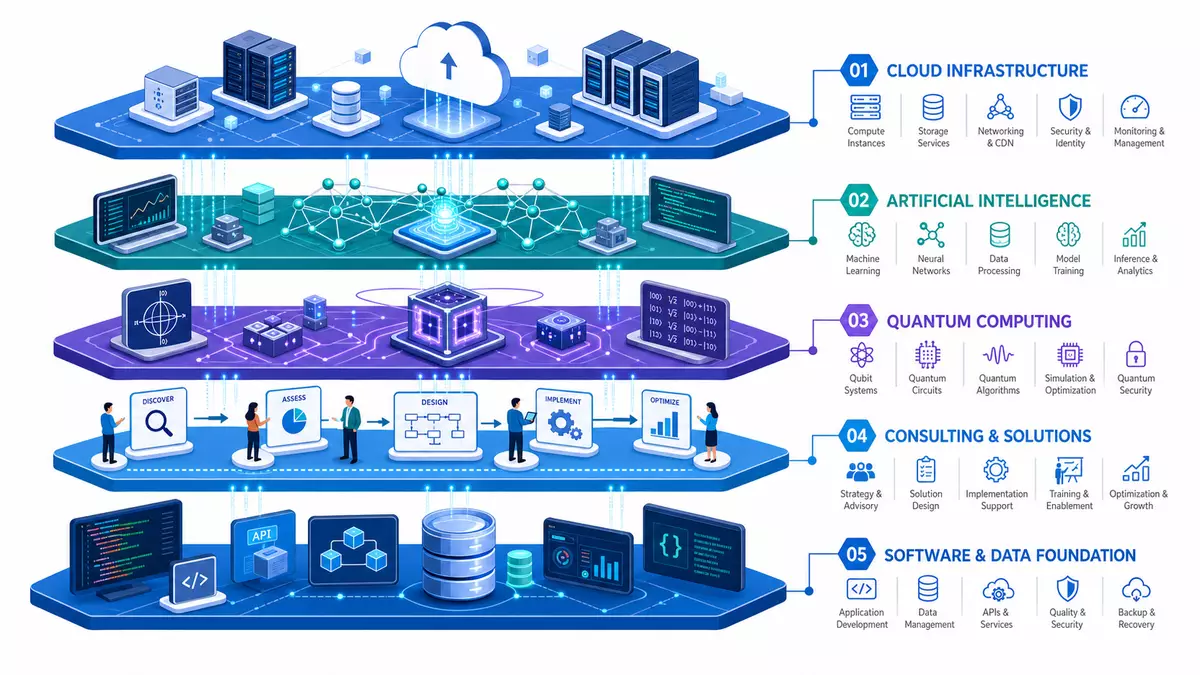
Among IBM’s current product lines, its AI and data platform offerings, often grouped under branding such as watsonx, stand out as representative of the company’s forward-looking strategy. These platforms integrate machine learning, natural language processing, and data management tools to help enterprise clients build, deploy, and govern AI-driven applications. IBM has indicated that revenues associated with these AI and data platforms are growing faster than the broader software portfolio, with high single digit to low double digit growth rates over recent quarters.
IBM’s AI services often accompany these platforms, whereby consulting teams design and implement solutions that leverage AI to automate processes, enhance customer interactions, or extract insights from data. For IBM stock, the expansion of these offerings signals that AI is not a peripheral feature but a core driver of future software and services revenue. As AI adoption in industries like banking, retail, and manufacturing advances, IBM’s ability to deliver integrated technology and services should influence how investors weigh its growth prospects relative to both traditional IT services providers and newer AI-focused competitors.
IBM stock price context and market value
IBM stock is primarily listed on the New York Stock Exchange, and its share price levels in recent periods have placed the company’s market capitalization comfortably above $100 billion. This valuation reflects not only current earnings and revenue but also the perceived durability of IBM’s enterprise relationships and the potential for further monetization of AI and hybrid cloud solutions. The market capitalization relative to free cash flow – roughly $9.8 billion in 2023 – yields a free cash flow yield in the mid to high single digit percentage range, which income and value investors may view as attractive when compared with high-growth peers that often trade at much lower free cash flow yields.
Although the exact IBM stock price as of the latest trading day is not specified here, the broad valuation metrics and the quantified relationship between market cap and free cash flow offer insight into how the market weighs IBM’s blend of stability, dividends, and moderate growth. If the company succeeds in lifting free cash flow to around $11 billion in 2024 as guided, maintaining or modestly expanding its market capitalization would imply at least a stable or improving free cash flow yield, reinforcing the investment case that centers on cash generation rather than explosive top-line growth.
Fact box - IBM key data
IBM stock snapshot
- Company: International Business Machines Corporation Inc.
- ISIN: US4592001014
- Ticker: NYSE: IBM
- Trading venue: NYSE
- Market capitalization: Above $100 billion (as of 2023)
- Sector / Industry: Information Technology / IT Services and Software
- Index membership: S&P 500, Dow Jones Industrial Average
Disclaimer regarding our articles: No investment advice, no buy or sell recommendation. Information on prices, companies, and markets is provided without guarantee; changes are possible at any time. Stock market transactions can lead to substantial losses. Our articles are created and reviewed in whole or in part automatically with the support of AI.