Intel stock holds ground as data center recovery and AI chip ramp shape outlook
Published on 07/23/2026 at 20:40 | Editorial responsibility: Rafael Müller, Editor-in-Chief AD HOC NEWS
Intel Corp. (ISIN US4581401001) stock sits in a transitional phase as the U.S. semiconductor group balances near-term headwinds with a multi-year turnaround focused on data center, AI accelerators, and a capital-intensive foundry strategy. According to Intel's 2024 annual report released in 2025, the company generated $54.2 billion in revenue in 2024, up from $52.9 billion in 2023 as demand in core client and data center markets began to recover.
Revenue stabilizes and margins rebuild
Intel's 2024 revenue of $54.2 billion compared with $52.9 billion in 2023 marked a modest top-line improvement after a challenging downcycle in PCs and servers. Management highlighted that client computing and data center segments, which had contracted in 2022 and early 2023, returned to growth in 2024 as channel inventories normalized and enterprise spending improved.
Operating profitability also began to recover. In its 2024 reporting, Intel indicated that gross margin increased from the low 40 percent range in 2023 to the mid 40 percent range in 2024, supported by cost reductions and an improved product mix but still below historical levels above 60 percent. The company reiterated its goal of rebuilding gross margin as it ramps newer manufacturing nodes and scales AI-focused products.
Data center and AI accelerators gain weight
Data center and AI have become central to Intel's narrative. In its 2024 disclosures, Intel reported that data center and AI segment revenue was in the mid tens of billions of dollars range and returned to year-over-year growth after declines in 2022 and 2023. The company emphasized that demand for Xeon processors improved with the latest generation and that AI workloads supported higher average selling prices.
Intel is also ramping dedicated AI accelerators, including its Gaudi product line. While AI accelerator revenue in 2024 was still a small portion of the total, management pointed to a multi-billion-dollar opportunity over the coming years as hyperscale cloud providers and enterprises expand AI infrastructure. The company framed AI as a key driver of both data center and foundry utilization, with expectations that AI-related revenue will grow faster than the broader portfolio.
Foundry investment and capital intensity
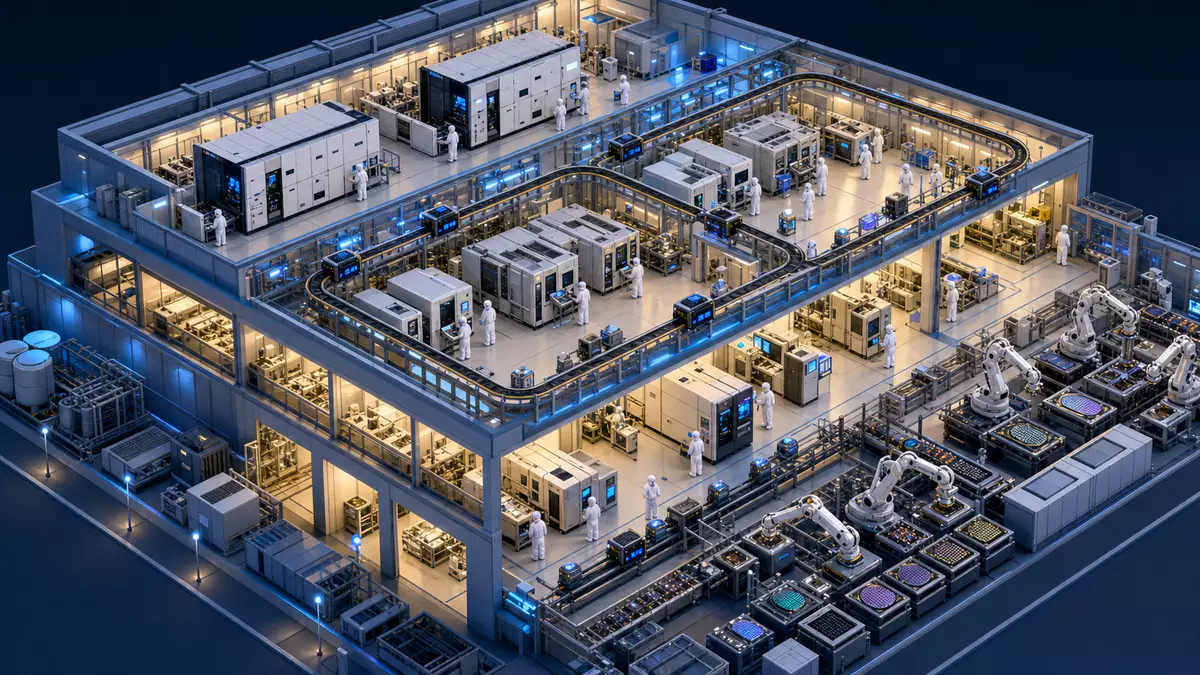
Intel's turnaround hinges on becoming a competitive foundry for external customers while keeping its internal product roadmap on track. In 2024, the company continued heavy capital spending to upgrade and build fabs in the United States and Europe, consistent with its multi-year plan to execute five advanced process nodes in four years. Annual capital expenditures remained in the tens of billions of dollars range as Intel invested in EUV equipment, advanced packaging, and new manufacturing sites.
This elevated capital intensity weighs on near-term free cash flow but is intended to establish Intel as a leading alternative to existing foundry players. Management argues that subsidies and incentives from government programs, combined with potential foundry revenue from external customers, can support the economics of this strategy over time.
More background on Intel stock and financials
Historic annual reports, detailed segment data, and official guidance updates provide additional context for Intel's turnaround and capital allocation strategy.
Client computing underpins the base
Client computing remains Intel's largest single business by revenue, anchored by PC processors and related chipsets. After a steep decline in global PC shipments in 2022 and early 2023, unit demand and revenues stabilized and then improved through 2024 as the installed base began a replacement cycle. Intel's 2024 client computing revenue grew versus 2023, benefiting from higher notebook and desktop demand along with a richer mix of premium CPUs.
Management highlighted opportunities in so-called AI PCs, where on-device AI capabilities could drive higher-performance processor adoption. While still early, Intel positions itself to capture this refresh cycle with new CPU platforms that integrate AI accelerators and enhanced graphics, aiming to defend share against competing architectures.
Balance sheet and shareholder returns
Intel enters this capital-intensive period with a substantial balance sheet. The company holds tens of billions of dollars in total debt, balanced by significant cash and short-term investments. Management has repeatedly emphasized an investment-grade profile and a commitment to dividend stability, even as free cash flow is pressured by high capital expenditures.
Intel has historically returned capital to shareholders via dividends and, at times, share repurchases. In the current phase, the emphasis is on maintaining the dividend while moderating buybacks to preserve cash for strategic investments. The mix of returns could evolve as the foundry strategy matures and as free cash flow improves with higher utilization and normalized capital intensity.
Representative product: Xeon and AI platforms
At the product level, Intel's Xeon server processors and adjacent AI platforms remain central to its data center strategy. Newer generations of Xeon are designed to handle both traditional workloads and emerging AI and analytics tasks, while the company pairs them with accelerators and networking components to build full-stack solutions. This approach aims to defend and grow share in cloud and enterprise data centers against both traditional competitors and newer AI-focused offerings.
Intel stock and market context
Intel stock is widely followed on Nasdaq under the ticker INTC, and the company is a member of key U.S. equity benchmarks such as the Nasdaq 100 and the S&P 500. The shares reflect the market's assessment of Intel's ability to execute its manufacturing roadmap, ramp AI and data center products, and balance heavy investment with shareholder returns over the coming years.
Intel stock at a glance
- Company: Intel Corp.
- ISIN: US4581401001
- Ticker: NASDAQ: INTC
- Trading venue: Nasdaq
- Sector / Industry: Semiconductors / Semiconductor Devices
- Index membership: S&P 500, Nasdaq 100
Disclaimer regarding our articles: No investment advice, no buy or sell recommendation. Information on prices, companies, and markets is provided without guarantee; changes are possible at any time. Stock market transactions can lead to substantial losses. Our articles are created and reviewed in whole or in part automatically with the support of AI.