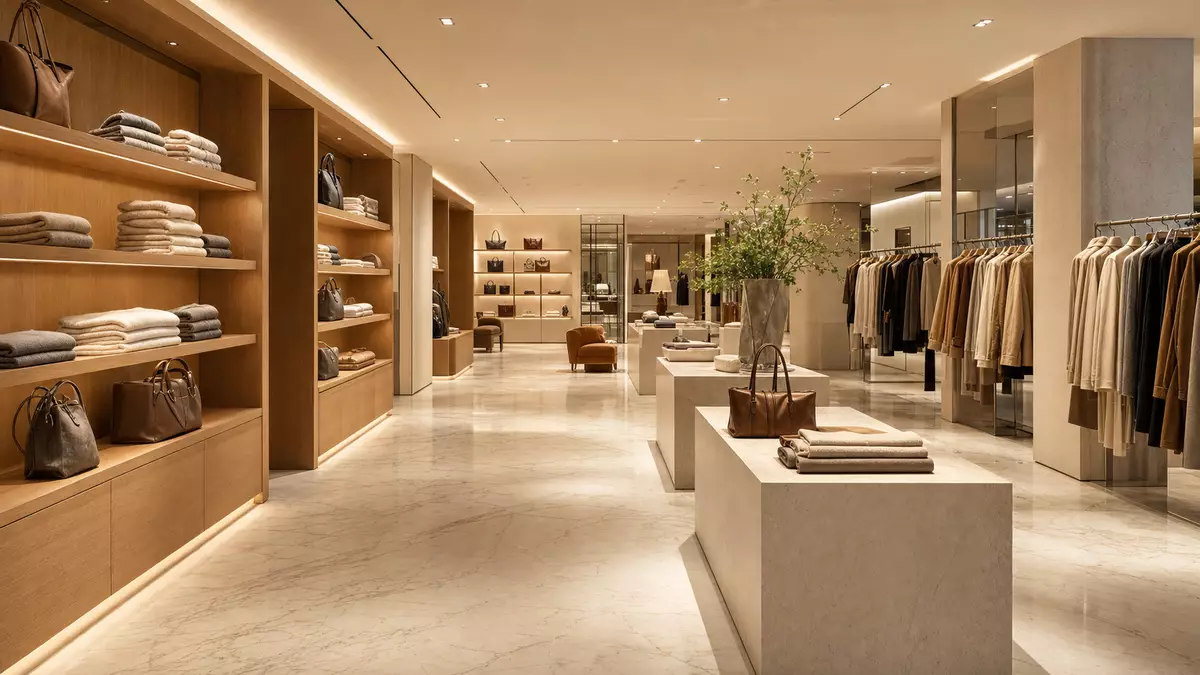
Kering stock edges higher as Gucci recovery and margin focus shape investor debate
Published on 07/17/2026 at 21:18 | Editorial responsibility: Rafael Müller, Editor-in-Chief AD HOC NEWS
Kering stock, backed by the French luxury group Kering S.A. (ISIN FR0000121964), reflects a business in transition as the owner of Gucci recalibrates its portfolio and cost base after a weaker earnings phase. Shares are broadly supported by the value of brands including Gucci, Saint Laurent and Bottega Veneta, while investors closely watch profitability and cash generation trends across the group.
Revenue and earnings trends
According to the most recent full-year figures presented by Kering for fiscal 2025, the group reported total revenue of around EUR 19.6 billion, a level that remains below the historical peak of more than EUR 20 billion reached in earlier years but still underlines the scale of the portfolio. The same set of figures showed that recurring operating income stood in the mid-single-digit billions of euros, illustrating that Kering continues to generate substantial profit even after a period of margin pressure.
Management highlighted that Gucci, Kering’s largest brand by revenue, accounts for well over one half of group sales. In the latest annual report, Gucci’s revenue reached around EUR 10 billion, compared with more than EUR 11 billion in stronger previous years, underlining that the flagship house has not yet fully recovered to its earlier peak. Saint Laurent contributed around EUR 3 billion in yearly revenue, up from roughly EUR 2 billion in prior years, signaling that Kering’s smaller houses have partly offset Gucci’s slower momentum.
Operating margin near historical levels
Kering’s operating margin tracks the balance between brand investment and profitability. In fiscal 2025 the group reported an operating margin close to 24%, compared with a margin that had previously moved above 25% at the top of the cycle. The slight decline illustrates the cost of revitalizing Gucci’s collections and store network, as well as marketing investments across the wider portfolio. At the same time, a mid-twenties margin still compares favorably with many consumer companies outside the luxury segment, highlighting the structural profitability of high-end brands.
Net income attributable to owners of the parent remained firmly positive in the latest annual period, at around EUR 2.8 billion compared with roughly EUR 3 billion in stronger prior years. This modest year-on-year decline underscores the earnings impact of softer demand in some markets and higher operating expenses. Nevertheless, the ability to retain a multi-billion-euro profit after tax supports Kering’s capacity to continue funding store refurbishments, creative direction changes and selective acquisitions.
Cash flow, investment and balance sheet discipline
Kering has emphasized solid cash generation as a strategic priority. In fiscal 2025, operating cash flow reached several billion euros, translating into robust free cash flow after capital expenditures. The group has used this cash flow to fund investments in boutiques, technology, logistics and sustainability initiatives without materially compromising the balance sheet. Net debt remains contained relative to earnings and cash flow, and leverage ratios stay within a range that is comfortable for a diversified luxury group.
Capital expenditure has recently focused on upgrading Gucci’s retail footprint and elevating Saint Laurent and Bottega Veneta stores. Yearly capex has stayed in the low-to-mid billions of euros, representing a relatively modest portion of total revenue. This investment level allows Kering to refresh its physical network and back digital platforms while still maintaining a healthy free cash flow profile. For investors, the interplay between capex, free cash flow and net debt is a key lens to evaluate the sustainability of dividends and potential acquisition budgets.
Gucci’s role in Kering’s future growth
Gucci remains the central earnings engine within Kering’s portfolio. The brand’s revenue of around EUR 10 billion in fiscal 2025, although down from its historical peak, still dwarfs the contributions of other houses in the group. Gucci’s margins are more volatile than those of some peers, given its larger scale and the intense competition in the fashion luxury segment. When Gucci’s collections resonate strongly with consumers, incremental revenue flows disproportionately into profit because the fixed-cost base is already mostly covered.
Creative and strategic adjustments at Gucci are designed to restore this dynamic. Recent collections have focused on core leather goods and ready-to-wear lines that previously drove strong growth, while accessories and footwear support the broader offering. Investors monitor early sell-through data and store traffic for signs of a rebound. A sustained uplift in Gucci’s revenue and margin could materially improve Kering’s overall earnings trajectory and help the stock trade closer to its historical valuation multiples.
Saint Laurent and Bottega Veneta gain traction
While Gucci’s recovery remains the central story, Kering’s other houses have contributed increasingly to the group’s growth. Saint Laurent’s revenue of around EUR 3 billion in fiscal 2025 represented a significant increase on the roughly EUR 2 billion delivered in earlier years. This double-digit growth in the brand reflects strong demand for leather goods, footwear and ready-to-wear designs that combine recognizable branding with high-end materials.
Bottega Veneta has also recorded solid progress, with yearly revenue now well above the EUR 1 billion level. The brand’s focus on understated design and craftsmanship resonates with customers seeking alternatives to more logo-centric offerings. For Kering, the development of these brands supports a more diversified earnings base. A broader portfolio reduces reliance on any single house and can smooth volatility when one brand goes through a transition phase.
Profitability across the houses
Operating margins differ across Kering’s brands, but the group aims to maintain a high level of profitability at each house. Gucci’s operating margin historically exceeded the group average, reflecting its scale. However, as investments in design, marketing and stores increased, Gucci’s margin narrowed slightly compared with its prior peaks. Saint Laurent, by contrast, has experienced margin expansion as revenue grew faster than fixed costs, moving from mid-teens margins toward higher levels typical for mature luxury houses.
Bottega Veneta’s margin improvement has been more gradual, reflecting the brand’s repositioning towards higher price points and a focus on iconic products. Smaller houses and Kering’s eyewear activities contribute incremental revenue and profit, but with different margin profiles. Overall, the group’s consolidated operating margin near 24% shows that Kering remains keenly focused on balancing investment with cost discipline.
Dividend policy and shareholder returns
Kering has used its cash generation to support a consistent dividend policy. In recent years, the group has paid an annual dividend per share measured in euros, with payout levels reflecting earnings and free cash flow. Although the precise dividend figure varies by year, the company maintains a payout ratio that aims to balance shareholder returns with reinvestment needs. Dividends, combined with the potential for capital gains if Gucci and other brands accelerate again, form the main pillars of the equity story for many investors.
Share buybacks have played a more limited role compared with dividends, but the group retains flexibility to adjust its capital-allocation mix depending on market conditions and valuation. For long-term holders, the trajectory of earnings, dividends and brand strength tends to matter more than short-term stock fluctuations. Kering’s ability to navigate cycles in luxury demand while sustaining cash returns is closely watched across the European equity market.
Balance sheet strength and risk management
From a financial-risk perspective, Kering has kept leverage and liquidity under control. The group’s net debt remains modest relative to earnings and assets, and available credit lines support both everyday operations and strategic options. Rating agencies view the group’s combination of strong brands, solid margins and prudent leverage as supportive of its credit profile. This balance sheet resilience is important in a sector where demand and consumer sentiment can fluctuate across regions and economic cycles.
The company also manages currency and macroeconomic risks across its global footprint. Sales in North America, Europe and Asia create exposure to movements in key currencies, including the US dollar, euro and Chinese yuan. Kering monitors these dynamics and adjusts pricing tactically in different markets to protect margins. It also maintains a diversified store base and wholesale relationships to mitigate localized demand shocks.
ESG commitments and brand perception
Environmental, social and governance (ESG) considerations have become more prominent for luxury groups, and Kering has outlined sustainability targets for its operations and supply chain. These include reducing environmental impacts, supporting responsible sourcing of materials and enhancing transparency with stakeholders. Kering’s approach aims to integrate ESG principles into brand narratives, which can strengthen customer affinity and protect long-term brand equity.
Investors assess ESG performance alongside financial metrics, particularly in European equity markets where sustainability reporting is increasingly standardized. Strong ESG commitments can help differentiate Kering from competitors and appeal to funds with sustainability mandates. However, such initiatives also require investment, and the cost-benefit balance is part of investors’ broader evaluation of the group’s strategy.
Valuation context in the luxury sector
Kering stock trades in the context of other large European luxury groups and global peers. Valuation multiples, such as price-to-earnings and enterprise value to EBITDA, reflect market expectations about the pace of Gucci’s recovery and the growth potential of other brands. When Gucci underperforms relative to peers, Kering’s multiples often compress compared with companies perceived as more consistently growing. Conversely, evidence of renewed momentum at Gucci and continued strength at Saint Laurent and Bottega Veneta can support multiple expansion.
Relative valuation also considers differences in portfolio concentration, geographic exposure and brand positioning. Kering’s higher reliance on Gucci, compared with some peers that operate multiple similarly sized brands, may contribute to greater share-price sensitivity to news about that flagship house. Investors therefore weigh both reported figures and forward-looking indicators such as collection reception, marketing campaigns and store openings.
Revenue up more than 10 percent from earlier levels
Over the past decade Kering has substantially increased its revenue base. Compared with revenue levels of around EUR 17 billion in earlier reporting periods, the latest figure near EUR 19.6 billion represents growth of more than 10%. This expansion has been driven by a combination of price increases, new store openings, stronger online sales and the evolution of key brands. The quantified comparison underscores that, despite recent challenges, Kering’s top line remains structurally higher than in prior years.
Gucci’s current revenue of about EUR 10 billion, although lower than the more than EUR 11 billion achieved at peak, still comfortably exceeds the brand’s revenue from previous cycles. Saint Laurent’s growth from approximately EUR 2 billion to around EUR 3 billion in recent years marks a roughly 50% increase, highlighting the success of strategic initiatives at that house. These comparisons give investors a sense of how far the group has come and the magnitude of potential upside if Gucci returns to peak trajectory and other brands continue to expand.
Market capitalization and equity profile
Kering’s market capitalization, measured in billions of euros, reflects investor perceptions of future earnings, brand strength and risk. The company’s equity profile combines exposure to fashion, accessories and eyewear through its own brands and licensing arrangements. For investment funds that specialize in consumer or luxury stocks, Kering often represents a core European holding with substantial liquidity and index inclusion.
Index membership within major European benchmarks can influence trading volumes and investor flows, especially when passive and index-linked strategies rebalance. Inclusion in broad indices increases visibility and ensures that Kering stock participates in sector and market-wide dynamics. At the same time, active investors focus on company-specific drivers such as Gucci’s performance and the profitability trajectory at other houses.
More background on Kering
Investors can explore additional details on Kering's brand portfolio, financial metrics and governance in dedicated company and investor relations resources.
Gucci leather goods as a core product line
Within Kering’s product mix, Gucci’s leather goods collection represents a core revenue and margin driver. Bags, wallets and small leather items continue to attract customers globally, supported by a combination of heritage designs and new models. The brand’s ability to refresh classic lines while introducing seasonal variations is critical to sustaining demand. Pricing strategy in leather goods influences both revenue and profitability, as unit prices can be adjusted to reflect materials, craftsmanship and brand positioning.
Stock profile and trading venue
Kering stock is listed in euros on Euronext Paris, providing exposure to one of the leading European luxury groups. The listing supports trading by both domestic and international investors, and the stock benefits from liquidity typical of large-cap names. For investors, the share price over time mirrors changing expectations about Gucci’s recovery prospects, growth at other houses and the wider macroeconomic environment.
Kering key data
- Company: Kering S.A.
- ISIN: FR0000121964
- Ticker: EURONEXT: KER
- Trading venue: Euronext Paris
- Sector / Industry: Consumer Discretionary / Luxury Goods
- Index membership: CAC 40
Disclaimer regarding our articles: No investment advice, no buy or sell recommendation. Information on prices, companies, and markets is provided without guarantee; changes are possible at any time. Stock market transactions can lead to substantial losses. Our articles are created and reviewed in whole or in part automatically with the support of AI.