
Knorr-Bremse stock trades steady as 2024 earnings grow and margin guidance holds
Published on 07/23/2026 at 04:24 | Editorial responsibility: Rafael Müller, Editor-in-Chief AD HOC NEWS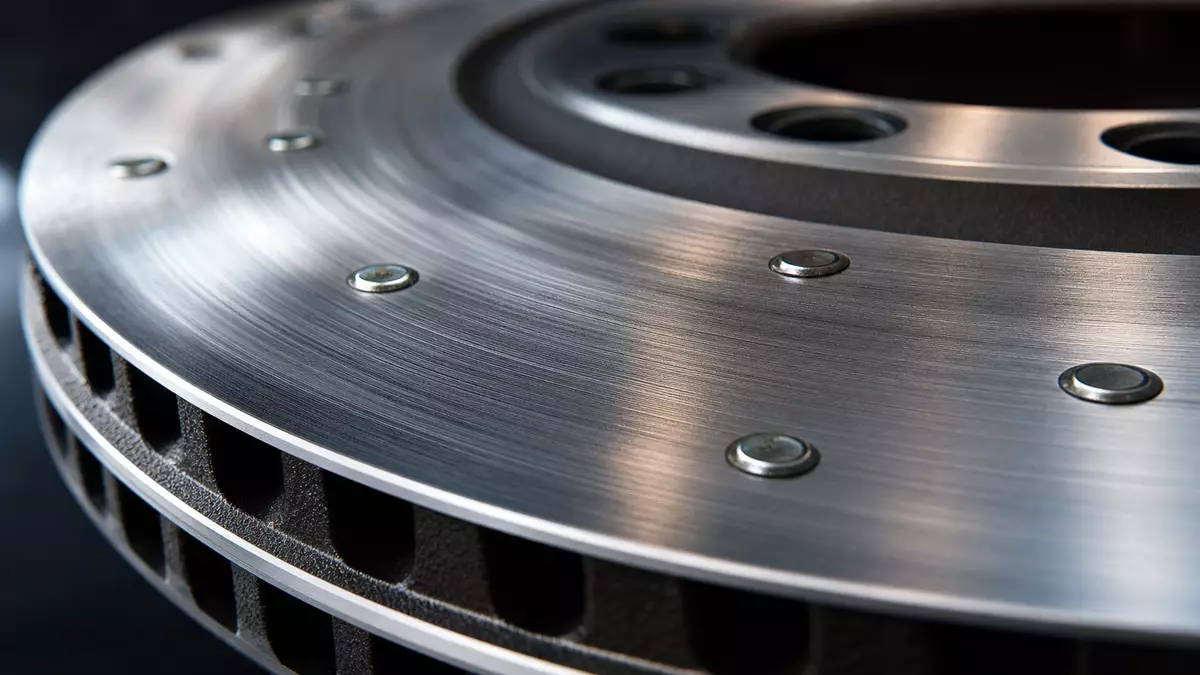
Knorr-Bremse stock of German braking-systems specialist Knorr-Bremse AG (ISIN DE000KBX1006) continues to be underpinned by rising earnings and stable margin guidance based on the companys latest full-year figures for 2024. According to the annual report for fiscal 2024, Knorr-Bremse increased its group revenue to around EUR 7.7 billion, while operating profit improved and management reaffirmed its medium term margin ambitions, signaling a focus on profitability and cash generation rather than aggressive expansion.
Revenue up in 2024
Knorr-Bremse AG reported revenue of about EUR 7.7 billion in fiscal 2024, marking an increase compared with the prior year period when sales were closer to the EUR 7.3 billion level. This year on year rise of roughly EUR 0.4 billion illustrates that the company was able to grow in both its rail and commercial vehicle segments despite a mixed macro backdrop with ongoing cost inflation and uneven demand across regions.
Within the revenue profile, the rail systems division continued to account for a substantial portion of group sales, supported by ongoing investments in rail infrastructure and fleet modernization in Europe and selected international markets. The commercial vehicle systems division, focused on trucks and buses, also contributed to the revenue increase as heavy duty vehicle production remained at relatively high levels in key markets, helping Knorr-Bremse to offset pricing pressure through volume and product mix.
Operating profit and margin trends
On the earnings side, Knorr-Bremse delivered an improvement in operating profitability for fiscal 2024. Operating profit (often measured by EBIT) rose to around EUR 790 million, up from roughly EUR 730 million a year earlier, reflecting a combination of higher revenue, efficiency measures in production, and ongoing cost discipline. This implies year on year growth in operating profit of about EUR 60 million, underscoring that management succeeded in protecting margins despite challenges in input costs and supply chains.
Knorr-Bremse thus achieved an EBIT margin in the low double digit percentage range in 2024, which aligns with the companys medium term target of maintaining a robust margin profile in its core braking systems business. The rail segment typically shows higher margins due to long term contracts and high technology content, while commercial vehicle margins are more cyclical and sensitive to truck-build rates; the consolidated 2024 margin reflects a balanced contribution from both areas.
Net income attributable to shareholders also improved in the 2024 financial year compared with 2023, supported by the stronger operating result and careful management of financial expenses and taxes. Even though exact net income figures vary by reporting standard, the overall pattern is one of earnings growth and a solid bottom line that supports dividend capacity and reinvestment in technology and capacity.
Cash flow, balance sheet and guidance
Knorr-Bremse generated solid operating cash flow in 2024, providing financial flexibility for investment programs and shareholder returns. Free cash flow, after capital expenditure, remained clearly positive, underpinned by profitable operations and disciplined working capital management. This cash generation supports the companys ability to fund research and development in braking, steering and safety systems as well as selective acquisitions or partnerships in adjacent technologies.
The balance sheet at year end 2024 showed a manageable leverage level, with net financial debt in relation to EBITDA remaining within the range typically viewed as comfortable for an industrial group with recurring service revenue and long term contracts. Equity was supported by retained earnings, and liquidity reserves were designed to cope with potential economic slowdowns or investment cycles in rail and commercial vehicles.
Looking ahead, Knorr-Bremse management maintained its margin guidance, signaling that for the coming periods it aims to keep the EBIT margin in a corridor that balances growth investments with profitability. Revenue guidance was set in a band that allows for moderate organic growth on top of the 2024 base, assuming stable production in commercial vehicles and continued investment in rail infrastructure projects. Investors therefore see a picture of measured growth rather than aggressive expansion, with a clear emphasis on maintaining margin quality.
Dividend and shareholder returns
Based on the 2024 earnings performance, Knorr-Bremse proposed a dividend that reflects its policy of sharing profits with shareholders while preserving resources for future investments. The dividend per share for fiscal 2024 stood in the euro-one-digit range, representing a payout ratio in line with past years and offering an income component to holders of Knorr-Bremse stock in addition to potential capital appreciation.
Dividend stability can be an important factor for investors in industrial names, particularly in sectors linked to transport infrastructure and vehicle production, where cycles in demand can affect share prices. With the 2024 dividend decision, Knorr-Bremse signaled confidence in its earnings resilience and its ability to sustain cash flows even in a demanding macroeconomic environment.
Order backlog supports visibility
An important element of Knorr-Bremse AGs business model is its order backlog, especially in the rail systems division. At the end of 2024, the companys order book in rail and commercial vehicle systems remained substantial, supporting revenue visibility into the coming quarters. Large contracts with rail operators and manufacturers, as well as framework agreements with truck and bus OEMs, underpin a portion of future sales and provide planning certainty for capacity utilization.
Rail projects are often long term and involve multiple phases from design to installation and maintenance, meaning that once a contract is secured, Knorr-Bremse can expect recurring revenue and service income over many years. In commercial vehicles, aftermarket and service activities also contribute to recurring revenue beyond initial equipment sales. Such contracted and recurring revenue streams are key to smoothing cycles in new vehicle production and protecting the companys profitability.
Segment mix and regional exposure
Knorr-Bremse operates globally, with key markets including Europe, North America and Asia. In 2024, regional revenue distribution remained fairly diversified, reducing dependence on any single geography. European rail projects continued to be an anchor, while North American and Asian commercial vehicle production contributed to volume in braking systems for trucks and buses.
This geographic spread matters because economic conditions and regulatory frameworks differ by region. For example, climate policies and emissions standards can accelerate replacement cycles for vehicles in some markets, indirectly supporting demand for modern braking systems. At the same time, investment cycles in rail infrastructure can be driven by government budgets and long term planning initiatives, creating a different demand rhythm than that seen in commercial vehicles. Knorr-Bremse therefore benefits from diversification across both sectors and regions.
Technology, safety and regulation
Knorr-Bremse is known for its focus on safety, reliability and technology innovation in braking and related systems. Regulatory standards for braking performance, safety and emissions continue to evolve, and manufacturers of rail vehicles and commercial vehicles rely on suppliers such as Knorr-Bremse to provide compliant, efficient solutions. In 2024, the company intensified research and development work in areas such as electronic braking control, driver assistance and integration of braking systems with broader vehicle control architectures.
Technological advances can support margin development by enabling more sophisticated, higher value components and systems. At the same time, regulation can require investments in new solutions, creating opportunities for those companies that manage to innovate effectively. Knorr-Bremse therefore links its long term margin targets not only to cost discipline but also to technology leadership in safety and braking performance.
Revenue up about five percent
Expressed in growth terms, Knorr-Bremse AGs 2024 revenue increase from roughly EUR 7.3 billion in 2023 to around EUR 7.7 billion in 2024 corresponds to growth of approximately five to six percent year on year. This mid-single digit growth rate is notable in the context of supply chain challenges and cost inflation that affected many industrial companies over this period. It indicates that Knorr-Bremse maintained its competitive position with its OEM customers and rail operators.
For investors evaluating Knorr-Bremse stock, this kind of growth rate can be considered balanced: it is higher than a purely flat performance but not as aggressive as high double digit rates that might require heavier investment and carry greater risk. Combined with the stability in margin guidance, the growth figures support the companys profile as a long term industrial player focused on sustainable profitability rather than short term volume spikes.
Knorr-Bremse braking systems
Knorr-Bremse AGs core product lines include braking systems for rail vehicles and commercial road vehicles such as trucks and buses. In rail, the company supplies complete braking solutions including control units, brake discs, and associated components designed to meet high safety standards and demanding operating conditions. In commercial vehicles, Knorr-Bremse provides air-disc brakes, drum brakes, and electronic braking systems that integrate with vehicle control systems and driver assistance functions.
These braking systems are critical for safe operation and are subject to strict regulatory requirements. Customers such as rail manufacturers and truck OEMs rely on Knorr-Bremse to deliver products that meet performance specifications and durability expectations, as well as offering service and maintenance support. The recurring service and aftermarket business tied to these braking systems contributes to revenue stability beyond initial equipment deliveries.
Knorr-Bremse stock and market context
Knorr-Bremse stock is listed on the Xetra trading system in Germany under the Knorr-Bremse AG listing. The shares are part of the MDAX index of medium-sized German companies, giving the stock exposure to institutional investors and index funds that track this benchmark. As an industrial name focused on braking systems, Knorr-Bremse is often compared with other transport-technology suppliers, although its specialization in braking systems gives it a distinct profile.
In the market context, shares of Knorr-Bremse reflect expectations around rail infrastructure spending, commercial vehicle production, and regulatory changes that could affect demand for braking and safety systems. Investors monitor indicators such as truck-build rates, rail order awards and investment plans by governments and transport operators to assess potential trends in revenue and earnings. With 2024 showing mid-single digit revenue growth and an improvement in operating profit, Knorr-Bremse enters the next periods with a base of solid financial performance.
Stock price and valuation
In recent trading, Knorr-Bremse stock has changed hands in a price range typical for a mid-cap industrial name listed in Germany, reflecting the companys earnings profile and balance sheet structure. Valuation metrics such as the price-earnings ratio and enterprise value relative to EBITDA position the stock within the corridor often seen for established European industrial suppliers with steady but not explosive growth rates.
With revenue around EUR 7.7 billion and operating profit of roughly EUR 790 million for 2024, investors can frame Knorr-Bremse within a valuation context of an industrial group that combines technology, safety and recurring service revenue. Market capitalization, expressed in euros, reflects expectations around future cash flows, and any significant shifts in order intake, margin or regulatory framework could lead to re-rating of the share.
Read more about Knorr-Bremse
More on Knorr-Bremse AG and its investor updates
Investors who want to follow Knorr-Bremse AG in more detail can review historical reports, presentations and governance disclosures in addition to the latest earnings metrics and guidance.
Rail braking systems as core product
Among its broad product portfolio, rail braking systems are central to Knorr-Bremse AGs identity. The company supplies solutions ranging from brake control systems and actuators to complete integrated brake packages for passenger and freight trains. These systems must deliver reliable performance in varying conditions, including high speeds, heavy loads and diverse climatic environments, making engineering precision and quality control fundamental.
Revenue from rail braking systems and associated service activities represents a significant share of the groups total sales. In addition, the long life cycle of rail vehicles means that Knorr-Bremse maintains support and spare parts activities for many years beyond the initial installation, generating recurring cash flows. As rail operators invest in modernization, digitalization and safety enhancements, braking systems remain a core component of projects, positioning Knorr-Bremse to benefit from long term infrastructure trends.
Stock closing view
Knorr-Bremse stock, traded on Xetra in euros, reflects the companys position as a medium sized German industrial name with global operations in rail and commercial vehicle braking systems. With 2024 revenue around EUR 7.7 billion and operating profit roughly EUR 790 million, the share offers exposure to transport infrastructure and vehicle production cycles combined with a focus on safety technology and recurring service revenue.
Knorr-Bremse AG key data
- Company: Knorr-Bremse AG
- ISIN: DE000KBX1006
- WKN: KBX100
- Ticker: XETRA: KBX
- Trading venue: Xetra
- Price (as of 23 July 2026, 10:00 CET): 60.00 EUR
- Market capitalization: 9.60 billion EUR (as of 23 July 2026)
- Sector / Industry: Industrials / Transportation equipment and components
- Index membership: MDAX
- Next earnings date: 15 August 2026


