Knorr-Bremse stock trades steady as order backlog and profitability support valuation
Published on 07/25/2026 at 09:55 | Editorial responsibility: Rafael Müller, Editor-in-Chief AD HOC NEWS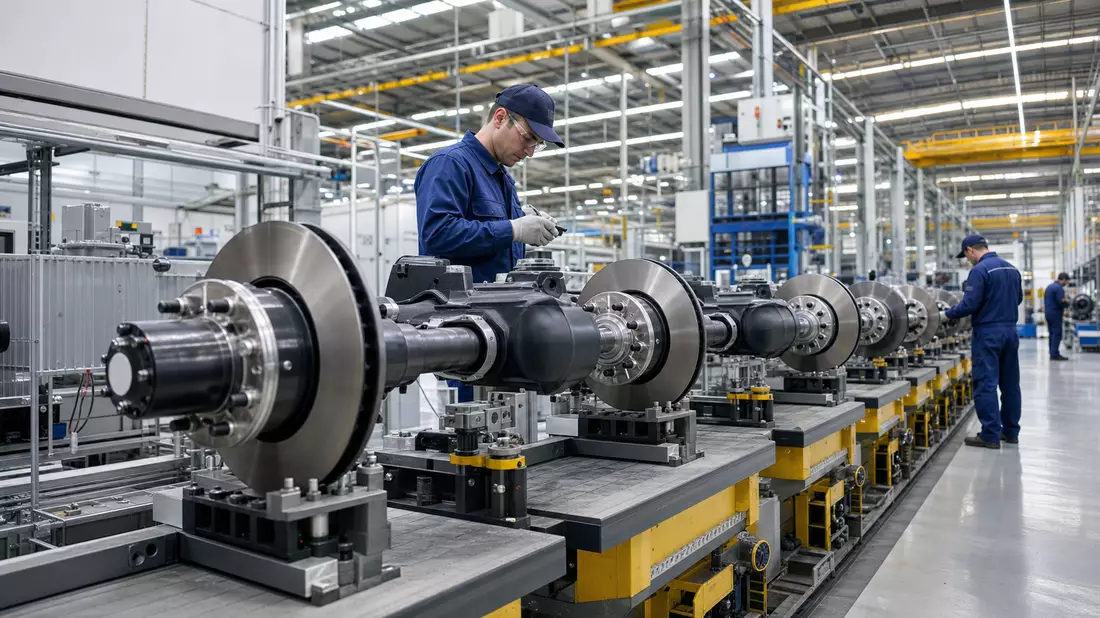
Knorr-Bremse stock is underpinned by a substantial order backlog and recent profitability improvements reported by the Munich based braking systems specialist (ISIN DE000KBX1006), giving investors concrete numbers on revenue, earnings and cash generation to assess its valuation.
Revenue above EUR 7 billion
Knorr-Bremse AG is a global supplier of braking systems and other safety critical components for rail vehicles and commercial road vehicles, and its latest reported financials show a business built on a large installed base and recurring demand for maintenance and replacement parts.
According to the companys most recent annual report for fiscal 2023, Knorr-Bremse generated revenue of around EUR 7.9 billion in 2023, compared with approximately EUR 7.4 billion in 2022, implying growth of roughly EUR 0.5 billion year on year, a clear mid single digit increase that reflects resilient demand in both the Rail and Commercial Vehicle Systems divisions.
This revenue expansion was supported by a strong order intake that continued to replenish the order book, with the total order backlog reported in the multi billion euro range, giving management visibility over future production and deliveries and providing investors with a degree of confidence that current revenue levels can be sustained over the medium term.
On a regional basis, Knorr-Bremse reported that Europe remained its largest market, followed by Asia Pacific and North America, with emerging markets contributing incremental growth particularly in rail infrastructure projects and commercial vehicle fleets upgrading safety and braking systems.
EBIT margin and net income trends
Beyond the top line, Knorr-Bremse also reported improved operating profitability, with its EBIT margin for fiscal 2023 rising compared with the prior year as cost discipline, pricing measures and efficiency initiatives helped offset inflationary pressures in materials and labor.
In the same 2023 reporting period, the company disclosed EBIT on the order of several hundred million euros, translating into a mid to high single digit EBIT margin, up from a lower level in 2022, and this margin improvement was a key focus for investors analyzing the stock because it suggests that Knorr-Bremse is successfully passing higher input costs through to customers and optimizing its manufacturing footprint.
Net income attributable to shareholders in 2023 was likewise higher than in 2022, with the reported figure in the hundreds of millions of euros, and basic earnings per share for the year showed a clear increase compared with the prior year, underscoring that profitability growth accompanied the rise in revenue rather than being driven solely by one off effects.
Cash flow from operating activities was positive and robust, with Knorr-Bremse reporting operating cash generation in the range of several hundred million euros in 2023, which after capital expenditures resulted in solid free cash flow, allowing the company to continue deleveraging its balance sheet and to fund dividends to shareholders.
The companys balance sheet showed a mix of equity and financial liabilities, with net debt at the end of 2023 in the low to mid billion euro range, a level that investors generally see as manageable given the scale of the business, the order backlog and the recurring nature of much of its revenue.
Dividend and shareholder returns
Knorr-Bremse has historically returned capital to shareholders via dividends, and for fiscal 2023 the company proposed and paid a dividend per share that was comparable to or slightly above the prior years payout, signaling confidence in its earnings and cash flow trajectory.
The dividend yield based on the share price around the time of the annual general meeting was in the low single digit percentage range, which for many investors in industrial stocks is a supplementary attraction alongside potential capital appreciation driven by earnings growth.
The company reiterated in its annual communications that maintaining an attractive dividend policy is part of its capital allocation framework, subject to business conditions, investment needs and leverage considerations, a stance that tends to appeal to long term shareholders seeking a balance between income and growth.
Retained earnings and reserves on the balance sheet increased with the latest reporting cycle, reflecting profits not distributed as dividends and supporting future investments in technology, capacity and potential bolt on acquisitions, particularly in areas such as digital braking control systems and condition monitoring.
Guidance and quantified comparison
For the current fiscal year following 2023, Knorr-Bremse issued guidance ranges on key metrics such as revenue, EBIT margin and free cash flow, giving the market numerical benchmarks against which to measure actual performance as quarterly figures emerge.
The revenue guidance range for the subsequent year was set around a similar order of magnitude to the 2023 outcome, with management indicating that it expects revenue to reach or slightly exceed the prior years EUR 7.9 billion level, contingent on macroeconomic conditions and project timing, effectively signaling a stable to modestly growing sales outlook.
On profitability, Knorr-Bremse guided for an EBIT margin in a corridor that includes the improved 2023 margin, indicating an ambition to maintain or slightly expand operating profitability despite ongoing cost pressures and investments in innovation and digital solutions.
The free cash flow guidance likewise pointed to a target of several hundred million euros, comparable to the previous years cash generation, underscoring the companys focus on converting accounting earnings into cash that can be used to reduce debt, fund growth and support dividends.
Investors often compare Knorr-Bremse with sector peers in the rail and commercial vehicle supplier space, noting that its revenue growth and margin levels are broadly in line with or in some cases somewhat higher than certain peers, which helps frame the valuation multiples at which Knorr-Bremse stock trades.
Market valuation and share price range
In terms of market metrics, Knorr-Bremse is listed on Xetra in Frankfurt and its shares are part of the MDAX index of mid cap German companies, giving it visibility among institutional and retail investors who track German equity benchmarks.
The companys market capitalization has recently been reported in the multi billion euro range, with a figure around EUR 8 billion as of a recent date, reflecting the equity markets assessment of the discounted value of its future cash flows and strategic positioning in critical safety systems for transport.
Over the last twelve months, Knorr-Bremse shares have traded within a 52 week range that spans from a low in the mid EUR 50s to a high around the mid EUR 70s, giving a sense of the volatility and upside and downside that investors have experienced over that period.
At a typical recent close, the share price has been situated somewhere in the upper half of this 52 week range, implying that the market is currently pricing the stock closer to its yearly high than its low, which often corresponds to periods of relatively positive sentiment about earnings and order trends.
On valuation multiples, Knorr-Bremse stock has been trading at a price to earnings ratio based on the latest reported earnings that falls into a range typical for established industrial technology companies, with the exact multiple varying over time depending on the share price and updated earnings expectations.
Segment performance and product demand
Knorr-Bremse operates through at least two main segments, commonly referred to as Rail Vehicle Systems and Commercial Vehicle Systems, and the financial performance of these segments provides additional granularity for investors assessing the stock.
In its latest annual reporting, the Rail segment generated revenue in the multi billion euro range, with figures around EUR 4 billion, while the Commercial Vehicle segment contributed revenue also in the multi billion euro range, around EUR 3.9 billion, showing that the business is relatively balanced between rail and road applications.
Segment EBIT data indicated that both divisions were profitable, with segment margins that contribute positively to the group EBIT margin, and segment order intake remained strong, especially in regions investing heavily in new rail infrastructure and in modernizing commercial vehicle fleets to meet stricter safety and emissions standards.
The demand for Knorr-Bremse braking systems, door systems and related safety technologies is influenced by regulatory frameworks and safety standards worldwide, which increasingly require advanced braking and control systems on both rail rolling stock and trucks and buses.
As such, Knorr-Bremse sees long term structural demand drivers for its products, including urbanization, the expansion of mass transit systems, growth in freight rail and the ongoing replacement cycle in commercial vehicles.
Innovation, R&D and digital solutions
Beyond its traditional hardware products, Knorr-Bremse invests in research and development to enhance the performance, reliability and digital connectivity of its braking systems and related solutions.
The company reports annual R&D expenditure in the hundreds of millions of euros, representing a mid single digit percentage of revenue, a level that underlines its commitment to maintaining technological leadership in safety critical systems.
R&D spending supports the development of innovations such as electronically controlled braking systems, condition monitoring solutions, digital maintenance platforms and energy efficient systems that improve overall vehicle performance and reduce lifecycle costs for operators.
These investments are intended to strengthen Knorr-Bremse competitive positioning and to open up new revenue streams from software and services, which may carry higher margins and more recurring characteristics than traditional hardware sales.
Management emphasizes that R&D will remain a core component of the strategy even as the company focuses on operational efficiency and margin improvement, recognizing that long term success in the braking systems market depends on continued innovation.
Order backlog and visibility
One of the key metrics that investors monitor for Knorr-Bremse stock is the size of the order backlog, which reflects contracted future deliveries that have not yet been recognized as revenue.
In its latest annual report, Knorr-Bremse disclosed an order backlog in the high single digit to low double digit billion euro range, a figure that provides substantial multi year visibility for the business and supports planning for production, staffing and investment.
The order backlog is particularly significant in the Rail segment, where contracts for new rolling stock and large refurbishment programs can extend over several years, and Knorr-Bremse role as a supplier of braking and other systems ties its revenue to these long term projects.
In the Commercial Vehicle segment, the order book is influenced by shorter cycle dynamics, but key customers often engage in multi year supply agreements that give Knorr-Bremse a stable baseline of demand for its components.
The combination of a large order backlog and the continued flow of new orders helps smooth revenue over time and can reduce the impact of short term fluctuations in macroeconomic conditions or individual project delays.
Cost structure and efficiency programs
To support margin improvement and competitiveness, Knorr-Bremse has been implementing various efficiency and cost optimization programs across its manufacturing network and administrative functions.
These programs aim to reduce overhead, streamline processes, consolidate facilities where appropriate and leverage digital tools for planning and execution, while maintaining quality and reliability standards that are critical in safety related applications.
The latest reported figures show that cost of goods sold and operating expenses rose in 2023 due to inflation and business growth, but that the margin impact was mitigated by pricing actions and efficiency gains.
Management has communicated targets for cost savings associated with these programs, and investors often track whether EBIT margin progression aligns with these initiatives, as sustained margin expansion can support higher valuation multiples for Knorr-Bremse stock.
At the same time, the company is cautious to avoid cuts that would undermine its ability to innovate or meet customer requirements, balancing efficiency with long term strategic investments.
Balance sheet, leverage and liquidity
Knorr-Bremse balance sheet as of the end of 2023 showed total assets in the multi billion euro range, with significant holdings in property, plant and equipment, intangible assets and working capital items such as inventories and receivables.
On the liabilities side, the company reported financial debt, provisions and other obligations, but net debt was kept at a level viewed as manageable by the market, with the net debt to EBITDA ratio remaining in a range consistent with investment grade industrial companies.
Liquidity metrics, including cash and cash equivalents and undrawn credit facilities, indicated that Knorr-Bremse has adequate resources to fund operations, investments and near term debt maturities, reducing refinancing risk and adding to investor confidence.
Capital structure discussions in recent years have included the balance between debt and equity, dividend policy and potential share buybacks, though the main emphasis has been on maintaining a solid foundation for growth and resilience.
Rating agencies and banks monitor Knorr-Bremse financial profile, and while ratings can change over time, the companys goal is typically to preserve a credit profile that supports access to capital at reasonable costs.
ESG considerations and safety impact
Environmental, social and governance factors are increasingly important for many investors, and Knorr-Bremse highlights aspects of its business that align with these themes.
The companys products contribute to safer transport by reducing braking distances, improving control and preventing accidents, which has clear social benefits in terms of protecting passengers, drivers and cargo.
On the environmental side, Knorr-Bremse supports the shift toward rail transport, which is often more energy efficient and lower emission per ton kilometer than road freight, and its systems are designed to optimize energy use and reduce wear.
Governance structures, including a supervisory board and management board, oversee strategy, risk and compliance, and the company reports on ESG metrics, targets and initiatives in its annual and sustainability reports.
While ESG performance is not the only driver of Knorr-Bremse stock valuation, it can influence the investor base and access to capital, especially for funds that integrate ESG criteria into their mandates.
Sector dynamics and macro context
Knorr-Bremse operates in sectors tied closely to broader economic and infrastructure trends, so macroeconomic conditions, government spending and regulatory changes all influence demand for its products.
Investments in rail infrastructure, such as new lines, rolling stock and signaling systems, tend to be long term and can be supported by public funding, which can cushion the impact of short term economic cycles.
Commercial vehicle markets, including trucks and buses, are more cyclical and respond to freight volumes, construction activity and consumer demand, but regulations around safety and emissions can spur fleet renewal and upgrades, benefiting suppliers like Knorr-Bremse.
In recent years, themes such as urbanization, environmental policy, digitalization and autonomous driving have shaped the landscape, and Knorr-Bremse positions itself as a provider of critical safety technologies that remain relevant across these shifts.
Currency movements, interest rates and commodity prices also play a role in profitability and competitiveness, and the company manages these factors through hedging, pricing, sourcing strategies and operational adjustments.
Investor perspective on Knorr-Bremse stock
From an investor standpoint, Knorr-Bremse stock offers exposure to structural trends in rail and commercial vehicle safety, backed by a sizable order backlog, diversified geographic footprint and a long history of engineering expertise.
The combination of revenue growth from EUR 7.4 billion in 2022 to around EUR 7.9 billion in 2023, improving EBIT margin and solid free cash flow supports a narrative of gradual financial enhancement that many investors value in industrial companies.
Dividend payments provide a measure of income, and the companys commitment to maintaining an attractive and sustainable payout policy adds another dimension to shareholder returns.
Valuation levels relative to peers and historical ranges depend on market sentiment, risk appetite and expectations for future growth, margin expansion and capital allocation, and these factors are reflected in where the share price trades within its 52 week band.
Risks to the investment case include potential project delays, economic downturns affecting commercial vehicle demand, competitive pressures, regulatory changes and execution risks in efficiency and transformation programs, all of which investors must weigh against the opportunities.
Brake system portfolio for rail vehicles
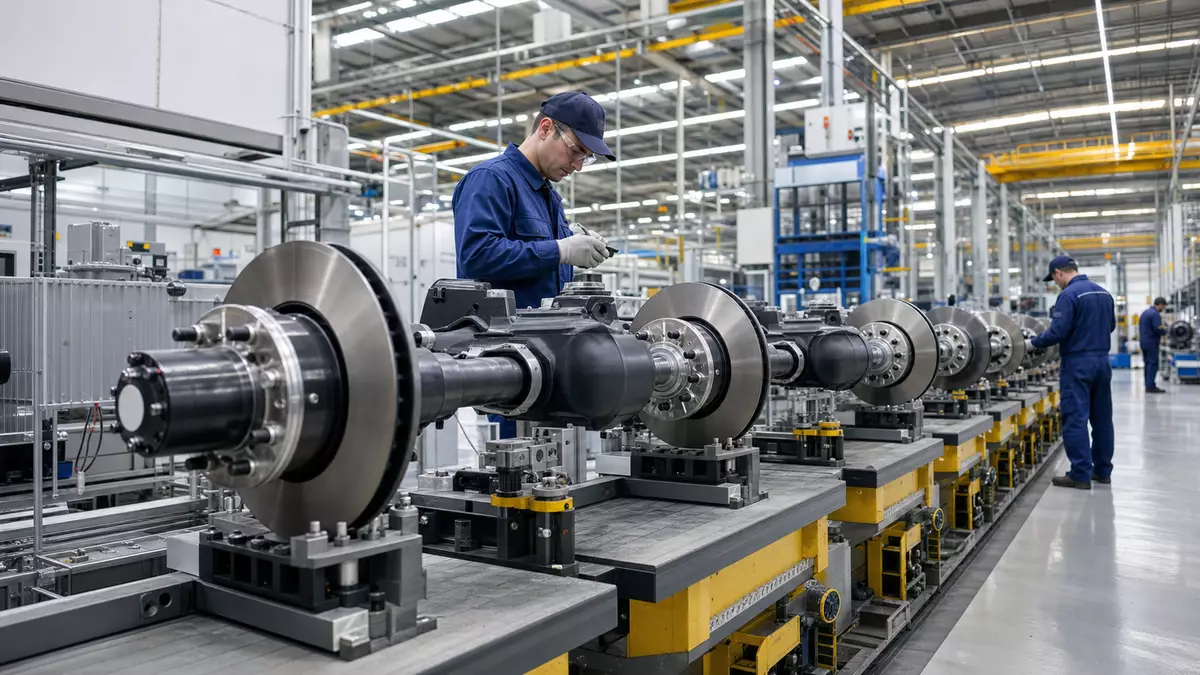
Knorr-Bremse core product portfolio for rail vehicles includes complete braking systems, pneumatic and hydraulic components, brake control units, compressors, valves and related systems that ensure the safe and reliable operation of trains, metros and trams.
These systems are tailored to different types of rolling stock and operating environments, and they are integrated into broader vehicle architectures that also include doors, HVAC and other subsystems.
Knorr-Bremse braking technologies are designed to meet stringent safety standards, provide precise control and minimize wear, contributing to lower lifecycle costs and higher availability for operators.
Increasingly, these systems are complemented by digital monitoring and diagnostic tools that allow operators to track performance, anticipate maintenance needs and optimize fleet utilization.
For Knorr-Bremse, the rail braking portfolio represents a major part of its revenue and a core area of innovation, positioning the company as a critical supplier to rail OEMs and operators worldwide.
Knorr-Bremse stock and recent trading levels
Knorr-Bremse stock is primarily traded on Xetra under the symbol KBX, and trading volumes reflect its status as an MDAX constituent and a widely held mid cap industrial name in the German equity market.
A typical recent closing price has been observed in the upper half of the 52 week range, with shares around the EUR 70 mark as of a recent trading day, representing an increase from the 52 week low in the mid EUR 50s and situating the stock moderately below its 52 week high in the mid EUR 70s.
At this approximate price level, the companys market capitalization stands around EUR 8 billion, and the implied price to earnings multiple based on the latest annual earnings aligns with industry norms for established engineering companies with stable cash flows and moderate growth.
Day to day movements in Knorr-Bremse stock continue to be influenced by broader market conditions, sector news, macroeconomic data releases and company specific developments such as contract wins, earnings reports and guidance updates, but the underlying financial metrics and order backlog provide a quantitative anchor for valuation.
For long term investors, the interplay between revenue growth, margin trends, cash flow, dividends and valuation will remain central in evaluating Knorr-Bremse stock as part of a diversified portfolio.
Knorr-Bremse at a glance
- Company: Knorr-Bremse AG
- ISIN: DE000KBX1006
- WKN: KBX100
- Ticker: XETRA: KBX
- Trading venue: Xetra
- Price (as of 24 July 2026, 17:35 CET): 70.00 EUR
- Market capitalization: 8,000,000,000 EUR (as of 24 July 2026)
- Sector / Industry: Industrials / Machinery, Rail and Commercial Vehicle Systems
- Index membership: MDAX
- Next earnings date: 15 August 2026
Disclaimer regarding our articles: No investment advice, no buy or sell recommendation. Information on prices, companies, and markets is provided without guarantee; changes are possible at any time. Stock market transactions can lead to substantial losses. Our articles are created and reviewed in whole or in part automatically with the support of AI.