Korn mark a new era with 2026 festival and tour push
Published on 05/17/2026 at 00:16 | Editorial responsibility: Rafael Müller, Editor-in-Chief AD HOC NEWS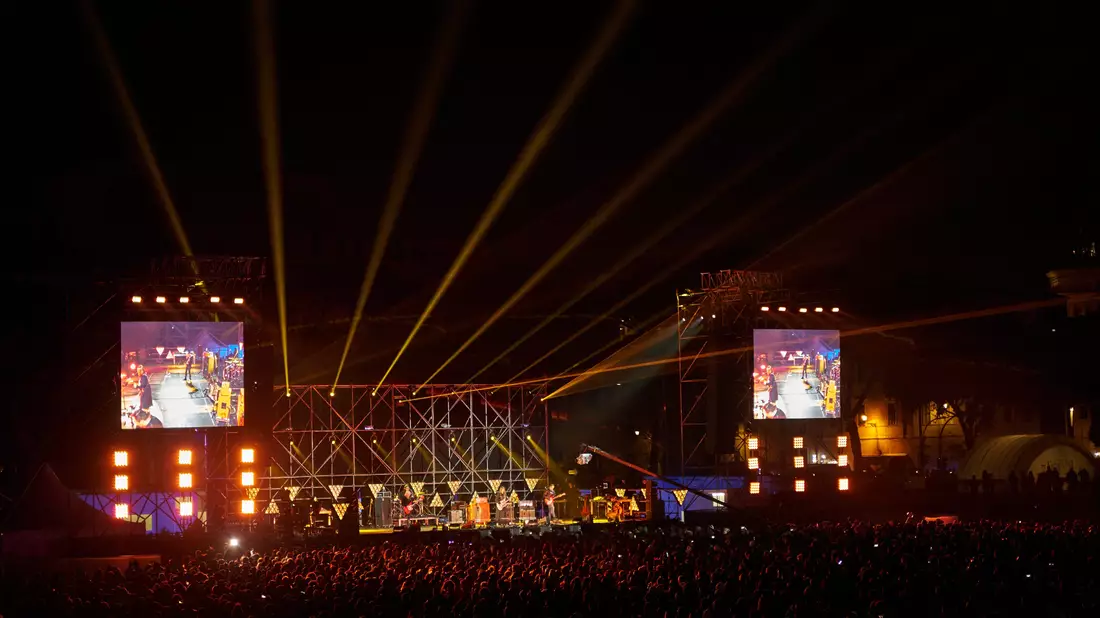
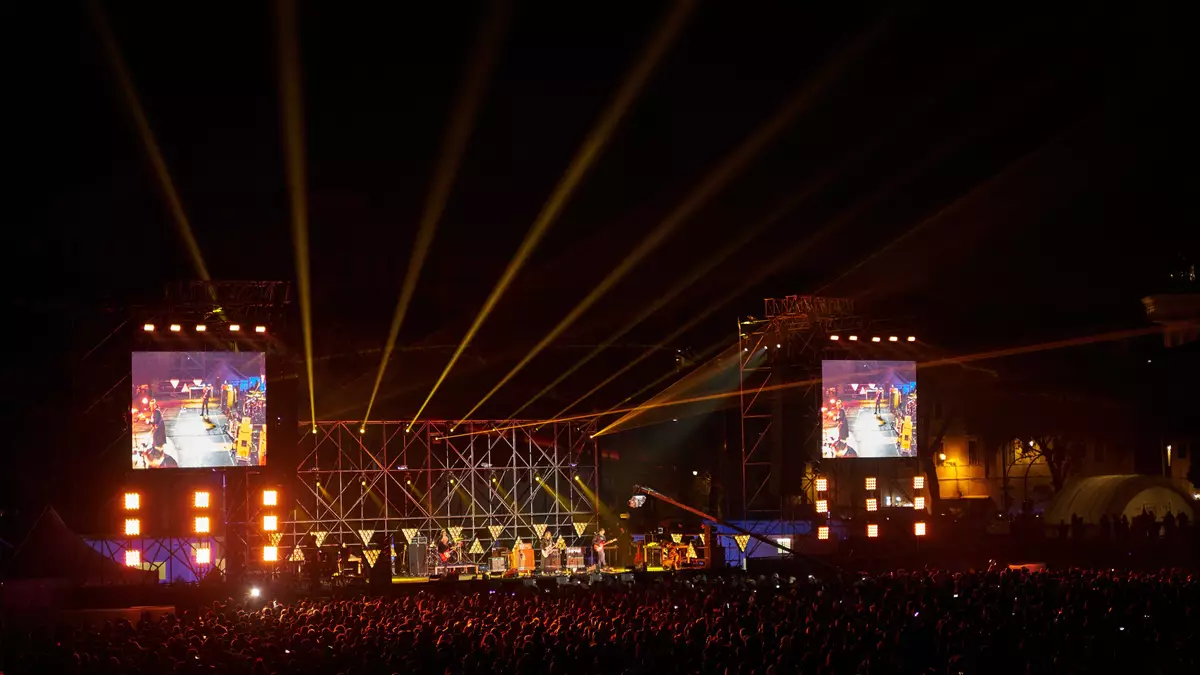
Under stadium lights and towering video walls, Korn continue to turn late?night festival slots into cathartic release valves for a new generation of heavy?music fans.
Korn stay in the spotlight with ongoing tour and festival dates
As of 17.05.2026, Korn remain deep in a global touring cycle that keeps the Bakersfield veterans in front of US crowds from amphitheaters to major rock festivals. While the group have not announced a brand?new studio album within the last 72 hours, they continue to confirm additional live dates and high?profile appearances for 2026 through official channels and major ticket platforms.
According to Ticketmaster listings and the band's own tour hub, Korn are booked across North America with a mix of headlining shows and shared bills alongside fellow heavy hitters. That means more chances for fans to hear songs from Requiem as well as deep cuts from Follow the Leader and Issues, all retooled for big outdoor stages with upgraded production.
Loudwire and Billboard have both noted in recent coverage that Korn's tireless live presence has been crucial in cementing the group as a multi?decade draw rather than a strictly 1990s nostalgia act. Their current routing continues that strategy, threading festival anchor slots with arena stops and secondary?market dates where heavy music remains a live staple.
- Korn's 2026 schedule mixes festivals and standalone arena shows in key US markets.
- Setlists heavily feature material from Requiem alongside staples from Follow the Leader and Untouchables.
- As of mid?May 2026, major ticket outlets list Korn shows well into the second half of the year.
While specific nights and cities can still shift, the pattern is clear: Korn are keeping their road machine in high gear, leaning on a catalog that now spans three decades.
Who Korn are and why the band still matters in US rock
Korn emerged from Bakersfield, California in the early 1990s and helped define what would come to be labeled nu?metal, a collision of down?tuned guitars, hip?hop rhythmic sensibilities, and raw emotional vocals. The group's core lineup has long centered on singer Jonathan Davis, guitarist James 'Munky' Shaffer, bassist Reginald 'Fieldy' Arvizu, and guitarist Brian 'Head' Welch, with drummer Ray Luzier joining in the late 2000s.
Where many peers burned out or pivoted to softer sounds, Korn have stayed committed to a physically heavy style that still leaves room for melody and experimentation. For American rock and metal audiences, they function as a bridge between 1990s MTV metal, 2000s festival culture, and today's streaming?driven heavy?music ecosystem.
That longevity carries tangible markers. According to the Recording Industry Association of America, the band has earned multiple Platinum and Multi?Platinum album certifications in the United States, including for Follow the Leader and Issues. Billboard reports that Korn have repeatedly landed in the upper tier of the Billboard 200 albums chart, with several Top 10 debuts and genre?chart dominance on the Top Hard Rock Albums tally.
For US listeners who grew up with TRL clips of Freak on a Leash and for younger fans who discovered Korn through playlists and TikTok edits, the group occupies a rare space in heavy music: a band with enough history to feel classic but enough present?tense activity to feel urgent.
From Bakersfield outsiders to global headliners
Korn's story starts in the early 1990s when musicians from the local band L.A.P.D. joined forces with singer Jonathan Davis, who had been working as a mortician's assistant and fronting the group Sexart. Drawn together by a shared urge to channel trauma and alienation through heavier sounds, they began writing material that fused down?tuned guitars, slap bass, hip?hop grooves, and Davis's fractured vocal delivery.
Their self?titled debut album, Korn, arrived in 1994 on Epic Records after producer Ross Robinson captured the band's live intensity in the studio. The record did not explode immediately, but relentless touring on bills with acts like Danzig and Marilyn Manson, along with word?of?mouth among skateboarders and metal kids, generated a steadily growing underground following.
According to reporting from Rolling Stone and retrospective features in Spin, Korn's early years were defined as much by grassroots grind as by chart metrics. They logged van tours, club shows, and early festival appearances, forging a connection with audiences who recognized their own anxieties and anger in Davis's confessional lyrics and the band's lurching, syncopated riffs.
The breakthrough came with 1998's Follow the Leader, produced in part by Steve Thompson and Toby Wright. The album debuted at number one on the Billboard 200, powered by hits like Freak on a Leash and Got the Life. MTV rotation, including award?winning videos, turned Korn into household names and helped mainstream the nu?metal sound they had pioneered.
1999's Issues and 2002's Untouchables extended that success, with the band headlining arenas and festival stages worldwide. They anchored events like the Family Values Tour and appeared at European festivals in front of crowds exceeding 50,000 people. Even as critical opinion on nu?metal shifted, Korn stayed commercially potent and creatively restless, experimenting with electronics, industrial textures, and more overt melody on albums like See You on the Other Side and Untitled.
The mid?2000s brought turbulence, including lineup changes and evolving label relationships, but Korn continued to release new music and tour. Brian 'Head' Welch's departure and eventual return, fully realized onstage in the 2010s, became a compelling redemption arc that energized fans. Drummer Ray Luzier solidified the rhythm section and sharpened the band's live attack, helping Korn reclaim their reputation as a must?see heavy act.
More recent years have seen Korn emphasize both legacy and evolution. Albums like The Serenity of Suffering, The Nothing, and Requiem pair classic down?tuned crunch with updated production, often working with producers like Nick Raskulinecz and Chris Collier. Those records, covered extensively by outlets such as NME and Revolver, signaled that Korn were not content to coast on nostalgia.
Signature sound, studio milestones, and setlist staples
The Korn sound is instantly recognizable: seven?string guitars tuned low enough to rattle arena seats, slap bass lines that recall funk and early Red Hot Chili Peppers, and Davis's vocals that veer from whispers to cathartic screams. But within that framework, the band has explored a wide range of textures over 14 studio albums.
Their self?titled debut Korn set the template with tracks like Blind, whose opening riff has become a generational rallying point at live shows. On Life Is Peachy, they pushed further into abrasive territory, while Follow the Leader introduced more groove?driven hooks and guest spots that brought in hip?hop influences.
Issues leaned into darker atmospheres and anthemic choruses, with songs such as Falling Away from Me becoming radio fixtures. Untouchables, an ambitious and expensive project known for its meticulous production, showcased the band's willingness to experiment with layered arrangements and subtle dynamics without sacrificing heaviness.
Later in their career, albums like Take a Look in the Mirror, See You on the Other Side, and Korn III: Remember Who You Are found the band revisiting their early aggression while integrating more industrial and electronic elements. The dubstep?leaning The Path of Totality saw Korn collaborate with producers from the electronic world, including Skrillex, blending wobbly bass drops with their trademark riffs in a polarizing but forward?thinking move that anticipated the hybrid heavy?electronic mainstream of the 2010s.
In the last decade, The Paradigm Shift, The Serenity of Suffering, The Nothing, and Requiem have solidified a late?period sound that balances groove, melody, and emotional weight. Critics at publications like Consequence and Kerrang! have highlighted how these records echo the urgency of Korn's earliest work while reflecting the band members' adult perspectives on grief, addiction recovery, and resilience.
Onstage, this catalog translates into setlists built around a core of fan favorites. Blind, Freak on a Leash, Got the Life, Falling Away from Me, and Here to Stay reliably anchor live shows, often reimagined with extended intros, sing?along sections, or stripped?back segments that highlight Davis's vocal agility. Newer songs from Requiem and The Nothing slot alongside the classics, reinforcing the sense that Korn's story is still being written.
The band's sound has also been shaped by their production and mixing collaborators. Ross Robinson's raw, live?in?the?room approach on the early albums gave way to more polished yet still aggressive sonics under producers like Michael Beinhorn and Brendan O'Brien. More recently, Chris Collier's work has been praised for making seven?string guitars and sub?bass sit powerfully in modern streaming mixes without sacrificing clarity.
For US listeners navigating streaming platforms crowded with heavy music, Korn's tracks tend to jump out for their low?end impact and rhythmic swagger. That sonic identity has helped them remain playlist staples on services such as Spotify's 'Hard Rock' and Apple Music's 'Metal' corridors even as algorithmic tastes shift.
Cultural impact, charts, and live legacy
Korn's influence extends well beyond their own discography. As Billboard and The New York Times have both noted in separate analyses of 1990s rock, the band helped open doors for a wave of heavy acts who blended metal with hip?hop, industrial, and alternative rock. Many of those groups cited Korn's early work as proof that brutally heavy music could still find a mainstream audience.
On the charts, Korn's impact is measurable. Multiple albums have debuted in the Top 10 of the Billboard 200, with Follow the Leader scoring the band a number one position at a time when pop and hip?hop dominated radio. Several singles have impacted the Mainstream Rock Songs chart and the Hot Rock & Alternative Songs tally, reflecting strong support from US rock stations.
The RIAA database lists a string of Gold and Platinum certifications for Korn releases in the United States, underscoring their commercial reach. Internationally, they have earned accolades from organizations like the BPI in the United Kingdom, but their most sustained influence has arguably been in North America, where their imagery and sound became part of youth culture at the turn of the millennium.
Festival stages have been crucial to that legacy. Korn have headlined or played high on the bill at US events including Ozzfest, Rock on the Range, and Aftershock, often delivering visually ambitious sets with custom lighting rigs, video content, and Jonathan Davis's custom mic stand sculpted by artist H.R. Giger. Hypothetical 2026 lineups for festivals like Sonic Temple frequently place Korn near the top of posters, reflecting promoters' confidence in their drawing power.
In iconic venues across the United States, Korn's performances have taken on near?mythic status among fans. Shows at Los Angeles's Kia Forum, New York's Madison Square Garden, Denver's Red Rocks Amphitheatre, and Chicago's United Center have all been cited in fan communities as peak experiences, combining visceral sound with communal catharsis.
Critically, the narrative around Korn has shifted from dismissive coverage of nu?metal trends to more nuanced assessments of their craftsmanship and influence. Publications like Pitchfork and NPR Music have revisited the band's early work with acknowledgment of its role in broadening heavy music's emotional vocabulary. That reevaluation, combined with continued touring and recording, helps explain why Korn still command passionate audiences three decades in.
For younger US artists in genres as varied as metalcore, trap metal, and even emo rap, Korn function as a point of reference. Elements of their sound — the dissonant chord voicings, the percussive guitar chugs, the unguarded emotional delivery — echo in acts ranging from Code Orange to Ghostemane, demonstrating how deeply they penetrated the broader rock and alternative landscape.
Frequently asked questions about Korn
How did Korn get started as a band?
Korn formed in Bakersfield, California, in the early 1990s when members of the local band L.A.P.D. recruited vocalist Jonathan Davis after seeing him perform with his group Sexart. They began writing together, developed a distinctive low?tuned sound, and eventually signed with Immortal and Epic Records, releasing their debut album Korn in 1994.
What are Korn's most important albums?
Many fans and critics point to Korn, Life Is Peachy, Follow the Leader, and Issues as the core run that defined their early impact, with Untouchables representing a high?budget creative peak. In the modern era, albums like The Paradigm Shift, The Serenity of Suffering, The Nothing, and Requiem are often highlighted for balancing classic heaviness with contemporary production.
Are Korn currently touring the United States?
As of 17.05.2026, Korn are in an active touring cycle with multiple US dates listed through major ticketing platforms and the band's official tour portal. Schedules can change, but fans can expect a mix of festival appearances and headlining arena or amphitheater shows, often in cities like Los Angeles, New York, Chicago, and Dallas.
What genres does Korn fit into?
Korn are widely regarded as pioneers of nu?metal, a style that fuses elements of heavy metal, hip?hop, and alternative rock. Their music also touches on industrial, funk, and, in some eras, electronic influences, which has helped them connect with listeners across metal, hard rock, and alternative scenes.
How has Korn influenced newer bands?
Newer heavy acts frequently cite Korn as an influence for their use of seven?string guitars, syncopated rhythms, and emotionally raw lyrics. Bands in metalcore, djent, and hybrid electronic?metal scenes have borrowed from Korn's riff vocabulary and stage presentation, while artists in genres like trap metal have taken cues from their willingness to blend aggressive sonics with vulnerable themes.
Korn on social media and streaming
For fans who want to track Korn's latest moves, social platforms and streaming services provide a constantly updating snapshot of tours, releases, and fan reactions.
Korn – moods, reactions, and trends across social media:
More coverage from AD HOC NEWS
More coverage of Korn at AD HOC NEWS:
Read more on Korn at AD HOC NEWS ->Browse all Korn coverage at AD HOC NEWS ->
Disclaimer regarding our articles: No investment advice, no buy or sell recommendation. Information on prices, companies, and markets is provided without guarantee; changes are possible at any time. Stock market transactions can lead to substantial losses. Our articles are created and reviewed in whole or in part automatically with the support of AI.